
Over The Range Microwave with Finished Sides: Your #1 Fix
You have designed your dream kitchen, but one detail threatens to spoil the entire look. The over-the-range microwave sits at the end of your cabinet line, exposing a side that is unfinished, metallic, and covered in labels or screw holes.
This common design dilemma can make an expensive renovation look cheap and incomplete. A raw appliance edge creates a jarring visual stop, detracting from the smooth, seamless flow you worked so hard to achieve.
You'll Learn About
Why That Microwave Side Looks So Unfinished
The core of the problem lies in manufacturing efficiency and common installation practices. Most over-the-range (OTR) microwaves are designed with the assumption that they will be installed snugly between two wall cabinets.
Manufacturers save costs by not applying a cosmetic finish to surfaces that are typically hidden. This leaves the sides plain, with exposed hardware and ventilation grilles never intended for display.
The Path to a Flawless, High-End Finish
Achieving a professional, fully integrated look is entirely possible, even with an exposed microwave side. The solution involves either selecting a specialized model or, more commonly, employing clever cabinetry and finishing techniques to conceal the unfinished surface.
These methods turn a design problem into a feature that looks intentional and custom-built. Your choice will depend on your budget, DIY skill level, and desired aesthetic.
Find a Rare Gem: Microwaves with Factory-Finished Sides
The most direct solution is to purchase an OTR microwave that is designed for this exact scenario. A small number of manufacturers offer models with one or both sides factory-finished in stainless steel or another matching color.
While convenient, these models can be more difficult to find and may come at a premium price. Always check the product’s specification sheet for terms like “finished sides” or “end-of-run installation” before purchasing.
The Professional’s Choice: Custom Cabinetry Solutions
For a truly seamless and built-in appearance, integrating the microwave with your cabinetry is the superior option. This method ensures a perfect match with your kitchen’s style.
The most popular technique involves using a cabinet end panel. This is a thin, decorative panel, made from the same material and with the same finish as your cabinet doors, used to cover the exposed side of the microwave. It creates the illusion that the microwave is housed inside a custom cabinet.
Properly measuring the stove opening between cabinets is the critical first step to ensure any custom panel fits perfectly. The panel is typically installed flush with the microwave door for a clean line.
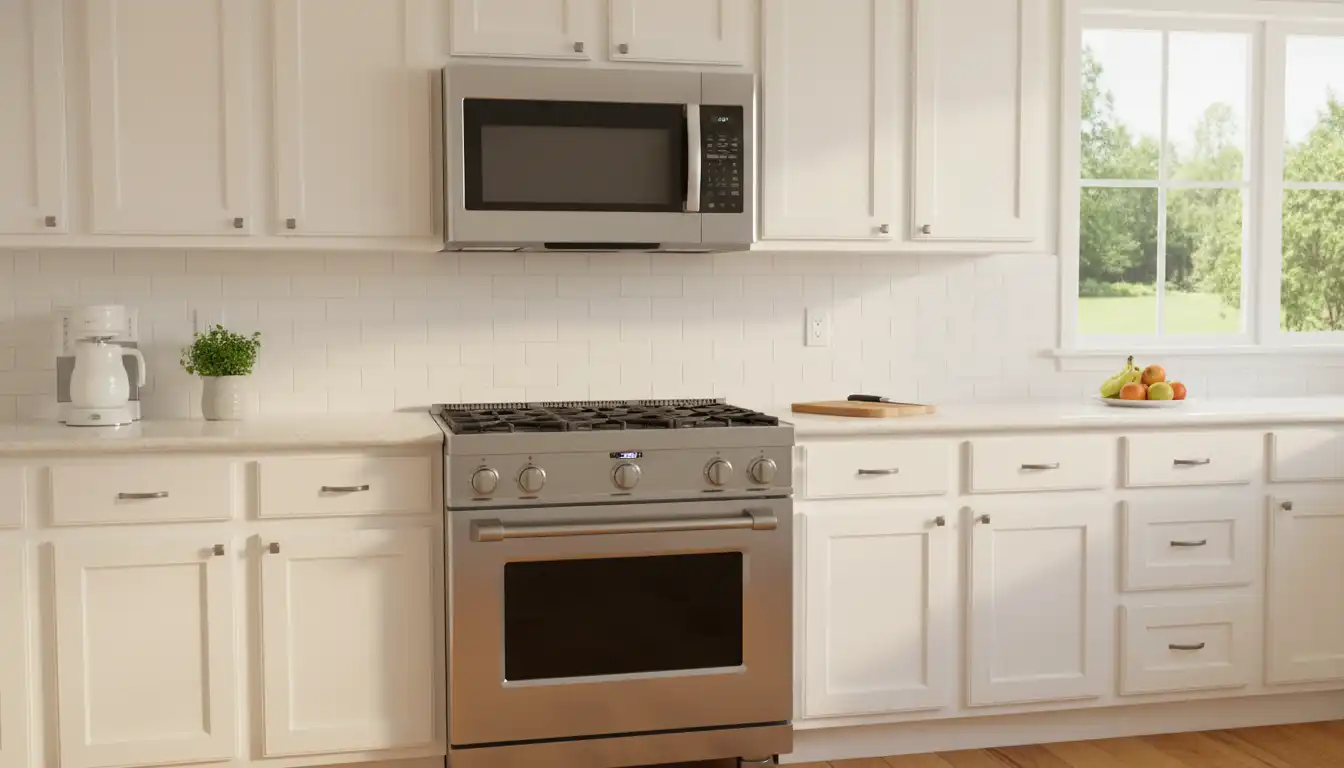
Creating the “Floating” Microwave Look
A more advanced technique that elevates kitchen design is to create a “floating” effect. Instead of a full-depth panel that makes the microwave look boxed in, this method uses a much thinner, rigid panel set back slightly from the microwave’s front frame.
This small reveal creates a shadow line, making the appliance appear as if it’s floating between the cabinet and the wall. It’s a subtle, high-end detail that transforms the installation from a simple cover-up into a deliberate design statement.
DIY Solutions for a Clean Finish
If you prefer a hands-on approach, several DIY methods can effectively cover an unfinished microwave side. These options offer flexibility and can be very budget-friendly if done correctly.
The key to a successful DIY finish is meticulous prep work and choosing the right material for the job. A hasty application can often look worse than the original unfinished side.
Material Options for a DIY Microwave Side Panel
For the committed DIYer, a stainless steel veneer offers the most authentic look. These are thin sheets of real stainless steel with a strong adhesive backing. Applying it slowly and using a squeegee is crucial to prevent air bubbles and ensure a smooth, factory-like finish.
Alternatively, a thin piece of laminate, chosen to match your countertops or cabinets, can create a cohesive look. For a simple and quick fix, high-heat appliance paint can be used, but achieving a perfectly even and durable surface without professional tools can be challenging.
Comparing Your Options for a Finished Look
Choosing the right approach requires balancing cost, effort, and the final aesthetic. What works for a quick fix in one kitchen may not suit a high-end custom build in another.
| Solution | Best For | Estimated Cost | DIY-Friendliness |
|---|---|---|---|
| Factory-Finished Model | Simplicity and a perfect appliance match. | $$$ (Premium on appliance price) | Excellent |
| Custom Cabinet Panel | A seamless, built-in, and professional look. | $$ (Cost of panel and installation) | Moderate |
| Stainless Steel Veneer | DIYers seeking an authentic appliance finish. | $ (Cost of materials) | High (Requires patience) |
| High-Heat Appliance Paint | The most budget-conscious solution. | $ (Cost of paint and supplies) | Moderate (Difficult to perfect) |
Critical Installation Mistakes You Must Avoid
Regardless of the method you choose, safety and functionality must come first. Covering an exposed microwave side incorrectly can create a fire hazard or damage the appliance.
Never, under any circumstances, block ventilation openings. Before applying any panel or finish, consult your microwave’s manual to locate all air vents. Your custom panel must have cutouts to allow for unrestricted airflow.
You must also maintain the manufacturer’s required clearances to combustible surfaces. This includes the distance to the cabinets on the top and sides. A custom panel is a cosmetic fix; it does not change the fundamental safety requirements of the installation.
Integrating the Design into Your Kitchen Plan
A successful installation looks intentional. The decision to place a microwave at the end of a cabinet run should be considered early in the kitchen design process, just like deciding on whether to install your IKEA cabinets before or after flooring.
This foresight allows you to order the necessary finished panels along with your cabinetry, ensuring a perfect match. It also helps balance the kitchen’s visual weight, preventing one side from looking heavier than the other.
When selecting materials for your kitchen, durability is just as important as aesthetics. Choosing high-quality, easy-to-clean surfaces for your cabinets and panels will ensure they last. This same principle of durability applies everywhere, even when choosing between different brands of outdoor storage like in a Suncast vs Keter comparison.
Conclusion: Your Path to a Perfect Kitchen Finish
An exposed, unfinished microwave side does not have to be a permanent flaw in your kitchen. It is a common problem with a variety of effective and elegant solutions.
By choosing between a specialty appliance, a custom cabinet panel, or a careful DIY application, you can achieve a polished, high-end look. This final detail will complete your kitchen’s design, ensuring it is as beautiful in reality as it was in your plans.
Frequently Asked Questions
Are the sides of over-the-range microwaves typically finished?
Often, the sides of over-the-range microwaves are not finished in the same material as the front. They are typically black or a different color and texture, designed to be concealed by cabinetry.
Can I use an over-the-range microwave on a countertop?
It is not recommended to use an over-the-range microwave on a countertop. These appliances are designed for specific mounting and ventilation, and placing them on a counter can lead to instability and overheating.
What can I do if one side of my over-the-range microwave is exposed?
If one side of your microwave is visible, you can install a finished panel or a small, custom-built shelf to cover the unfinished side. This can create a more integrated and aesthetically pleasing look in your kitchen.
Should an over-the-range microwave be flush with the cabinets?
Ideally, an over-the-range microwave should be installed so that it is flush with the surrounding cabinet doors for a seamless look. However, proper clearance for the microwave door to swing open without hitting adjacent surfaces is crucial. Some installations may require the microwave to stick out slightly to ensure full door functionality.
What is the primary function of an over-the-range microwave?
An over-the-range microwave combines the convenience of a microwave oven with the functionality of a range hood. It is designed to be installed above a cooktop to save counter space while also ventilating smoke, steam, and cooking odors.
Final Words
Finding an over-the-range microwave with finished sides is the ultimate fix for kitchens where the appliance is exposed at the end of a cabinet run. Standard models often leave unsightly gray or black unfinished metal visible, but premium options from brands like GE Profile and Samsung offer sleek, color-matched exteriors that wrap entirely around the unit. This small detail ensures your microwave looks like a purposeful, built-in feature rather than an afterthought.
By selecting a model with a polished, finished side, you eliminate the need for custom trim work or “false hoods” to hide the casing. Whether you choose a high-capacity unit or a low-profile slim model, the result is a seamless, professional aesthetic that elevates your entire kitchen’s design. Investing in the right finish today means a cleaner, more cohesive look for your home for years to come.
