
Outlets on Waterfall Island: The Ultimate Guide to a Flawless Finish
The waterfall island is the undisputed centerpiece of modern kitchen design. Its sleek, continuous surface, flowing seamlessly from countertop to floor, creates a stunning architectural statement. But this beautiful design presents a significant challenge: how do you incorporate essential electrical outlets without destroying the clean, monolithic aesthetic you invested in?
This single question causes immense stress for homeowners and designers alike. The fear of making a costly mistake—an awkwardly placed, color-mismatched outlet permanently marring an expensive slab of quartz or marble—is very real. The result is often a compromise that satisfies neither function nor form, leaving you with a beautiful island that’s surprisingly impractical.
You'll Learn About
Why Traditional Outlets Sabotage Your Waterfall Island’s Look
A waterfall island’s appeal lies in its uninterrupted lines. The entire point is to showcase the chosen material, be it richly veined marble or pristine white quartz, as a single, sculptural piece. A standard, off-the-shelf plastic outlet and cover plate act as a visual disruption, a jarring piece of hardware that breaks the very flow the design aims to create.
This creates what designers call “visual clutter.” On a feature designed to be minimalist and elegant, a clunky outlet screams for attention, drawing the eye away from the luxurious material. It can make a high-end installation look like an afterthought, undermining the entire investment in the island.
The Code Conundrum: Understanding NEC Requirements for Island Outlets
Ignoring the problem is not an option. The National Electrical Code (NEC) has specific requirements for power on kitchen islands to ensure safety and functionality. While codes can vary by location, they generally mandate that islands of a certain size have at least one, and often more, receptacle outlets.
Recent updates to the NEC, specifically in the 2023 version, have changed how these outlets must be installed. Critically, outlets are often no longer permitted on the side of the island below the countertop, as this created a hazard with cords being snagged or pulled. This pushes the solution onto or above the countertop surface, making a discreet and elegant solution more critical than ever.
The Best Outlet Solutions for a Flawless Waterfall Finish
Fortunately, technology and innovative design have produced several excellent solutions that protect your island’s aesthetic while meeting code. The key is to move beyond the traditional mindset and embrace options specifically engineered for seamless integration. Each comes with its own set of benefits and considerations.
Pop-Up Outlets: Power When You Need It, Hidden When You Don’t
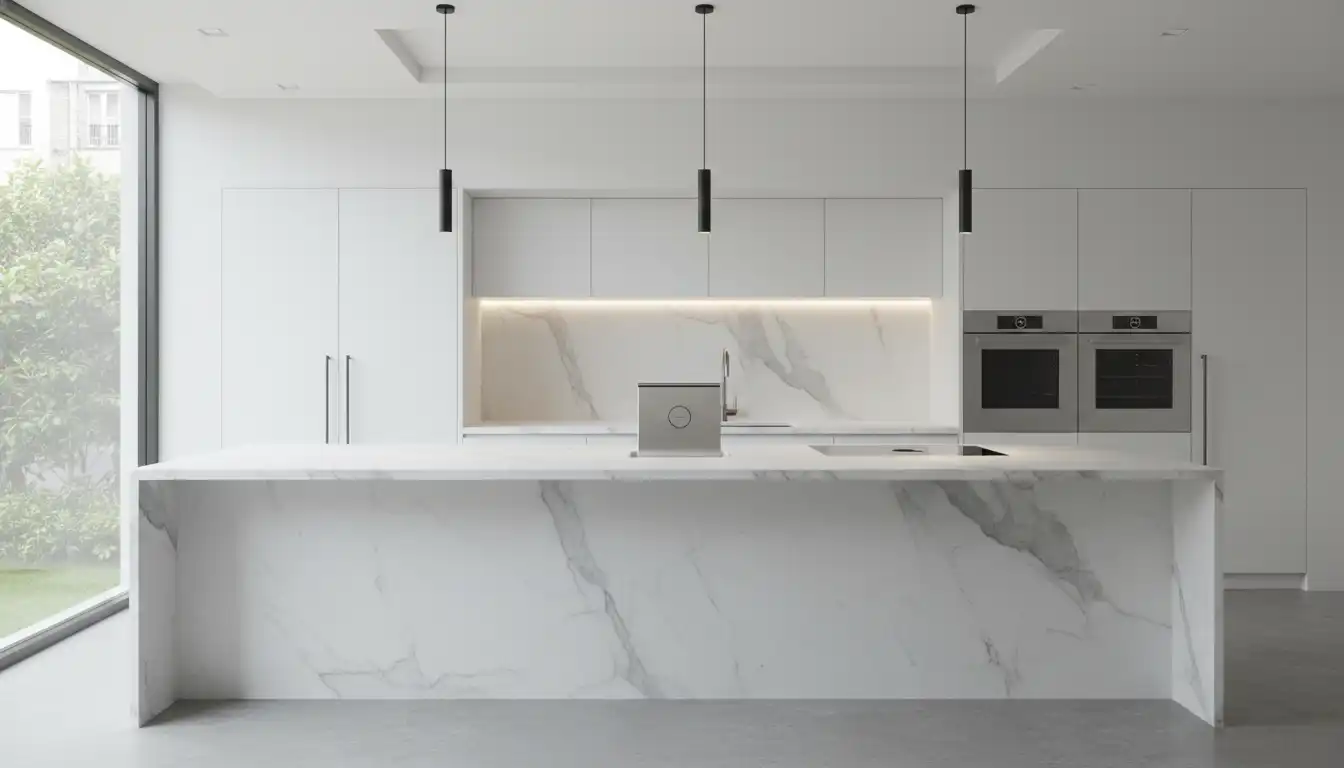
Pop-up outlets are a modern and popular solution. These units are recessed into the countertop and sit flush with the surface when not in use. A simple press causes them to elevate, revealing multiple power receptacles and often USB ports for charging devices.
Their primary advantage is their disappearing act. They provide power exactly where you need it for small appliances, then retract to restore the clean countertop line. Many models are even available with tops that can be fitted with your actual countertop material, making them virtually invisible when closed.
However, they come at a higher cost and require meticulous, precise cutting by your stone fabricator. There is also a potential for mechanical failure over time, and ensuring the unit is properly sealed against spills is paramount for safety.
Undermount Outlets & Power Strips: The Stealthy Power Source
For those who want to keep their countertop surface completely untouched, undermounting is the ultimate stealth solution. This involves placing outlets or angled power strips on the underside of the countertop overhang, typically on the seating side of the island.
This approach makes the outlets completely invisible from most sightlines, preserving the pristine look of both the top surface and the waterfall edges. It’s an excellent way to add significant functionality without any aesthetic compromise, keeping charging cables for laptops and phones neatly tucked away. This can be a great option if your design is more akin to a kitchen peninsula without seating, where one side is always hidden.
The main drawback is accessibility. Reaching under the overhang can be less convenient than having an outlet right on the work surface. Furthermore, some local codes may not count outlets placed under a deep overhang as meeting the requirement for serving the countertop, so it’s essential to verify with your electrician.
Flush-Mount Outlets: The Integration Game
The pinnacle of integrated design is the flush-mount outlet. Unlike standard outlets, these systems are designed to be installed perfectly level with the surrounding surface. High-end systems can be plastered, tiled, or even set into stone for a truly seamless appearance.
This is the choice for design purists. When paired with a cover plate that is custom-painted or made from the same material as the island, the outlet almost vanishes into the waterfall side. It is a subtle, sophisticated solution that respects the integrity of the material.
The challenge with flush-mount outlets is the complexity and cost of installation. They require a skilled installer and close coordination with your stone fabricator. Achieving a perfect color match on the cover plate is also a critical step that demands attention to detail.
Choosing the Right Outlet: A Comparison Table
To simplify the decision, here is a direct comparison of the most common solutions for a waterfall island. Consider your priorities—be it budget, aesthetics, or convenience—to determine the best fit for your project.
| Outlet Type | Best For | Average Cost (Installed) | Pros | Cons |
|---|---|---|---|---|
| Pop-Up Outlet | Maximum convenience and a modern, tech-forward look. | $300 – $600+ | Sits flush when closed; provides power on the work surface; often includes USB ports. | Expensive; requires precise stone cutting; potential for mechanical wear; spill concerns. |
| Undermount Power Strip | Preserving a completely clean countertop and waterfall edge. | $150 – $350 | Completely hidden; provides multiple outlets; keeps cords tucked away. | Less convenient to access; may not meet code for countertop service in all areas. |
| Flush-Mount Outlet | Achieving the most seamless and integrated aesthetic on the island side. | $250 – $500+ | Can be perfectly matched to the surface; minimalist and high-end appearance. | Complex installation; requires expert coordination; can still be visible. |
| Color-Matched Standard Outlet | Budget-conscious projects where a side outlet is acceptable. | $130 – $300 | Most affordable option; simple installation. | Visually disrupts the waterfall edge; can look cheap if not well-matched. |
Critical Installation Mistakes That Can Ruin Your Island
Choosing the right product is only half the battle. The execution of the installation is what truly determines success or failure. Even the most expensive pop-up outlet will look terrible if installed poorly.
Failing to Plan Before Countertop Fabrication
This is the single most important piece of advice. The decision on what type of outlets you are using and their exact locations must be finalized before your stone fabricator makes the first cut. Templating for a waterfall island is a precise process, and retrofitting an outlet hole is often impossible or risks cracking the slab.
Discuss the outlet specifications with your fabricator and electrician together. They need to coordinate on the exact cutout dimensions, the thickness of the stone, and the clearance required behind it. Last-minute changes are a recipe for disaster.
Ignoring the Cabinetry and Interior Structure
An outlet doesn’t just exist on the surface; it requires space and support inside the island. A pop-up outlet needs significant vertical clearance to retract, meaning it cannot be placed above a drawer or certain appliances. A flush-mount box on the side needs to be anchored securely to the island’s framing.
Ensure your kitchen designer or cabinet maker accounts for the internal space needed for your chosen electrical solution. Failing to do so can lead to conflicts where a drawer won’t close or there’s no solid material to mount the electrical box to, requiring costly modifications on-site.
Beyond the Basics: Future-Proofing Your Island’s Functionality
A truly modern kitchen island should anticipate future needs. As our reliance on technology grows, so does our need for convenient power. Thinking beyond a standard duplex receptacle can significantly enhance your island’s usability and value.
Look for outlet solutions that incorporate both USB-A and USB-C charging ports. USB-C is the emerging standard for fast charging laptops, tablets, and phones, and having it built-in eliminates the need for bulky adapters. This small feature makes an island instantly more practical for everything from kids doing homework to adults working from home.
Another forward-thinking technology is integrated wireless charging. Special Qi charging modules can be installed invisibly beneath the stone surface. This allows you to simply place your compatible smartphone on a designated spot on the counter to charge, offering the ultimate in clean, cord-free convenience. While design trends evolve and you might one day wonder are two-tier kitchen islands outdated, integrated technology will always be in style.
The Final Word on Powering Your Waterfall Island
Integrating outlets into a waterfall island is a design challenge that demands careful planning and a commitment to detail. The key is to treat the electrical components not as an afterthought but as an integral part of the design from day one. By collaborating closely with your designer, fabricator, and electrician, you can select a solution that is both compliant and beautiful.
Whether you choose the high-tech convenience of a pop-up outlet, the complete discretion of an undermount strip, or the seamless look of a flush-mounted receptacle, the right choice will protect your investment. You can achieve a kitchen centerpiece that delivers the stunning form you desire and the essential function you need, with no compromises.
