
Outdoor Kitchen Under Covered Patio: Avoid These 5 Costly Mistakes!
An outdoor kitchen under a covered patio sounds like the ultimate backyard upgrade. It promises idyllic evenings grilling for friends and family, rain or shine. But this dream can quickly sour, turning into a frustrating and expensive ordeal if planned incorrectly. The very cover that offers protection creates a unique set of problems that most homeowners fail to anticipate.
Many find themselves battling stubborn grease stains on their beautiful new ceiling, or constantly dodging plumes of smoke that refuse to escape. Without proper planning, an expensive investment can become a hazardous, grimy, and unpleasant space to be in. This guide illuminates the hidden challenges and provides the expert solutions you need to build the perfect covered outdoor kitchen without the costly regrets.
You'll Learn About
The Hidden Dangers: Why Your Covered Patio Can Ruin Your Outdoor Kitchen
A roof over your grill is a game-changer, but it also traps elements that would otherwise dissipate into the open air. Understanding these challenges is the first step toward a successful design. From air quality to material decay, the covered environment demands a specialized approach.
The Smoke & Grease Trap: A Recipe for Disaster
The most immediate and dangerous issue with a covered outdoor kitchen is inadequate ventilation. An open-air grill allows smoke, grease, and harmful gases like carbon monoxide to drift away. A roof, however, traps them directly in the cooking and entertaining space. This isn’t just unpleasant; it’s a significant safety hazard.
Without a powerful, properly installed vent hood, smoke will billow and linger, irritating eyes and lungs. More insidiously, a fine layer of grease will accumulate on every surface: the ceiling, furniture, countertops, and flooring. This buildup is not only difficult to clean but also creates a serious fire risk.
Moisture & Mold: The Silent Destroyers
A covered patio provides shelter from rain, but it can also trap humidity and prevent surfaces from drying out quickly. Rain driven by wind, condensation from temperature changes, and steam from cooking all introduce moisture that struggles to escape. This creates the perfect breeding ground for mold and mildew, which can compromise air quality and cause health issues.
Furthermore, prolonged dampness can wreak havoc on building materials. Wood can warp and rot, porous stone countertops can stain and weaken, and metal appliances and hardware can corrode much faster than they would in a dry, open environment. Even outdoor-rated materials can fail prematurely if they are constantly damp.
The Utility Nightmare: Planning for Power, Gas, and Water
Underestimating the complexity and cost of running utilities is a frequent pitfall. An outdoor kitchen often requires dedicated electrical circuits for refrigerators, lighting, and outlets; gas lines for the grill; and plumbing for a sink. Trenching and running these lines from the house to the patio is a significant undertaking that requires licensed professionals and adherence to local building codes.
Failing to plan your utility layout from the beginning is a critical error. Deciding to add a sink or an under-counter refrigerator after the patio is built can lead to expensive and disruptive work, like cutting into finished concrete or stone. Thoughtful planning ensures all necessary lines are installed correctly and safely before the first cabinet is set.
The Ultimate Solution: Designing a Flawless Covered Outdoor Kitchen
Building a successful outdoor kitchen under a covered patio hinges on addressing the core challenges of ventilation, moisture, and utilities head-on. With the right strategies and materials, you can create a space that is safe, durable, and beautiful for years to come.
Investing in the right solutions from the start will save you countless headaches and expenses down the road. It transforms your project from a potential liability into a valuable and enjoyable home asset.
Mastering the Air: Your Ultimate Ventilation Guide
Proper ventilation is non-negotiable in a covered outdoor kitchen. The single most important appliance you will purchase is a high-quality, outdoor-rated vent hood. Do not attempt to use an indoor hood; they are not designed to handle the grease output of a grill or withstand the outdoor elements.
Look for a vent hood with a high CFM (Cubic Feet per Minute) rating, typically 1200 CFM or higher, to effectively capture and exhaust smoke and heat. The hood should also be at least six inches wider than your grill’s cooking surface to ensure complete coverage. Professional installation is crucial to ensure it is mounted at the correct height and vented properly to the outside.
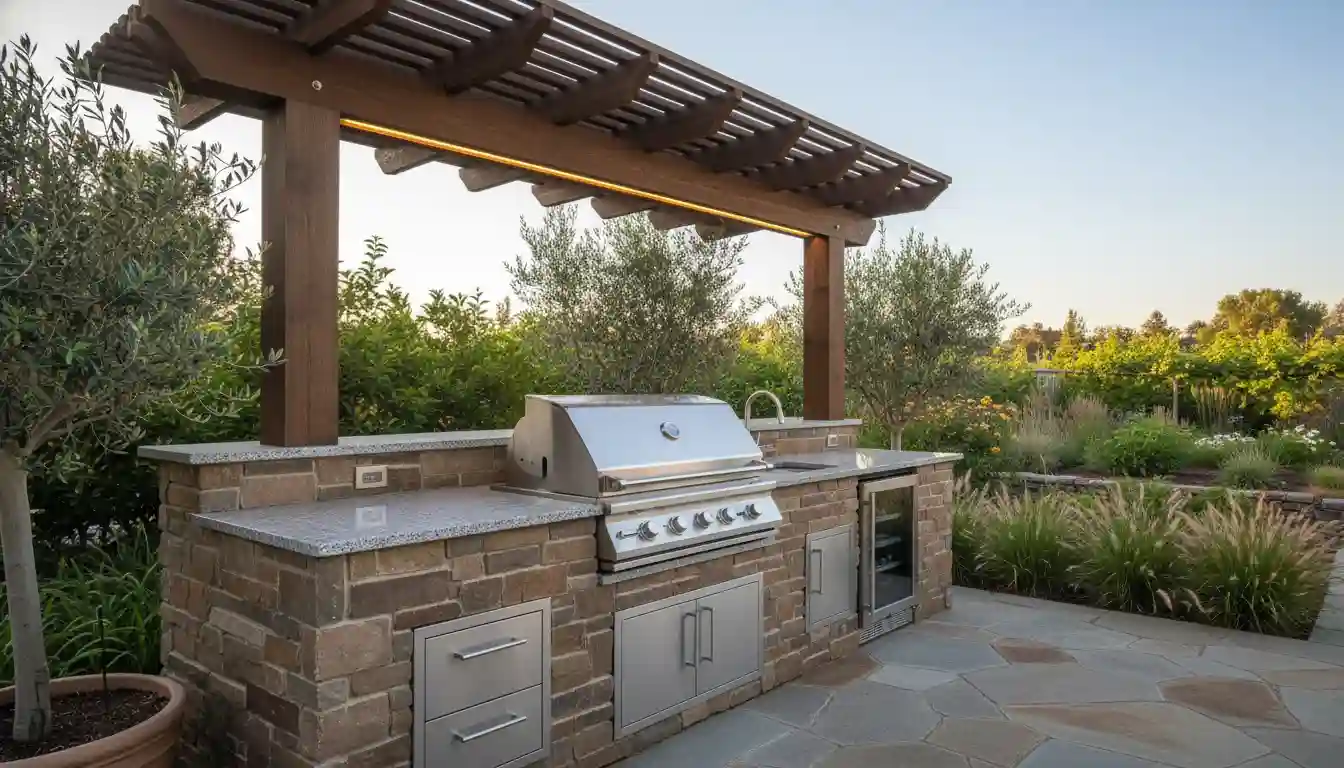
Choosing Invincible Materials: The Foundation of Longevity
The materials you choose are your primary defense against moisture and wear. Every surface, from the cabinets to the flooring, must be rated for outdoor use and capable of handling the specific challenges of a covered, humid environment. Making smart material choices is essential for creating a low-maintenance and long-lasting space.
For cabinetry, options like marine-grade polymer (HDPE) and powder-coated stainless steel are excellent choices as they are completely waterproof and will not warp, rust, or fade. When it comes to countertops, non-porous materials are key. While granite is a popular choice, it requires regular sealing to prevent staining and moisture absorption. Materials like quartzite and Dekton offer superior durability and resistance to stains, heat, and UV rays without the need for sealing. For a large preparation space, consider how a seamless kitchen island could elevate the functionality and aesthetics of your outdoor setup.
Your flooring must be durable, slip-resistant, and easy to clean. Concrete pavers, natural stone like travertine, and porcelain tiles are all fantastic, hard-wearing options that can withstand heavy foot traffic and exposure to the elements.
Material Comparison for Covered Outdoor Kitchens
Choosing the right combination of materials is critical for the longevity and performance of your kitchen. This table compares popular options for key components, focusing on their suitability for a covered, and potentially damp, environment.
| Component | Top Material Choice | Key Benefits | Considerations |
|---|---|---|---|
| Countertops | Quartzite or Dekton | Non-porous, highly resistant to stains, heat, and UV fading. No sealing required. | Higher initial cost compared to granite. |
| Cabinets | Marine-Grade Polymer (HDPE) | 100% waterproof, will not warp or rot, easy to clean, UV stable. | Can be more expensive than stainless steel; aesthetic is modern. |
| Appliances | 304-Grade Stainless Steel | Industry standard for durability and corrosion resistance. | Requires regular cleaning to maintain appearance; can get hot in direct sun. |
| Flooring | Porcelain Pavers | Extremely durable, non-porous, slip-resistant, and available in many styles. | Can be more expensive than concrete; professional installation recommended. |
Smart Utility Planning: Powering Your Outdoor Oasis
A successful outdoor kitchen project starts with a detailed utility plan created in coordination with your contractor before any construction begins. This plan should map out the exact location of every appliance and feature to ensure that gas, water, and electrical lines are stubbed up in the correct places. For your cooking appliances, a thorough comparison of options, similar to a Bosch vs KitchenAid wall oven analysis for an indoor kitchen, can help you finalize your layout and utility needs.
All electrical outlets must be GFCI-protected (Ground Fault Circuit Interrupter) to prevent electrical shock in a wet environment. Plan for more outlets than you think you need to power blenders, speakers, or phone chargers. For plumbing, ensure your plan includes winterization steps, such as shut-off valves and drainage points, to prevent pipes from freezing and bursting in colder climates.
Illuminating Your Space: A Layered Lighting Strategy
Good lighting is essential for both the functionality and ambiance of your covered outdoor kitchen. A solid roof will make the area dark, so a multi-layered lighting plan is necessary. Start with ambient lighting for overall illumination.
Recessed ceiling lights are a great choice for a clean, modern look. Next, add task lighting directly over the primary work zones. Under-cabinet LED strips are perfect for illuminating countertops for food prep, while a dedicated light over the grill is crucial for cooking after dark. Finally, consider accent lighting, like wall sconces or uplighting on stone features, to create a warm and inviting atmosphere for entertaining.
Beyond the Basics: Elevating Your Covered Outdoor Kitchen
Once you have the foundational elements of ventilation, materials, and utilities planned, you can focus on the features that will make your space truly exceptional. Proper maintenance and thoughtful design choices will ensure your investment remains a source of enjoyment for years to come.
These finishing touches are what separate a basic setup from a truly luxurious and functional outdoor living area.
Future-Proofing and Maintenance
An outdoor kitchen is constantly exposed to the elements, even when covered. Regular maintenance is key to protecting your investment. Create a simple annual checklist: deep clean all appliances, inspect gas lines and electrical connections, and re-apply sealant to porous stone countertops or grout if needed.
Using high-quality, weather-resistant covers for your grill and furniture during the off-season provides an extra layer of protection against moisture, dust, and debris. This simple step can significantly extend the life and appearance of your outdoor assets, ensuring they are ready to go when the warm weather returns.
Conclusion: Build it Right, Enjoy it for a Lifetime
An outdoor kitchen under a covered patio is a fantastic addition to any home, offering a versatile space for cooking, dining, and entertaining regardless of the weather. However, the success of this project lies in acknowledging and addressing the unique challenges posed by the covered environment.
By prioritizing powerful ventilation, selecting durable and moisture-resistant materials, meticulously planning your utility infrastructure, and designing a thoughtful lighting scheme, you can avoid the common pitfalls and costly mistakes. A well-planned kitchen will not only function flawlessly but will also stand the test of time, providing a beautiful and safe outdoor oasis for you, your family, and your friends to enjoy for many years.
