
Outdated Tile Flooring: 7 Signs It’s Killing Your Home’s Value
That tile flooring you once loved might be the single biggest thing dragging down your home’s aesthetic and value. Styles change, and what was once the height of fashion can now make an entire space feel tired and neglected.
Recognizing the signs of a dated floor is the first step toward a transformative home update. This guide will help you identify the culprits and explore modern solutions to bring your home back to life.
You'll Learn About
Is Your Tile Floor Stuck in a Time Warp? The Telltale Signs
An outdated floor often affects the entire mood of a room, making it feel dark, small, or just plain old. Look for these key indicators to determine if your tile is due for an upgrade.
1. The Color Palette is a Blast from the Past
Color trends are one of the fastest-changing aspects of interior design. Was your tile installed during the era of harvest gold, avocado green, or dusty rose? These colors instantly date a home.
Even the once-popular Tuscan-inspired earth tones of the early 2000s, with their heavy reds and browns, can now feel heavy and overbearing. Modern design leans toward brighter, more neutral palettes.
2. Small Tiles with Overwhelming Grout Lines
The 4×4 or 6×6 inch square tile was a standard for decades, but today it creates a busy, grid-like pattern that can make a room feel smaller. The sheer number of grout lines is visually overwhelming.
These excessive grout lines are also a magnet for dirt and discoloration, making the entire floor look dingy no matter how much you clean. Modern aesthetics favor large-format tiles that create a more seamless, expansive look.
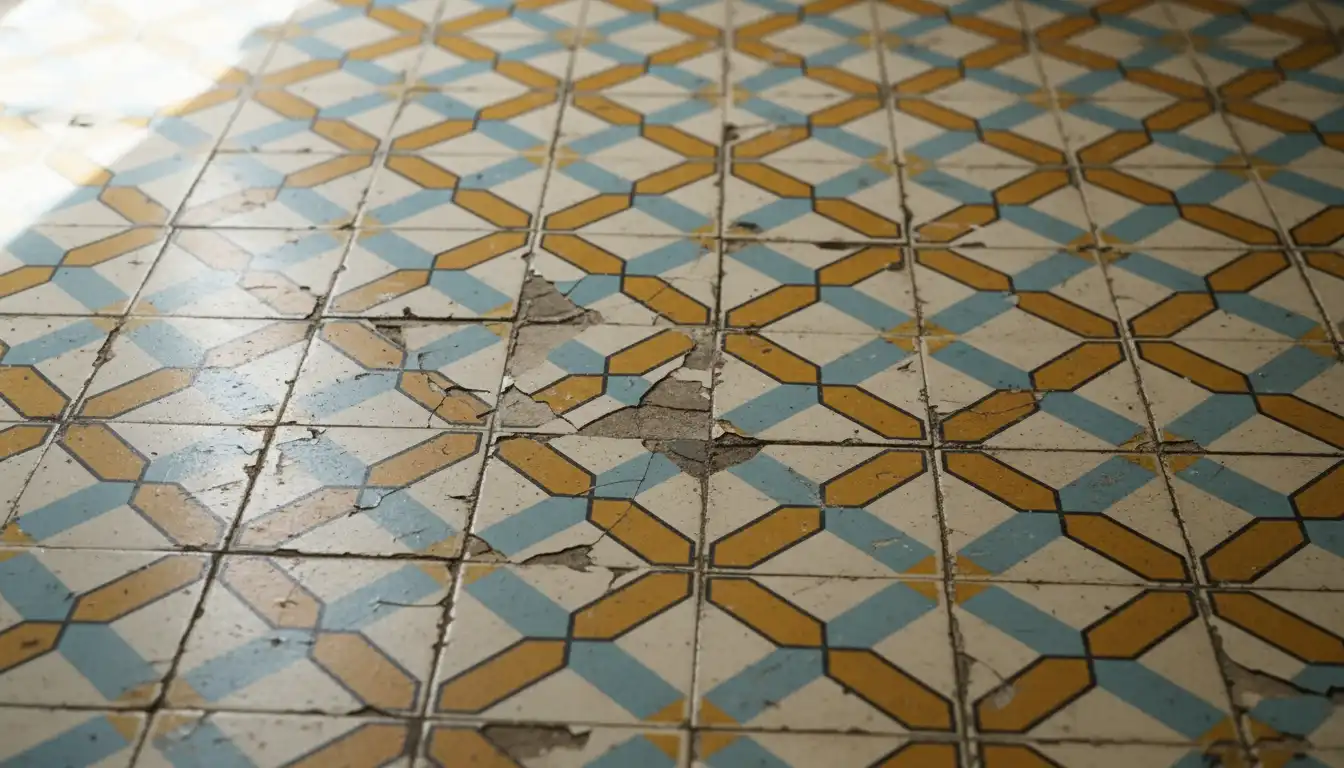
3. Busy, Intricate Patterns
Elaborate, repeating patterns, such as florals, faux-stone textures, or geometric designs from the 70s and 80s, are a major red flag. These designs were meant to be focal points but now clash with contemporary decor.
While some intricate designs, like those seen in ornate baroque styles, can be a deliberate choice, the mass-produced patterns of previous eras often lack that timeless quality. Considering a unique look? Researching something specific like baroque flooring reviews can help determine if a bold pattern is a timeless statement or a fleeting trend.
4. High-Gloss Finish Overload
The ultra-shiny, high-gloss ceramic tile that was popular for years is now often seen as a dated choice. This finish not only shows every smudge and footprint but can also create a harsh glare.
Today’s preferred finishes are more nuanced, including matte, honed, and satin sheens. These options offer a more sophisticated, soft appearance that complements modern furnishings.
The Hidden Costs of Hanging On to Old Tile
Beyond pure aesthetics, that outdated tile flooring can have tangible negative impacts on your home and finances. It’s more than just an eyesore; it’s a liability.
It Actively Lowers Your Resale Value
For potential homebuyers, an outdated floor signals one thing: an immediate and expensive project. It’s a major turn-off that can lead to lower offers or cause buyers to walk away entirely.
Kitchens and bathrooms are critical selling points, and a dated floor in these areas can make the entire space feel like a gut renovation is necessary. Upgrading the floor is one of the most effective ways to boost perceived value.
Maintenance Becomes a Losing Battle
Older tile and grout can be a nightmare to maintain. Decades of ingrained dirt, stained grout, and hairline cracks in the tiles themselves are common issues.
The surface of older ceramic tiles may have worn down, making them more porous and susceptible to staining. Furthermore, if you have a cracked tile, you’ll quickly discover a new problem: it’s incredibly difficult to find a match for discontinued styles.
It Creates a Design “Domino Effect”
Outdated flooring can hold your entire home’s decor hostage. You might find yourself trying to decorate “around” the floor, choosing paint colors, furniture, and cabinets that don’t clash with the tile.
This domino effect prevents you from achieving a truly modern and cohesive look. Instead of being a neutral foundation, the floor dictates every other design choice, limiting your options.
Your Modernization Blueprint: Smart Solutions for Dated Tile
You’ve identified the problem, now it’s time for the solution. Thankfully, you have several options ranging from a complete overhaul to budget-friendly cosmetic fixes.
The Ultimate Fix: Complete Removal and Replacement
Tearing out the old tile and starting fresh is the most effective way to modernize your space. This approach guarantees a professional, lasting result and allows you to address any underlying subfloor issues.
This is your chance to install modern, large-format porcelain tiles, luxury vinyl plank (LVP), or engineered hardwood for a truly timeless look. Using a digital tool can be a massive advantage here; a good flooring layout software can help you visualize patterns and minimize waste before you even start.
Budget-Friendly Transformation: Painting Your Tile
For those on a tight budget, painting tile is a viable and impactful option. When done correctly, it can completely transform the look of a room for a fraction of the cost of replacement.
The key is meticulous preparation. The process involves deep cleaning, light sanding, applying a high-adhesion primer, and then using a durable paint specifically designed for floors, like an epoxy paint. A top coat of polyurethane is crucial for longevity.
The Quick Cover-Up: Installing a Floating Floor
One of the most popular solutions is to install a floating floor directly over the existing tile. Materials like Luxury Vinyl Plank (LVP) and laminate are perfect for this.
This method avoids the messy and labor-intensive demolition process. However, you must ensure the existing tile floor is level and stable. The added height can also create issues with door clearances and transitions to other rooms.
Focusing on the Details: Grout Renewal
Sometimes, the tiles themselves are a neutral color, but the wide, dirty grout is the real problem. In these cases, focusing on the grout can be a game-changer.
You can use a heavy-duty grout cleaner to try and restore the original color. If that fails, a grout colorant or stain can be applied to paint the grout lines a fresh, consistent color. For a more permanent fix, you can have the old grout removed and replaced entirely.
Comparing Your Tile Modernization Options
Choosing the right path depends on your budget, timeline, and DIY comfort level. This table breaks down the key considerations for each method.
| Solution | Average Cost (per sq. ft.) | Durability | DIY-Friendliness | Impact Level |
|---|---|---|---|---|
| Full Replacement | $15 – $25+ | Very High | Low (Professional Recommended) | Transformational |
| Painting Tile | $1 – $3 | Low to Medium | High | High (Cosmetic) |
| Floating Floor Over Tile | $5 – $10 | High | Medium to High | Very High |
| Grout Renewal | $0.50 – $2 | Medium | High | Medium |
The Common Dilemma: The Single Broken Tile
What happens when your floor is generally in good shape, but you have one or two cracked tiles that are impossible to replace? This is a frustrating but common issue with older floors.
This exact scenario is why so many homeowners ask what to do when you can’t match floor tiles. Instead of a fruitless search for a vintage match, consider creating a deliberate accent, like a small mosaic, or strategically placing a piece of furniture or a rug over the damaged area as a temporary fix.
Choosing Timeless Tile to Avoid Future Regret
When you do decide to upgrade, the goal is to choose a style that will last for decades, not just a few years. Avoid falling into the trap of trendy patterns or colors that will quickly become the “outdated tile” of tomorrow.
Embrace Natural and Neutral
Tiles that mimic natural materials like stone, concrete, or wood are always a safe and sophisticated bet. Their inherent variations and neutral color palettes provide a versatile foundation that works with any decor style.
Look for porcelain tiles with subtle veining or a limestone-like texture. These materials offer the beauty of natural stone without the high maintenance.
Think Big with Large-Format Tiles
The single most effective way to ensure your new floor looks modern and spacious is to use large-format tiles. Tiles that are 12×24, 24×24, or even larger create fewer grout lines.
This seamless look not only makes a room feel bigger but also means less grout to clean. It’s a practical and aesthetic choice that has become the new standard in flooring design.
Stick to Classic Shapes
While trendy shapes can be tempting, classic rectangular and square tiles have stood the test of time for a reason. They provide a clean, uncluttered canvas for the rest of your room.
If you want to add visual interest, do it with the layout rather than a trendy tile shape. A herringbone or brick-lay pattern using classic subway tiles, for example, is a timeless look that adds sophistication without feeling dated.
Conclusion: A New Floor is a New Beginning
Your flooring is the foundation of your home’s design. Letting outdated tile dictate your style and lower your home’s value is a choice you don’t have to make.
By identifying the signs of a dated floor and understanding your options—from budget-friendly refreshes to a full replacement—you can make an informed decision that will revitalize your space. An investment in modern, timeless flooring is an investment in your home’s future and your daily enjoyment.
