Ostrich Fern vs Lady Fern: Which Is Right for Your Garden?
Choosing the perfect fern for a shade garden often feels like a delightful yet daunting task. You envision lush, green fronds creating a cool, woodland oasis, but you’re faced with countless options that, at first glance, look remarkably similar. This confusion is a common problem for gardeners, leading to choices that might not fit their space or maintenance style. Two of the most popular and beautiful contenders, the Ostrich Fern and the Lady Fern, frequently cause this exact dilemma.
While both bring texture and elegance to shady spots, their fundamental differences in size, growth habit, and even edibility can mean the difference between a garden that thrives and one that creates unforeseen challenges. Making the wrong selection can lead to an aggressive plant taking over a meticulously planned border or a delicate specimen getting lost in a vast landscape. Understanding these distinctions is the key to unlocking your garden’s true potential.
You'll Learn About
Unmasking the Contenders: Key Differences at a Glance
Before diving into the intricate details, a side-by-side comparison can quickly illuminate the core differences between these two garden favorites. This table highlights the essential characteristics that will guide your decision-making process, ensuring you select the fern that aligns perfectly with your garden’s needs and your personal aesthetic.
| Feature | Ostrich Fern (Matteuccia struthiopteris) | Lady Fern (Athyrium filix-femina) |
|---|---|---|
| Mature Size | 3-6 feet tall, 5-8 feet wide | 1-3 feet tall, 1-3 feet wide |
| Frond Appearance | Large, bold, resembles ostrich plumes; has separate, shorter fertile fronds | Delicate, lacy, feathery, tapering at both ends |
| Growth Habit | Spreading; forms large colonies via underground rhizomes | Clumping; grows from a central point, slowly expanding outwards |
| Sunlight Needs | Partial to full shade; can burn in direct sun | Partial to full shade; more tolerant of some sun than Ostrich Fern |
| Soil Preference | Consistently moist, rich, slightly acidic soil | Moist, rich soil; more tolerant of drier conditions than Ostrich Fern |
| Hardiness Zones | 3-7 | 4-8 |
| Key Feature | Produces edible fiddleheads; aggressive spreader | Graceful appearance; well-behaved clumper with many cultivars |
The Majestic Ostrich Fern: A Detailed Profile
The Ostrich Fern, Matteuccia struthiopteris, is a true giant of the shade garden, celebrated for its dramatic height and the bold texture of its fronds. It brings an untamed, prehistoric feel to the landscape, quickly creating a lush, green backdrop.
Appearance and Identification
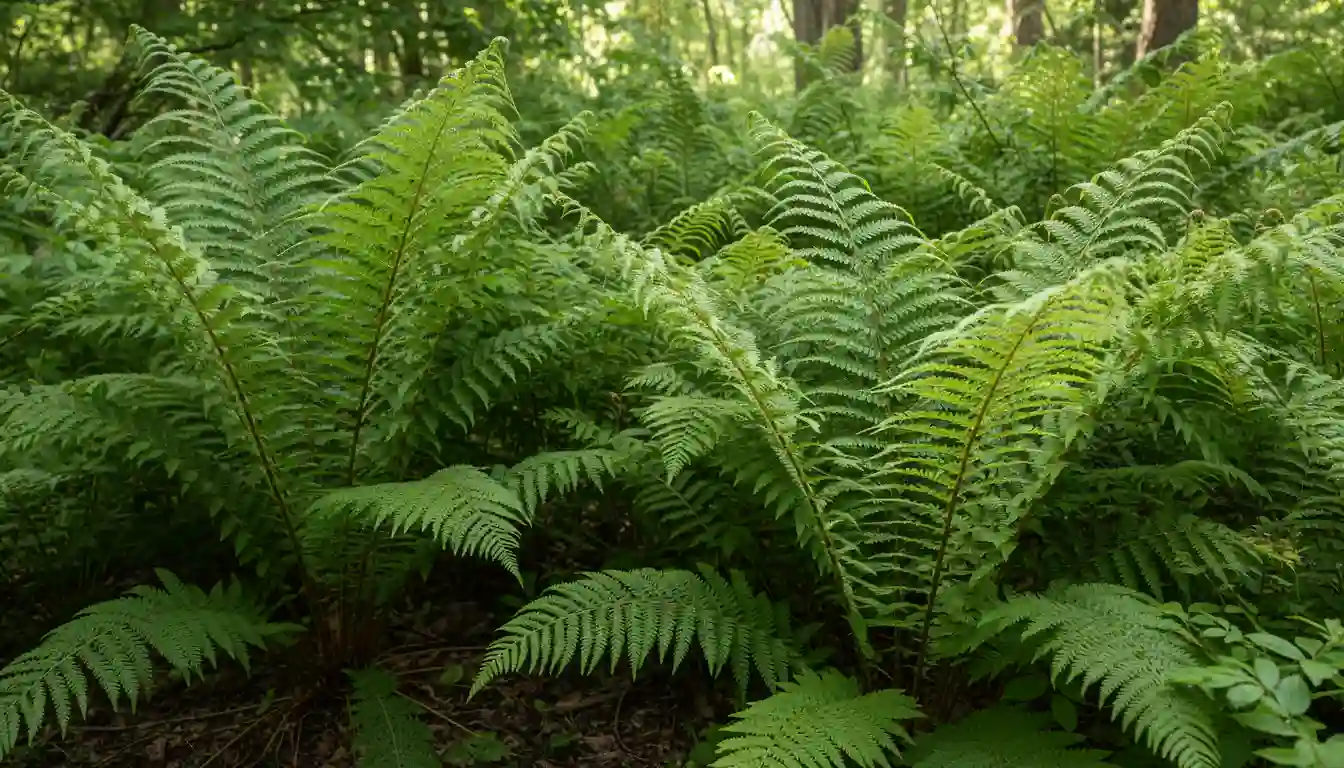
The most striking feature of the Ostrich Fern is its grand, vase-like shape, with fronds emerging from a central crown and arching outwards like the plumes of an ostrich. These sterile fronds are bright green and can reach heights of up to six feet in ideal conditions. A key identifying feature is its dimorphic nature; it produces two distinct types of fronds. In addition to the large, showy sterile fronds, it sends up shorter, stiff, dark-brown fertile fronds later in the season which persist through winter, adding structural interest to the dormant garden. The fiddleheads, or emerging fronds, are smooth with a deep, U-shaped groove on the stem and are covered in a thin, papery brown sheath.
Growth Habit: The Aggressive Spreader
Herein lies the most critical consideration for any gardener: the Ostrich Fern is an aggressive spreader. It reproduces rapidly via underground stems called rhizomes, sending up new plants and quickly forming dense colonies. This habit makes it an excellent choice for filling large, empty spaces or for naturalizing a woodland area. However, in a small or formal garden bed, it can quickly become invasive, crowding out less vigorous perennials. If you love its look but have limited space, containment strategies like installing root barriers or planting it in a large container are essential to keep it in check.
Ideal Growing Conditions
True to its native habitat along riverbanks and in moist woodlands, the Ostrich Fern thrives in consistently moist to wet, rich soil. It prefers partial to full shade, as its delicate fronds can scorch and turn brown if exposed to too much direct sun, especially in warmer climates. This fern is perfect for rain gardens, boggy areas, or shady spots that retain moisture well.
The Elegant Lady Fern: A Graceful Alternative
For gardeners seeking a more refined and manageable fern, the Lady Fern, Athyrium filix-femina, is an exceptional choice. Its delicate beauty and versatile nature have made it a staple in shade gardens for centuries.
Appearance and Identification
The Lady Fern presents a softer, more intricate appearance. Its fronds are lacy and feathery, with finely divided leaflets that create a light, airy texture. The fronds are typically a bright, fresh green and taper at both the top and bottom, being widest in the middle. The stems (stipes) can vary in color from green to reddish or even purple, a characteristic exploited in popular cultivars like ‘Lady in Red’. Unlike the Ostrich Fern, its fertile spores are found on the back of the green, vegetative fronds.
Growth Habit: The Well-Behaved Clumper
The Lady Fern’s greatest advantage for the average home garden is its polite, clumping growth habit. It grows from a central crown, with the clump slowly increasing in diameter over time without sending out aggressive runners. This makes it a predictable and easy-to-manage plant, perfect for mixed perennial borders, foundation plantings, or any situation where you want a fern that stays exactly where you put it. While it will form small colonies over many years, it is not considered aggressive.
Ideal Growing Conditions
The Lady Fern is notably more adaptable than the Ostrich Fern. While it performs best in moist, rich, well-drained soil in partial shade, it is more tolerant of sun and drier soil conditions once established. This versatility makes it a reliable choice for a wider range of garden situations, from the deep shade of a north-facing wall to areas that receive some morning sun.
Head-to-Head: Solving Your Garden Dilemma
Now, let’s directly address the central question: which fern should you plant? The answer depends entirely on your space, goals, and willingness to perform maintenance.
For the Grand, Naturalistic Garden: Choose the Ostrich Fern
If your goal is to create a lush, jungle-like effect or cover a large, moist, shady area quickly, the Ostrich Fern is your solution. It excels at creating a tall, verdant backdrop for other shade lovers like hostas and astilbes. Its height and bold texture provide a dramatic impact that few other hardy ferns can match. Just remember, this is a plant you manage, not just plant. Be prepared to control its spread unless you have acres to fill.
For the Tidy, Manicured Border: Choose the Lady Fern
If you have a smaller garden, a formal design, or a mixed border where plants need to respect their neighbors’ space, the Lady Fern is the clear winner. Its delicate texture provides a beautiful contrast to broad-leaved plants like Coral Bells and Hostas, and its non-invasive nature means you can plant it with confidence. Its manageable size also makes it a superb choice for container gardens on a shady patio. Even in winter, after it dies back, you can focus on other tasks like preparing for snow with a reliable machine, perhaps comparing Craftsman vs Ariens snowblower models, knowing your garden beds are safe from underground invasion.
Beyond the Basics: Advanced Care and Originality
Both ferns are remarkably low-maintenance, resistant to most pests and diseases, and are generally not favored by deer or rabbits. However, a few advanced tips can elevate their health and appearance from good to spectacular.
A Focus on Soil Acidity and Frond Vibrancy
While both ferns tolerate a range of soil pH, they achieve their most vibrant, deep green coloration in slightly acidic soil, mimicking a natural woodland floor. An optimal pH between 5.0 and 6.5 allows for the most efficient nutrient uptake. If your ferns appear pale or yellowish despite adequate moisture, a simple soil test might be revealing. Amending the soil with organic matter like compost, peat moss, or pine bark mulch can gently lower the pH over time, unlocking the nutrients that produce intensely colored, healthy fronds. This subtle adjustment can make a significant visual impact.
Managing Moisture In and Out of the Garden
Consistent moisture is key for fern health, especially for the water-loving Ostrich Fern. However, “moist” does not mean “waterlogged,” as poor drainage can lead to root rot. Ensuring good soil structure is vital. While managing moisture in the garden is a seasonal task, it’s a year-round concern inside the home. Unaddressed plumbing issues can cause significant damage; for example, it’s critical to deal with problems like an open sewer pipe in the basement immediately to prevent far more serious consequences for your home’s foundation and air quality.
Bringing the Woodland Vibe Indoors
The beauty of a lush fern garden can inspire interior design choices. The natural textures and patterns of fronds can be echoed indoors through fabrics and art. This biophilic design approach, connecting indoor spaces with nature, can even extend to architectural elements. For instance, creating a feature ceiling using materials like unique 16×32 ceiling tiles can mimic the dappled light filtering through a forest canopy, seamlessly blending your home and garden aesthetic.
Conclusion: Embrace the Power of the Frond
In the “ostrich fern vs lady fern” debate, there is no single winner, only the right choice for a specific garden. The Ostrich Fern is a bold, fast-growing giant perfect for large, natural spaces where its aggressive nature is an asset. The Lady Fern is a delicate, well-behaved clumper ideal for smaller, more controlled garden designs where grace and predictability are paramount.
By understanding their distinct personalities—the powerful spreader versus the elegant clumper—you can move beyond simple aesthetics and make an informed decision. You can now confidently select the perfect fern to transform your shady corner into the beautiful, thriving woodland retreat you’ve always envisioned.