
Old Montgomery Ward Tiller: Resurrect a Garden Legend?
In a dusty corner of a barn or buried in a classified ad, you find it: an old Montgomery Ward tiller. It’s heavy, built of thick steel, and carries a name that echoes from a bygone era of American retail. The immediate question is whether this forgotten machine is a worthless piece of scrap or a powerful gardening tool waiting for a second chance.
This is the core problem for enthusiasts of vintage garden machinery. The allure of saving a classic tool is strong, but the path to restoration is often unclear. Concerns about finding parts, understanding the mechanics, and justifying the effort are all valid.
You'll Learn About
The Enduring Legacy of Montgomery Ward Tillers
Understanding the history behind these machines reveals why they command such loyalty. They represent a period when tools were built for longevity, not disposability. This inherent quality is the primary reason they are still sought after by gardeners and homesteaders today.
A Piece of American Gardening History
Montgomery Ward was a pioneering American retail company, founded in 1872. Through its famous mail-order catalog, it provided access to a vast range of products for people in rural areas. Their entry into the agricultural and garden equipment market made quality machinery accessible to the average American family.
Many of their tillers were sold under brand names like Garden Mark and Powr-Kraft. Crucially, Montgomery Ward did not manufacture these machines themselves. Instead, they partnered with established equipment makers like Gilson Brothers Company and Simplicity, rebranding their durable products. This means an old Montgomery Ward tiller often shares its DNA with other high-quality, respected brands of the era.
Why These Old Tillers Still Have a Cult Following
The appeal of a vintage Montgomery Ward tiller lies in its simplicity and durability. These machines were designed with straightforward mechanics, featuring robust cast iron gearboxes and powerful, no-nonsense engines from manufacturers like Briggs & Stratton or Tecumseh. This construction stands in stark contrast to many modern machines that rely heavily on plastic components.
Owners often report that these tillers, once restored, can outperform newer, lighter models, especially when breaking new ground or working in heavy, clay-like soil. There is also a profound sense of satisfaction in using a tool that you have brought back to life yourself—a true piece of working history.
Identifying Your Vintage Tiller: A Buyer’s Guide
Before beginning a restoration, it’s essential to know what you have. Proper identification can help you source the correct manuals, parts, and advice from the vintage gardening community. The model number is your most important clue.
Common Models and What to Look For
Montgomery Ward tillers came in various configurations, primarily front-tine and rear-tine models. The manufacturer can often be identified by a prefix on the model number tag. A “GIL” prefix indicates it was made by Gilson, “SIM” by Simplicity, and “TMO” by MTD, who produced equipment for them in later years.
Many of the most common and beloved models were made by Gilson, famous for their legendary “Iron Heart” worm drive gearbox. This robust, oil-bathed transmission is known for its incredible durability. Engines typically ranged from 3.5 to 8 horsepower, providing ample power for serious gardening tasks.
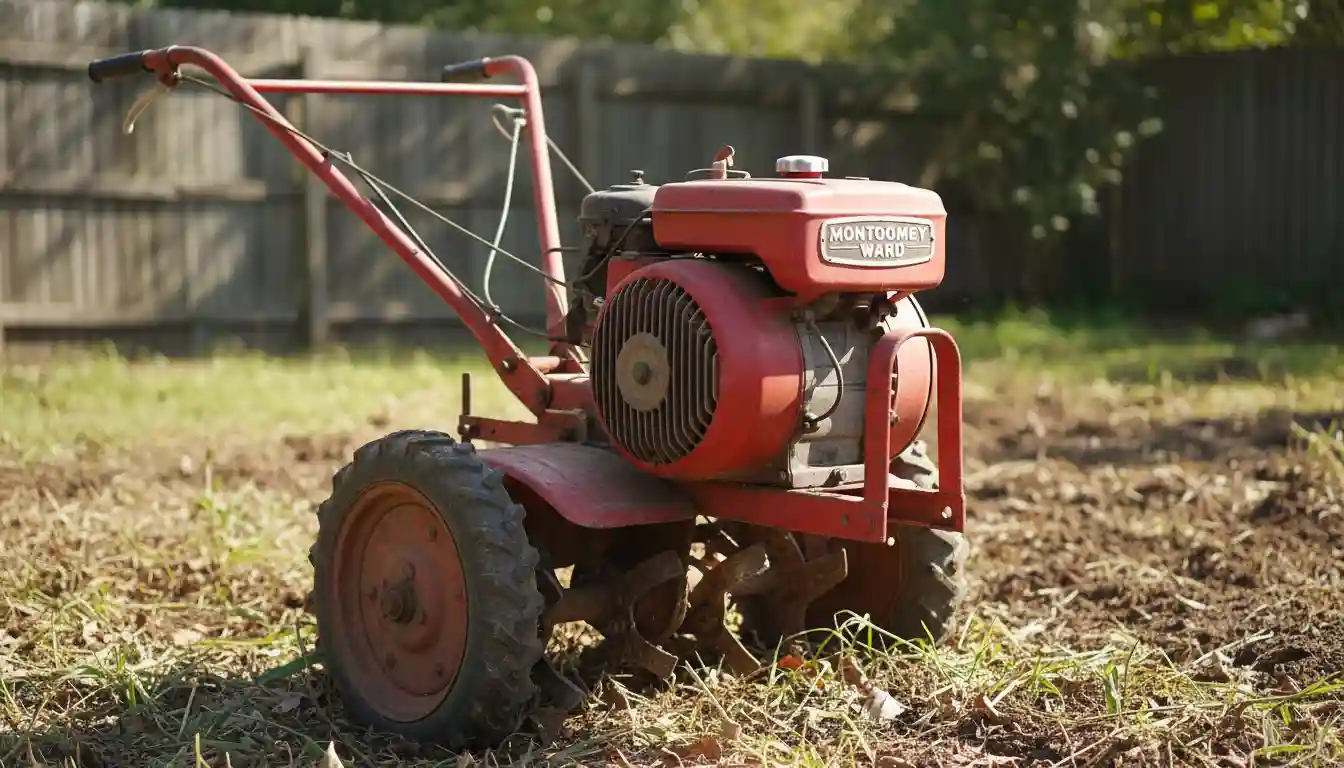
When inspecting a potential project, look for the engine manufacturer. Parts for older Briggs & Stratton and Tecumseh engines are still widely available, which can significantly simplify the restoration process.
The Pre-Purchase Inspection Checklist
Even if a tiller isn’t running, a quick inspection can reveal whether it’s a worthy project or a parts machine. First, check the engine for compression. Slowly pull the starter rope; you should feel distinct resistance as the piston compresses air. If the rope pulls with no resistance, there may be significant internal engine damage.
Next, inspect the physical structure. Look for cracks in the cast iron transmission housing or engine block. Check that all the main components are present, including the carburetor, air filter assembly, and belt guards. Finally, examine the tines for excessive wear or damage and ensure the wheels turn freely.
The Ultimate Restoration Guide for Your Montgomery Ward Tiller
Bringing an old tiller back to life is a rewarding process. By tackling it systematically—focusing on safety, the engine, the transmission, and the finish—you can turn a neglected relic into a reliable workhorse for your garden.
Safety First: Preparing Your Workspace
Before you begin, set up a clean, well-lit, and well-ventilated workspace. An organized shop is a safe shop. A comfortable workshop is a productive one, and proper ventilation is crucial when working with engines and cleaning solvents. Whether you’re exploring complex climate control options in a Mr Cool vs Pioneer analysis or simply opening a garage door, fresh air is non-negotiable.
Gather essential safety gear, including safety glasses, gloves, and a fire extinguisher. Ensure your work area is stable and uncluttered; even small issues, like making sure a corner shelf not 90 degrees is properly secured, can prevent accidents and frustration down the line.
Engine Revival: The Heart of the Machine
The engine is the logical starting point for any restoration. The fuel system is the most common point of failure on a small engine that has been sitting for a long time. Old gasoline turns to varnish, clogging the tiny passages inside the carburetor.
Start by safely draining the old fuel tank and disposing of the fuel properly. Remove and thoroughly clean the carburetor. This often involves complete disassembly and soaking the metal parts in carburetor cleaner. Replace any brittle fuel lines and install a new in-line fuel filter. Also, clean or replace the spark plug and change the engine oil.
Tine and Transmission Triage
With the engine addressed, turn your attention to the drivetrain. Inspect all the belts for cracks and wear; replacements are readily available online or at auto parts stores. Check the condition of any chains and sprockets, lubricating them as needed.
The transmission, or gearbox, is a critical component. For the common Gilson-made models, this means checking the oil level in the worm drive. These gearboxes are incredibly tough, but running them low on oil can cause catastrophic failure. If the seals are leaking, they will need to be replaced to ensure the gearbox holds oil.
The Finishing Touches: Paint and Preservation
A cosmetic restoration not only makes the tiller look great but also protects it from future rust and decay. Disassemble the tiller as much as is practical, taking photos along the way to aid in reassembly. Remove all rust and old paint from the metal parts using a wire wheel, sander, or media blaster.
Apply a coat of high-quality metal primer followed by a durable enamel paint. While finding the exact original color can be difficult, a classic red or orange often pays homage to the vintage aesthetic. Applying reproduction decals, available from online vendors, is the final step to a factory-fresh appearance.
Sourcing Parts for a Discontinued Classic
One of the biggest anxieties for restorers is finding parts for a machine that hasn’t been made in decades. Fortunately, the popularity of these tillers and the shared components they use make it easier than you might think.
Your Go-To Online Resources
Online marketplaces like eBay are invaluable resources for both new-old-stock (NOS) and used parts. Many small engine parts suppliers also carry common items like carburetor rebuild kits, belts, and ignition components. Online forums dedicated to vintage garden tractors and equipment are another fantastic resource, where experienced enthusiasts often share part numbers and advice.
A quick search will reveal vendors specializing in reproduction decals, service manuals, and even hard-to-find transmission components like bronze worm gears. Don’t underestimate the power of these dedicated online communities.
The Art of the Cross-Reference
Because Montgomery Ward used outside suppliers, many parts are not unique to their tillers. The engine parts for a Briggs & Stratton or Tecumseh engine are universal to that engine model, regardless of what machine it’s on. Bearings, seals, and belts are often standard sizes that can be found at industrial supply houses.
Learning how to use the model and serial numbers from the engine and the tiller itself to cross-reference parts is a key skill. This allows you to search for parts under the original manufacturer’s name (like Gilson) rather than just Montgomery Ward, greatly expanding your options.
| Component | Common Issue | Troubleshooting Step | Potential Solution |
|---|---|---|---|
| Engine | Won’t start / Runs poorly | Check for spark and fuel delivery | Clean carburetor, replace spark plug, check ignition points |
| Carburetor | Leaking gasoline | Inspect float needle and seat | Install carburetor rebuild kit, replace float if necessary |
| Drive System | Tines won’t engage | Inspect drive belts and engagement lever | Replace worn or broken belts, adjust cable tension |
| Transmission | Grinding noise / Leaking oil | Check gear oil level and condition | Replace oil seals, inspect worm gear for damage |
| Starter Rope | Rope won’t retract | Inspect recoil spring assembly | Clean and lubricate spring, or replace the entire assembly |
| General Operation | Excessive vibration or bouncing | Check tine condition and balance | Clean debris from tines, replace bent or broken tines |
Beyond Tilling: Is a Vintage Tiller Worth It in the Modern Garden?
After the restoration is complete, the final question remains: was it worth the effort? For many, the answer is a resounding yes. These machines offer a unique combination of performance, durability, and satisfaction that is hard to find in modern equipment.
Performance vs. Modern Machines
An old, heavy-duty Montgomery Ward tiller often excels at breaking new ground. Its sheer weight helps the tines dig deep into compacted soil, whereas lighter modern tillers tend to bounce around on the surface. They are powerful tools for primary tillage in the spring and incorporating large amounts of compost or amendments into the soil.
Where they may fall short is in maneuverability and ease of use. They are heavy machines that require some physical strength to operate. For light cultivation between established garden rows, a smaller, more modern cultivator might be a more convenient choice.
The Sustainability and Satisfaction Factor
Restoring an old piece of equipment is an inherently sustainable act. You are preventing a large piece of steel and iron from ending up in a landfill and avoiding the resource consumption associated with manufacturing a new machine. It’s a practical application of the “reduce, reuse, recycle” philosophy.
Beyond the practicalities, there is immense pride in using a tool you saved and restored. It connects you to a history of American manufacturing and self-sufficiency. After a long day of turning soil with a machine you brought back from the brink, the simple comforts of home, like deciding whether to use pillows on dining room chairs for added comfort, feel especially well-deserved.
Final Thoughts on a Garden Legend
An old Montgomery Ward tiller is more than just an antique. It is a link to a time when quality and durability were paramount. While the restoration process requires patience and effort, the reward is a powerful, reliable gardening tool that can last another lifetime.
If you have the space, the mechanical inclination, and an appreciation for vintage quality, do not hesitate to rescue one of these legends. It is a project that will pay dividends in your garden for many years to come.
