
Off Center Bed Placement: Your #1 Guide to a Stunning Room
That one, unbreakable rule of bedroom design. You know the one. The bed must be centered on the main wall.
But what if your room’s architecture fights back? An awkwardly placed window, a door that swings right into your ideal layout, or a room that’s just too narrow can make centering the bed impossible. This can leave you feeling like you’ve made a design mistake before you’ve even started.
The truth is, perfect symmetry is often boring and impractical. An off-center bed placement isn’t a design flaw; it’s a high-impact opportunity to create a dynamic, functional, and visually stunning bedroom that breaks the mold.
You'll Learn About
Why Perfect Symmetry Is a Myth (And Why Off-Center Works)
The belief that a bed must be centered stems from a traditional desire for formal balance. This works well in large, perfectly proportioned rooms, but most homes have quirks and imperfections that demand more creative solutions.
Embracing asymmetry allows you to design for the room you actually have, not the one you wish you had. It’s about creating visual balance, where different elements work together to feel harmonious, even if they aren’t mirror images of each other.
The Real Reasons Your Bed Can’t Be Centered
Sometimes, an off-center bed is the only logical choice. Understanding the root cause helps you find the perfect solution.
Architectural Hurdles: Often, the house itself makes the decision for you. This includes off-center windows, closets, or doors on the main wall that prevent symmetrical furniture placement.
Maximizing Small Spaces: In a compact bedroom, pushing the bed against a wall or into a corner can be the single best way to free up precious floor space for walking paths and other furniture.
Creating Functional Zones: An asymmetrical layout can open up enough space to create a dedicated reading nook, a small home office area, or a vanity station, making your bedroom a multi-functional retreat.
The Secret to Asymmetrical Balance: Visual Weight
The key to mastering off-center bed placement is understanding the concept of visual weight. This refers to the perceived “heaviness” of an object in your design. A large, dark bed has a lot of visual weight.
Your goal is not to mirror the bed on the other side of the room. Instead, you need to balance its heavy presence with other items that, when combined, create an equal sense of importance on the other side. This creates a feeling of intentionality, turning a potential problem into a sophisticated design choice.
Think of it like a seesaw. A large person on one end can be balanced by two smaller people on the other. In your bedroom, the bed is the large person, and you’ll use art, lighting, and furniture as the smaller counterweights.
How to Style an Off-Center Bed: A Step-by-Step Guide
Making an off-center bed look deliberate and stylish is a matter of strategic decorating. Follow these steps to achieve a balanced and beautiful result.
Step 1: Create a Strong Anchor
First, give the bed a strong focal point so it doesn’t look like it’s just floating in an awkward position. This anchor grounds the bed and announces that its placement is on purpose.
You can achieve this with a prominent headboard, painting an accent color on the wall behind the bed, or hanging a large piece of artwork directly above it. This creates a visual destination for the eye.
Step 2: Balance with Nightstands and Surfaces
Forget matching nightstands. Asymmetry is your friend here. The goal is to balance the visual weight of the bed and the one nightstand next to it.
If your bed is pushed to one side, you’ll have a nightstand on one side and a larger open space on the other. Use this open space for a counter-balancing element. This could be a small desk, a vanity table, a low dresser, or even a comfortable armchair.
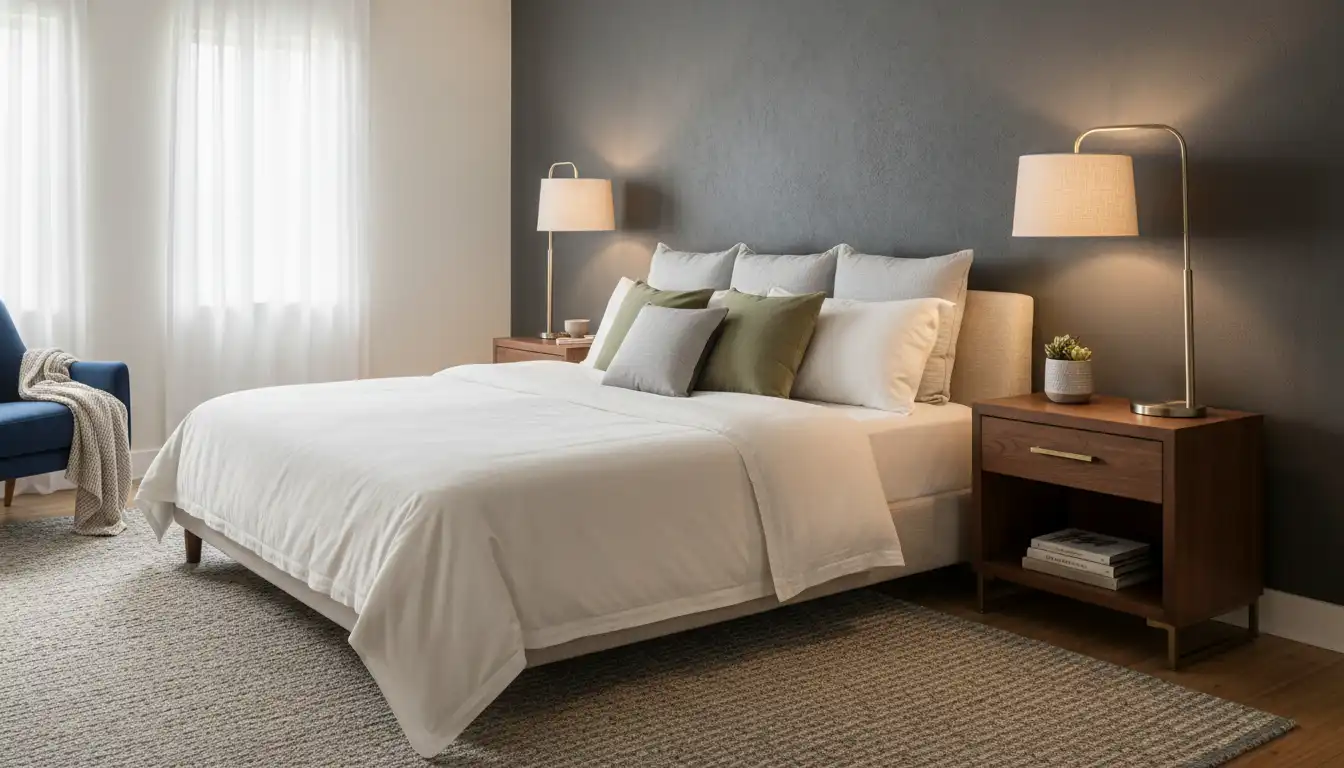
This approach ensures the wall feels complete and balanced. The key is that the furniture on the open side should occupy a similar visual footprint to the nightstand and the portion of the bed on the other side.
Step 3: Use Lighting to Your Advantage
Lighting is a powerful tool for creating balance. Instead of two matching table lamps, try a more creative combination.
Place a table lamp on the nightstand and a sleek floor lamp on the other side of the bed. Alternatively, you could hang a stylish pendant light over the nightstand and use a wall-mounted sconce on the more open side to illuminate a reading nook or art.
Step 4: Ground the Area with a Rug
A well-placed area rug can define the sleeping zone and unify the entire arrangement. It acts as a visual foundation that ties the bed and its surrounding furniture together.
The rug should be large enough to extend beyond the sides of the bed and any accompanying furniture, like your nightstand and balancing dresser or chair. If your layout is unconventional, you might wonder about the typical placement rules. Learning the oval rug under bed guidelines can provide creative solutions for defining your unique space.
Step 5: Leverage Vertical Space with Art
An art arrangement can be your secret weapon for achieving perfect asymmetrical balance. Instead of one picture centered over the bed, create a gallery wall.
Start the gallery wall above the nightstand and extend it across the wall over the bed and into the open space. This technique draws the eye across the entire wall, connecting the different zones and making the off-center placement feel completely intentional and cohesive.
Balancing Strategies at a Glance
Choosing the right combination of elements is crucial for making your asymmetrical layout work. This table offers a few proven combinations to balance the space next to your bed.
| Scenario | Nightstand Side Solution | Open Side Balancing Element | Best For |
|---|---|---|---|
| The Functional Nook | Standard Nightstand with Table Lamp | Small Desk or Vanity with a Chair | Creating a multi-purpose bedroom. |
| The Reader’s Corner | Small Bedside Table or Floating Shelf | Upholstered Armchair and a Floor Lamp | Cozy, relaxing spaces. |
| The Minimalist Edit | Slim C-Table Nightstand | A single large floor plant or a tall sculpture | Clean, uncluttered, and modern rooms. |
| The Storage Solution | Standard Nightstand | Low, wide dresser or credenza | Bedrooms needing extra storage space. |
Off-Center Solutions for Common Room Problems
Every room has its challenges. Here’s how to apply these principles to specific architectural quirks.
Working with an Off-Center Window
Never let a window dictate your comfort. If the only logical place for your bed is in front of a window that isn’t centered, embrace it. Place the bed where it needs to go, and then use window treatments to trick the eye.
Install a curtain rod that extends across the entire wall. Use enough curtain panels to cover the wall, allowing you to draw them so the window appears centered behind the bed. When designing your window treatments, it’s critical to make smart choices. If you’re getting new windows, don’t buy blinds for replacement windows until you have a clear plan for the entire room’s layout.
When a Door Is in the Way
If a swinging door prevents you from centering the bed, shift the bed over just enough to allow the door to open freely. Then, use the space on the other side of the bed for a larger piece of furniture, like a dresser.
This larger piece will balance the visual weight of the door on the opposite side. A gallery wall that starts behind the bed and continues over the dresser will further unify the space.
Feng Shui and the Asymmetrical Bedroom
Many people worry that an off-center bed violates Feng Shui principles, particularly the “commanding position.” This principle states that you should be able to see the door from your bed without being directly in line with it.
An off-center bed can absolutely still be in a commanding position. The key is your line of sight to the door. As long as you can see the entrance, you are maintaining good energy flow and a sense of security.
If pushing the bed to one side gives you a better view of the door than a centered position would, it’s actually the better choice from a Feng Shui perspective. Use a solid headboard to provide a sense of support and stability.
Expanding the Master Suite
In larger master bedrooms, an off-center bed placement can be a deliberate choice to open up possibilities for luxury features. By shifting the bed, you might create the perfect alcove for a unique element.
This design freedom allows for unconventional thinking about the entire suite. For some, the ultimate luxury is integrating spa-like features, and an asymmetrical layout could be the key to finding space for a bathtub in the master bedroom, creating a truly opulent retreat.
Final Thoughts: Break the Rules with Confidence
The idea that your bed must be perfectly centered is an outdated rule that doesn’t account for real-world architecture or modern design sensibilities. Off-center bed placement is not a compromise.
It is a powerful and sophisticated design strategy. By understanding the principles of visual weight and asymmetrical balance, you can solve your layout dilemmas and create a bedroom that is functional, beautiful, and uniquely yours.
