
Nigra Arborvitae vs Green Giant: Don’t Plant Until You Read This
Choosing the perfect evergreen for a privacy screen is a critical long-term decision for any homeowner. The wrong choice can lead to years of frustrating maintenance, disappointing growth, or a hedge that fails to provide the intended seclusion. Two titans of the hedging world, the Nigra Arborvitae and the Green Giant Arborvitae, are consistently top contenders, yet they serve vastly different needs and landscapes.
Making an informed decision goes beyond simply picking the faster-growing tree. It involves understanding their unique characteristics, long-term behavior, and how they will perform in your specific environment. This guide will break down the critical differences to ensure your living fence becomes a beautiful, thriving asset rather than a landscape liability.
You'll Learn About
Meet the Contenders: A Tale of Two Thujas
At first glance, both trees offer the lush, green foliage homeowners desire for year-round privacy. However, they come from different branches of the Thuja family tree, which accounts for their significant differences in size, growth rate, and resilience. Understanding their lineage is the first step in choosing the right one for your garden.
The Nigra Arborvitae (Thuja occidentalis ‘Nigra’) is a cultivar of the Eastern Arborvitae, a species native to North America. It is prized for its deep, dark green foliage that holds its color exceptionally well through winter. In contrast, the Green Giant is a powerful hybrid, a cross between the Western Redcedar (Thuja plicata) and the Japanese Arborvitae (Thuja standishii), giving it immense vigor and a robust nature.
Growth Rate and Size: The Speed Demon vs. The Patient Grower
The most dramatic difference between these two arborvitaes is their growth rate and ultimate size. This is often the primary deciding factor for homeowners and can have the biggest impact on the long-term success of a privacy hedge. One offers near-instant gratification, while the other provides a more controlled, manageable screen.
Green Giant: The Speed Demon of Privacy
If you need privacy and you need it fast, the Green Giant is unparalleled. Under optimal conditions, this tree can put on an astonishing 3 to 5 feet of growth per year. This rapid growth means a small sapling can become a formidable screen in just a few seasons. However, this speed comes with a significant trade-off: immense size. A mature Green Giant can tower 40 to 60 feet tall with a spread of 12 to 18 feet. This makes it an excellent choice for large properties or for blocking the view of a multi-story building, but it can easily overwhelm a standard suburban yard if not given adequate space.
Nigra Arborvitae: The Patient, Compact Grower
The Nigra Arborvitae offers a much more moderate and manageable growth rate of about 1 to 2 feet per year. Its mature height is also far more contained, typically reaching 20 to 30 feet tall with a spread of 5 to 7 feet. This slower, more deliberate growth makes it an ideal candidate for smaller yards, formal hedges, and situations where overpowering size is a concern. Its columnar, upright form is easier to maintain in a tight, uniform hedge without constant, aggressive pruning.
Appearance and Foliage: More Than Just “Green”
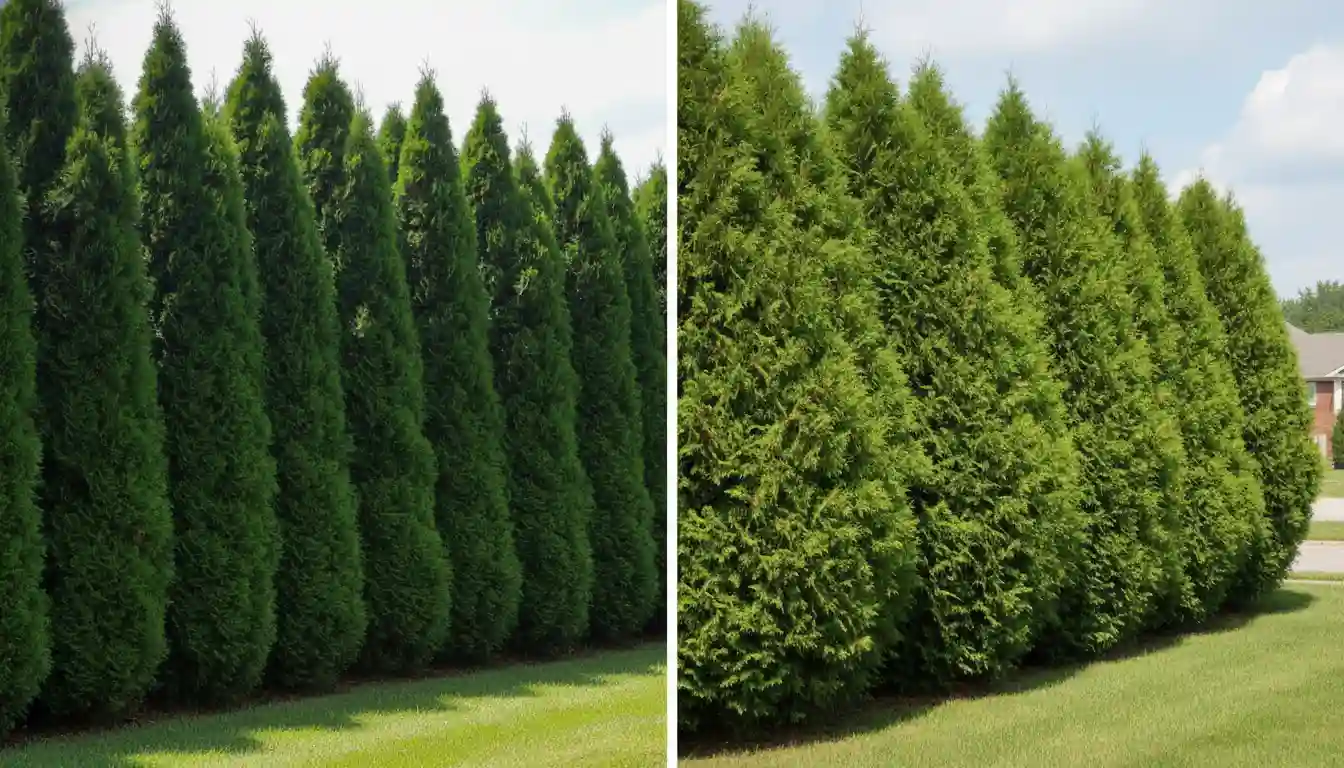
While both are evergreens, their color, texture, and overall shape create distinct visual impacts in the landscape. The Nigra presents a formal, dark elegance, while the Green Giant offers a lush, vibrant, and more natural look. Your aesthetic preference will play a large role in this decision.
The Nigra Arborvitae is famous for its deep, dark green foliage that resists the bronze or yellow discoloration common to other arborvitaes in winter. Its sprays of foliage are dense and create a very solid, formal appearance. The overall shape is a tidy, narrow cone or column. The Green Giant, on the other hand, has brighter, lustrous green foliage. Its texture is slightly softer and more feathery, and its pyramidal shape is broader and more commanding. It maintains good green color through winter, though perhaps not as deep and dark as the Nigra.
Durability and Resilience: Weather, Pests, and Deer
A privacy screen is an investment, and its ability to withstand environmental pressures is paramount. Here, the hybrid vigor of the Green Giant often gives it an edge, but the Nigra holds its own, particularly in colder climates. However, one major vulnerability can make or break the decision for many gardeners: deer.
Deer Resistance: A Gardener’s Nightmare
This is a critical distinction. Green Giant Arborvitaes are widely regarded as being significantly more deer-resistant than their Thuja occidentalis cousins. While no plant is truly “deer-proof,” deer tend to avoid the foliage of Green Giants. In contrast, the Nigra Arborvitae is a known favorite of deer, especially during winter when other food sources are scarce. In areas with high deer pressure, a row of Nigra Arborvitaes can be decimated overnight, leaving you with a permanent “browse line” several feet off the ground.
Weather and Disease Tolerance
The strong central leader and robust branch structure of the Green Giant make it exceptionally resilient against heavy snow and ice, which can splay and damage multi-stemmed arborvitaes like some Nigras. Green Giants are also highly adaptable to a wide range of soils, including sandy loams and heavy clays, and are generally resistant to major diseases. The Nigra is extremely cold-hardy, thriving in zones 3-7, but can be more susceptible to winter burn in exposed, windy locations. Winter burn occurs when the foliage loses moisture to winter winds and sun while the ground is frozen, preventing the roots from absorbing more water.
The Ultimate Comparison: At a Glance
To simplify the decision, this table breaks down the key attributes of each tree side-by-side. Use it as a quick reference to match the right tree to your specific needs and landscape conditions.
| Feature | Nigra Arborvitae (Thuja occidentalis ‘Nigra’) | Green Giant Arborvitae (Thuja ‘Green Giant’) |
|---|---|---|
| Mature Height | 20-30 feet | 40-60 feet |
| Mature Spread | 5-7 feet | 12-18 feet |
| Growth Rate | Moderate (1-2 ft/year) | Fast (3-5 ft/year) |
| Foliage Color | Deep, dark green; excellent winter color | Lush, bright green; good winter color |
| Shape | Narrow, columnar to pyramidal | Broad, pyramidal |
| Hardiness Zone | 3-7 | 5-8 |
| Deer Resistance | Low (Frequently damaged) | High (Generally avoided by deer) |
| Ideal Spacing | 3-4 feet apart for a dense hedge | 5-8 feet apart for a dense screen |
| Best Use | Formal hedges, smaller yards, foundation plantings | Tall privacy screens, windbreaks, large properties |
Maintenance and Long-Term Care
The initial planting is just the beginning. The long-term maintenance required to keep your living fence healthy and attractive can vary significantly between these two choices. Considering the future effort involved is a crucial, yet often overlooked, part of the planning process.
Pruning and Shaping
Because of its moderate growth and tidy habit, the Nigra Arborvitae generally requires less pruning to maintain its shape and size. A light shearing in late spring is usually all that’s needed to keep a formal hedge looking crisp. The Green Giant’s rapid growth means it will require more frequent and substantial pruning if you wish to keep it at a specific height or width. While it can be left to grow to its natural majestic size, containing it within a smaller space is a significant annual commitment. Never remove more than one-third of the plant’s total volume in a single year.
Soil, Sun, and Water Needs
Both arborvitaes thrive in full sun but can tolerate partial shade. They prefer moist, well-drained soil and will benefit from regular watering, especially during their first few years as they become established. Green Giants are notably more adaptable to different soil types. A key factor that many overlook is soil pH. While both perform well in a relatively neutral pH range, Green Giants show slightly better tolerance for acidic soils, giving them an edge in certain regions.
Making the Right Choice for Your Landscape
The solution to your privacy problem lies in correctly matching the tree’s characteristics to your property’s constraints and your personal goals. The “better” tree is entirely dependent on the situation.
Choose Green Giant If:
You have a large property and need a tall screen or windbreak quickly. Your primary concern is creating a massive, living wall in just a few years. Most importantly, you live in an area with a significant deer population. The Green Giant’s combination of speed and deer resistance makes it the clear winner for fast privacy in deer country.
Choose Nigra Arborvitae If:
You have a smaller yard or need a more formal, manicured hedge. Your goal is a dense, dark green screen that won’t grow out of control and overwhelm your house or garden. You do not have significant deer pressure, or you are prepared to protect the trees with fencing or repellents.
A Note on Landscaping Foresight
Proper planning is essential for any major landscaping project. Just as you would plan for potential issues inside your home, like what to do with a washer and dryer in a flooded basement, you must anticipate the future growth and needs of your plants. Thinking ahead can prevent costly mistakes. For instance, understanding your home’s infrastructure, such as how to use a hose without an outside tap, can be crucial for watering new plantings effectively. Even seemingly unrelated household tasks, like knowing how to fix a steam mop mark on the floor, reflect a mindset of care and maintenance that is vital for a thriving garden.
Final Verdict: The Right Tree for the Right Job
There is no single champion in the “Nigra Arborvitae vs. Green Giant” debate. The Green Giant is a landscaping powerhouse, offering incredible speed and resilience for large-scale screening. The Nigra Arborvitae is a refined, elegant choice for more controlled, formal applications in smaller spaces.
Ultimately, the best choice is the one that fits your space, grows well in your climate, and solves your specific problem without creating new ones. By carefully considering size, growth rate, and especially deer resistance, you can confidently plant a living fence that will provide beauty and privacy for decades to come.
