
Newel Post Placement Mistakes That Can Ruin Your Staircase
A staircase is more than just a way to get from one floor to another; it’s a central architectural feature of your home. The entire structure relies on one critical component for its safety and style: the newel post. Yet, the precise placement of this foundational support is often an afterthought for many homeowners, leading to wobbly railings, failed inspections, and a visually awkward design.
Incorrect newel post placement is a problem that compromises both the structural integrity and the aesthetic harmony of your staircase. This guide addresses the core issue head-on, providing a comprehensive roadmap to ensure every newel post you install is perfectly positioned for maximum safety, code compliance, and visual appeal.
You'll Learn About
The Unsung Hero: Why Newel Post Placement is Non-Negotiable
Think of a newel post as the anchor of your entire balustrade system. It’s the large, sturdy post at the bottom, top, and key turns of a staircase that secures the handrail. Without correctly placed newels, the handrail has no meaningful support, transforming it from a safety feature into a significant hazard.
Proper placement isn’t just about stability; it dictates the entire layout of your railing. It ensures balusters are spaced correctly and that the handrail flows at a consistent, safe height. A misplaced newel can throw off every subsequent measurement, turning a straightforward installation into a complex and frustrating puzzle.
The Structural Cornerstone of Your Balustrade
The primary function of a newel post is to absorb and resist the lateral forces applied to the handrail. When someone leans on the railing or uses it for support, the newel post transfers that load safely into the floor structure. This is why its connection to the floor joists or stair stringers is so critical.
A post that is simply attached to the surface of a stair tread or finished floor offers almost no structural resistance. Understanding the underlying framework of your home is the first step in determining the most secure placement points. This foundational thinking is a core part of any major installation, whether you’re securing a staircase or comparing the installation requirements of a Bosch vs KitchenAid wall oven.
Decoding the Rules: Where Building Codes Mandate Newel Posts
Before you plan any installation, it’s essential to understand that newel post placement is governed by building codes. While specifics can vary by locality, the general principles are universal and designed to ensure user safety. Always consult your local building department for the exact requirements in your area.
Generally, a newel post is required at any point where the balustrade begins, ends, or changes direction. This non-negotiable framework ensures that no part of the handrail is left unsupported, providing a continuous and secure graspable surface along the entire length of the staircase.
Key Locations for Mandatory Newel Post Placement
At the Bottom of the Stairs: A “starting newel” is always required to anchor the beginning of the railing. This is often the most decorative and substantial post, setting the stylistic tone for the entire staircase.
At the Top of the Stairs: A “top newel” provides the final anchor point where the staircase meets the upper floor or landing. It secures the end of the handrail and provides a safe transition.
At Landings and Turns: For any staircase that isn’t a single straight run, a newel post must be placed at each corner of a landing. On L-shaped or U-shaped stairs, these “landing newels” secure the handrails as they change direction.
For Long Railing Spans: On long, continuous stretches of railing, such as along a balcony or loft, an “intermediate newel” may be required. Codes often specify that a post is needed every 8 to 12 feet to provide additional support and prevent the handrail from flexing or failing.
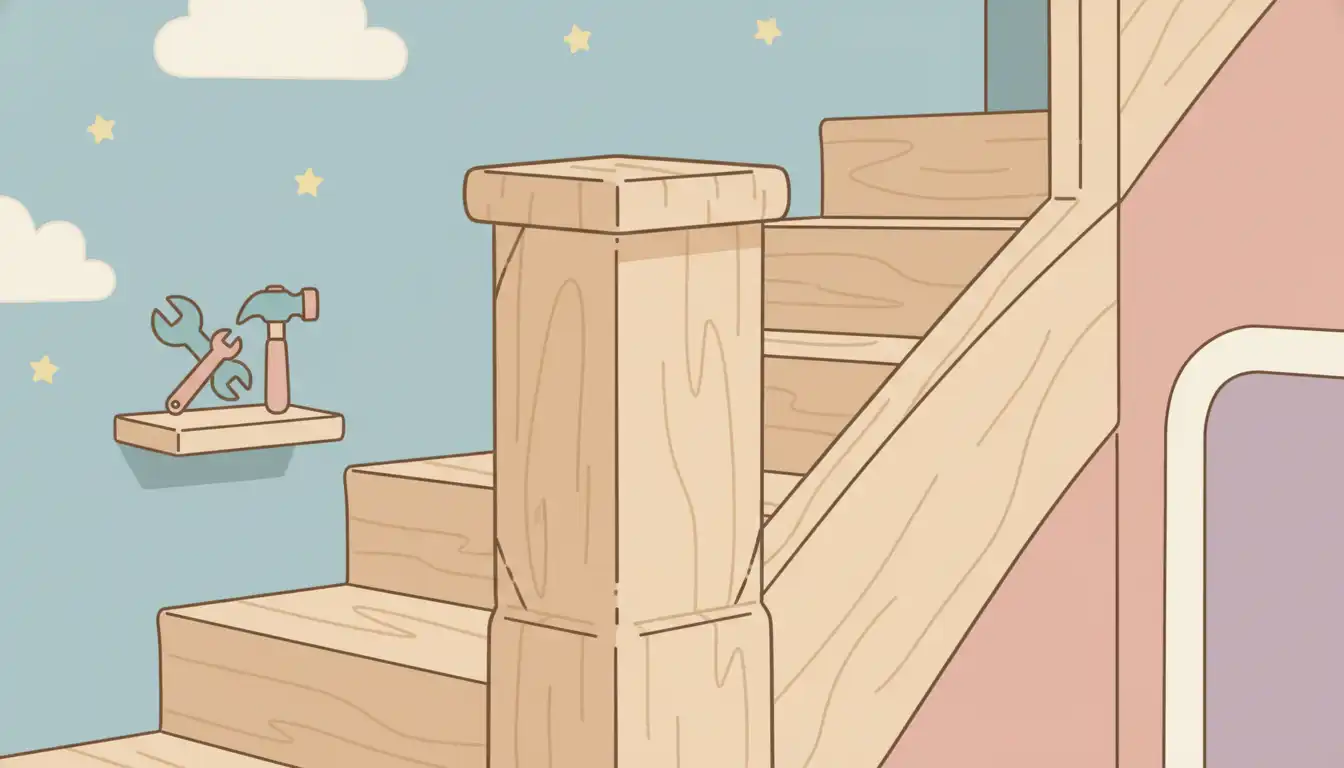
A Deeper Dive: Placement Nuances for Different Newel Types
Beyond the basic rules, the specific placement of each newel post involves subtle but important details. The type of staircase and the design of the newel itself will influence its final position. Getting these details right is what separates a professional-looking installation from an amateur one.
Understanding these nuances is crucial because a staircase project involves many interconnected parts. The complexity of learning how hard is it to replace stair railings often comes down to these precise details, where one small miscalculation in newel placement can affect every other component.
Starting Newel Placement: The Grand Entrance
The starting newel’s position is critical for visual impact. It can be mounted directly on the floor in front of the first step, or it can be mounted on the first stair tread itself. A floor-mounted post offers a more traditional, substantial look, while a tread-mounted post can save space on a narrow staircase.
When mounting on the floor, the center of the newel should align with the center of the first riser for a balanced look. If mounting on the tread, ensure there is ample space for foot traffic and that the post doesn’t create a trip hazard. The method of securing the post—often with a heavy-duty mounting kit bolted into the floor joists—is paramount for stability.
Landing Newel Placement: The Critical Pivot
On staircases with landings, the newel posts act as pivotal connection points. A common configuration on an L-shaped staircase involves a single, larger newel post at the corner of the landing, connecting the handrail from the lower flight and the handrail for the upper flight.
The key here is alignment. The centerlines of the handrails must intersect precisely at the center of the newel post for a clean, professional joint. This often requires careful notching of the newel post to accept the rails at different angles and heights, a task that demands precision and foresight.
Beyond Code: Strategic Placement for Aesthetics and Flow
While safety and code compliance are the primary drivers of newel post placement, aesthetics play a huge role in the final result. The placement of newels can influence the perception of space, create a sense of rhythm, and tie the staircase design into the broader architectural style of your home.
Think about the “visual weight” of your newel posts. Large, ornate box newels create a powerful statement and should be placed where they can be appreciated without overwhelming the space. Slimmer, simpler turned newels can be used to create a lighter, more open feel.
Creating Rhythm and Balance
On long gallery railings overlooking a lower level, the spacing of intermediate newel posts is a design opportunity. Instead of just meeting the minimum code requirement, consider how the spacing relates to other elements in the room, such as windows or doorways. Aligning posts with these features creates a sense of intentionality and order.
This attention to detail in design is universal. It’s similar to how a dramatic color choice, like using a vantablack wall paint, must be balanced with the right lighting and decor to be effective. Similarly, your newel posts must be in visual harmony with the scale and style of your home to achieve the desired impact.
| Newel Post Location | Primary Purpose | Key Placement Consideration |
|---|---|---|
| Bottom of Stairs (Starting Newel) | Anchor the start of the balustrade | Align with the first riser; ensure secure mounting to floor joists. |
| Top of Stairs (Top Newel) | Secure the end of the balustrade | Position to allow for a safe, unobstructed transition to the upper floor. |
| Landings & Turns | Anchor the change in railing direction | Center the post at the corner to ensure clean handrail intersections. |
| Mid-Span (Intermediate Newel) | Support long, continuous railing sections | Space evenly (typically every 8-12 feet) for structural and visual balance. |
Common Newel Post Placement Mistakes to Avoid
Even with the best intentions, several common mistakes can compromise a newel post installation. Being aware of these pitfalls is the first step toward avoiding them and ensuring a successful project.
These errors often stem from a lack of planning or an underestimation of the structural forces at play. A wobbly newel post is not something that can be ignored; it’s a sign of a critical failure in the installation process.
Mistake 1: Surface-Only Mounting
The most dangerous mistake is failing to anchor the newel post to the home’s underlying structure. Simply screwing or gluing a newel post to the top of a finished floor or stair tread provides no meaningful stability. The post must be securely bolted to the floor joists or the stair stringer.
Solution: Use a high-quality newel post fastening system. These kits typically include a large lag bolt or threaded rod that anchors into the subfloor and joists, combined with a mounting plate that secures the base of the post. Always cut away the finished flooring to expose the subfloor for a direct, secure connection.
Mistake 2: Ignoring Plumb and Level
A newel post that is not perfectly plumb (vertically straight) will throw off the entire aesthetic of the staircase. It creates a domino effect, causing handrail angles to be off and balusters to appear crooked. This is a visual mistake that is impossible to hide once the installation is complete.
Solution: Use a high-quality level on at least two adjacent sides of the post as you are installing it. Brace the post temporarily while you tighten the mounting hardware, checking for plumb continuously. Don’t rely on your eyes; even a slight deviation will be noticeable.
Mistake 3: Incorrect Height Calculation
The top of the newel post must align with the required handrail height, which is typically between 34 and 38 inches above the nose of the stair treads. Miscalculating the newel post height can result in a handrail that is too high or too low, both of which are code violations and safety hazards.
Solution: Plan your handrail height first. Mark a guideline on the wall along the slope of the stairs. The newel posts must be cut to a height that allows the handrail to sit perfectly on this line as it terminates into the post. Remember to account for the thickness of the handrail itself in your calculations.
A Step-by-Step Guide to Planning Your Layout
Proper newel post placement begins with a solid plan. Before you make a single cut, a thorough layout process will save you time, money, and immense frustration. Follow these steps to create a foolproof plan.
This systematic approach ensures all variables are considered, from structural limitations to final aesthetic goals.
1. Measure and Diagram Your Staircase
Create a simple, to-scale drawing of your staircase. Measure the total run (horizontal length) and rise (vertical height). Note the position of all landings, turns, and the points where the stairs begin and end. This visual reference is invaluable.
2. Identify All Mandatory Anchor Points
On your diagram, mark the locations where newel posts are required by code: the start, the end, and every change in direction. If you have long, open sections, mark the locations for intermediate posts as well, ensuring they are evenly spaced.
3. Locate Structural Framing
Use a stud finder and, if necessary, drill small exploratory holes to locate the floor joists and stair stringers beneath your marked newel post locations. The final position of your newel may need to be adjusted slightly to ensure it can be anchored to solid wood framing.
4. Finalize Positions and Mark the Floor
Once you have confirmed the ideal locations that satisfy code, aesthetics, and structural requirements, mark the precise outlines of the newel post bases on the floor or treads. This gives you a final blueprint for the installation process.
Conclusion: The Foundation of a Safe and Stylish Staircase
Newel post placement is a task where precision is paramount. It is the foundational step that dictates the safety, stability, and style of your entire staircase. By understanding the structural principles, adhering to building codes, and paying close attention to aesthetic details, you can ensure your newel posts serve as unwavering anchors for a beautiful and secure balustrade.
Rushing this critical stage or overlooking the details will inevitably lead to problems that are difficult and expensive to fix. Take the time to plan meticulously, measure accurately, and install securely. Your reward will be a stunning staircase that not only enhances your home’s beauty but also provides uncompromising safety for years to come.
