
Neolith Reviews: The Unvarnished Truth Before You Buy
The quest for the perfect countertop can feel endless. You dream of a surface that is stunningly beautiful, effortlessly functional, and virtually indestructible—a centerpiece for your home that stands up to the chaos of daily life. In this search, you’ve likely encountered Neolith, a material praised for its sleek, modern aesthetic and long list of impressive features. But delving into Neolith reviews often leaves homeowners more confused than confident, facing a mix of glowing praise and cautionary tales.
The core problem is one of uncertainty. Is Neolith the revolutionary, worry-free surface it claims to be, or does it harbor hidden flaws that could lead to disappointment and costly repairs? This article will cut through the noise, providing a comprehensive, honest review to solve this dilemma. We will explore the science behind Neolith, weigh its incredible strengths against its much-debated weaknesses, and give you the clear, actionable information needed to decide if it’s truly the right fit for your home and garden lifestyle.
You'll Learn About
What Exactly is Neolith? The Science Behind Sintered Stone
Before judging its performance, it’s crucial to understand what Neolith is. It is not quartz, nor is it a natural stone slab quarried from the earth. Neolith is a brand of sintered stone, a category of surfaces created through a high-tech manufacturing process that mimics and accelerates the natural formation of stone.
The process begins with a carefully selected blend of 100% natural raw materials: clays, feldspar, silica, and mineral oxides. These elements are fused together under immense pressure and extreme heat (over 1200°C), a process called sintering. This technology creates an ultra-compact, non-porous slab with exceptional density and strength, giving it properties that often surpass both natural stone and engineered quartz.
A critical aspect to understand is how the pattern is applied. Unlike granite where the pattern runs through the entire stone, most Neolith patterns are printed on the surface. This means the beautiful veining you see on top does not extend through the body of the slab, a detail that has significant implications for edge design and chip repair, which we will explore later.
The Good: Unpacking the Pros of Neolith Surfaces
Much of the praise for Neolith is well-deserved. Its manufacturing process results in a surface with some truly remarkable benefits for any home, especially in demanding areas like kitchens and outdoor spaces.
Unmatched Durability & Scratch Resistance
Neolith is incredibly hard and dense, making it one of the most scratch-resistant surfaces on the market. Everyday use, from sliding plates to chopping vegetables (though a cutting board is always recommended), will not easily mar its finish. Its resilience means it maintains its pristine look for years, even in the busiest of households.
Incredible Heat Resistance
One of Neolith’s standout features is its phenomenal resistance to high temperatures. Because it is forged in fire, it is essentially fireproof and will not burn or release harmful substances when exposed to heat. You can place hot pots and pans directly on the surface without fear of scorching, discoloration, or damage—a significant advantage over materials like quartz, which can be damaged by thermal shock.
Non-Porous and Stain-Proof
The sintering process creates a surface with near-zero porosity. This means liquids cannot penetrate the material, making it completely stain-proof. Spills like red wine, coffee, lemon juice, and aggressive cleaning agents can be wiped away easily without leaving a trace. This hygienic quality also prevents bacteria from harboring, making it an excellent choice for food preparation areas.
UV Resistance & Outdoor Use
Unlike quartz, whose resins can yellow and fade with prolonged sun exposure, Neolith is completely UV resistant. The natural mineral pigments used for its coloring will not degrade over time, making it an ideal material for outdoor kitchens, patio countertops, and building facades. It withstands not only sunshine but also freezing temperatures, ensuring its beauty and integrity in any climate.
Lightweight & Thin Profile
Neolith is available in various thicknesses, including very thin profiles (as slim as 3mm and 6mm). This makes it significantly lighter than traditional stone slabs, offering greater versatility. It can be used for wall cladding, flooring, and cabinet fronts without requiring massive structural support, allowing for seamless and cohesive designs throughout a space.
The Bad & The Ugly: Honest Neolith Reviews and Common Problems
No material is perfect, and Neolith is no exception. The very properties that make it so strong also contribute to its biggest drawbacks. The most common complaints stem from three key areas: chipping, fabrication complexity, and cost.
The Chipping Controversy: Brittleness at the Edges
The most frequent and significant complaint found in user reviews is Neolith’s tendency to chip, particularly along the edges. While the surface is incredibly hard and scratch-resistant, this hardness also makes it brittle. A sharp, heavy impact—like dropping a cast-iron skillet on an edge or corner—can cause a chip.
The solution lies in prevention and proper fabrication. Opting for a slightly rounded edge profile instead of a sharp, squared-off edge can dramatically reduce the likelihood of chipping. Furthermore, careful use, especially around sinks and dishwashers where heavy pots are frequently handled, is essential for long-term satisfaction.
The Fabrication Challenge: Finding the Right Professional
This is arguably the most critical factor for a successful Neolith installation. Neolith is not a material that any countertop installer can work with; it requires specialized tools, training, and experience. An inexperienced fabricator is the source of most Neolith horror stories, from difficult installations to poorly finished edges that are more prone to chipping.
When choosing an installer, you must vet them thoroughly. Ask for a portfolio of their previous Neolith projects, speak with references, and ensure they are certified or recommended by the manufacturer. A great fabricator will not only ensure a beautiful finish but will also advise on the best edge profiles to enhance durability, a conversation that is far more important than just understanding older home systems like the differences between cloth wiring vs knob and tube.
Cost: Is Neolith Worth the Investment?
Neolith is a premium material, and its price reflects its advanced manufacturing and performance characteristics. The cost per square foot for the material itself is often comparable to high-end quartz or natural stone. However, the total project cost can be significantly higher due to the complex fabrication and installation process, which demands more time and specialized labor.
When budgeting, it’s essential to factor in these higher installation costs. While the initial investment is substantial, its longevity and low maintenance can offer long-term value. Below is a comparison to help put its cost and features into perspective.
| Material | Average Cost (Installed) | Heat Resistance | Scratch Resistance | Stain Resistance | Maintenance |
|---|---|---|---|---|---|
| Neolith | $80 – $150 / sq. ft. | Excellent | Excellent | Excellent | Very Low |
| Quartz | $60 – $120 / sq. ft. | Good (can be damaged by high heat) | Very Good | Excellent | Very Low |
| Granite | $50 – $100 / sq. ft. | Excellent | Good (can be scratched) | Good (requires sealing) | Low (periodic sealing) |
| Marble | $70 – $200+ / sq. ft. | Good | Poor (scratches and etches easily) | Poor (stains easily) | High (frequent sealing) |
Pattern Depth & The Mitred Edge Issue
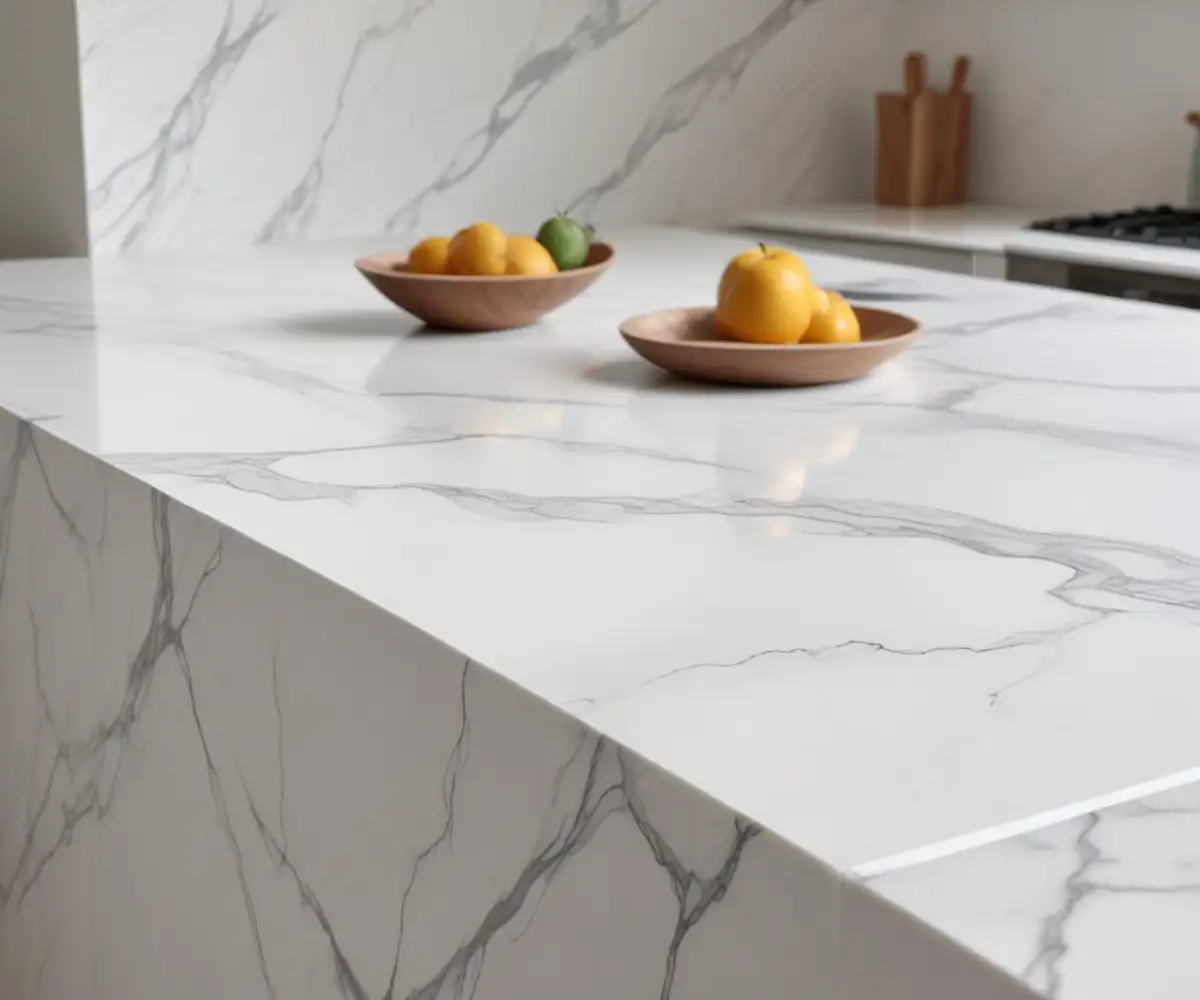
As mentioned earlier, the pattern on most Neolith slabs is surface-deep. This is not an issue for the top of the counter, but it becomes apparent on the edges. To create the illusion of a thick, solid slab with continuous veining, fabricators use a mitred edge, where two pieces are cut at a 45-degree angle and joined. A perfect mitred edge can look fantastic, but an imperfect one can show a visible seam and highlight the lack of a through-body pattern, which can detract from the “natural stone” look.
Neolith in Your Home: Practical Applications & Design Ideas
The versatility of Neolith allows it to be used in numerous applications beyond just kitchen countertops, creating a cohesive and sophisticated look throughout your home.
Kitchen Countertops & Backsplashes
This is Neolith’s most popular application, where its hygienic, heat-proof, and stain-proof qualities shine. Using the same slab for both the countertop and a full-height backsplash creates a dramatic, seamless look that is both beautiful and incredibly easy to clean. Proper under-cabinet lighting is key to showcasing the material’s finish, so selecting the right fixtures, such as a specific bulb like the chuan shi plc26w 3500k, can make a significant difference.
Bathroom Vanities and Wall Cladding
In the bathroom, Neolith’s non-porous surface makes it impervious to water and resistant to mold and mildew. Large-format slabs can be used to create stunning, grout-free shower walls, vanities, and flooring, offering a luxurious and low-maintenance alternative to tile.
Flooring and Outdoor Patios
Its durability and resistance to abrasion and UV rays make Neolith an excellent choice for high-traffic flooring and outdoor applications. An outdoor kitchen with Neolith countertops will withstand the elements year-round, from intense sun to freezing snow. This level of all-weather durability requires thinking about overall home maintenance, just as you would for seasonal equipment, for instance, troubleshooting why a snowblower runs rough without choke.
Maintaining Your Neolith Surface: The Simple Guide
Neolith is celebrated for being exceptionally low-maintenance. For daily cleaning, a damp cloth with warm water and a mild detergent is all that’s needed. Since it’s non-porous, stains don’t soak in; they simply sit on the surface and can be easily wiped away. It is not advisable to use waxes or oily soaps, as they are unnecessary and can build up a film over time.
It’s also important to note how different finishes might affect maintenance. A polished finish, for example, may show fingerprints and smudges more readily than a matte or silk finish and requires a bit more diligence to keep it looking perfect. However, all finishes offer the same superior resistance to stains and heat.
Conclusion: Is Neolith the Right Material for Your Home?
After weighing the extensive reviews, the truth about Neolith becomes clear: it is a high-performance, technologically advanced material that is not without its trade-offs. Its strengths—heat, scratch, and stain resistance—are truly exceptional and offer a level of performance that few other materials can match.
However, its success is almost entirely dependent on the quality of fabrication and installation. Its brittleness at the edges is a real concern that must be mitigated through smart design choices and careful handling. Neolith is an excellent choice for the discerning homeowner who prioritizes a modern aesthetic, superior hygiene, and incredible durability, and who is willing to invest in a highly skilled professional to ensure the job is done right. It is likely not the best choice for those on a tight budget or for households that are exceptionally rough on their countertop edges. By understanding both its brilliant potential and its critical limitations, you can now make an informed and confident decision.
