
MTD Snowflite 5/24 Not Working? Your Ultimate Repair Guide
The MTD Snowflite 5/24 is a testament to durable, no-frills engineering. For decades, these machines have reliably cleared driveways after heavy snowfalls. But even the most dependable equipment eventually faces the challenges of age.
You pull the cord, but the engine sputters and dies, or worse, does nothing at all. Perhaps the auger has stopped spinning, or the wheels refuse to turn. This guide provides the expert-level solutions you need to diagnose and fix the most common issues, transforming your dormant snow blower into a powerful, snow-clearing beast once more.
You'll Learn About
Uncovering the Root Cause of MTD Snowflite 5/24 Failures
Before you can fix the problem, you must understand its origin. Most issues with this model stem from a few key areas that degrade over time. These predictable failures are often simple to address with the right knowledge.
From fuel system clogs to simple mechanical wear, pinpointing the source is the first critical step. Understanding these common culprits saves you time and prevents unnecessary repairs.
The Fuel System: The Number One Offender
The single most common cause of starting and running problems in any small engine is the fuel system. Modern gasoline, especially fuel containing ethanol, can wreak havoc if left sitting for extended periods. It can absorb water, form gummy deposits, and corrode sensitive carburetor parts.
This leads to clogged fuel lines, a blocked carburetor jet, or a malfunctioning float. If your MTD Snowflite 5/24 has been sitting since last winter with fuel in the tank, the problem is almost certainly fuel-related.
Ignition System Glitches
A reliable engine needs three things: fuel, compression, and spark. If the fuel system is clean, the next suspect is the ignition system. A spark plug can become fouled with oil or carbon deposits, preventing a strong, consistent spark.
Over time, the spark plug wire or ignition coil can also degrade. These components are essential for igniting the fuel-air mixture at the precise moment required for combustion.
Mechanical Wear and Tear
The MTD Snowflite 5/24 is a mechanical workhorse, and its moving parts endure significant stress. Belts stretch, shear pins break, and the friction disc that drives the wheels wears down. These are not signs of a bad machine; they are predictable wear items designed to be replaced.
Shear pins, for instance, are designed to break to protect the more expensive gearbox if the auger hits a large rock or a chunk of ice. Understanding and inspecting these mechanical components is crucial for keeping your machine in top condition.
The Essential Pre-Repair Checklist
Before disassembling any part of your snow blower, run through a quick but vital checklist. These simple steps can often solve the problem without the need for tools. Most importantly, always begin by performing a critical safety step.
First and foremost, disconnect the spark plug wire and secure it away from the spark plug. This prevents any possibility of the engine accidentally starting while you are working on it, especially when manipulating the auger or belts.
With safety handled, check the basics. Is there fresh, clean fuel in the tank? Is the fuel shut-off valve in the “On” position? Confirm the oil level is sufficient, the choke is set correctly for a cold start, and the primer bulb feels firm and is squirting fuel when pressed.
Step-by-Step Troubleshooting: Your Path to a Perfect Repair
Now it’s time to dive into specific scenarios and their actionable solutions. This section breaks down the most common problems into logical, easy-to-follow steps. We will address everything from an engine that refuses to cooperate to an auger that has stopped throwing snow.
Scenario 1: The Engine Won’t Start or Runs Rough
This is the most frequent complaint, but it is also one of the most solvable. By systematically addressing the fuel and ignition systems, you can restore smooth and reliable engine operation. Patience and cleanliness are your best tools here.
Solution 1: Complete Fuel System Overhaul
Start by draining all the old fuel from the tank into an approved container. Remove the fuel line and inspect it for cracks or blockages; if it’s brittle, replace it. Remove the carburetor bowl to see if there is any debris or gummy varnish inside and clean it thoroughly with carburetor cleaner.
Solution 2: Deep Carburetor Cleaning
For persistent issues, a full carburetor cleaning is necessary. Carefully remove the carburetor from the engine. Disassemble it, taking care to note the location of all jets, the float, and the needle. Spray all orifices and passages with carburetor cleaner and use a small wire to gently clear any stubborn blockages in the main and pilot jets. Reassemble and reinstall.
Solution 3: Ignition System Tune-Up
Unscrew the old spark plug. If it’s black, oily, or wet, it needs replacing. Use a spark plug gap tool to set the gap on the new plug to the manufacturer’s specification (typically found in the manual, often around 0.030 inches). Before installing the new plug, test for spark by connecting the plug wire, holding the plug’s base against the engine block, and pulling the starter rope. You should see a bright blue spark.
Scenario 2: The Auger Fails to Turn or Throw Snow
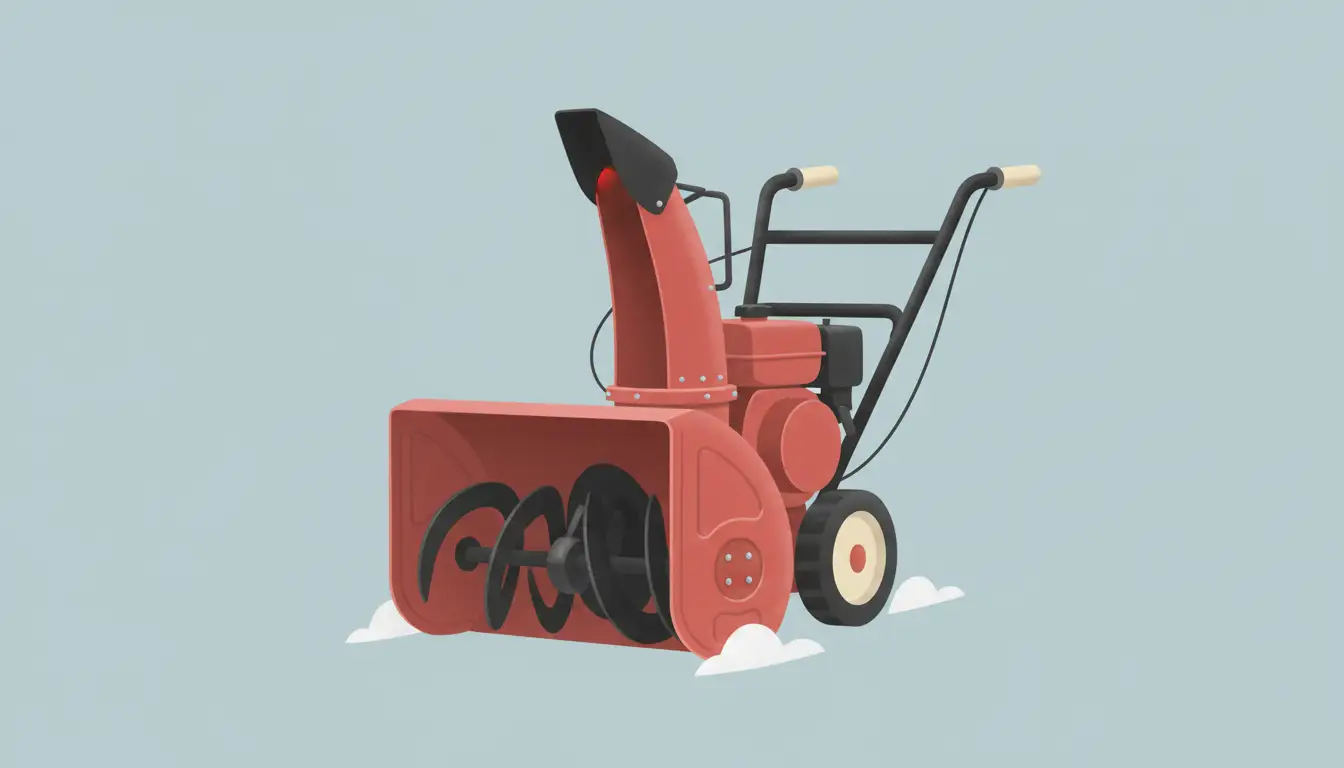
When the engine runs fine but the machine isn’t moving snow, the problem lies within the auger assembly or its drive system. These are typically straightforward mechanical fixes. The most common culprit is a part designed to fail to protect the machine.
Solution 1: Inspect and Replace Shear Pins
The auger is connected to its drive shaft with small bolts called shear pins. If the auger hits a hard object, these pins break, disconnecting the auger from the gearbox to prevent catastrophic damage. Visually inspect the shear pins on the auger shaft; if one is broken or missing, replace it with an identical OEM part. Never substitute a shear pin with a standard bolt, as this will defeat the safety feature and can lead to a destroyed gearbox.
Solution 2: Auger Belt Inspection and Replacement
If the shear pins are intact, the auger drive belt is the next likely suspect. To access it, you will need to split the snow blower’s frame by removing the bolts connecting the engine section to the auger housing. The belt may be stretched, cracked, or broken. Loosen the tensioner, remove the old belt, route the new one correctly around the pulleys, and re-tension it before reassembling the machine.
Scenario 3: The Snow Blower Won’t Move Forward or Backward
A running engine and a spinning auger are useless if the wheels won’t turn. Drive problems on the MTD Snowflite 5/24 almost always point to the friction disc system. This is another wear item that is relatively easy to replace.
Solution 1: Adjust the Drive Engagement Cable
Sometimes, the cable that engages the drive system simply stretches over time. This can prevent the friction disc from making full contact with the drive plate. Locate the cable adjustment point, usually near the handlebars, and tighten it to remove any slack.
Solution 2: Replace the Rubber Friction Disc
The friction disc is a rubber-coated wheel that transfers power from the engine to the axle. Over time, this rubber wears down, becomes glazed, or gets contaminated with oil, causing it to slip. To replace it, you will need to remove the bottom cover plate. The friction disc is held in place on a hexagonal shaft; slide the old one off and install the new one, ensuring the hub is oriented correctly.
Scenario 4: The Discharge Chute is Stuck
Being unable to direct the snow you are clearing is incredibly frustrating. This issue is rarely a major mechanical failure. It’s almost always caused by a lack of lubrication or a minor obstruction.
Clear any ice or debris from the base of the chute. Apply a silicone spray or a quality grease to the chute’s rotating ring and the worm gear mechanism. Working the crank back and forth will help distribute the lubricant and free up the movement. A stuck chute can be as maddening as discovering you have a gas fireplace valve stuck right when you need it most.
Proactive Maintenance for a Long-Lasting Machine
The best way to fix problems is to prevent them from happening in the first place. A simple and consistent maintenance schedule will ensure your MTD Snowflite 5/24 starts on the first pull every season and runs for decades to come. Think of it as an investment against future frustration.
Essential Pre-Season Checklist
Before the first snowflake falls, dedicate an hour to preparation. Change the engine oil while the engine is warm to help drain contaminants. Install a new spark plug and ensure it is gapped correctly. Most importantly, fill the tank with fresh gasoline treated with a quality fuel stabilizer.
Post-Season Storage Procedure
How you store your snow blower is the most critical factor in its longevity. At the end of winter, you must either drain the fuel system completely or use a fuel stabilizer. The best method is to run the engine until it stops from fuel starvation, ensuring the carburetor is completely empty. Clean any salt or dirt off the machine to prevent rust and store it in a dry location.
Key Specifications and Common Replacement Parts
Finding the right parts for a vintage machine can be a challenge. Having the correct specifications and part numbers on hand makes the process much simpler. This table outlines the most commonly replaced items for the MTD Snowflite 5/24.
| Part Name | Common Part Number / Specification | Expert Tip |
|---|---|---|
| Spark Plug | NGK BPR6ES or Champion RJ19LM | Ensure the gap is set to 0.030″ for optimal performance. |
| Auger Drive Belt | MTD 754-0430 / 954-0430 | When replacing, inspect the pulleys for wear or damage. |
| Wheel Drive Belt | MTD 754-0370 / 954-0370 | Check belt guides to ensure they are not bent or rubbing. |
| Friction Disc Wheel | MTD 735-0243B / 935-0243B | Make sure the drive plate surface is clean and free of oil before installation. |
| Shear Pins | MTD 738-04124A | Always use OEM shear pins. Never substitute with a standard bolt. |
Beyond the Basics: Advanced Adjustments for Peak Performance
Once your machine is running reliably, you can make a few advanced adjustments to optimize its performance. These small details are often overlooked but can make a significant difference in how well the snow blower clears snow and how easy it is to use. Proper setup prevents bigger issues down the line, much like avoiding a problem such as toilet paper in shower drain, which can lead to major plumbing work.
One of the most impactful adjustments is setting the scraper bar height. The scraper bar is the metal plate located at the bottom of the auger housing. It should be adjusted so there is about 1/8 inch of clearance between it and a flat surface, like a garage floor. This allows the machine to clear snow effectively without digging into the pavement or damaging the auger housing.
Is the MTD Snowflite 5/24 Still a Worthy Machine?
Absolutely. The MTD Snowflite 5/24 represents a class of machinery built with simplicity and longevity in mind. Unlike many modern machines, it is designed to be repaired, not replaced. With its straightforward mechanics and robust construction, it remains a highly capable snow blower.
By following this guide and investing in routine maintenance, you can keep this classic machine running for another generation. The satisfaction of mastering a repair yourself, like skillfully laying a herringbone around a corner, is a reward in itself. Take pride in keeping this dependable workhorse ready for any storm.
