Moving Underground Power Line For Pool: A Hidden Danger
You’ve picked the perfect spot for your new swimming pool, the design is finalized, and excavation is about to begin. Then, the utility marking service paints a bright red line directly through your dream location. An underground power line sits exactly where your pool should be, bringing your entire project to a screeching halt. This scenario is more common than homeowners realize and presents a serious, non-negotiable problem that must be addressed before any digging can start.
Ignoring or improperly moving an underground electrical line isn’t just a code violation; it’s a life-threatening risk. The National Electrical Code (NEC) has strict rules for a reason: to prevent electrocution and ensure the safety of your family and anyone using the pool. This guide will walk you through the critical steps, safety requirements, and professional help needed to solve this complex issue correctly and safely.
You'll Learn About
Why You Can’t Just “Bury It Deeper”
When faced with an underground power line, some homeowners wonder if they can simply dig deeper and build the pool over it. This is strictly prohibited and incredibly dangerous. The NEC explicitly forbids underground wiring from being installed under a swimming pool. Water and electricity are a lethal combination, and the risk of a damaged line energizing the ground and the pool water is too high.
Furthermore, all underground utility lines must be at least five feet away from the inside wall of a pool. This five-foot buffer zone is a critical safety measure. Any closer, and you risk accidental contact during pool installation, future maintenance, or even landscaping. The only exception is for wiring that directly services the pool’s equipment, and even then, it must be encased in specific types of conduit.
The Unseen Dangers of Excavation
Excavation is the first major step in pool construction, and it’s also where the highest risk of hitting a utility line occurs. Striking a buried power line can cause severe electrocution, power outages for your neighborhood, and significant financial liability for repairs. The danger isn’t just from large equipment like backhoes; even a misplaced shovel can damage a shallow cable.
Before any soil is moved, you must contact your local “Call Before You Dig” service, which is typically done by dialing 811. This free service sends professionals to mark the approximate location of all public utility lines on your property. However, it’s crucial to remember that this service does not locate private lines, such as electrical wiring running to a shed or outdoor lighting, which you may need to find with the help of a private utility locator.
Step 1: Assessing the Situation with Professionals
Once you’ve confirmed an underground power line is in conflict with your pool plans, the very first step is to stop all work and consult with the right experts. Do not attempt to move the line yourself. This is a job exclusively for your local utility company and a licensed electrician.
Your utility company owns and manages the service lines running to your property’s meter. You must contact them to initiate the process of relocating this primary line. Concurrently, you will need to hire a qualified electrician, preferably one with experience in pool installations, to handle all the wiring on your side of the meter and ensure the entire project meets strict safety codes.
Working with the Utility Company
The process of relocating a utility-owned power line can be lengthy and involves several steps. You will need to submit a formal request, which often requires detailed plans of your proposed pool project. The utility company will then send an engineer to assess the site and design a new, safe route for the power line.
This process can take weeks or even months, so it’s essential to begin this communication as early as possible. They will provide a cost estimate for the relocation, which the homeowner is typically responsible for. Expect this to be a significant, multi-thousand-dollar expense.
Step 2: Planning the New Route and Trenching
After consulting with the utility company and your electrician, a new path for the underground line must be planned. This new route must adhere to all NEC and local code requirements, maintaining the mandatory five-foot distance from the pool walls. The new trench will need to be dug to a specific depth to protect the wiring.
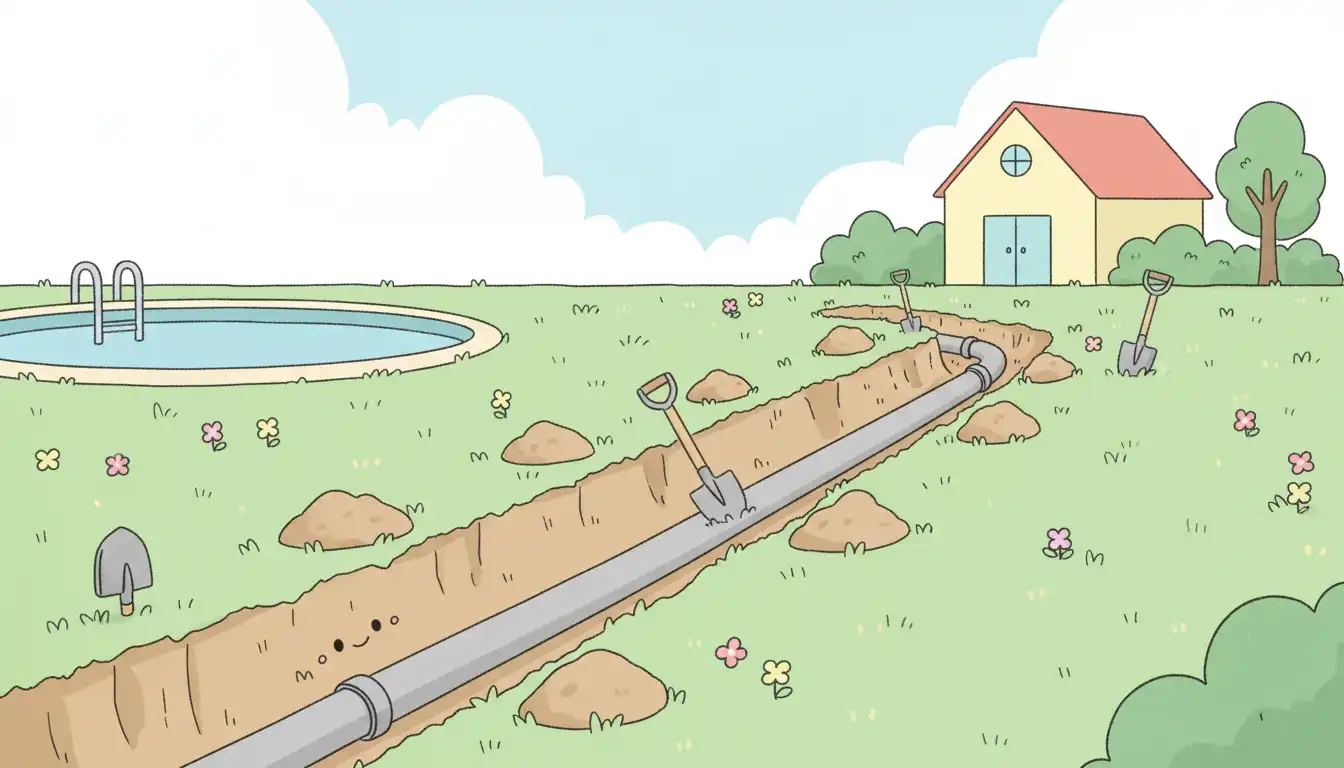
The required burial depth depends on the type of conduit used to protect the electrical wires. While you might be tempted to handle the digging to save money, it’s often best to let the professionals manage this to ensure it’s done correctly. If you’re considering running power to other outdoor features, like a shed, now is the perfect time to plan for that. Adding wiring for other needs in the same trench can be a cost-effective strategy; you can learn more about the expenses involved in our article on the cost to run power to a shed.
Understanding Conduit and Burial Depths
The type of wiring and conduit determines how deep the trench must be. National codes provide minimum depth requirements to prevent accidental damage from future digging.
| Wiring Method | Minimum Burial Depth (Inches) |
|---|---|
| Rigid Metal Conduit (RMC) | 6 inches |
| Intermediate Metal Conduit (IMC) | 6 inches |
| Nonmetallic (PVC) Conduit | 18 inches |
| Direct-Burial Cable (UF) | 24 inches |
Using a rigid metal conduit allows for a shallower trench, but PVC is often used for its corrosion resistance and lower cost, despite requiring a deeper trench. Your electrician will determine the best option for your specific situation.
Step 3: The Relocation and Installation Process
With the new trench dug and approved, the physical relocation can begin. This is a coordinated effort. The utility company will handle their side of the connection, often at the street-side utility pole or transformer, and run their new line to your meter’s new location. Your electrician is responsible for everything from the meter to your home’s main electrical panel.
This process will require a temporary power outage to your home while the switchover is made. Your electrician will install the new conduit, pull the new wires through it, and make all the necessary connections at the meter and your panel. Every step of this process must be inspected by your local building authority to ensure it is compliant with all electrical codes.
The Critical Role of GFCI Protection
Any electrical circuit that serves a swimming pool, including the pump, lighting, and nearby outlets, requires Ground Fault Circuit Interrupter (GFCI) protection. A GFCI is a fast-acting device that detects small imbalances in the current and shuts off the power almost instantly. This is a non-negotiable safety feature that saves lives by preventing electric shock.
Your electrician will ensure that all pool-related circuits are properly protected by GFCI breakers in your electrical panel. This includes the main power for the pump and any convenience outlets, which themselves must be a certain distance from the pool’s edge.
The Financial Reality: Understanding the Costs
Moving an underground power line is a significant and often unexpected expense in a pool installation project. The final cost can vary widely based on several factors, but homeowners should be prepared for it to run into the thousands of dollars.
Key cost factors include the length of the new trench, the type of soil (rocky terrain is more expensive to excavate), the fees charged by the utility company, and the labor rates of your electrician. It’s crucial to get detailed, written estimates from both the utility company and your electrical contractor before any work begins. While it’s a costly step, it pales in comparison to the cost of a tragic accident. Sometimes, excavation uncovers other issues, such as poor soil stability. If you notice unusual piles of dirt around your foundation during the dig, it could signal a separate problem that needs attention.
Beyond the Power Line: Considering Drainage
While relocating the power line, it’s wise to also consider the drainage plan for your new pool deck and surrounding yard. Proper drainage prevents water from pooling around the pool’s foundation or creating soggy, unusable areas in your yard. Often, the same trench dug for the electrical conduit can be shared with a drainage solution, like a French drain.
Planning for water management at this stage is highly efficient. A well-designed system can protect your investment and prevent future headaches. If your yard has challenging slopes, you might even need to consider solutions like a French drain uphill to manage water flow effectively.
Final Thoughts: Safety First, Always
Discovering an underground power line in your future pool’s location can feel like a major setback, but it’s a safety issue that cannot be ignored. The process of moving it requires careful planning, professional expertise from both the utility company and a licensed electrician, and a significant financial investment.
Never cut corners when it comes to electrical work around a swimming pool. Adhering to the strict guidelines set by the National Electrical Code is not just about passing an inspection; it’s about ensuring a safe environment for your family and friends for years to come. By tackling this challenge correctly, you can proceed with your pool project with the peace of mind that it is built on a foundation of safety.