
Moving Laundry Room to Basement? Your Ultimate Survival Guide
Is the constant rumble of your washer shaking the kitchen? Are clean clothes perpetually piled in a corner of your living space? If you’re tired of your laundry appliances dominating valuable main-floor real estate, moving the laundry room to the basement can feel like the perfect solution.
Relocating this essential workspace downstairs can free up precious square footage and dramatically reduce noise pollution in your daily life. However, this popular home improvement project is far more complex than simply carrying a washer and dryer down a flight of stairs. Without meticulous planning, it can lead to costly mistakes, plumbing nightmares, and a damp, unwelcoming space that makes chores even more dreadful.
This comprehensive guide will walk you through every critical step, from initial planning to final execution. We’ll uncover the hidden challenges, detail the technical requirements, and provide actionable advice to ensure your new basement laundry room is a functional, safe, and even pleasant space for years to come.
You'll Learn About
Why Relocate Your Laundry Room to the Basement? The Pros and Cons
Before you start hauling appliances, it’s crucial to weigh the benefits against the potential drawbacks. A basement laundry room isn’t the right choice for every home or lifestyle, and a clear-eyed assessment is the first step toward a successful renovation.
The Undeniable Advantages
For many homeowners, the upsides are significant. The most immediate benefit is noise reduction. Placing loud, vibrating machines in the basement isolates the sound from your primary living areas, creating a more peaceful home environment. You can run loads at any time without disrupting conversations, movie nights, or sleeping family members.
Reclaiming space on your main floor is another huge motivator. The area previously occupied by a cramped laundry closet can be transformed into a pantry, a mudroom, or an expanded kitchen. In the basement, you often have the luxury of creating a larger, more organized laundry area with ample room for sorting, folding, and storage solutions that were impossible in a tight closet.
Finally, basements are inherently better equipped to handle potential water leaks. A burst hose or overflowing machine is far less catastrophic on a concrete slab near a floor drain than it is on a second-floor hallway over your living room ceiling. This containment of potential water damage provides invaluable peace of mind.
The Critical Disadvantages to Consider
The most obvious drawback is convenience. Carrying heavy baskets of laundry up and down one or more flights of stairs can be a significant physical challenge. This is an especially important consideration for individuals with mobility issues or those planning to age in place. The “out of sight, out of mind” nature of a basement location can also lead to forgotten loads, resulting in musty clothes left sitting in the washer.
Furthermore, basements are naturally prone to dampness and humidity. Without proper ventilation and moisture control, this environment can lead to mildew on clean clothes and a perpetually musty smell. The installation itself is also more complex and expensive than on an upper floor, often requiring specialized plumbing and electrical work to meet code requirements.
The Real Cost: Budgeting for Your Basement Laundry Relocation
The cost of moving your laundry room to the basement can range from a few thousand dollars for a simple hookup to well over $10,000 for a fully finished space. The final price tag depends heavily on your existing infrastructure, the finishes you choose, and whether you hire professionals or tackle some of the work yourself.
Understanding the potential expenses is key to creating a realistic budget and avoiding unpleasant surprises. Here is a breakdown of common costs associated with this project.
| Expense Category | Estimated Cost Range (Professional Install) | Key Considerations |
|---|---|---|
| Plumbing Rough-In | $1,000 – $3,500+ | Includes running new hot/cold water lines and a drain line. Costs increase significantly if a sewage ejector pump is required. |
| Electrical Work | $500 – $1,500 | Requires dedicated 20-amp (washer) and 30-amp (dryer) circuits with GFCI protection. Price varies by panel accessibility. |
| Dryer Venting | $200 – $800 | Cost depends on the length of the vent run and the material of the exterior wall (e.g., concrete vs. wood). |
| Framing & Drywall | $1,500 – $4,000 | Necessary if you are creating a new, enclosed room rather than an open-concept space. |
| Flooring | $300 – $2,000+ | Waterproof options like LVT, ceramic tile, or sealed concrete are essential. |
| Permits | $150 – $500 | Most municipalities require permits for new plumbing and electrical work to ensure it meets safety codes. |
The Technical Hurdles: Plumbing, Venting, and Electrical Explained
Successfully moving a laundry room requires more than just interior design skills; it’s a technical project that must be done correctly to ensure safety and functionality. The “big three” technical challenges are drainage, venting, and electrical wiring.
Mastering Basement Drainage: The Uphill Battle
Unlike on upper floors where gravity helps whisk water away, basement drainage is a significant challenge. Washing machines expel large volumes of water with great force. Your primary obstacle is getting that wastewater up to the level of your home’s main sewer line.
If your sewer line exits the house high on the basement wall, you will need a special pump system. The most common solution is a laundry pump or a more robust sewage ejector pump. This involves installing a sealed basin (a sump pit) into the concrete floor, where a pump will collect the washer’s wastewater and actively pump it upward to the main drain. This is a job for a licensed plumber, as incorrect installation can lead to backups and flooding.
Clearing the Air: Safe and Effective Dryer Venting
Proper dryer venting is a critical safety issue. Lint buildup in a long or poorly installed vent is a leading cause of house fires. Building codes are very specific about dryer vents for this reason. The vent must be made of smooth, rigid metal ducting—flexible foil or plastic ducts are often prohibited because they can trap lint and are more easily crushed.
The rule of thumb is to create the shortest, straightest path to the outside possible. Most manufacturers specify a maximum vent length, typically around 35 feet. Every 90-degree turn in the ductwork effectively adds 5 feet to the total length, reducing airflow efficiency. The vent must terminate at an exterior wall with a proper vent cap that prevents pests from entering.
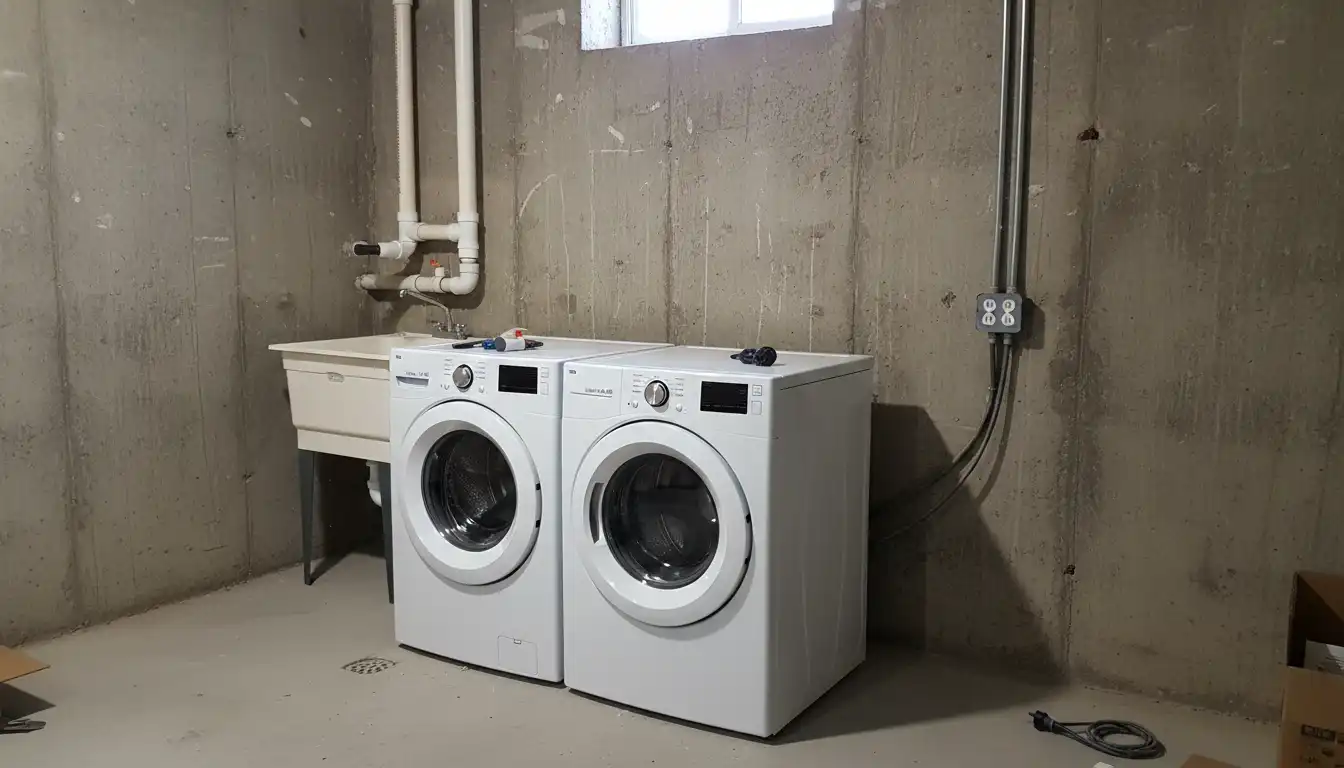
Powering Your Appliances: Electrical Code Essentials
Washers and dryers are powerful appliances that draw a lot of electricity. They cannot simply be plugged into any existing outlet. Both the washing machine and the electric dryer require their own dedicated circuits, meaning no other outlets or lights can be on that circuit. This prevents overloads that could trip breakers or create a fire hazard.
An electric dryer requires a 240-volt, 30-amp circuit with a special four-prong outlet. The washing machine needs a 120-volt, 20-amp circuit. Furthermore, all outlets in a laundry area—and anywhere else in a basement—must have Ground Fault Circuit Interrupter (GFCI) protection. A GFCI outlet quickly cuts power if it detects a short circuit, which is a vital safety feature in areas where electricity and water are in close proximity.
Designing a Functional and Inviting Basement Laundry Space
Once the technical systems are planned, you can focus on making your new laundry room a space where chores feel less burdensome. Good design in a basement laundry room is about overcoming the inherent challenges of a subterranean space: lack of light, potential for dampness, and a cold, industrial feel.
Beyond the Basics: Essential Design Elements
Start with the foundational surfaces. Flooring must be waterproof. Luxury vinyl tile (LVT), ceramic tile, and sealed or epoxy-coated concrete are all excellent choices that can withstand moisture. Avoid carpet, laminate, or unprotected wood at all costs.
Lighting is crucial for transforming a dim basement into a functional workspace. A single bare bulb is not enough. Plan for layered lighting: bright overhead fixtures for general illumination and task lighting, such as under-cabinet LED strips, to illuminate countertops and sorting areas.
Finally, tackle moisture head-on. Ensure your basement walls are properly waterproofed. A high-quality dehumidifier is a wise investment to keep the air dry, prevent musty odors, and stop mold before it starts. Proper air circulation, potentially aided by a small fan, will also contribute to a healthier environment.
Choosing the Right Appliances for a Basement Setup
Your new, larger space might be the perfect opportunity for an appliance upgrade. When choosing new machines, consider stackable units to maximize floor space for other uses, like a folding station or storage. The debate over which brands perform best is endless, but understanding the differences in a direct Electrolux vs Speed Queen comparison can help you decide between advanced features and rugged durability.
Also, consider a high-efficiency (HE) washer. While better for the environment and your water bill, be aware that some HE models have a small, continuous discharge of condensation during operation. This water must be routed to the drain, which may require a separate, small condensate pump if the drain is not easily accessible.
The Utility Sink: A Non-Negotiable Addition
One of the greatest advantages of a spacious basement laundry room is the ability to install a large utility sink. This is a workhorse for any home, perfect for pre-soaking heavily stained clothes, hand-washing delicates, cleaning paintbrushes, or potting plants. A deep, functional sink dramatically enhances the utility of the space.
For a touch of character and sustainability, you might even consider a reclaimed fixture. A vintage concrete laundry sink worth restoring can become a unique and durable centerpiece for your new room, blending functionality with timeless style.
Step-by-Step: Your Action Plan for Moving the Laundry Room
A methodical approach will help ensure your project stays on track and on budget. Breaking the process down into manageable steps will prevent you from feeling overwhelmed.
- Plan and Permit: Finalize your layout, including appliance locations, storage, and workflow. Consult with your local building department to understand what permits are required and submit your application before any work begins.
- Hire Professionals: Unless you are a licensed plumber and electrician, hire qualified professionals for the plumbing and electrical rough-in. This is the most critical stage for safety and code compliance.
- Frame and Rough-In: Once permits are approved, the work begins. This includes framing any new walls, running the water supply and drain lines, installing electrical circuits and outlet boxes, and cutting the hole for the dryer vent. This phase can be disruptive, and having a plan for managing the renovation chaos, much like you would for a temporary bathroom during renovation, is essential.
- Inspect and Insulate: After the rough-in is complete, you will need to schedule inspections as required by your permit. Once the plumbing and electrical work passes inspection, you can insulate the walls before closing them up.
- Finish Surfaces: Install drywall, paint the walls, and lay your chosen waterproof flooring. This is the stage where the space begins to look like a finished room.
- Install Fixtures and Appliances: Install your utility sink, cabinets, and countertops. Finally, move your washer and dryer into place, connect them to the new hookups, and test everything thoroughly.
Common Mistakes to Avoid at All Costs
Even with careful planning, certain pitfalls can derail a basement laundry project. Being aware of these common errors can save you significant time, money, and frustration.
- Ignoring Moisture Control: The single biggest mistake is underestimating the potential for dampness in a basement. Failing to waterproof walls and run a dehumidifier will result in a space that smells musty and promotes mold growth.
- Violating Building Codes: Taking shortcuts on plumbing, electrical, or venting is not only dangerous but can also create major problems when you sell your home. Always get permits and have the work inspected.
- Choosing the Wrong Flooring: Installing non-waterproof flooring is a recipe for disaster. A single machine leak can ruin the floor, requiring a complete replacement.
- Inadequate Lighting: A poorly lit laundry room is depressing and makes tasks like stain-checking difficult. Invest in good quality, bright lighting to make the space usable and pleasant.
Is Moving Your Laundry Room to the Basement Worth It?
Ultimately, the decision to move your laundry room to the basement is a personal one that depends on your priorities. If your primary goals are to reduce noise and free up valuable living space on your main floor, and you are prepared for the cost and complexity of the project, the answer is a resounding yes.
A well-executed basement laundry room can be a huge asset to your home, providing a dedicated, functional, and spacious area for an essential household chore. By carefully planning the technical details, focusing on creating a bright and dry environment, and avoiding common mistakes, you can transform an underutilized basement into one of your home’s most practical and hard-working spaces.
