
Moonglow vs. Wichita Blue Juniper: Which Is Right for You?
Choosing the right evergreen for your landscape can feel like a monumental decision. You want color, structure, and year-round interest, but navigating the subtle differences between cultivars can be daunting. This is especially true when comparing Moonglow juniper and Wichita Blue juniper, two popular upright conifers prized for their stunning blue foliage.
At first glance, they appear nearly identical, leading many gardeners to believe they are interchangeable. This common misconception is a significant problem, as selecting the wrong one can lead to issues with spacing, long-term size, and overall visual harmony in your garden design. Making an informed choice from the start ensures your landscape thrives and matures as you envisioned, saving you from future frustration and costly replacements.
You'll Learn About
Unveiling the Contenders: A Head-to-Head Introduction
Both Moonglow and Wichita Blue are cultivars of Juniperus scopulorum, commonly known as the Rocky Mountain Juniper. This parentage gives them their characteristic toughness, drought tolerance, and adaptability to a wide range of soils. However, they were selected and propagated for distinct traits that set them apart.
What is Moonglow Juniper? (Juniperus scopulorum ‘Moonglow’)
Moonglow juniper is renowned for its exceptionally bright, silvery-blue foliage that seems to shimmer in the sunlight and glow under the moon. It has a dense, compact branching habit that creates a very full appearance. Its natural shape is broadly pyramidal, making it an excellent choice for creating solid, lush privacy screens and windbreaks.
What is Wichita Blue Juniper? (Juniperus scopulorum ‘Wichita Blue’)
Wichita Blue juniper also boasts beautiful blue foliage, though it’s often described as a more intense, true blue compared to the silvery sheen of Moonglow. It maintains this vibrant color throughout the winter. Its form is typically a more compact, upright pyramid, slightly narrower than Moonglow, which can be an advantage in smaller spaces.
The Ultimate Showdown: Moonglow vs. Wichita Blue Juniper
While their similarities are numerous, their differences are what will ultimately guide your decision. Understanding these distinctions in color, form, and size is the key to selecting the perfect juniper for your specific landscaping needs. These factors dictate not only the plant’s appearance but also its functional role in your garden, from a dense privacy hedge to a striking vertical accent.
To provide a clear overview, here is a direct comparison of their most important features.
| Feature | Moonglow Juniper | Wichita Blue Juniper |
|---|---|---|
| Foliage Color | Bright, silvery-blue; has a distinct sheen | Vibrant, intense powder blue; retains color well in winter |
| Mature Height | 15-20 feet | 10-15 feet |
| Mature Width | 5-8 feet | 4-6 feet |
| Shape / Form | Broadly pyramidal, very dense | Compact, upright pyramidal, slightly narrower |
| Growth Rate | Moderate to fast | Moderate |
| Primary Use | Privacy screens, hedges, windbreaks | Specimen planting, accents, hedges in smaller spaces |
Color: A Tale of Two Blues
The most debated difference is their color. Moonglow offers a silvery-blue hue that reflects light, giving it a shimmering, almost ethereal quality. This can be a stunning effect, especially in evening light.
In contrast, Wichita Blue presents a more saturated, vibrant blue. This bold color provides a powerful statement in the landscape and is particularly valued for maintaining its intensity even through the harshest winter months, a time when many evergreens can look dull.
Shape & Form: Pyramidal vs. Broadly Conical
Moonglow’s growth habit is distinctly broad and dense. This makes it an absolute powerhouse for creating visual barriers. When planted in a row, the individual trees merge to form a solid, seamless wall of silvery foliage.
Wichita Blue is naturally more restrained. Its classic, compact pyramidal shape is neater and more defined. This makes it suitable for more formal garden designs or as a vertical accent where space is a consideration.
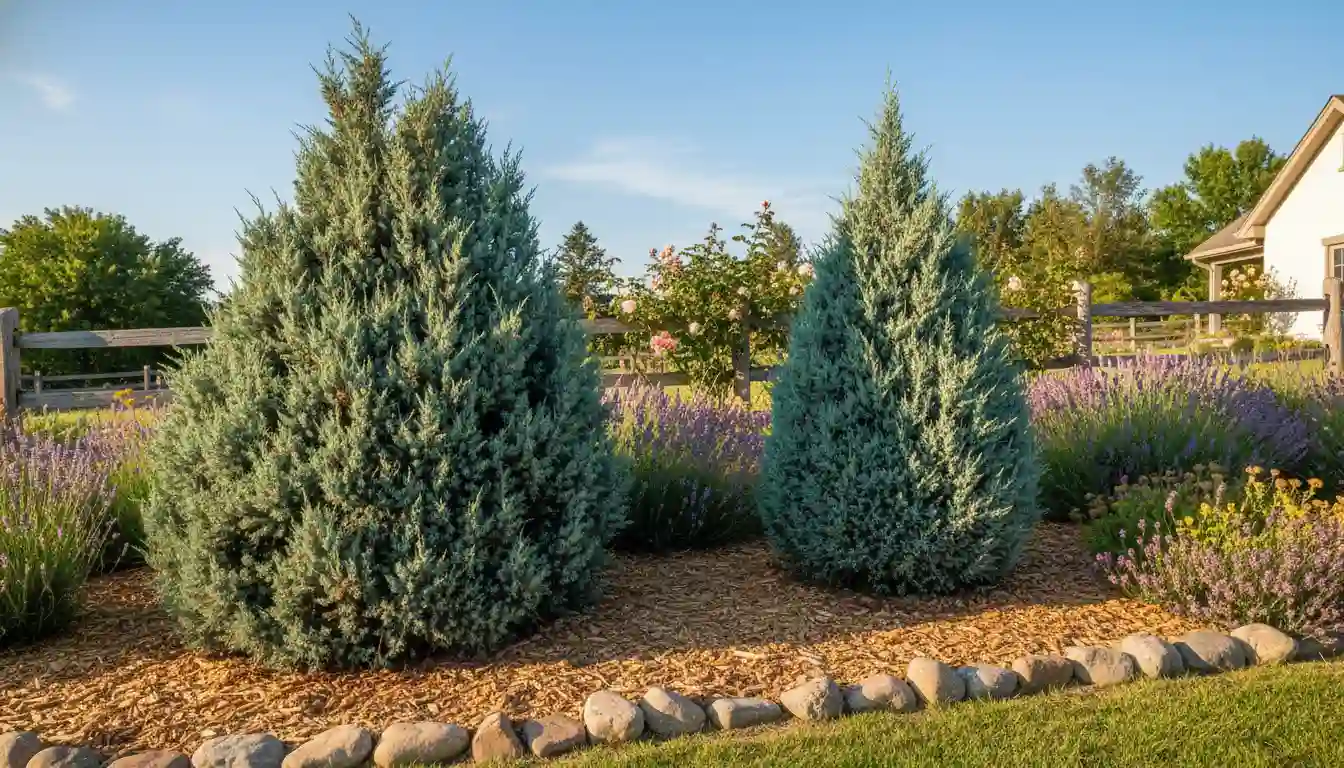
Size & Growth Rate: The Deciding Factor for Your Space
Perhaps the most critical difference for long-term planning is their mature size. Moonglow can reach up to 20 feet tall and 8 feet wide, making it a substantially larger plant. Its faster growth rate means it will fill in more quickly, which is a plus for privacy screening.
Wichita Blue is a more moderately sized option, typically maturing at 10-15 feet tall and 4-6 feet wide. Its slightly slower, more controlled growth makes it easier to manage in residential landscapes and less likely to overwhelm its surroundings.
Beyond the Basics: The Hidden Differences That Matter
While color and size are the most obvious distinctions, several other factors can influence which juniper is the superior choice for your garden. These less-discussed attributes relate to their performance, resilience, and maintenance needs, which are crucial for the long-term health and beauty of your landscape.
Density and Foliage: The Privacy Screen Test
For those seeking to block an unsightly view or create a secluded backyard retreat, foliage density is paramount. Moonglow’s dense, compact-branching habit makes it the clear winner for creating a quick and impenetrable living wall. The way its branches ascend and interlock leaves very few gaps.
Wichita Blue also forms a dense screen but may require slightly closer spacing to achieve the same level of opacity as Moonglow. However, its tighter form means it is less likely to splay open under heavy snow, a significant advantage in northern climates.
Durability & Hardiness: Surviving the Elements
Both junipers are exceptionally tough, thriving in USDA Hardiness Zones 3-7. They are drought-tolerant once established and can handle exposure to wind and sun. They are native to the Rocky Mountains, a testament to their resilience.
One subtle point of differentiation is humidity tolerance. Some gardeners report that Juniperus scopulorum cultivars can be susceptible to fungal diseases like twig blight in regions with high summer humidity. Both are generally resistant, but ensuring good air circulation by providing adequate spacing is a key preventative measure for both varieties.
Soil and Sun: Fueling the Blue Hues
To achieve the most brilliant foliage color, full sun is non-negotiable for both Moonglow and Wichita Blue. Planting them in partial shade will result in looser growth and a duller, greener coloration.
They are highly adaptable to a wide range of soil types, from sandy to clay, as long as the drainage is good. They cannot tolerate “wet feet” or standing water, which will lead to root rot. A little-known fact is that soil pH can subtly influence their color; slightly acidic to neutral soil tends to produce the most intense blues.
Pest and Disease Resistance: A Gardener’s Peace of Mind
Junipers are generally low-maintenance regarding pests and diseases. However, they can be susceptible to bagworms, spider mites, and juniper webworms. These are typically not life-threatening and can be managed with timely intervention.
Of greater concern are fungal issues like Phomopsis twig blight and certain rusts. Cedar-apple rust can be an issue if apple or crabapple trees are nearby. While both cultivars have good resistance, Wichita Blue is sometimes noted as having a slight edge in resisting common blights.
Practical Applications: Choosing the Right Juniper for Your Project
The decision between Moonglow and Wichita Blue ultimately comes down to your specific landscaping goals. Each one excels in different applications, and aligning their characteristics with your vision is the key to success.
The Ideal Choice for Hedges and Privacy Screens
For a tall, dense, and fast-growing privacy screen, Moonglow is the superior choice. Its broad habit and rapid growth will provide the desired coverage more quickly. Plant them 4-5 feet apart to allow their sides to merge into a solid, living fence.
Best for Specimen and Accent Planting
As a standalone specimen or a formal accent, Wichita Blue’s neater, more compact pyramidal form often has the edge. Its striking blue color creates a powerful focal point without demanding as much horizontal space as Moonglow. It works beautifully to frame an entryway or anchor the corner of a foundation planting.
Considerations for Small Gardens and Tight Spaces
In smaller yards or narrow side yards, Wichita Blue is the more practical option. Its smaller mature footprint of 4-6 feet in width makes it a much better fit for tight spaces where Moonglow’s 8-foot spread would be overwhelming. Always plan for the mature size to avoid future conflicts with structures or walkways.
Long-Term Care and Maintenance: Keeping Your Junipers Thriving
One of the greatest appeals of these junipers is their low maintenance profile. Once established, they require very little care to look their best. However, a few best practices will ensure they remain healthy and beautiful for decades.
Pruning: To Shape or Not to Shape?
Both Moonglow and Wichita Blue have beautiful natural forms that require minimal pruning. The most important rule with junipers is to avoid cutting back into old wood, as it will not regenerate new growth. Light shearing in early spring can be done to maintain a very tidy shape, but it’s often unnecessary.
The only essential pruning is the removal of any dead, broken, or diseased branches. An unaddressed issue can sometimes be a sign of a larger problem, much like how one might discover a gap around a recessed medicine cabinet signals a structural shift; catching problems early is key.
Watering and Fertilizing: A Minimalist’s Dream
During their first growing season, water these junipers deeply and regularly to help them establish a strong root system. After the first year, they are remarkably drought-tolerant and will likely only need supplemental water during prolonged, severe droughts.
Fertilizer is generally not required. These hardy plants are adapted to thrive in average to poor soils. If your soil is extremely poor, a single application of a balanced, slow-release fertilizer in the spring is sufficient.
The Expert Verdict: Which Blue Juniper Reigns Supreme?
There is no single winner in the Moonglow vs. Wichita Blue debate. The “better” juniper is entirely dependent on your landscape’s needs and your personal aesthetic preferences.
Choose Moonglow Juniper if your priority is creating a tall, wide, and dense privacy screen as quickly as possible. Its silvery-blue foliage and robust size are unmatched for this purpose.
Choose Wichita Blue Juniper if you need a striking blue specimen tree, a formal accent, or a hedge for a smaller space. Its vibrant color and more compact, tidy form make it a versatile and stunning landscape feature.
Ultimately, making the right choice is about understanding scale and proportion in your garden, a principle that applies to everything from plant selection to interior design, like making sure your TV isn’t bigger than your console. Proper planning and maintenance are crucial for a successful garden year-round, which includes everything from planting to seasonal tool prep, like knowing your Cub Cadet snow blower oil capacity before the first storm hits. By carefully considering the unique traits of both Moonglow and Wichita Blue, you can confidently select the perfect blue juniper to elevate your home and garden for years to come.
