
Mixing Slate and Stainless Appliances: The #1 Secret to a Cohesive Designer Look
You need a new dishwasher, but your refrigerator and range are stainless steel. The problem? You’ve fallen for the warm, matte finish of slate appliances. This scenario creates a common design dilemma: can you mix slate and stainless appliances without your kitchen looking like an unplanned collection of mismatched items?
The fear is valid. For years, the unwritten rule of kitchen design was uniformity. This guide is here to dismantle that outdated notion and provide a clear, strategic framework for mixing these two popular finishes to create a kitchen that looks intentional, sophisticated, and custom-designed.
You'll Learn About
Why the Fear of Mixing Appliance Finishes?
The hesitation to mix appliance finishes stems from a few core concerns. Traditional design advice often emphasized a “matchy-matchy” approach, leading homeowners to believe that any deviation looks like a mistake. This creates a fear that a mixed-finish kitchen will appear chaotic or piecemeal, as if appliances were replaced one by one out of necessity rather than by design.
Another significant worry is resale value. Homeowners are often cautious, wondering if potential buyers will be turned off by a non-uniform set of appliances. The underlying issue is the visual challenge of balancing the distinctly different aesthetics of slate and stainless steel; slate offers warm, earthy undertones, while stainless steel is cool, bright, and reflective.
The Undeniable Appeal: Why Mix Slate and Stainless?
Beyond solving the practical problem of a phased appliance upgrade, intentionally mixing slate and stainless steel offers compelling aesthetic and functional advantages. It’s a move away from the sterile, “showroom” feel of a perfectly matched kitchen towards a more layered, personal, and professionally curated space.
The Practical Perks of Slate
Slate appliances, offered exclusively by GE, have gained a loyal following for good reason. Their signature feature is a matte, stone-inspired finish that is exceptionally resistant to fingerprints and smudges, making them a low-maintenance dream for busy households. This low-gloss surface also minimizes glare, creating a softer, more inviting ambiance in the kitchen.
The warm, deep gray color of slate adds a unique depth and earthiness that stainless steel lacks. This makes it an ideal choice for creating a cozy yet modern atmosphere, pairing beautifully with a wide range of cabinet colors and materials.
The Timelessness of Stainless Steel
Stainless steel has dominated the kitchen appliance market for decades, and its popularity is unwavering. It imparts a clean, professional look reminiscent of a chef’s kitchen, and its reflective surface helps to brighten the space and make it feel larger. Its classic appeal is universal, fitting seamlessly into nearly any design style, from ultra-modern to rustic farmhouse.
While traditional stainless can be prone to smudges, many brands now offer fingerprint-resistant versions. Its widespread availability across all major brands makes it a reliable and versatile choice for any kitchen renovation.
The Designer Advantage
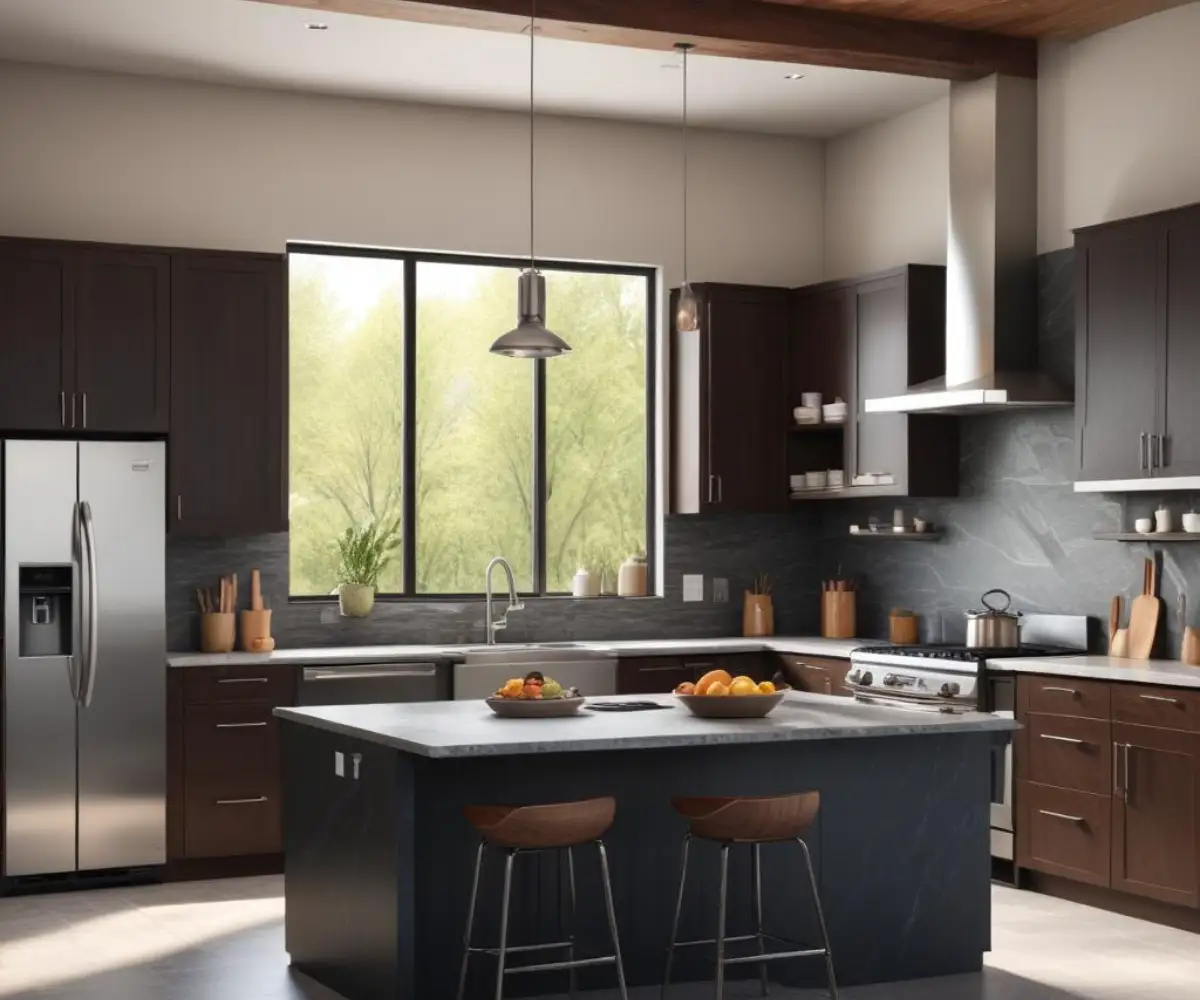
Mixing slate and stainless steel is your ticket to a truly custom-designed kitchen. This approach breaks the mold, adding visual interest and preventing the space from feeling monotonous. It tells a story of thoughtful selection rather than settling for a pre-selected package.
This strategy also offers financial flexibility. It allows you to invest in mid-to-high-end appliances over time, selecting the best model for each function regardless of its finish. When done correctly, this mix signals a high-end, deliberate design choice.
The Core Principle: The “Finish Anchoring” Strategy
The secret to successfully mixing appliance finishes is to avoid a random, equal split. Instead, one finish must be chosen as the dominant “anchor,” while the other serves as a deliberate accent. This simple principle is the foundation of a cohesive look, ensuring the combination feels purposeful rather than accidental.
Without a clear hierarchy, a 50/50 mix can look disjointed. By establishing a primary finish, you create a visual foundation that allows the secondary finish to stand out as a stylish, intentional contrast.
Adapting the 60/30/10 Rule for Appliances
To implement the Finish Anchoring strategy, we can adapt the classic 60/30/10 decorating rule. This rule provides a balanced framework for combining finishes in a way that is visually pleasing and harmonious.
In this context, 60% of your major appliances should be in your dominant finish (e.g., stainless steel for the refrigerator and range). 30% should be your secondary finish (e.g., a slate dishwasher). The final 10% is your “bridging” accent—this is the most critical element, often your cabinet hardware or faucet, which contains tones of both finishes to tie everything together.
Your Step-by-Step Guide to Mixing Slate and Stainless
Achieving a harmonious blend of slate and stainless steel is not about luck; it’s about strategy. Follow these steps to ensure your mixed-finish kitchen looks polished and professional.
Step 1: Choose Your Dominant Finish
First, decide which finish will be your anchor. Consider the overall style of your kitchen. Stainless steel is a natural fit for modern, contemporary, or industrial designs, while slate’s warmer tone excels in transitional, modern farmhouse, or earthy aesthetics. Often, the largest appliance, typically the refrigerator, will dictate the dominant finish.
Step 2: Group Appliances by Function or Zone
Create visual cohesion by grouping appliances. One highly effective technique is to keep the primary “cooking zone”—the range, wall oven, and over-the-range microwave—in one consistent finish. This creates a powerful, unified focal point in the kitchen.
Similarly, you could designate one finish for appliances on a single wall or within a specific block of cabinetry. This “zoning” approach ensures the mix looks organized and intentional, rather than scattered.
Step 3: Use a “Bridging Element” to Create Harmony
This is the master stroke that ties the two distinct finishes together. A bridging element is a component in your kitchen that shares characteristics with both slate and stainless steel, creating a visual link between them. Without this, the mix can feel disconnected.
Cabinet hardware is your most powerful bridging tool. A finish like brushed nickel or matte black can seamlessly connect the cool tones of stainless steel with the warm depth of slate. The principles are similar to those used when mixing different hardware finishes throughout your home. Countertops with veining that includes both gray and brown tones are another excellent bridge, as is a multi-tonal backsplash tile.
| Strategy | Description | Best For… |
|---|---|---|
| Finish Anchoring | Choose one finish to be dominant (2-3 appliances) and the other as a clear accent (1 appliance). | Creating a clear, intentional hierarchy and avoiding a chaotic 50/50 split. |
| The Stainless Steel Sandwich | Place a slate appliance (like a dishwasher) between two stainless steel appliances (like a range and refrigerator). | Integrating a single new appliance into an existing kitchen layout for a balanced look. |
| Zone Grouping | Keep all appliances in a specific work zone (e.g., cooking wall with oven and microwave) in the same finish. | Larger kitchens where you can create distinct visual clusters of appliances. |
| The Hardware Bridge | Use cabinet hardware in a finish like brushed nickel or matte black to tie the warm and cool tones together. | All mixed-finish kitchens. This is a non-negotiable step for a truly cohesive design. |
Common Questions and Pro-Level Solutions
Even with a clear strategy, specific questions often arise during the design process. Here are expert answers to the most common concerns about mixing slate and stainless steel appliances.
Will mixing appliances hurt my home’s resale value?
A thoughtfully mixed-appliance kitchen will not hurt your resale value; in fact, it can enhance it. When the combination looks deliberate and is supported by bridging elements like hardware and countertops, it reads as a high-end, custom kitchen. What negatively impacts value is a mismatched kitchen that looks accidental or dated, not one that is intentionally layered.
Which appliance should be slate, and which should be stainless?
A practical approach is often best. Use the fingerprint-resistant slate finish for high-touch appliances that show the most smudges, such as the dishwasher and refrigerator. Many designers prefer to use stainless steel for the range or wall ovens to create a bright, professional-style cooking zone that acts as a focal point.
What about the handles? Can they be different?
This is a key detail where GE’s slate appliances offer a built-in advantage. Most GE slate models come with stainless steel handles, which automatically create a cohesive link to other stainless appliances in the kitchen. If you are mixing brands, focus on coordinating the style of the handles (e.g., all pro-style bars or all curved handles) more than matching their finish perfectly.
The Overlooked Detail: Lighting and Undertones
To truly master the art of mixing finishes, you must consider the subtle but powerful roles of lighting and color undertones. These elements are often overlooked but are critical to creating a harmonious final look. How light interacts with a surface can dramatically change its appearance.
Slate’s matte finish absorbs light, which contributes to its soft, warm, and grounded feel. In contrast, the reflective nature of stainless steel bounces light around the room, making the kitchen feel brighter and more expansive. This interplay should inform your kitchen’s lighting plan; good under-cabinet and overhead lighting will ensure both finishes look their best.
Choosing the Right Cabinet and Countertop Colors
The undertones of your primary finishes must guide your color choices. Slate possesses warm, earthy undertones, while stainless steel has cool, blue-gray undertones. The key is to select cabinet and countertop colors that complement both. This is why “greige”—a blend of gray and beige—is a perfect neutral for mixed-finish kitchens.
For cabinets, whites with a creamy or warm undertone, warm grays, and medium-toned woods are excellent choices that bridge the gap between slate and stainless. For countertops, look for quartz or granite with a mix of warm and cool veining to physically tie the appliance finishes together. This nuanced approach to color is also essential when successfully blending different dark metal finishes in a design.
Your Final Checklist for a Flawless Mixed-Finish Kitchen
Mixing slate and stainless steel is a confident design choice that adds character and sophistication. By moving past outdated rules, you can create a unique space that is both functional and beautiful. This approach allows for flexibility, personalization, and a truly custom look that reflects your style.
Define your dominant finish to anchor the design (60% of appliances).
Group by function or zone to create visual order.
Select a bridging element, like cabinet hardware or countertops, to unify the space.
Coordinate handle styles for a consistent look, even if finishes differ.
Pay attention to lighting and undertones to ensure both finishes are flattered.
Ultimately, the goal is to create a kitchen that you love. With these expert strategies, you can confidently combine slate and stainless steel appliances to achieve a harmonious, high-end result that is anything but a design mistake.
