
Mixing Oil Rubbed Bronze and Brushed Nickel: Your #1 Guide to a Designer Look
You’re standing in the hardware aisle, paralyzed by choice. In one hand, you have a classic, oil-rubbed bronze knob with its deep, warm tones. In the other, a sleek, brushed nickel pull that feels cool and contemporary. The common wisdom for years has been to pick one and stick with it, but what if you want both? This is the dilemma many homeowners face: the fear that mixing these two distinct finishes will create a chaotic, mismatched mess instead of a thoughtfully designed space.
The core of the problem lies in the inherent contrast between these two metals. Oil-rubbed bronze is warm, dark, and evokes a sense of tradition, while brushed nickel is cool, light, and speaks to modern sensibilities. Without a clear strategy, combining them can feel unintentional. But when done correctly, this very contrast is what creates a layered, sophisticated, and deeply personal interior that looks curated over time.
You'll Learn About
Understanding the Metals: A Tale of Two Tones
Before diving into the “how,” it’s crucial to understand the “what.” Knowing the distinct personalities of oil-rubbed bronze and brushed nickel is the first step toward making them work together in harmony. Their undertones, textures, and the styles they evoke are the foundational elements of this design puzzle.
The Rich Warmth of Oil-Rubbed Bronze
Oil-rubbed bronze is a “living finish,” meaning it’s designed to change and patina over time, revealing subtle copper or bronze highlights beneath its dark surface. This dynamic quality gives it a sense of history and character. It’s a finish that feels substantial and classic, pairing beautifully with traditional, rustic, and Tuscan-style homes. Its deep brown and black tones anchor a space and add a touch of inviting warmth.
Because of its dark nature, it excels at hiding fingerprints and water spots, making it a practical choice for high-traffic areas. However, its commanding presence means it can sometimes feel heavy in a small or poorly lit room if not balanced correctly. Thinking about pairing it with other dark finishes? Explore how to create a cohesive look by mixing black and oil-rubbed bronze for a dramatic and moody effect.
The Sleek Coolness of Brushed Nickel
Brushed nickel, with its soft, silvery-white hue, is the chameleon of metal finishes. Its subtle texture is created by treating the metal with a wire brush, which gives it a matte appearance that masterfully diffuses light. This quality makes it incredibly forgiving when it comes to smudges and water spots, a key advantage over its shinier cousin, polished chrome.
Its neutral, cool tone allows it to blend seamlessly into a wide array of design styles, from ultra-modern to transitional and even contemporary farmhouse. While brushed nickel is incredibly versatile, a room filled exclusively with it can sometimes feel a bit sterile or one-dimensional. To understand how its cool tone interacts with other reflective surfaces, it’s helpful to see how a chrome faucet pairs with brushed nickel hardware, a common combination that relies on subtle differences in warmth.
The 4 Unbreakable Rules for Mixing Bronze and Nickel
Successfully mixing these two metals isn’t about luck; it’s about strategy. By following a few key principles, you can move from fearing a design disaster to creating a space that feels intentional, balanced, and professionally styled. These rules provide a framework for making confident choices.
Rule #1: Choose a Dominant Metal
This is the most critical rule. To avoid a chaotic, checkerboard effect, one metal must be the clear star of the show, while the other serves as a complementary accent. A good guideline is the 60/30/10 principle applied to your metal finishes. Let your dominant metal cover about 60-70% of the fixtures and hardware in the room. Your secondary metal will then serve as the 30% accent, with the remaining 10% being a potential third finish or simply negative space.
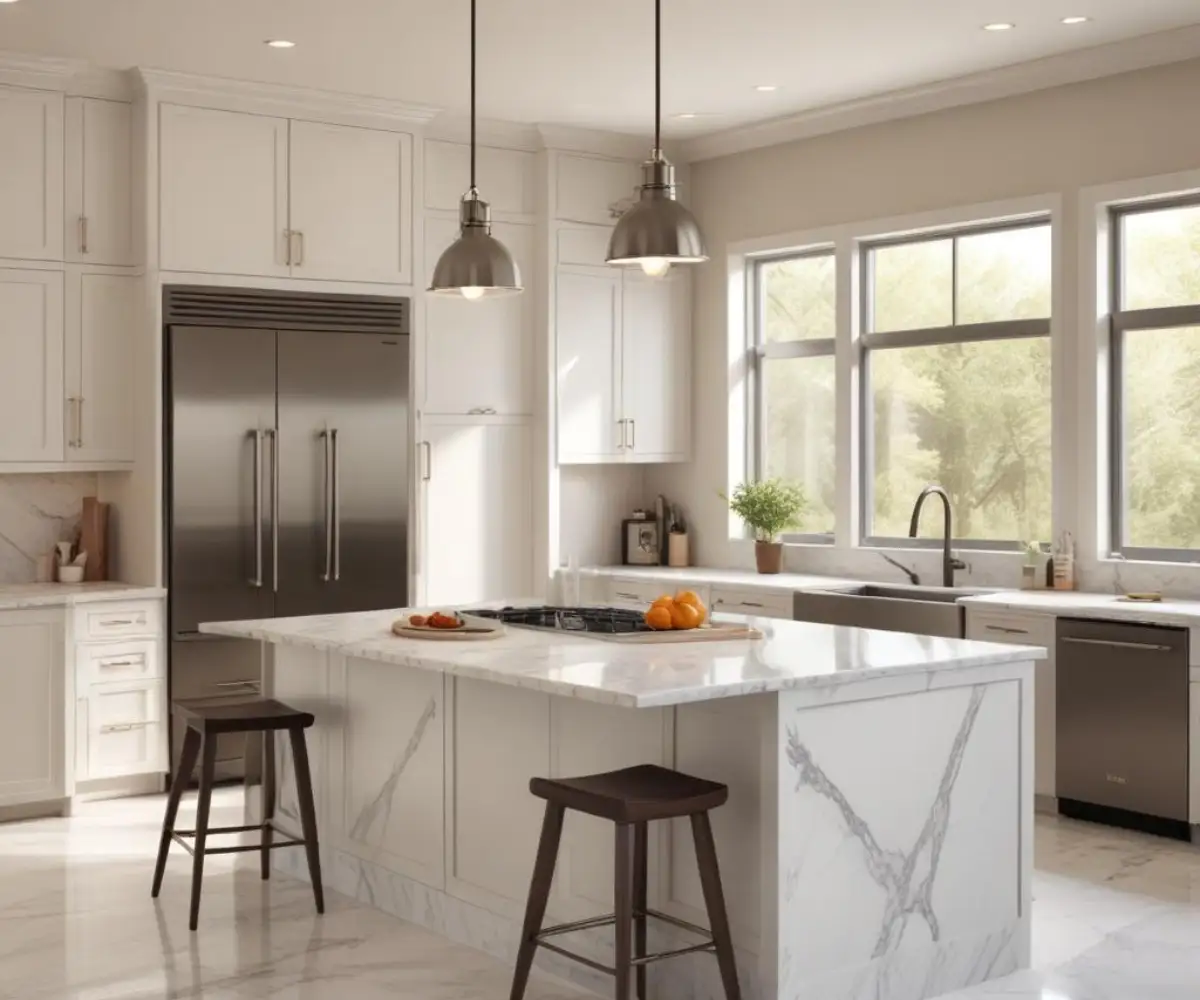
For example, in a kitchen, your dominant finish might be brushed nickel, used on all cabinet pulls, the main faucet, and major appliances. The oil-rubbed bronze would then be introduced as an accent in the pendant lights over the island and perhaps the hardware on a standalone pantry or hutch.
Rule #2: Create Separation and Balance
Avoid placing the two finishes directly next to each other whenever possible. Think in terms of visual height and planes. For instance, use oil-rubbed bronze for elements at eye level and above, like light fixtures, mirror frames, or curtain rods. Then, use brushed nickel for elements below, such as faucets, cabinet hardware, and towel bars. This vertical separation allows each finish to breathe and prevents them from visually competing.
This method creates a natural sense of order and guides the eye through the space. The distribution should feel balanced; if you have a bronze light fixture on one side of the room, consider a small bronze element, like a vase or picture frame, on the other side to create a cohesive flow.
Rule #3: Find a Bridge Element
This is the secret weapon that ties the entire look together. A “bridge” element is a piece in the room that contains both warm and cool tones, effectively marrying the oil-rubbed bronze and brushed nickel. This could be a countertop with veins of both brown and gray, a backsplash tile with subtle variations, or even a piece of artwork.
Wood is an excellent bridging material. A warm wood tone, like oak or walnut, can pick up the warmth of the bronze, while its grain might have cooler, grayish undertones that connect to the nickel. This subtle connection makes the pairing of the metals feel deliberate and harmonious rather than random.
| Feature | Oil-Rubbed Bronze | Brushed Nickel |
|---|---|---|
| Color/Undertone | Deep brown/black with warm, coppery highlights | Silvery-white with cool, slightly warm undertones |
| Best For Styles | Traditional, Rustic, Tuscan, Farmhouse | Modern, Contemporary, Transitional |
| Maintenance | Excellent at hiding fingerprints and water spots | Very good at hiding smudges; easy to clean |
| Primary Vibe | Warm, Aged, Classic | Cool, Sleek, Versatile |
| Pairs Well With | Cream, beige, warm wood tones, earthy colors | Gray, white, blue, cool-toned stones |
Rule #4: Mind the Texture and Sheen
While mixing colors, don’t forget you are also mixing textures. Oil-rubbed bronze often has a smooth, low-sheen, almost matte appearance. Brushed nickel has a distinct, fine-lined texture. Strive for a consistent level of shine, or lack thereof. A matte bronze will pair more successfully with a brushed nickel than it would with a highly polished chrome because both have a muted quality.
If you introduce a third metal, such as a touch of gold, ensure its finish aligns. For instance, a soft, brushed gold would be a better fit than a high-polish, reflective gold. For guidance on matching hardware to specific warm finishes, see this guide on cabinet hardware to match Brizo Luxe Gold, which explores the nuances of sheen and undertone.
Practical Application: Room-by-Room Strategies
Theory is one thing, but applying these rules to real-world spaces is where the design comes to life. Here’s how you can implement this mixed-metal strategy in the most common areas of your home.
In the Kitchen
The kitchen offers the most opportunities for mixing metals. A popular and effective approach is to use brushed nickel for the functional “workhorse” items and oil-rubbed bronze for the decorative “jewelry.”
Example Scenario:
- Dominant (Brushed Nickel): Main sink faucet, cabinet pulls and knobs, stainless steel appliances (which read as a neutral cool tone).
- Accent (Oil-Rubbed Bronze): Pendant lights over the island, faucet for a secondary prep sink, and the hardware on a standalone furniture piece like a hutch.
This approach keeps the high-touch, functional hardware consistent and easy to clean while using the bronze to add warmth and create stunning focal points.
In the Bathroom
In the bathroom, the key is to create clear zones for each finish. Plumbing fixtures are often a good place to maintain consistency.
Example Scenario:
- Dominant (Oil-Rubbed Bronze): Faucet, showerhead, and tub filler. This creates a cohesive look for all the plumbing.
- Accent (Brushed Nickel): Light fixtures (sconces), mirror frame, towel bars, and cabinet hardware.
This strategy prevents the space from looking disjointed. By grouping all plumbing in one finish and all accessories in another, you create a look that is layered yet organized and intentional.
The Overlooked Factor: Lighting’s Impact on Metal Finishes
A crucial element that many guides overlook is the profound effect of lighting on how metal finishes are perceived. The color temperature of your light bulbs—measured in Kelvins (K)—can either enhance your mixed-metal palette or completely sabotage it.
Warm light (2700K-3000K) will accentuate the rich, coppery undertones in oil-rubbed bronze, making it feel even warmer and more inviting. It will also soften the coolness of brushed nickel, giving it a subtle, champagne-like glow. Cool light (4000K-5000K), on the other hand, will highlight the crisp, silvery aspects of brushed nickel, making it appear brighter and more modern. However, this same light can wash out oil-rubbed bronze, making it look flat and dull.
For a balanced look that flatters both finishes, aim for neutral or warm-white lighting (around 3000K-3500K). This middle ground ensures that the bronze retains its warmth and the nickel its clean brightness, allowing them to coexist beautifully without one overpowering the other. Dimmers are also invaluable, allowing you to adjust the intensity and mood, further refining the interplay between your chosen metals.
Final Thoughts: Confidence is the Key Ingredient
Mixing oil-rubbed bronze and brushed nickel is no longer a design taboo; it’s a mark of a confident, personalized home. By moving beyond the outdated notion that everything must match, you open the door to a richer, more dynamic interior. The fear of clashing is easily overcome with a clear strategy.
Remember the core principles: establish dominance, create separation, find a bridge, and respect the texture. By treating these finishes as complementary partners rather than adversaries, you can create a layered, cohesive, and visually interesting space that feels both timeless and uniquely you. This thoughtful blend of warm and cool, old and new, is the secret to a truly designer-level look.
