Mixing Copper and Brass: The #1 Design Secret to a Luxe Home
You stand in the aisle, a brass faucet in one hand and a copper light fixture in the other. A nagging voice whispers the old design “rule”: never mix your metals. For years, homeowners have been paralyzed by this outdated advice, fearing a chaotic, mismatched look that screams amateur instead of curated.
This hesitation leads to safe, but often monotonous, spaces. Entire rooms are outfitted in a single metal finish, resulting in a flat, one-dimensional look that lacks depth and personality. The real problem isn’t mixing metals; it’s mixing them without a clear strategy.
You'll Learn About
The Great Metal Debate: Style vs. Science
The fear of mixing copper and brass stems from two distinct concerns. The first is aesthetic harmony—will these two warm-toned metals clash or complement each other? The second is a practical, scientific issue: galvanic corrosion, a term that sounds intimidating and warns of potential damage, especially in plumbing.
Understanding the difference between these two challenges is the key to unlocking a sophisticated, layered design. One is about visual balance, while the other is about electrochemical reactions. Addressing both allows you to confidently combine these beautiful materials throughout your home.
Aesthetic Alchemy: How to Mix Copper and Brass Flawlessly
The secret to a successful mixed-metal palette is intention. It’s about creating a conversation between the elements, not a competition. Both copper and brass belong to the warm metal family, giving them a natural compatibility that cool metals like chrome or stainless steel lack.
Start by choosing a dominant metal. This will be the most prevalent finish in your space. For example, in a kitchen, your cabinet hardware and faucet might be brushed brass. This sets the primary tone for the room.
Your second metal, in this case, copper, should be used as an accent. Think of it as a supporting character. Introduce it in a few key places to create pops of warmth and visual interest—a set of gleaming copper pendants over the island, a classic copper tea kettle, or a collection of copper cookware on display. This thoughtful distribution prevents the space from feeling accidental.
Beyond the Basics: Unifying Your Mixed-Metal Look
To truly elevate the design, consider the finish. Mixing a brushed or satin brass with a polished copper can create a subtle, sophisticated contrast in texture. Conversely, pairing an aged brass with a patinated copper enhances a rustic or vintage aesthetic.
Another powerful technique is to use a “bridge” element. This is a single item or surface that contains both metals or colors that complement them both. A piece of artwork, a patterned backsplash, or a slab of granite with both warm gold and reddish-brown veining can tie the entire look together, making the mixed metals feel deliberate and harmonious.
This strategy extends beyond a single room. For a cohesive feel throughout your home, you can use brass as the primary metal for functional items like doorknobs and hinges, a concept central to creating timeless door hardware styles, while using copper for more decorative, statement pieces like lighting and accessories.
The Practical Reality: Plumbing and Corrosion Explained
While mixing metals in decor is a matter of taste, in plumbing, it becomes a matter of science. The primary concern is galvanic corrosion. This electrochemical process occurs when two different metals are in contact in the presence of an electrolyte, like water. One metal (the anode) corrodes faster, while the other (the cathode) is protected.
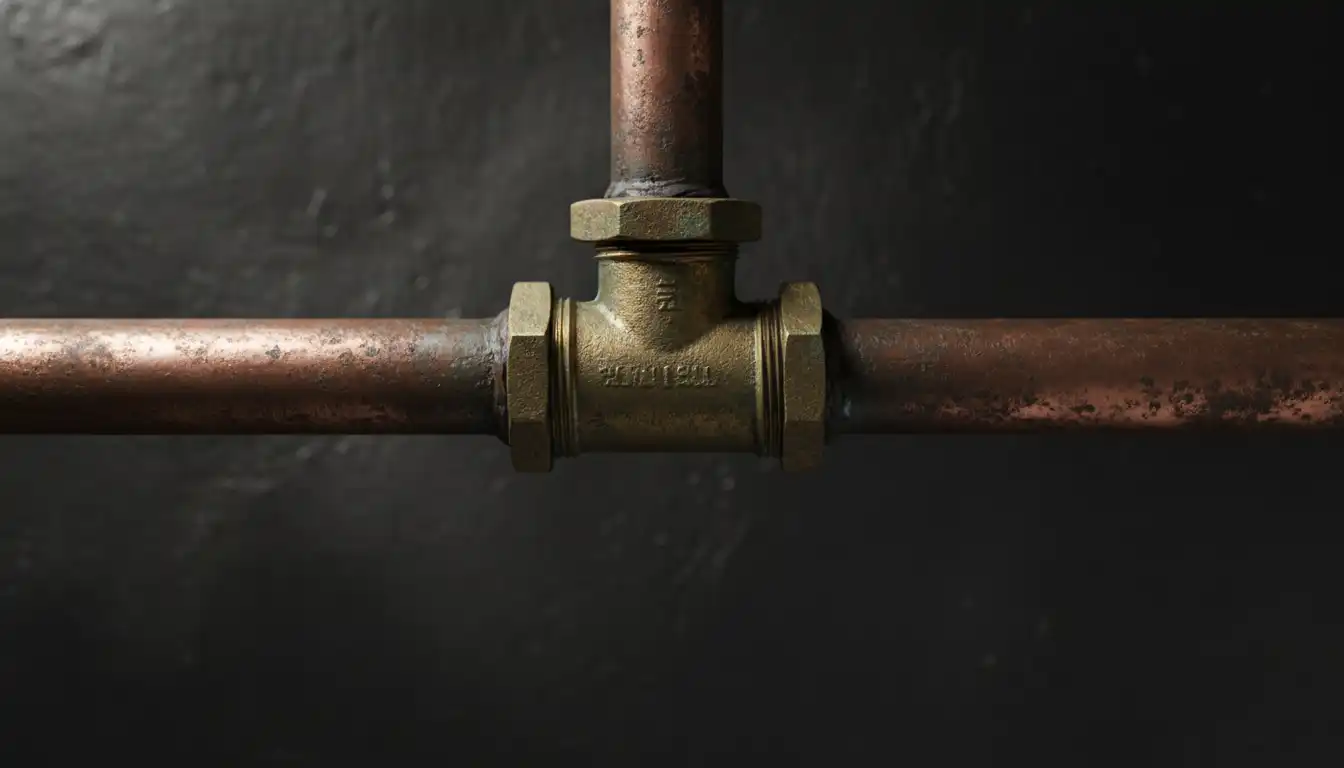
When connecting copper pipes directly to standard yellow brass pipes in a water supply line, this can be a real risk. However, the plumbing industry has a simple and effective solution that has been used for decades.
The Unsung Hero: Dielectric Unions
The key to safely joining copper and brass pipes is a dielectric union. This is a special fitting that creates a physical barrier between the two metals, typically with a rubber or plastic washer and a sleeve. This barrier stops the flow of electrical current, halting the galvanic corrosion process before it can even begin.
Any professional plumber will use a dielectric union when making such a connection. For the DIY homeowner, it’s a critical, non-negotiable component for ensuring the longevity of your plumbing system. Forgetting this small part can lead to leaks and pipe failure down the road.
Why Brass Fittings on Copper Pipes Are So Common
You might notice that most shut-off valves and many small fittings attached to copper pipes are made of brass. This is perfectly safe and standard practice. The reason lies in the composition of modern plumbing brass.
Modern brass alloys used for fittings, often called red brass, have a high copper content and a lower zinc content. This makes them very close to copper on the galvanic scale, significantly reducing the potential for corrosion. The small surface area of the fitting compared to the large pipe system also minimizes any potential reaction, making it a non-issue in almost all residential applications.
| Application Area | Key Concern | Solution / Best Practice |
|---|---|---|
| Kitchen & Bath Decor (Faucets, Lights, Hardware) | Aesthetic clash or looking unintentional. | Choose a dominant metal (e.g., 70% brass) and use the other as an accent (30% copper). Vary the textures for depth. |
| Plumbing Pipes (Direct Connection) | Galvanic corrosion leading to leaks. | Always use a dielectric union. This fitting physically separates the metals and stops corrosion. |
| Small Plumbing Fittings (Valves on Copper Pipe) | Minor potential for corrosion. | Generally safe. Modern brass fittings have high copper content, making the reaction negligible. It is standard industry practice. |
| High-End Appliances (Handles & Knobs) | Integrating with other kitchen metals. | Use appliance hardware as an accent. Many mid to high-end appliances offer custom hardware in bronze or copper to complement brass fixtures. |
Achieving a High-End, Cohesive Look
Mixing copper and brass is not a design flaw; it’s a feature of a sophisticated, personalized home. By moving past outdated rules, you can create spaces with incredible warmth, depth, and character. Whether you are choosing a faucet or installing a pipe, the key is to understand the principles at play.
For your home’s decor, think like a designer: establish dominance, use accents strategically, and create bridges to unify the look. For plumbing, think like a scientist: respect the potential for galvanic corrosion and use the right component—the dielectric union—to ensure a safe and lasting connection. With this knowledge, you can confidently embrace the rich and inviting world of mixed metals.
Frequently Asked Questions
Is it safe to mix copper and brass fittings?
Yes, it is generally safe to mix copper and brass fittings, and it is a common practice in plumbing. Brass is an alloy that contains copper, which makes the two metals highly compatible. This combination can enhance the durability and adaptability of the plumbing system.
Will mixing copper and brass cause corrosion?
While both metals are resistant to corrosion, there is a potential for galvanic corrosion when mixing copper and brass in the presence of moisture. Galvanic corrosion is an electrochemical process that can cause one metal to corrode more quickly than the other. To minimize this risk, especially in plumbing, it is recommended to use dielectric unions to create a barrier between the two metals.
What is the main difference between copper and brass?
The primary difference is their composition. Copper is a pure elemental metal with a distinct reddish-brown color. Brass, on the other hand, is an alloy primarily made of copper and zinc, which gives it a more yellowish, golden hue.
Can I mix copper and brass for decorative purposes?
Absolutely. Mixing the warm, reddish tones of copper with the golden hue of brass can create a visually interesting and dynamic look in home decor. This combination adds warmth, texture, and character to a space. Many interior designers intentionally mix metals to create a layered and sophisticated aesthetic.
Are there any advantages to using brass over copper?
Brass offers several advantages over pure copper in certain applications. It is generally harder and has higher strength and durability. Brass is also more machinable, meaning it is easier to cut and shape into various fittings and components.