Mismatched Washer and Dryer: Your #1 Smartest Laundry Decision
You imagine a perfect laundry room: gleaming, matched appliances sitting side-by-side, a testament to domestic harmony. But reality hits. Your trusty washer gives out, years before its dryer counterpart, or you find an incredible deal on a single, high-efficiency machine. Suddenly, you’re facing the dreaded prospect of a mismatched washer and dryer.
Is this a laundry room sin? Will your clothes suffer? The short answer is a resounding no. In almost every functional sense, having a mismatched set is not only perfectly fine but can often be the most intelligent financial and practical choice a homeowner can make.
You'll Learn About
Debunking the Myths: Why Mismatched Sets Are Perfectly Fine
The belief that washers and dryers must be purchased as a pair is one of the most persistent myths in home appliances. This idea is largely driven by aesthetics and marketing, not by engineering. The core functions of washing and drying are entirely independent processes.
Your washer connects to a water line and a standard electrical outlet, while your dryer connects to a dedicated 240-volt outlet (for electric models) and an exhaust vent. They are two separate machines that perform two separate tasks. They do not need to “talk” to each other to work effectively, and one brand’s washing ability has no impact on another brand’s drying performance.
Efficiency and Performance Are Not a Team Sport
An appliance’s energy and water efficiency is tied to its individual design and Energy Star rating, not its matching partner. A high-efficiency front-load washer will save you money on water and energy bills regardless of the brand or age of the dryer next to it. Similarly, a dryer with advanced moisture sensors will stop the cycle when clothes are dry, preventing over-drying and energy waste, no matter what machine washed them.
Performance is also entirely independent. A washer known for superior stain removal will perform that job excellently whether it’s paired with a top-of-the-line dryer or a decade-old model. The two machines are teammates in your laundry routine, but their individual performance stats are what truly matter.
The Stacking Dilemma: The ONLY Time Mismatching Is a Major Problem
There is one critical exception where mismatching brands is highly discouraged: stacking them vertically. If you plan to stack your units to save space, you must use a compatible pair from the same manufacturer. Stacking kits are designed with precise measurements and locking mechanisms that are specific to certain models within a brand.
Attempting to place a dryer on top of a washer from a different brand is a serious safety hazard. The units will not secure properly, and the intense vibration from the washer’s spin cycle could cause the dryer to shift and potentially fall. Never stack a mismatched washer and dryer. The only safe alternative for vertical placement is to build a sturdy, custom shelf to hold the dryer, completely independent of the washer below it.
Capacity and Dimensions: The Practical Side of Mismatching
While brand matching is functionally irrelevant for side-by-side setups, capacity matching is crucial for efficiency. A common mistake is buying a massive new washer without considering the existing dryer’s capacity. As a rule of thumb, your dryer should have roughly double the cubic foot capacity of your washer.
This larger volume is necessary because wet clothes are compact, but they need ample room to tumble freely in heated air to dry evenly and quickly. If you stuff a large, wet load from a high-capacity washer into a small-capacity dryer, the result is often damp, wrinkled clothes and much longer drying times. Before purchasing a replacement, always check the capacity of your existing machine.
A Guide to Matching Capacities
Physical dimensions are just as important. Measure your space carefully, accounting for the depth of the machines plus several inches behind them for hoses and venting. Also, consider the swing of the doors. Ensure that the washer and dryer doors don’t collide or block your access when opened simultaneously.
| Washer Capacity (Cubic Feet) | Recommended Dryer Capacity (Cubic Feet) | Typical Load Capability |
|---|---|---|
| 3.5 – 4.4 | 7.0 – 8.0 | Good for Queen Size Comforters |
| 4.5 – 5.0 | 7.5 – 8.5 | Easily Handles King Size Comforters |
| 5.1+ | 8.0+ | Washes a King Comforter and Sheets in One Load |
The Smart Shopper’s Secret: Advantages of a Mismatched Pair
Choosing to mismatch your appliances can be a strategic move that saves money and gets you better features. When you aren’t locked into a matched set, you have the freedom to shop for the best possible deal on each individual unit. This allows you to take advantage of clearance sales, floor models, or brand-specific promotions.
Furthermore, it empowers you to build a “best-in-class” laundry duo. One brand might be renowned for its washer’s direct-drive motor reliability, while another brand might lead the industry in sensor-drying technology. By purchasing separately, you can select the top-performing machine for each task, tailored to your specific needs, rather than settling for a package deal where one appliance might be weaker than the other.
From Eyesore to Asset: Design Tips for a Cohesive Laundry Room
The primary concern for most homeowners is aesthetics. A white washer next to a stainless steel dryer can feel jarring. However, with a few simple design strategies, you can make your mismatched pair look intentional and stylish.
One of the most effective solutions is to build a countertop over both units. A butcher block, laminate, or stone countertop instantly unifies the space, hides the tops of the machines, and provides a large, practical surface for folding laundry. This single design choice transforms the appliances from two separate objects into one integrated workstation.
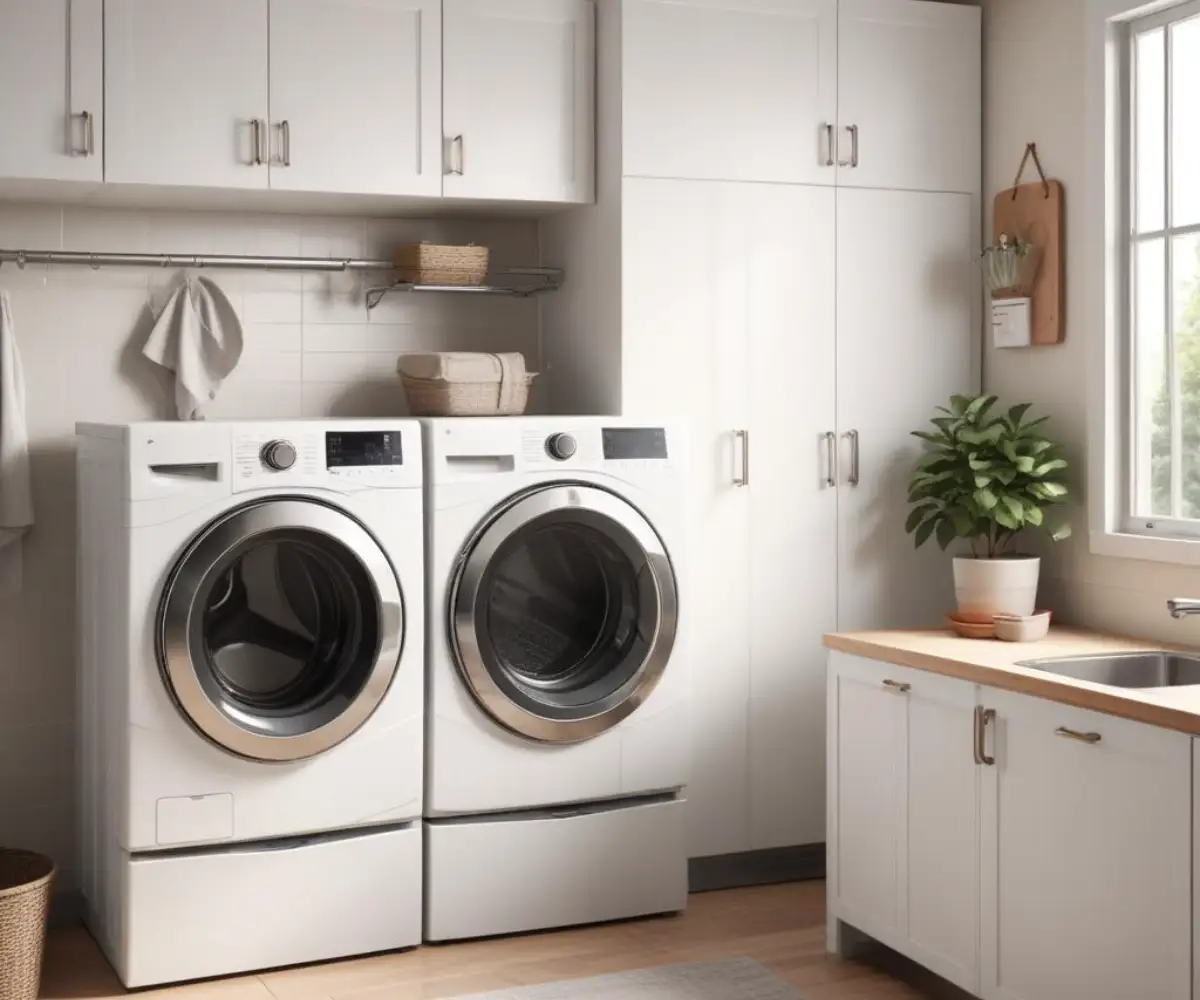
Another strategy is to use cabinetry. Enclosing the units within custom or stock cabinetry creates a clean, built-in look that completely conceals the mismatch. If a full renovation isn’t an option, simply adding a narrow rolling cart or a decorative panel between the machines can create a visual break that makes the difference in style and color feel deliberate.
Beyond the Basics: Advanced Compatibility Checks
While brand compatibility is a myth, utility compatibility is a reality. Before buying any new appliance, verify your home’s connections. For an electric dryer, check if your outlet is a 3-prong or 4-prong configuration and purchase the correct power cord to match. For a gas dryer, ensure your gas line is in good condition and professionally installed.
It’s also worth noting that some modern “smart” laundry pairs offer linked features, where the washer can send cycle information to the dryer. This is a niche convenience that you will lose with a mismatched set. However, for the vast majority of users, this minor feature does not outweigh the significant cost and performance benefits of choosing appliances independently.
A Note on Interior Wall Stability
Modern washing machines, particularly high-efficiency front-loaders, have incredibly high spin speeds. This can create significant vibration, which is more noticeable in laundry rooms located on upper floors. Ensuring your laundry room is built with robust framing, such as considering the benefits of 2×6 interior walls, can help minimize vibration and noise transfer throughout your home.
Avoiding Installation Headaches
Proper planning is key to a smooth installation. Measure your space, doorways, and hallways to ensure the new appliance can be delivered without issue. A common issue is misjudging the location of studs or pipes, and dealing with a stud finder false positive can delay your installation and cause unnecessary frustration.
The Final Verdict: Should You Mix and Match?
Unless you are stacking your units, there is no functional or safety reason to buy a matching washer and dryer set. The decision to mix and match is a financially savvy and practical one. It allows you to prioritize what truly matters: performance, reliability, and value.
By focusing on matching capacity and dimensions rather than brand logos, you can build a laundry system that is perfectly tailored to your household’s needs. If you’re undertaking a larger laundry room renovation to accommodate your appliances, you might find yourself exploring more extensive upgrades. Sometimes, improving the utility space leads to considering how to enhance the overall home, like looking into the cost to raise 8-foot ceilings for a more spacious feel. Ultimately, a mismatched washer and dryer set is not a design flaw; it’s the mark of a smart homeowner who values substance over superficial style.