
Bloom Booster vs All Purpose: The #1 Miracle-Gro Mistake You’re Making
You stand in the garden aisle, a sea of colorful boxes promising the lushest leaves and the most vibrant flowers. You grab a familiar green and yellow box, assuming it’s the right choice for your entire garden. Yet, weeks later, you’re faced with a frustrating reality: your tomato plants are a jungle of leaves with no fruit, and your petunias look lush but are stubbornly refusing to flower.
This is a story familiar to countless gardeners. The promise of a beautiful, productive garden feels just out of reach, not due to a lack of effort, but a simple misunderstanding of what your plants are truly asking for. The solution isn’t to fertilize more; it’s to fertilize smarter.
The key to unlocking your garden’s potential lies in understanding the fundamental difference between two of the most popular plant foods: Miracle-Gro All-Purpose and Miracle-Gro Bloom Booster. They aren’t interchangeable, and using the wrong one at the wrong time is the single biggest reason for disappointing results. This guide will demystify the numbers on the box and give you a professional strategy to achieve explosive blooms and a healthy, vibrant garden.
You'll Learn About
Decoding the Numbers: What N-P-K Really Means for Your Plants
Before diving into specific products, you must understand the three numbers prominently displayed on every fertilizer package. These numbers represent the N-P-K ratio, the cornerstone of plant nutrition. This isn’t just jargon; it’s the recipe for your plant’s success.
Each number corresponds to the percentage of a primary macronutrient essential for plant life. Think of them as the three main food groups for your garden.
N is for Nitrogen: The Growth Engine
Nitrogen is the primary driver of vegetative growth. It is responsible for creating lush, green leaves and strong stems. When you see a plant with vibrant, deep green foliage, you are seeing the work of sufficient nitrogen. It’s a critical component of chlorophyll, the pigment that allows plants to convert sunlight into energy through photosynthesis.
A plant deficient in nitrogen will have pale, yellowing leaves (a condition called chlorosis), especially on older growth, and will appear stunted. Conversely, too much nitrogen at the wrong time can force a plant to focus all its energy on producing leaves, often at the expense of flowers and fruit.
P is for Phosphorus: The Bloom and Root Builder
Phosphorus is the master nutrient for energy transfer, root development, and, most importantly, flowering and fruiting. It is the key ingredient for producing big, beautiful blooms and a bountiful harvest. Strong root systems are the foundation of a healthy plant, and phosphorus plays a vital role in their establishment.
When it’s time for a plant to enter its reproductive phase—creating flowers, fruits, and seeds—it draws heavily on phosphorus reserves. This is why fertilizers designed to promote flowering are always high in this second number.
K is for Potassium: The Plant Protector
Potassium is the great regulator. It doesn’t produce dramatic visual results like the green leaves from nitrogen or the big flowers from phosphorus, but its role is just as critical. Potassium governs a plant’s overall health, vigor, and resilience.
It helps regulate water movement within the plant, strengthens it against temperature extremes, and improves its resistance to diseases and pests. Think of it as the plant’s immune system, ensuring all internal processes run smoothly so it can effectively use the nitrogen and phosphorus you provide.
Miracle-Gro All-Purpose: The Foundation for a Strong Start
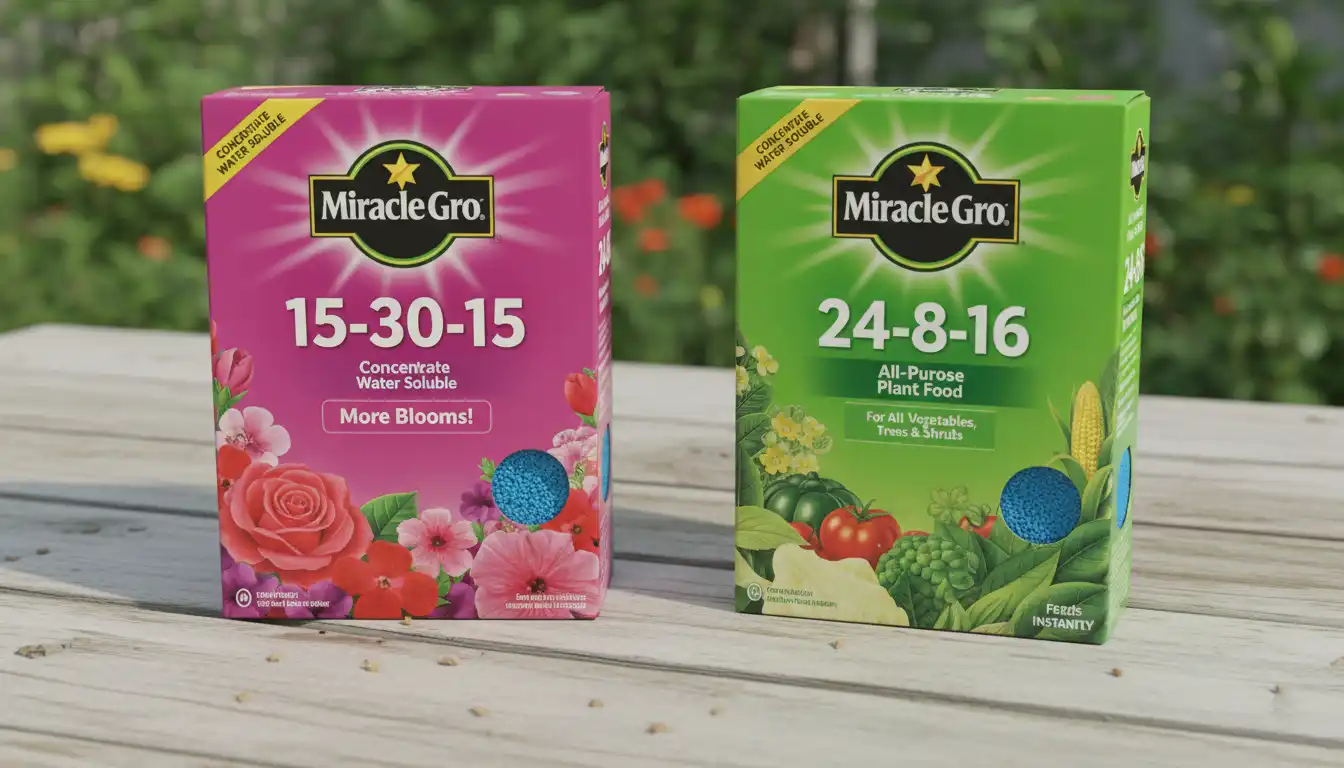
As its name suggests, Miracle-Gro Water Soluble All-Purpose Plant Food is designed as a general-purpose tool. Its typical N-P-K ratio is 24-8-16, a formula that tells a clear story: it is dominated by nitrogen.
This high-nitrogen blend is engineered to do one thing exceptionally well: promote vigorous vegetative growth. When you apply it, you are telling your plants to focus their energy on building a strong framework of leaves and stems. This is essential during the early stages of a plant’s life.
Young seedlings, leafy greens like lettuce and spinach, and houseplants prized for their foliage all thrive on a nitrogen-rich diet. It’s also effective for landscape shrubs and young trees as they establish themselves. During the initial growth phase, building this “plant factory” is crucial for future success. Without a robust set of leaves for photosynthesis, a plant will never have the energy to support a spectacular bloom show later.
Miracle-Gro Bloom Booster: The Secret to a Flower-Filled Garden
Miracle-Gro Water Soluble Bloom Booster Flower Food operates on a completely different principle. Its N-P-K ratio, typically 15-30-15, immediately reveals its purpose. The middle number, phosphorus, is double the amount of nitrogen and potassium.
This high-phosphorus formula is a direct signal to your plants to shift their focus from growing leaves to producing flowers, fruits, and seeds. It provides the specific type of energy needed for the demanding process of reproduction. This is the fuel for vibrant colors, more numerous blooms, and a heavier yield of vegetables like tomatoes and peppers.
This fertilizer is the go-to choice for most flowering plants, including annuals like petunias and marigolds, perennials, and flowering shrubs like roses and hydrangeas. Using it just as buds begin to form and continuing through the flowering season can dramatically increase the quality and quantity of your blooms.
The Decisive Factor: When to Use Each for Maximum Impact
The choice between All-Purpose and Bloom Booster is not about which one is “better” overall, but which one is right for your plant’s current stage of life. Using them strategically is the difference between an average garden and a truly spectacular one.
The fundamental error is thinking one-size-fits-all. A plant’s nutritional needs change dramatically from its youth to its maturity. Providing the right nutrients at the right time is the secret that professional growers use to achieve stunning results.
| Feature | Miracle-Gro All-Purpose | Miracle-Gro Bloom Booster |
|---|---|---|
| Primary Goal | Promote lush, green vegetative growth (leaves and stems). | Stimulate flower production, fruit development, and root growth. |
| Typical N-P-K Ratio | High Nitrogen (e.g., 24-8-16) | High Phosphorus (e.g., 15-30-15) |
| Best For | Young plants, seedlings, leafy vegetables, foliage houseplants, and lawns. | Flowering annuals, perennials, roses, tomatoes, peppers, and fruiting plants. |
| When to Apply | At the beginning of the growing season to build a strong plant structure. | Just before buds set and throughout the flowering and fruiting season. |
The #1 Mistake That Leads to a Disappointing Garden
The most common pitfall for well-intentioned gardeners is using a single fertilizer for the entire season. This often leads to one of two frustrating outcomes, both of which are entirely avoidable.
Understanding these common problems is the first step toward solving them permanently and achieving the garden you’ve envisioned.
The “All Leaves, No Flowers” Syndrome
This is the classic symptom of prolonged high-nitrogen feeding. You’ve diligently used All-Purpose fertilizer all season long, and your tomato or pepper plants look incredible. They are tall, bushy, and a stunning shade of deep green. Yet, when you look closely, you find only a few flowers, or worse, none at all.
By continually feeding the plant nitrogen, you’ve kept it in a perpetual state of vegetative growth. You’ve signaled “grow more leaves” week after week, and the plant has dutifully obeyed, never receiving the signal to switch to its reproductive, flowering mode. The same applies to hanging baskets of petunias that look like green waterfalls but have sparse, disappointing blooms. This issue is akin to the challenges faced with unripe zucchini woes, where improper nutrient timing can halt fruit development.
The “Weak and Stunted” Problem
The opposite mistake is using only Bloom Booster from the very beginning. A gardener, eager for flowers, might think a high-phosphorus diet is the best approach right from the start. However, this neglects the plant’s foundational needs.
A young plant needs nitrogen to build the leafy “solar panels” required for photosynthesis. Without a strong structure of stems and leaves, the plant simply won’t have the energy or the physical framework to support abundant flowers later on. The result is often a plant that is small and weak, producing a few premature flowers before it has the resources to sustain them.
A Pro-Level Feeding Strategy: How to Combine Fertilizers for Success
The secret is not to choose one product over the other but to use them as a two-part system that adapts to your plant’s changing needs throughout the season. This strategic approach ensures your plants get exactly what they need, precisely when they need it.
Phase 1: Build the Factory (Early Season)
From the time you plant your seedlings or your perennials emerge in the spring, your first priority is to build a strong, healthy plant. During this initial growth phase, use Miracle-Gro All-Purpose Plant Food. This nitrogen boost will fuel the development of a robust root system and a full canopy of leaves.
This period can last from a few weeks to a couple of months, depending on the plant. The goal is to create a vigorous “plant factory” capable of producing and supporting a massive number of blooms later. A strong frame is essential, much like providing proper bush bean support ideas to prevent the plant from collapsing under the weight of its own harvest.
Phase 2: Flip the Switch (Pre-Bloom)
The transition is the most critical step. As your plants reach maturity and you see the first tiny flower buds begin to form, it’s time to change the signal. Stop using the All-Purpose fertilizer and switch to Miracle-Gro Bloom Booster.
This change in diet tells the plant to halt its aggressive leaf production and divert all its energy into developing those buds into big, beautiful flowers. This is the moment you transition from building the factory to starting the production line.
Phase 3: Maximize Production (Full Bloom)
Once the plant is actively flowering or fruiting, continue feeding with Bloom Booster every 7 to 14 days, according to the package directions. This steady supply of phosphorus will sustain continuous blooming, produce more vibrant colors, and increase the yield of your vegetables.
By following this phased approach, you are working with the plant’s natural life cycle, providing targeted nutrition at each stage to maximize its genetic potential. You are no longer just a gardener; you are a plant nutrition strategist.
Are There Other Factors to Consider?
While mastering the All-Purpose versus Bloom Booster strategy is a game-changer, it’s also helpful to see how it fits into the broader context of garden care. The principles of N-P-K apply to all types of fertilizers, not just water-soluble ones.
For gardeners who prefer an organic approach, bone meal is a fantastic natural source of phosphorus to boost blooms, while blood meal or composted manure can provide the necessary nitrogen for early growth. Similarly, slow-release granular fertilizers work on the same principles, often having balanced or bloom-focused N-P-K ratios. The delivery method changes, but the plant’s needs remain the same. The choice of nutrients is as specific to a plant’s needs as choosing between delphinium vs lupine is to your garden’s aesthetic and soil conditions.
Frequently Asked Questions
Can I mix All-Purpose and Bloom Booster together?
It is not recommended. Doing so would create a confusing nutritional signal for the plant. The power of this strategy lies in using them separately at different stages of the plant’s life cycle to guide its growth.
How often should I be feeding my plants?
For water-soluble fertilizers like these, the general guideline is every 7 to 14 days during the active growing season. However, you should always read and follow the specific instructions on the product label, as concentrations can vary.
Can using too much Bloom Booster burn my plants?
Yes, any fertilizer can cause “fertilizer burn” if it’s applied too heavily or too frequently. This occurs when excess fertilizer salts draw moisture out of the plant’s roots. Always dilute the product according to the directions and apply it to moist soil to prevent root damage.
The Verdict: A Partnership, Not a Competition
The debate of Miracle-Gro Bloom Booster vs. All-Purpose has a simple resolution: it’s the wrong question. These two products were never meant to be competitors. They are partners, designed to be used in a sequential strategy to guide your plants through their life cycle.
All-Purpose builds the foundation, and Bloom Booster delivers the spectacular finish. By understanding the simple language of N-P-K and applying this two-phase feeding strategy, you can finally resolve the frustrating issues of poor blooms and lackluster harvests.
Stop guessing in the garden aisle and start feeding your plants with purpose. This year, you can move beyond a garden that simply survives to one that truly thrives, filled with the explosive color and bountiful harvest you’ve always wanted.
