
Minwax Espresso vs Dark Walnut: The Stain That Will Define Your Home
Choosing the right wood stain is a high-stakes decision. It’s the final touch that can elevate a piece of furniture from ordinary to extraordinary, or make an entire room’s flooring the undeniable centerpiece. Yet, it’s a choice fraught with anxiety.
You stand in the hardware store aisle, faced with a wall of color samples that all start to look the same. Two of the most popular and captivating dark stains, Minwax Espresso and Dark Walnut, often cause the most hesitation. One wrong move, and that beautiful oak table or newly sanded floor could be a source of regret for years to come.
This isn’t just about picking a color; it’s about understanding how a stain will interact with your specific wood, lighting, and overall design aesthetic. The fear of choosing a color that looks perfect on the can but disastrous on your project is real. This guide will eliminate that fear, providing a definitive breakdown to ensure your next project is a stunning success.
You'll Learn About
Unveiling the Core Differences: More Than Just Color
At a glance, Espresso and Dark Walnut both occupy the “dark stain” category, but they live in entirely different worlds. Their undertones and the way they interact with wood grain are the critical distinctions that will guide your choice. Understanding these nuances is the first step toward a professional-looking finish.
Espresso: The Bold, Contemporary Contender
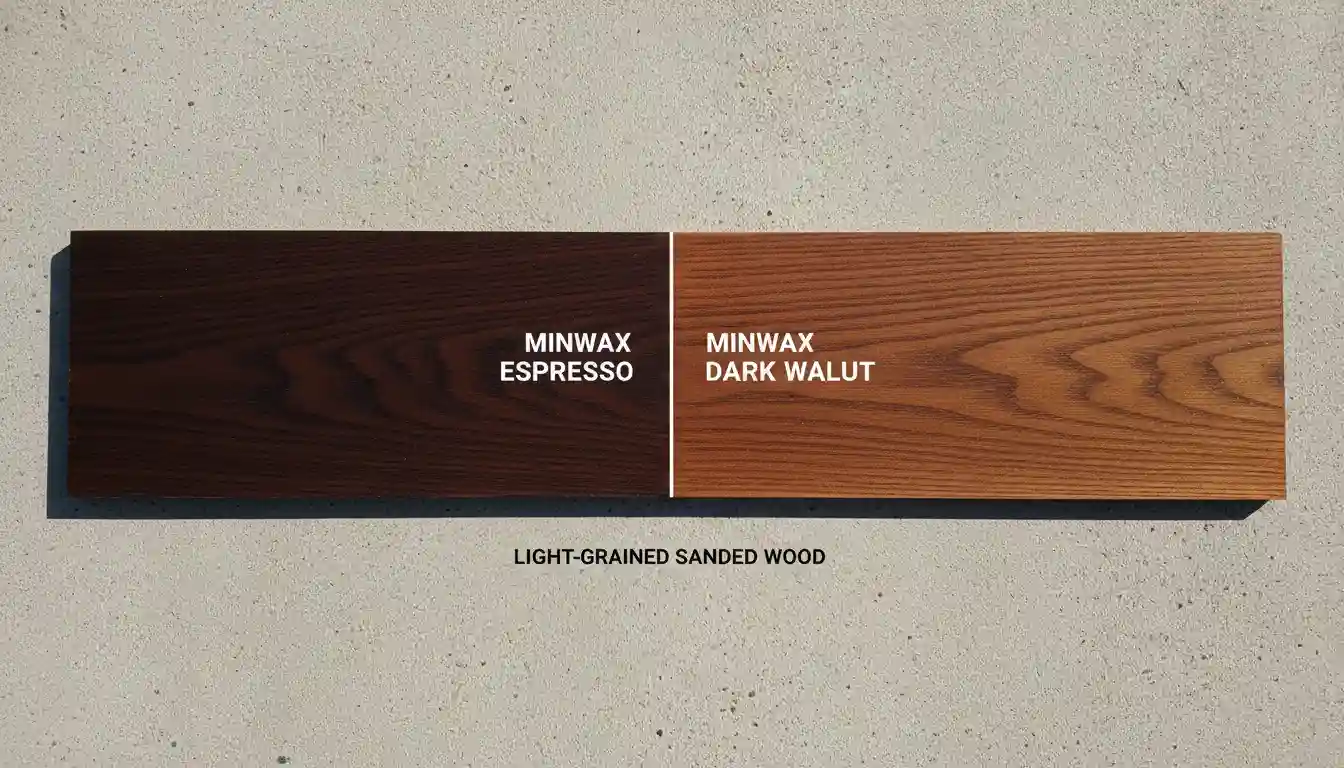
Minwax Espresso is a statement. It is a profoundly deep, rich stain with strong black and cool undertones. Think of the color of black coffee; it’s a near-black that offers a sleek, modern, and dramatic feel. Because of its high pigmentation, Espresso is significantly more opaque than many other stains.
This opacity means it tends to obscure more of the natural wood grain, creating a more uniform, solid color effect. This is a major advantage for achieving a consistent finish on woods that might have uneven grain patterns. Its boldness makes it a perfect fit for contemporary, minimalist, or transitional design schemes where you want the wood to be a strong, grounding element.
Dark Walnut: The Timeless, Traditional Classic
Dark Walnut, on the other hand, is the epitome of classic warmth. It is a rich, deep brown that is rooted in tradition. Its primary characteristic is its warm, earthy brown undertones, often with subtle hints of red or gold depending on the wood it’s applied to.
Unlike Espresso, Dark Walnut is more transparent, designed to enhance rather than conceal the wood’s natural beauty. It allows the unique patterns and texture of the grain to show through, adding depth and character. This makes it an ideal choice for traditional, rustic, farmhouse, or craftsman-style homes where the story of the wood itself is a key part of the decor.
The Ultimate Comparison: Head-to-Head Showdown
Making an informed decision requires a direct comparison of the key attributes that will impact your project. This table breaks down the essential differences between these two powerhouse stains.
| Feature | Minwax Espresso | Minwax Dark Walnut |
|---|---|---|
| Primary Color | Deep, near-black | Rich, deep brown |
| Undertones | Cool; strong black | Warm; brown with subtle red/gold hints |
| Grain Visibility | Low; creates a more uniform, opaque finish | High; enhances and reveals natural wood grain |
| Best Wood Pairings | Oak, Maple, Poplar (for a solid look) | Oak, Pine, Ash, Hickory (to highlight grain) |
| Ideal Design Styles | Modern, Contemporary, Minimalist, Transitional | Traditional, Rustic, Farmhouse, Craftsman |
| Common Applications | Cabinets, modern furniture, flooring, doors | Flooring, antique furniture restoration, trim, beams |
The Wood Type Factor: Why Your Lumber Choice is Crucial
The single most important factor that will determine the final look of your stain is the wood species you are working with. The same stain can look dramatically different on two different types of wood. This is where testing on a scrap piece is not just recommended; it is absolutely essential.
The natural color, grain density, and porosity of the wood will either complement or fight against the stain’s characteristics. When considering a major project like new cabinets, understanding this interaction is key, much like comparing the durability and style of different cabinet brands. For an in-depth look at popular cabinet options, exploring a comparison like Fabuwood versus KraftMaid can provide valuable context.
Staining Red Oak
Red Oak has strong, porous grains and distinct pink or red undertones. Applying Dark Walnut will result in a very rich, warm, traditional brown, as the red in the wood will amplify the stain’s warm undertones. Espresso, with its cool black base, will effectively neutralize the red tones, leading to a more consistent, dark, and modern finish that masks the wood’s natural color.
Staining White Oak
White Oak is a preferred choice for staining because of its neutral, beige-to-light-brown coloring and less porous grain. On White Oak, both stains will appear much more true to the color on the can. Dark Walnut will look like a pure, rich brown, while Espresso will provide a striking, almost pure black that is perfect for contemporary designs.
Staining Pine and Other Softwoods
Pine is a softwood known for its tendency to absorb stain unevenly, resulting in a blotchy appearance. For this reason, using a pre-stain wood conditioner is non-negotiable on pine. Espresso’s high pigment load can sometimes help to create a more even color and hide some blotchiness. Dark Walnut can accentuate the grain beautifully, but any blotchiness will be highly visible if the wood isn’t properly prepared.
Application Secrets for a Flawless, Professional Finish
The difference between a DIY project and a professional job often comes down to preparation and technique. Rushing the process is the quickest way to end up with a finish you regret. Taking the time to execute each step correctly will pay dividends in the final result.
The Unskippable Step: Pre-Stain Wood Conditioner
We cannot stress this enough: for porous or softwoods like pine, poplar, birch, and maple, a pre-stain wood conditioner is your best friend. This product partially seals the wood, forcing it to absorb the stain more evenly and preventing dark, blotchy patches.
Apply a liberal coat, let it penetrate for the time recommended on the can (usually 5-15 minutes), and then wipe away all the excess before you begin staining. Do not skip this step if you want a uniform finish.
The Hidden Factor: How Your Topcoat Changes Everything
Here is a critical piece of information that is often overlooked: the protective topcoat you apply over the stain can dramatically alter the final color. The choice between an oil-based and a water-based polyurethane is just as important as the stain choice itself.
Oil-based polyurethane imparts a warm, amber glow as it dries. This ambering effect will enhance the warmth of Dark Walnut, making it appear even richer and more golden. However, when applied over the cool, black base of Espresso, it can sometimes muddy the color, giving it a slightly greenish or brownish cast. Water-based polyurethane, in contrast, dries crystal clear and will not change the color of the stain underneath. For Espresso, this is almost always the better choice to preserve its true, cool-toned character. For Dark Walnut, it comes down to personal preference: choose water-based for the true stain color, or oil-based to add extra warmth.
Achieving Your Desired Color Depth
The final color is also controlled by your application method and the number of coats. For a lighter shade, apply the stain and wipe it off almost immediately. For a deeper, richer color, allow the stain to penetrate the wood for 5-10 minutes before wiping off the excess.
Espresso is so pigmented that one coat is often sufficient for a very dark finish. Dark Walnut may require a second coat to achieve its deepest potential color. Always wait for the first coat to dry completely as per the manufacturer’s instructions before applying a second.
Making the Final Decision: Which Stain Is Right for Your Project?
By now, the choice should be becoming clearer. It boils down to the mood and style you want to create, paired with the type of wood you are using.
Choose Minwax Espresso if:
- You are aiming for a modern, contemporary, or dramatic look.
- You want to minimize the wood grain for a more uniform, solid color.
- You need to neutralize strong red or pink undertones in a wood like Red Oak.
- Your design palette involves cool colors like grays, blues, and bright whites.
Choose Minwax Dark Walnut if:
- You desire a classic, traditional, rustic, or warm and inviting feel.
- You want to celebrate and enhance the natural beauty and grain of the wood.
- You are working with a beautiful piece of wood like White Oak or Ash and want its character to shine.
- Your home’s decor features warm colors, creams, beiges, and earthy tones.
Ultimately, the perfect stain is the one that brings your vision to life. Whether you are refinishing an old piece of furniture or putting the final touches on brand new hardwood floors, which even the most advanced flooring systems like those in Välinge flooring reviews still require, the stain is paramount. Both Espresso and Dark Walnut are fantastic choices, but they serve very different masters. By understanding their unique personalities, you can choose with confidence, ensuring a beautiful, lasting finish that you’ll be proud to show off for years to come.
