
Mid-Range Cabinets: Your Guide to a Luxe Kitchen Without the Luxe Price Tag
Embarking on a kitchen remodel often feels like navigating a minefield of choices, especially when it comes to cabinetry. You face the classic dilemma: spend a fortune on high-end custom cabinets or settle for budget options that might not withstand the test of time. This choice paralysis can stall a project and create immense stress, leaving you wondering if a beautiful, durable kitchen is even possible without an astronomical budget.
The core of the problem lies in the vast, often confusing, middle ground. This is the world of mid-range cabinets, a category that promises the perfect balance of quality and affordability. Yet, without a clear understanding of what to look for, homeowners can easily make costly mistakes, choosing cabinets that look great in the showroom but fail to perform under the daily pressures of a busy household.
You'll Learn About
What Truly Defines a “Mid-Range” Cabinet? (It’s Not Just Price)
Defining “mid-range” by price alone is a common pitfall. A true mid-range cabinet is defined by a superior combination of materials, construction, and features that deliver long-term value. It’s the sweet spot where smart engineering meets quality components, offering a semi-custom experience that elevates your kitchen far beyond basic stock options.
These cabinets bridge the gap between mass-produced stock units and fully custom creations. Typically falling into the semi-custom category, they offer a wider selection of styles, finishes, and sizes. This allows for a more personalized kitchen design without the high costs and long lead times associated with custom work.
Materials: The Plywood vs. Particleboard Debate
The foundation of any quality cabinet is its box construction. In the mid-range category, plywood construction is the gold standard you should look for. Plywood is made from thin layers of wood veneer glued together, creating a strong, stable material that resists moisture and holds screws securely over time. This is a significant upgrade from particleboard (or furniture board), which is made from compressed wood chips and resin.
While some manufacturers use high-density particleboard, plywood generally offers superior durability and longevity, especially in the moisture-prone environments of kitchens. When you open a cabinet door, a quick glance at the unfinished edges of the box can often reveal the layered construction of plywood versus the pressed-chip appearance of particleboard.
Construction: The Joints and Bones of Your Cabinets
How a cabinet is put together is just as important as the material it’s made from. One of the most critical indicators of quality is the drawer box. Look for dovetail joints, an interlocking method that creates an incredibly strong and durable connection. This is a hallmark of quality craftsmanship and is far superior to drawers that are simply stapled or glued together.
You should also inspect the hardware. Quality mid-range cabinets will feature soft-close hinges and full-extension, soft-close drawer glides as standard. These features not only provide a touch of luxury but also reduce wear and tear on the cabinet doors and frames, contributing to a longer lifespan.
Features & Finishes: Where You See the Value
The finish on your cabinets is their first line of defense against daily wear. The best mid-range cabinets use a catalyzed conversion varnish. This is a multi-step, chemical-cured finish that is much harder and more durable than standard paint or lacquer. It resists scratches, stains, and moisture, ensuring your cabinets look beautiful for years.
This level of finish is one of the clearest differentiators between low-end and quality mid-range products. While a simple painted finish might look good initially, it lacks the resilience to stand up to the rigors of a busy kitchen.
Top Mid-Range Cabinet Brands to Watch in 2025
The mid-range market is filled with reputable brands known for delivering consistent quality and value. Companies like KraftMaid, Medallion, and Diamond have long been staples in this category, offering extensive catalogs of styles and finishes. These brands set a high bar for what homeowners can expect from semi-custom cabinetry.
When exploring your options, it is helpful to compare specific lines from different manufacturers. For example, our Medallion vs. KraftMaid breakdown explores the subtle but important differences in their offerings. Similarly, the rise of online brands has introduced new dynamics, making direct comparisons like our Cliq Cabinets vs. KraftMaid analysis essential for modern homeowners.
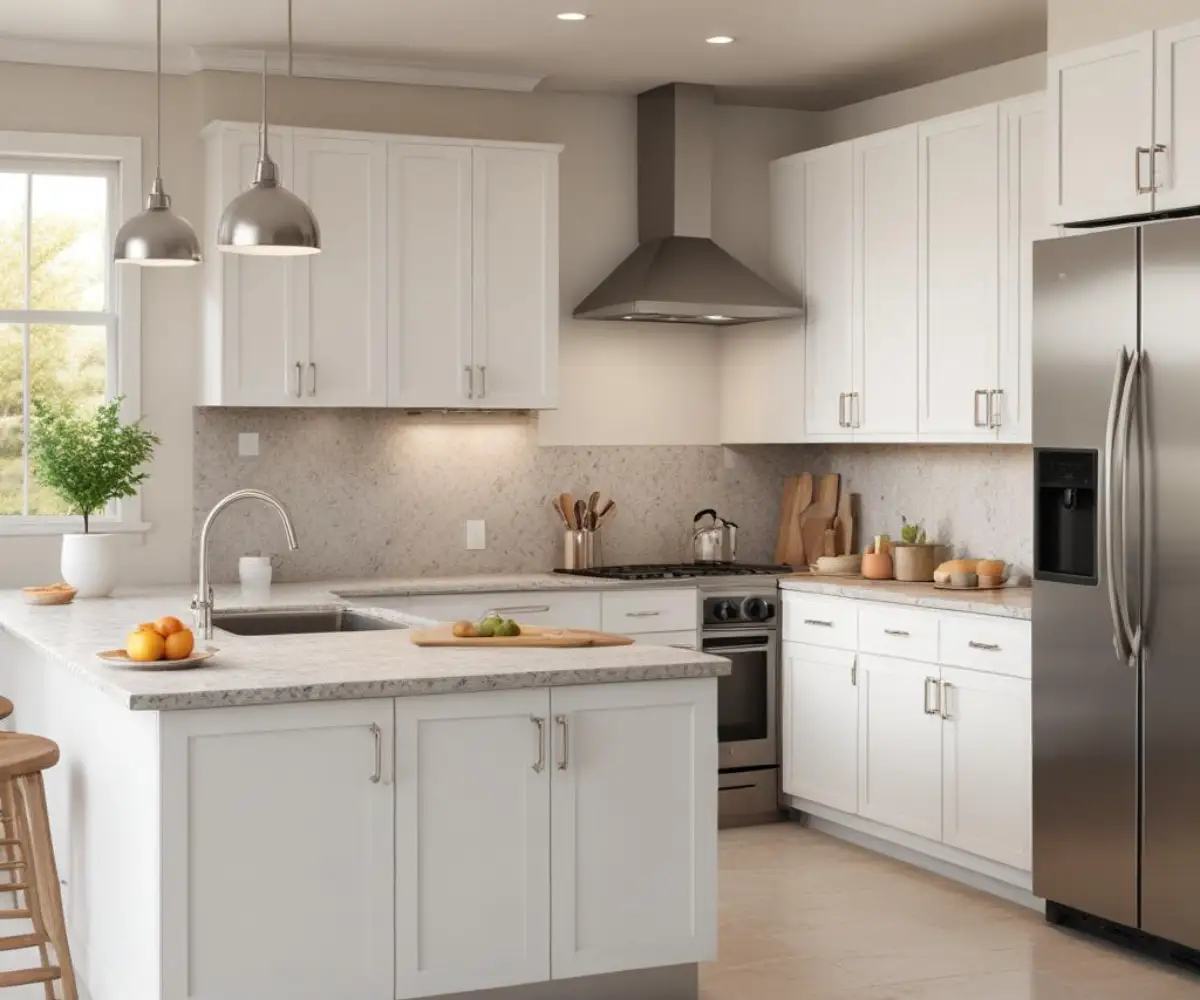
The Ultimate Mid-Range Cabinet Buyer’s Checklist: 7 Things to Verify
To avoid buyer’s remorse, you need a clear, actionable plan. Use this checklist when visiting showrooms or browsing online to ensure you are getting the best possible value for your investment. It will empower you to ask the right questions and spot the key indicators of quality.
1. Box Construction: Ask for Plywood
Start with the cabinet’s core. Always ask if the cabinet boxes are made from furniture-grade plywood. Specify that you want plywood sides, top, and bottom for maximum durability, not just upgraded end panels.
2. Drawer Box Quality: Demand Dovetail Joints
Open a drawer and inspect the corners. You should see the characteristic interlocking “fingers” of a dovetail joint. If you see staples or a simple glued joint, you are likely looking at a lower-quality product.
3. Hardware Check: Are Soft-Close Features Standard?
Confirm that soft-close hinges and full-extension, undermount, soft-close drawer glides are included. These are not luxury add-ons in the mid-range market; they are the standard for quality and longevity.
4. Finish Durability: Inquire About Catalyzed Varnish
Ask the salesperson to describe the finishing process. Look for terms like “catalyzed conversion varnish” or “baked-on finish.” This professional-grade coating is significantly more durable than paint and is crucial for kitchen environments.
5. Warranty Wisdom: Look for a Limited Lifetime Guarantee
A strong warranty reflects a manufacturer’s confidence in their product. Reputable mid-range cabinet brands will offer a Limited Lifetime Warranty that covers defects in materials and workmanship, giving you peace of mind.
6. Customization Options: The Semi-Custom Advantage
A key benefit of mid-range cabinets is the ability to make modifications. Inquire about the ability to change dimensions, such as depth or width. This flexibility is what separates semi-custom from basic stock and is critical for creating a truly functional layout, a topic further discussed in our guide on 30 vs 36-inch upper cabinets.
7. Showroom Samples: Trust Your Hands, Not Just Pictures
Never buy cabinets without seeing and touching a sample. Feel the finish, operate the drawers, and inspect the joints up close. A physical sample will tell you more about the quality than any brochure or website ever could.
Cabinet Quality Comparison
Understanding the key differences across cabinet tiers is essential for making an informed decision. This table breaks down the typical features you will find at each level, highlighting why mid-range options often provide the best overall value for most homeowners.
| Feature | Low-Range (Stock) | Mid-Range (Semi-Custom) | High-End (Custom) |
|---|---|---|---|
| Box Material | Particleboard/MDF | Plywood (Standard or Upgrade) | Furniture-Grade Plywood/Solid Wood |
| Drawer Construction | Stapled or Doweled | Dovetail Joints | Dovetail Joints (Often with custom woods) |
| Hardware | Standard Hinges/Side-Mount Glides | Soft-Close Hinges/Undermount Glides | Premium Soft-Close Hardware (e.g., Blum) |
| Finish | Thermofoil or Basic Lacquer/Paint | Catalyzed Conversion Varnish | Multi-Step Hand-Applied Finishes |
| Customization | None (Fixed Sizes) | Size modifications, wide finish selection | Fully customizable size, style, and finish |
| Warranty | 1-5 Years | Limited Lifetime | Lifetime |
Red Flags: When “Mid-Range” is Just Cheap in Disguise
Navigating the cabinet market requires a vigilant eye. Some manufacturers may market lower-quality products as mid-range to justify a higher price. Be wary of these red flags to protect your investment and ensure you are getting the quality you pay for.
Vague Material Descriptions
Be cautious if a description says “engineered wood” or “furniture board” without specifying the material. Reputable brands are proud to state they use plywood. Vague terminology often hides the use of lower-density particleboard.
Stapled Drawer Boxes
Staples are the fastest and cheapest way to assemble a drawer, and they are a clear sign of a budget-oriented construction. A true mid-range cabinet will never have stapled drawer boxes. This is a non-negotiable quality indicator.
Short-Term Warranties
A warranty of five years or less suggests the manufacturer does not expect the product to last. A quality mid-range cabinet should be backed by a warranty that reflects its expected lifespan, ideally a limited lifetime guarantee.
The Verdict: Are Mid-Range Cabinets the Smartest Investment for Your Home?
For the vast majority of homeowners, mid-range cabinets represent the smartest and most valuable investment for a kitchen remodel. They successfully blend the durability and features of high-end cabinetry with a price point that is accessible and justifiable. This category allows you to achieve a beautiful, highly functional kitchen that will stand up to daily use and enhance your home’s resale value.
The key is to move beyond the price tag and become an educated consumer. By focusing on the critical markers of quality—plywood construction, dovetail drawers, durable hardware, and a catalyzed varnish finish—you can confidently select cabinets that deliver lasting satisfaction. Your kitchen is the heart of your home; investing wisely in its foundation ensures it will serve you beautifully for decades to come.
