
Medieval Floors Reviews: Your Ultimate Guide to a Timeless Look
You adore the profound character and enduring charm of floors that whisper tales of history. The robust, authentic feel of a medieval castle or a centuries-old farmhouse floor is something you want to replicate in your own home. Yet, you find yourself facing a common and frustrating problem: how do you achieve this ancient aesthetic without sacrificing modern practicality and durability?
The quest for the perfect medieval-style floor often leads to a maze of questions. You might worry about the high cost, the demanding maintenance, or whether such a bold style will overwhelm your contemporary decor. This guide is designed to solve that problem, offering a comprehensive review of the best modern flooring materials that masterfully capture the medieval spirit.
You'll Learn About
Decoding the Medieval Aesthetic: More Than Just “Old”
To truly understand medieval-style flooring, one must look beyond a simple “rustic” label. This aesthetic is defined by substantial, natural materials that showcase their origins. Think of wide, commanding wood planks, the cool, formidable presence of natural stone, and the earthy warmth of terracotta tiles.
The beauty of this style lies in its imperfections. Features like visible grain, knots, and hand-hewn textures are not flaws but celebrated elements of character. These floors feel grounded and permanent, offering a stark contrast to the uniformity of many modern flooring options.
Top Materials for a Medieval Look: A Modern Review
Achieving an authentic medieval look doesn’t require sourcing ancient materials. Modern flooring technology offers fantastic alternatives that provide the desired aesthetic with enhanced performance and accessibility. Here’s a review of the top contenders.
Reclaimed Wide-Plank Wood: The Pinnacle of Authenticity
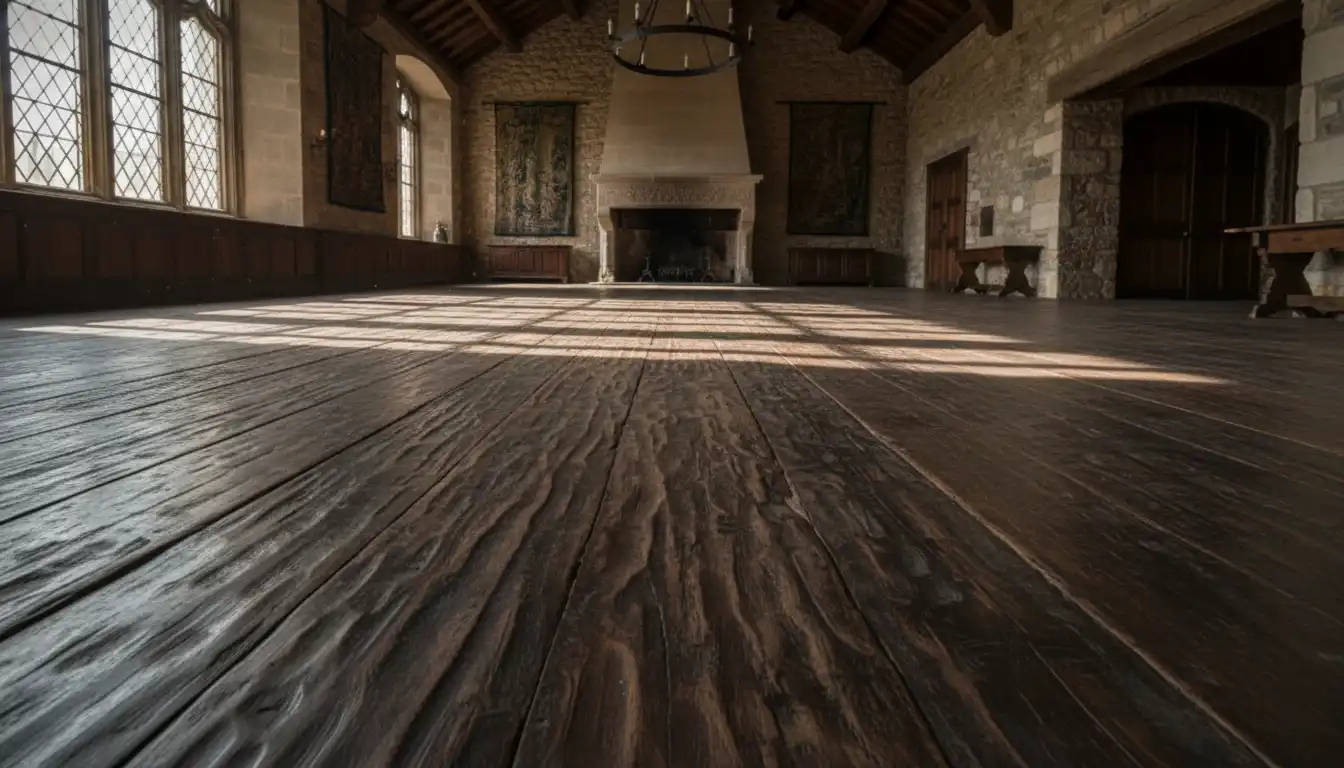
For the truest historical feel, reclaimed wood is unparalleled. Salvaged from old barns, warehouses, and historic structures, each plank tells a story. This choice is perfect for those who prioritize genuine character and sustainability.
The primary advantage of reclaimed wood is its unique beauty and eco-friendliness. This wood often comes from old-growth trees, making it denser and more durable than much of today’s new timber. However, it comes with a higher price tag and can be more challenging to source and install.
Engineered Hardwood: The Practical and Stable Contender
If the cost and potential quirks of reclaimed wood are a concern, engineered hardwood is an excellent solution. Constructed with a core of layered plywood and topped with a real hardwood veneer, it offers greater stability. This makes it suitable for installation in basements or over radiant heating systems.
To capture the medieval essence, look for engineered planks with a hand-scraped or distressed finish. These texturing techniques mimic the appearance of age-worn wood, providing character at a more accessible price point. The key is to choose a product with a thick wear layer for longevity.
Natural Stone (Flagstone & Slate): The Castle Standard
Nothing says “castle” quite like a natural stone floor. Flagstone and slate are the quintessential materials for creating a durable, commanding, and truly timeless medieval foundation. Their natural cleft texture and color variations ensure no two floors are exactly alike.
Stone is incredibly durable and low-maintenance once sealed. It can create a stunning, seamless transition from an indoor living space to an outdoor patio. The main drawbacks are its coldness underfoot and its unforgiving hardness, which can be a concern for families with young children.
Terracotta & Quarry Tiles: The Warm, Earthy Alternative
For a warmer, more provincial medieval feel, terracotta and quarry tiles are exceptional choices. Their rich, earthy tones of red, orange, and brown bring an inviting and rustic warmth to any room. This style is reminiscent of historic Mediterranean villas and country manors.
These tiles are durable and relatively affordable. However, their porous nature means they absolutely must be sealed to protect against stains and moisture. The charm of these floors often increases over time as they develop a natural patina.
Medieval Flooring Materials: At-a-Glance Comparison
Choosing the right material is a balance of aesthetics, budget, and lifestyle. This table provides a clear comparison to help guide your decision-making process.
| Material | Best For… | Average Cost/Sq. Ft. (Installed) | Durability | Maintenance Level |
|---|---|---|---|---|
| Reclaimed Wood | Maximum authenticity and character in living rooms and bedrooms. | $15 – $30+ | Very High | Moderate |
| Engineered Hardwood | Versatility and stability in any room, including basements. | $8 – $20 | High | Low |
| Flagstone/Slate | Ultimate durability and indoor/outdoor flow. | $15 – $25 | Exceptional | Low (once sealed) |
| Terracotta/Quarry Tiles | Warmth and rustic charm in kitchens and entryways. | $7 – $15 | High | Moderate (requires sealing) |
Beyond the Material: Details That Define the Medieval Style
The secret to a convincing medieval floor lies in the finishing touches. The material itself is only half the story; texture, grout, and finish are what truly bring the look to life.
The Crucial Role of Texture
A perfectly smooth, glossy floor will never feel medieval. The key is to embrace texture. For wood, this means choosing finishes that are hand-scraped, wire-brushed, or distressed to create an uneven, lived-in surface that artfully hides minor wear and tear.
For stone floors, a natural cleft or riven finish, which showcases the stone’s natural layers, is far more authentic than a highly polished one. This texture not only looks right but also provides better slip resistance.
Grout: The Unsung Hero of Stone and Tile
With stone and terracotta tile installations, the grout choice is critical. Opt for wider grout lines than you would in a typical modern installation. This small detail dramatically enhances the historic, handcrafted appearance of the floor.
Grout color should also be considered carefully. A darker, charcoal-colored grout will look more authentic and be more forgiving of dirt than a bright white or light gray.
The Right Sheen: Matte is a Must
High-gloss finishes are a modern invention and can make a rustic floor look out of place. To maintain historical accuracy, choose a finish with a low sheen. Matte or satin finishes absorb light rather than reflecting it, which helps to hide imperfections and creates a softer, more aged appearance.
For wood floors, consider a hardwax oil finish instead of polyurethane. It penetrates the wood for a more natural look and feel, and it’s easier to spot-repair scratches and scuffs down the line.
Bringing the Look Home: Styling Medieval Floors in a Modern Space
A medieval-style floor doesn’t mean your home has to look like a museum. The beauty of this style is its ability to ground and add character to contemporary designs. It’s all about creating a thoughtful balance.
Pairing with Modern Furnishings
The contrast between a rugged, historic floor and clean, modern furniture can be stunning. The key is to soften the hard surfaces. A plush, comfortable sofa can add a layer of cozy sophistication and prevent the room from feeling too stark. Finding a quality piece is essential; for inspiration, you might explore options highlighted in Pottery Barn Cameron sofa reviews to see how modern comfort can complement timeless floors.
Use area rugs to define spaces and add warmth and texture. A simple, neutral-toned rug can anchor a seating area while still allowing the beautiful floor to show around the edges.
Creating a Seamless Indoor-Outdoor Connection
Using materials like flagstone or terracotta can create a beautiful, uninterrupted flow from your great room to your garden patio. This is a core concept in modern home and garden design. Extending your living space outdoors makes your home feel larger and more connected to nature. This philosophy can extend to your entire outdoor setup; for instance, ensuring you have utilities like water accessible for gardening or an outdoor kitchen is a practical step. If you’re thinking big, planning for essentials like running a water line from the house to a shed can support a truly functional outdoor living area.
The Foundation of a Great Floor: A Structural Perspective
One critical aspect often overlooked in purely aesthetic reviews is the structural requirement of heavy flooring. Materials like flagstone are incredibly heavy and demand a robust subfloor. Before committing, it’s vital to ensure your home’s joists can support the load without excessive deflection, which could lead to cracked tiles and grout. The Marble Institute of America recommends a subfloor deflection standard of L/720 for all-natural stone, which is significantly stiffer than standard construction.
This attention to foundational integrity is a principle that applies to the entire home. Just as the subfloor supports your beautiful stone, your home’s foundation supports everything. Protecting it from moisture is key, which involves smart landscaping choices. It raises related practical questions about home care, such as, can you put mulch against a brick house without risking moisture damage? Understanding these foundational elements ensures your design choices are not only beautiful but also sound and sustainable.
Frequently Asked Questions & Your Final Verdict
Even with a clear plan, some practical questions are bound to arise. Here are answers to some of the most common concerns about living with medieval-style floors.
Are medieval-style floors difficult to clean?
While textured surfaces can trap more dirt than smooth ones, maintenance is straightforward. Regular sweeping or vacuuming with a brush attachment is the first line of defense. For stone and tile, damp mopping with a pH-neutral cleaner is all that’s needed. For textured wood, a microfiber mop works wonders.
Will a dark, rustic floor make my room feel small?
A dark floor can add coziness and drama, but it doesn’t have to make a space feel small. Balance it with light-colored walls, ample natural and artificial lighting, and reflective surfaces like mirrors. Using lighter-toned area rugs can also break up the expanse of a dark floor.
What is the most budget-friendly option for this look?
For those on a tighter budget, quarry tiles or a heavily distressed or hand-scraped engineered hardwood will deliver the medieval aesthetic for the lowest cost. Both options are durable and offer a fantastic return on investment in terms of style.
Ultimately, choosing a medieval-style floor is about creating a home with a soul. It’s an investment in a look that has stood the test of time and will continue to feel relevant for generations. By reviewing the modern materials available and understanding the key stylistic details, you can confidently build a foundation of timeless character in your own home.
Final Words
Choosing the right flooring is about more than just aesthetics; it is about finding the perfect balance between enduring style and everyday performance. As we’ve seen throughout these Medieval Floors reviews, the brand successfully bridges the gap between old-world charm and modern engineering.
Why Medieval Floors Stands Out?
-
Authentic Character: Captures the rugged, storied look of reclaimed timber without the maintenance headaches.
-
Modern Durability: Built to withstand the foot traffic, spills, and chaos of a busy contemporary home.
-
Lasting Value: A timeless design choice that ensures your home feels sophisticated for years to come, regardless of changing trends.
Whether you are drawn to the deep, weathered grains of their luxury vinyl or the structural integrity of their engineered hardwoods, Medieval Floors offers a foundation that tells a story. By investing in quality now, you aren’t just finishing a room—you’re setting the stage for a lifetime of memories.
