Matching Ceiling Fans in Different Sizes: Your Secret to Flawless Design
The open-concept floor plan is the heart of modern living, creating a seamless flow from the living room to the dining area and kitchen. This spaciousness, however, presents a unique design challenge that can leave homeowners feeling stuck.
You have a vast great room that demands a large, powerful ceiling fan, but it opens directly into a smaller breakfast nook where such a fan would be overwhelming. The core problem is clear: how do you select different-sized ceiling fans for connected spaces without creating a jarring, mismatched look? This guide provides the definitive solution to achieving a cohesive, professionally designed aesthetic.
You'll Learn About
Why a Cohesive Fan Strategy Matters More Than You Think
Achieving a harmonious flow in your home’s design isn’t just about paint colors and furniture. The fixtures you choose, especially those on the ceiling, play a critical role in establishing a sense of unity and calm.
When ceiling fans in adjacent rooms or a large, open space are mismatched, it creates visual noise. This small detail can subconsciously make a space feel less intentional and more chaotic. The goal isn’t to make everything identical, but to make it feel coordinated and purposeful.
This principle of a unified design extends from the ground up. The very architecture of your home sets the stage for these choices. For instance, the decision between 8 ft vs 9 ft ceilings fundamentally alters the volume of a room, which in turn influences the scale of the fixtures you choose. A well-thought-out fan strategy respects and enhances these foundational architectural elements.
The First Commandment of Ceiling Fans: Thou Shalt Size for the Space
Before you even think about style or finish, you must address function. A ceiling fan’s primary job is to move air effectively. A fan that is too small for a room will be ineffective, while one that is too large can create an uncomfortable, windy environment.
The key is to select a fan based on the room’s square footage. Manufacturers provide a “blade span” measurement, which is the full diameter of the fan’s blades. This is the primary number you will use to match the fan to your room’s dimensions.
It’s also critical to consider the fan’s CFM, or Cubic Feet per Minute, which measures airflow efficiency. A higher CFM rating means the fan moves more air. For ultimate performance, prioritize a high CFM rating appropriate for your room size, not just the blade span. A well-designed fan with a powerful motor can often outperform a larger fan with a weak motor.
The Definitive Sizing Guide
Navigating the technical specifications can be confusing. This table simplifies the process by correlating room size with the recommended blade span and CFM rating to ensure optimal air circulation and comfort.
| Room Size (Square Feet) | Recommended Blade Span (Inches) | Ideal CFM Range |
|---|---|---|
| Up to 75 sq. ft. (e.g., Bathroom, Walk-in Closet) | 29″ – 36″ | 1,000 – 3,000 |
| 76 to 144 sq. ft. (e.g., Bedroom, Home Office) | 36″ – 44″ | 1,600 – 4,500 |
| 145 to 225 sq. ft. (e.g., Master Bedroom, Kitchen) | 44″ – 54″ | 2,000 – 6,500 |
| 226 to 400 sq. ft. (e.g., Living Room, Great Room) | 54″ – 62″ | 4,000 – 9,000 |
| Over 400 sq. ft. (e.g., Large Great Room, Loft) | 62″ – 96″ or multiple fans | 6,000 – 13,500+ |
Decoding “Design Families”: The Secret to a Perfect Match
The best-kept secret in the world of ceiling fans is the concept of a “design family” or “collection.” Leading manufacturers understand the need for cohesive design and create a single, signature fan style in multiple sizes and configurations.
This is the ultimate solution to our core problem. You can select a large 60-inch fan for your great room and a matching 44-inch version for the adjacent dining area. They share the exact same design DNA, ensuring a flawless visual transition between the spaces.
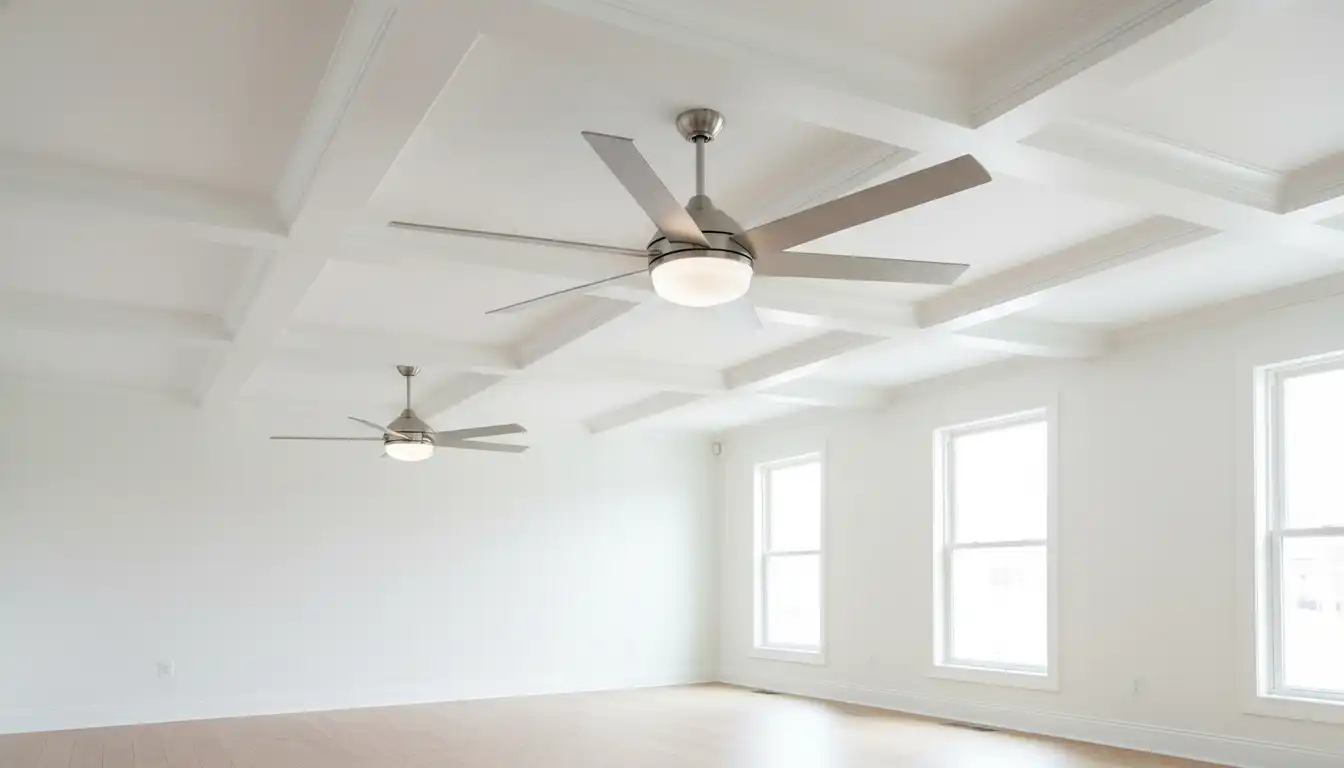
These collections are meticulously engineered. It’s not just about shrinking the blades; the motor power and blade pitch are often adjusted to ensure the smaller fan performs just as effectively in its intended space as the larger version does in its.
Key Elements of a Fan Collection
When shopping within a collection, you will find consistency across several key design features. This allows you to customize the fan for each specific room’s needs while maintaining a unified aesthetic.
The most important element to keep consistent is the finish. Whether you choose matte black, brushed nickel, or aged bronze, using the same finish throughout the connected spaces is non-negotiable for a coordinated look. Collections ensure this consistency is perfect.
The motor housing is the central body of the fan and its most distinct design feature. Within a family, the housing will have the same shape, lines, and details, regardless of the fan’s overall size. Similarly, the blade design—their shape, material, and the arms that hold them—will be identical in style across all sizes.
Finally, collections offer options. You can get the large fan with an integrated LED light kit for the main living area and choose a version without a light for a smaller, adjacent space that is already well-lit. This flexibility is what makes shopping by collection so powerful.
Advanced Strategies for a Truly Custom Look
Once you’ve mastered sizing and have committed to shopping within a design family, a few advanced considerations can elevate your project from good to exceptional. These details are what separate a standard installation from a professionally curated design.
These nuances ensure that every choice you make contributes to a home that is not only beautiful but also thoughtfully designed for comfort and ease of living.
The Critical Role of Ceiling Height and Downrods
The height of your ceiling dramatically impacts both the look and function of your fan. A fan installed too close to the ceiling will have poor airflow, while one hanging too low can be a hazard and look out of place.
This is where downrods come in. A downrod is the metal pipe that connects the fan’s motor housing to the mounting bracket on the ceiling. For ceilings higher than 9 feet, a longer downrod is essential to position the fan at the optimal height for air circulation—typically 8 to 9 feet from the floor.
When using matching fans in different sizes, you must also use matching downrods. Fan collections will always have corresponding downrods in various lengths and in the exact same finish, ensuring perfect continuity from the ceiling to the fan itself.
Unifying Control with Smart Home Technology
One of the most innovative and often overlooked aspects of modern ceiling fans is smart home integration. Many collections now offer smart fans that can be controlled via a smartphone app or voice assistants like Amazon Alexa and Google Assistant.
This provides a powerful layer of functional cohesion to complement the visual cohesion. You can group the 60-inch fan in the living room and the 44-inch fan in the dining nook together in the app. This allows you to control them simultaneously with a single tap or voice command, such as, “Alexa, set the living area fans to 50%.”
This level of unified control enhances the feeling of a single, integrated space. It’s a modern convenience that reinforces your intentional design choices, making your home smarter and more comfortable.
Common and Costly Mistakes to Avoid
Selecting the right ceiling fans can be a rewarding process, but a few common missteps can derail your project. Being aware of these potential pitfalls will help you make choices with confidence and avoid buyer’s remorse.
These mistakes often stem from focusing on one aspect, like price or style, while ignoring other crucial factors like scale, motor quality, and installation requirements. A holistic approach is always best.
The most common error is ignoring scale. Homeowners often underestimate the size of their room and choose a fan that is too small. A 42-inch fan in a 300-square-foot living room will look comically undersized and fail to move enough air to be effective. Always measure your room and consult a sizing chart.
Another frequent mistake is being seduced by large blades attached to a weak motor. A budget-friendly, oversized fan might look impressive in the box, but if its motor is underpowered (indicated by a low CFM rating), it will do little more than wobble and hum. Always invest in a quality motor from a reputable brand.
Finally, don’t overlook the details of the installation. A very large fan can be significantly heavier than a standard model. It is crucial to ensure that your ceiling’s electrical box is rated to support the weight of the new fan. If not, it will need to be replaced and braced, a job best left to a qualified electrician.
A Savvy Homeowner’s Final Checklist
Becoming a truly savvy homeowner is about understanding that every choice, from the largest renovation to the smallest repair, contributes to the overall health and value of your home. It’s about developing an eye for detail and a proactive mindset.
This means knowing when to tackle a project yourself and when to call a pro. It’s understanding the nuances of your home’s systems, whether that’s troubleshooting why your snow joe cordless snow blower not starting before a big storm or knowing the difference between a caulk squeeze tube vs gun for sealing drafts and improving energy efficiency.
Applying this mindset to your ceiling fan project is the final step. By choosing the right size for each room, shopping within a cohesive design collection, and paying close attention to details like finish, downrods, and smart features, you are making an expert-level decision. You are moving beyond simply buying a product and are actively curating your home’s environment.
The result will be a space that not only looks professionally designed and unified but also feels more comfortable and functions more intelligently. This thoughtful approach is the true secret to creating a home you love.