
Master Bedroom Off Kitchen: The #1 Layout Mistake to Avoid?
The master bedroom off the kitchen. It is a floor plan feature that elicits strong reactions, ranging from practical appreciation to outright horror. For some, it represents the pinnacle of convenience for single-level living; for others, it’s a fundamental design flaw that compromises the very essence of a master suite: privacy and tranquility.
This layout is more common than many think, appearing in historic homes, modern apartments, and custom builds alike. Understanding the root of its challenges—and the surprisingly effective solutions—is key to transforming this controversial design from a liability into a livable, even luxurious, feature of your home.
You'll Learn About
The Unspoken Appeal: Why This Layout Exists
Before diving into the problems, it’s important to acknowledge why a master bedroom might be located off a kitchen in the first place. Often, it’s a matter of necessity or specific lifestyle choices. These layouts frequently arise from home additions, accessibility needs for aging in place, or the conversion of a space like a formal dining room.
In smaller homes or condos, it can be an efficient use of a limited footprint. Recognizing the “why” behind the design is the first step in addressing its inherent drawbacks without compromising its intended benefits.
The Elephant in the Room: Major Drawbacks You Can’t Ignore
The core of the issue with this layout stems from the kitchen’s role as the high-traffic, multi-sensory hub of the home. Your master bedroom, intended as a sanctuary, is suddenly exposed to the three primary disruptors of peace: noise, smells, and a lack of privacy.
The Noise Factor: From Morning Coffee to Midnight Snacks
The kitchen is arguably the noisiest room in the house. Think of the sounds: the whir of the coffee grinder in the early morning, the clang of pots and pans during dinner prep, the hum of the dishwasher, and late-night conversations over a snack. These sounds don’t stay neatly contained.
Sound travels easily through standard interior walls, which often lack the insulation of exterior walls. The constant auditory interruptions can severely disrupt sleep patterns and create a persistent, low-level stress that undermines the restorative purpose of a bedroom.
The Aroma Invasion: When Kitchen Smells Follow You to Bed
Cooking odors are another significant challenge. While the smell of baking bread is pleasant, the lingering scent of fried fish or garlic on your bedding and clothes is far from ideal. These airborne particles easily permeate textiles and can be difficult to remove.
A poorly ventilated kitchen ensures that these smells have nowhere to go but into the nearest adjacent space—your bedroom. This can impact air quality and make it difficult to relax in what should be a fresh, clean environment.
The Privacy Predicament: A Gateway to Your Personal Sanctuary?
Privacy is perhaps the most significant casualty of this floor plan. The kitchen is a social hub where family members and guests congregate. When your bedroom door opens directly into this public space, your private retreat is put on display.
This creates an awkward dynamic, especially when entertaining. Guests may feel uncomfortable being so close to your private space, and you may feel a constant need to keep your bedroom door closed and perfectly tidy, eroding the sense of it being your personal sanctuary.
The Ultimate Fixes: Transforming Your Controversial Layout into a Haven
Despite the significant challenges, a master bedroom off the kitchen is not a lost cause. With strategic interventions, you can mitigate nearly every drawback and create a peaceful, private, and functional space. The key is to focus on creating separation and insulation through intelligent design solutions.
Fortifying Your Fortress: Advanced Soundproofing Solutions
Sound is the number one enemy, and defeating it requires more than just a standard hollow-core door. Your goal is to add mass and create disconnection between the two rooms to stop sound vibrations from traveling through.
Start with the door itself. Replace a hollow-core door with a solid-core wood or composite door. This single change can make a dramatic difference. To go a step further, install a full weatherstripping kit around the door jamb and a door sweep at the bottom to seal any air gaps where sound can leak through.
For the shared wall, consider adding a layer of 5/8-inch drywall on top of the existing wall, using a sound-dampening compound like Green Glue between the layers. This combination of added mass and damping is highly effective at blocking a wide range of frequencies. If you’re undertaking a larger renovation, installing resilient channels before the new drywall will further decouple the wall and enhance its sound-blocking capabilities.
Creating a Buffer Zone: The Genius of Transitional Spaces
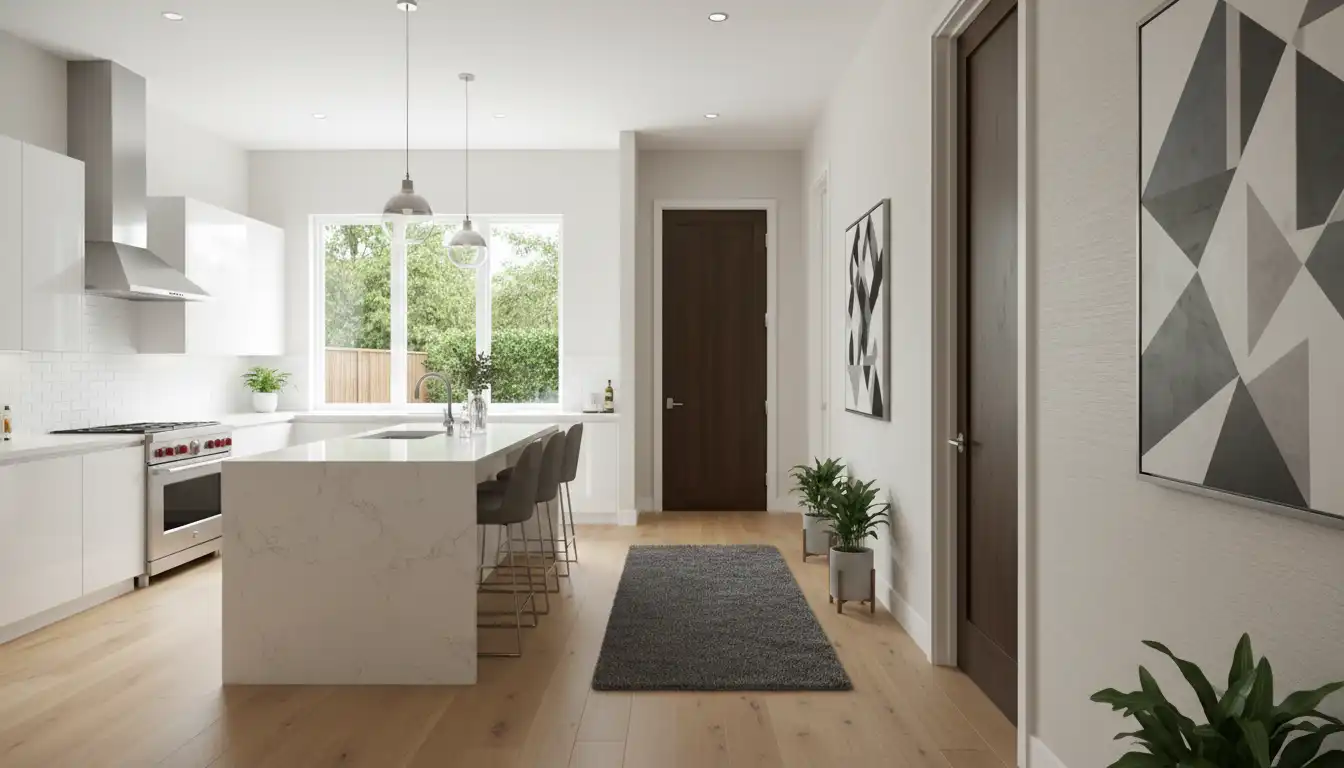
One of the most effective architectural solutions is to create a “buffer zone” between the kitchen and the bedroom entrance. This doesn’t require a massive amount of space. Even a small, dedicated transitional area can create the psychological and physical separation needed.
This could be a short hallway, a small vestibule, or a functional nook. Consider incorporating a small mudroom-style bench with hooks, a built-in bookshelf, or even a walk-through pantry. This transitional space serves multiple purposes: it adds distance, absorbs sound, helps contain odors, and visually separates the private and public areas of your home, making the bedroom feel like a true destination rather than an appendage of the kitchen.
Clearing the Air: Ventilation and Odor Control Mastery
To combat cooking smells, your first line of defense is a high-quality, powerful range hood. Ensure it is ducted to the exterior of your home, not just recirculating air. Look for a hood with a high cubic feet per minute (CFM) rating suitable for the size of your kitchen and the type of cooking you do.
In addition to proper ventilation, an air purifier with a carbon filter placed in the bedroom can help capture any odors that do make their way in. Finally, ensuring your bedroom door is well-sealed with weatherstripping will not only block sound but also prevent odors from seeping through the cracks.
The color of your walls can also influence the perception of freshness. When selecting a paint, consider how different shades interact with light and space. A thoughtful choice, like comparing options in our guide to white paints, can make your sanctuary feel even cleaner and more serene.
Mastering Light and Privacy with Strategic Design
Light from the kitchen can be just as disruptive as noise. Simple solutions are often the most effective here. Installing high-quality blackout curtains or blinds is essential for blocking light from late-night kitchen visits.
When thinking about window treatments, it’s worth exploring all your options. If you’re considering new windows or simply want to upgrade your light-blocking strategy, don’t buy new treatments until you’ve explored the best blinds for replacement windows to ensure a perfect fit and maximum effectiveness.
| Problem Area | Good Solution (DIY Friendly) | Better Solution (Moderate Skill) | Best Solution (Professional Recommended) |
|---|---|---|---|
| Noise | Install a solid-core door with a door sweep and weatherstripping. | Add a layer of mass-loaded vinyl (MLV) to the shared wall. | Build a double-stud wall or add resilient channels and a second layer of drywall with Green Glue. |
| Smells | Use an air purifier with a carbon filter in the bedroom. | Ensure the bedroom door is fully sealed with gaskets. | Install a high-CFM, externally-vented range hood in the kitchen. |
| Privacy | Always keep the bedroom door closed. | Create a visual block with a decorative screen or bookshelf near the door. | Construct a small vestibule or transitional hallway to buffer the entrance. |
| Light | Use high-quality blackout curtains or shades on the bedroom window. | Install a door with no glass panels and ensure it is well-sealed. | Create a hallway buffer that blocks the direct line of sight from the kitchen to the bedroom. |
The Resale Value Question: Is This Layout a Dealbreaker?
Many homeowners worry that a master bedroom off the kitchen will negatively impact their home’s resale value. While some potential buyers may be turned off by the layout, it is not always a dealbreaker, especially if the issues have been thoughtfully addressed.
For certain demographics, such as older buyers looking for single-level living, the convenience can be a major selling point. When the layout is executed with smart design choices—like a buffer zone and proper soundproofing—it can be perceived as a unique and functional feature rather than a flaw. A well-designed, private-feeling suite is always desirable, regardless of its proximity to the kitchen. It can certainly be more appealing than other unconventional layouts, such as those discussed in our analysis of the cost of a master suite above a garage.
Beyond the Basics: Advanced Architectural and Design Considerations
If you’re open to more significant changes, several advanced design strategies can fundamentally alter the dynamic between your kitchen and master bedroom, adding a layer of sophistication that goes beyond simple problem-solving.
Reconfiguring the Entry: The Power of an Angled Doorway
A subtle but incredibly powerful change is to reconfigure the bedroom’s entrance. Instead of having the door open directly into the kitchen, creating an angled doorway that faces away from the main work triangle (sink, stove, refrigerator) can do wonders. This small shift in geometry breaks the direct line of sight and sound path, making the entrance feel more private and intentional.
This approach redirects foot traffic and creates a more graceful transition. It suggests a separation of spaces without needing to build a long hallway, making it an efficient and elegant solution.
The “Broken Plan” Concept: A Modern Alternative
The “broken plan” is a design concept that offers a middle ground between fully open-concept and traditional closed-off rooms. It uses partial dividers to create distinct zones while maintaining a sense of openness and light.
You can apply this concept by using elements like a half-wall, a stylish slatted wood screen, or a partition made of frosted or textured glass. These structures can artfully screen the bedroom door from the main kitchen area, providing visual privacy and a degree of sound absorption without completely closing off the space. This modern approach is perfect for maintaining an airy feel while solving the core privacy issue.
Leveraging Vertical Space: The Lofted Bed Solution
In homes with high ceilings, particularly in compact urban apartments or lofts where this layout is common, leveraging vertical space can be a game-changer. Creating a lofted sleeping area within the bedroom physically elevates you from the ground-floor activity of the kitchen.
This creates a profound psychological separation. The area below the loft can then be used as a small sitting area, a walk-in closet, or a home office, further buffering the sleeping space from the kitchen. This is a creative, space-maximizing solution for the right home.
Conclusion: Your Blueprint for Success
A master bedroom off the kitchen presents a unique set of design challenges, but it is far from an unsolvable problem. The key is to address the core issues of noise, smell, and privacy with a multi-layered approach. By adding mass, creating separation, sealing gaps, and thinking creatively about transitional spaces, you can transform this unconventional layout into a comfortable and private sanctuary.
Ultimately, the success of this floor plan depends on thoughtful execution. With the right strategies, you don’t have to choose between convenience and tranquility—you can have both.
