
Marble Backsplash With Quartz Countertop: The #1 Pairing Mistake
The dream of pairing a marble backsplash with a quartz countertop is a powerful one. It promises the timeless, luxurious veining of natural marble with the bulletproof durability of engineered quartz. It’s the best of both worlds, or so it seems.
Yet, this popular combination is fraught with hidden pitfalls. Homeowners invest thousands, only to end up with a kitchen that looks disjointed, feels “off,” and creates a maintenance headache they never anticipated. The most common error isn’t about budget or brands; it’s a fundamental design mistake.
You'll Learn About
Why This Combination is So Deceptively Alluring
The appeal is easy to understand. Quartz countertops offer a non-porous, scratch-resistant, and stain-resistant work surface that requires virtually no upkeep. It’s the practical, logical choice for a busy kitchen.
Marble, on the other hand, delivers an organic, classic beauty that no engineered material can perfectly replicate. Using it for the backsplash seems like a clever compromise—you get the stunning look without subjecting it to the daily abuse of a countertop.
The Real Reason Your Pairing Will Fail: Competing Elements
The primary failure point in this combination is visual conflict. Homeowners fall in love with a bold, veiny quartz and a beautifully patterned marble, failing to realize that when you have two “stars” in the same space, they don’t harmonize. They fight for attention.
This creates a chaotic, busy look that undermines the goal of a serene, elegant kitchen. The secret is to understand that one surface must be the focal point, while the other serves as a quiet, supporting partner.
The Undertone Trap: A Subtle but Critical Mismatch
Beyond busy patterns, the most overlooked mistake is clashing undertones. Not all “whites” are the same. A Calacatta marble with warm, gold, and beige undertones will look jarring next to a bright white quartz with cool, blue, or gray undertones.
This subtle temperature clash is often what makes a kitchen feel “wrong,” even if you can’t quite put your finger on why. It’s an error that samples under harsh showroom lights will never reveal.
The Hidden Maintenance Nightmare Everyone Ignores
You chose quartz for its effortless maintenance, but pairing it with a marble backsplash introduces the very vulnerability you sought to avoid. Marble is a soft, porous, calcium-carbonate-based stone. It is susceptible to staining and etching.
That splash of tomato sauce, spatter of cooking oil, or stray drop of lemon juice can permanently mar the surface. While your quartz counter is impervious, your backsplash remains a constant source of worry.
Sealing: The Non-Negotiable Chore
To protect it, a marble backsplash requires a high-quality penetrating sealer. This isn’t a one-and-done task. The sealer must be reapplied regularly, typically every 6 to 12 months, depending on the type of stone and how much you use your kitchen.
Forgetting to seal leaves your investment exposed to irreversible damage. What was meant to be a beautiful feature becomes a delicate liability.
Grout: The Weakest Link in Your Armor
Even with a sealed marble tile, the grout lines present another challenge. Standard cement-based grout is highly porous and will absorb stains readily. It must also be sealed meticulously.
Choosing the right grout is crucial. While a contrasting grout can look bold, a color that blends with the marble’s veining is often a safer, more timeless choice that also helps conceal future stains.
| Material Feature | Quartz Countertop | Marble Backsplash |
|---|---|---|
| Porosity | Non-porous | Porous and absorbent |
| Stain Resistance | Extremely high | Low; susceptible to oils, acids, and wine |
| Scratch Resistance | Very high | Low; can be scratched easily |
| Acid Sensitivity (Etching) | Resistant to most household acids | Highly sensitive; lemon juice, vinegar will etch |
| Sealing Required | No | Yes, every 6-12 months |
| Cleaning | Simple soap and water | pH-neutral stone cleaner only |
Your 4-Step Guide to a Flawless Marble and Quartz Pairing
Avoiding these mistakes is possible with careful planning. A successful combination hinges on a clear strategy from the very beginning. Follow these steps to ensure a beautiful and functional result.
Step 1: Choose Your “Star” and Your “Supporter”
Before you look at a single slab, decide which surface will be the main event. If you want a quartz countertop with dramatic, marble-like veining, you must choose a very subtle, quiet marble for the backsplash.
This could be a Carrara marble with faint, soft gray veining or a Thassos marble with almost no veining at all. Conversely, if you fall in love with a statement Calacatta Gold marble backsplash, pair it with a solid, pattern-free quartz countertop in a complementary color.
Step 2: Get Samples and Test Them in Your Light
Never make a final decision based on showroom samples or online photos. Obtain the largest samples you can of both your chosen quartz and marble. Place them together in your kitchen.
Observe them throughout the day—in the morning sun, under artificial evening light, and on a cloudy afternoon. This is the only way to accurately see their undertones and ensure they are truly compatible in your home’s unique lighting environment.
Step 3: Harmonize the Finishes
The finish of each surface plays a significant role in the final look. A polished quartz countertop paired with a honed marble backsplash is a popular and effective combination. The low-sheen, matte finish of the honed marble can help hide minor etching and reduces glare.
A polished marble backsplash will create a more seamless, light-reflecting look but will also show every fingerprint and potential etch mark more clearly. Consider the practical implications of the finish, not just the aesthetic.
Step 4: Acknowledge the Maintenance Commitment
Go into this decision with your eyes open. Accept that you are creating a “mixed-maintenance” kitchen. The non-porous nature of quartz is a huge benefit, making it a star performer in many homes, even finding its way into modern bathrooms where the choice between acrylic and quartz shower walls highlights its durability.
You must commit to sealing your marble backsplash and using only pH-neutral cleaners on it. This diligence is the price of admission for enjoying the natural beauty of marble in your kitchen design.
Are There Better, Low-Maintenance Alternatives?
If the maintenance commitment of real marble gives you pause, there are excellent alternatives that deliver a similar aesthetic without the associated risks. These options allow for a more cohesive and worry-free kitchen.
The Marble-Look Quartz Solution
The technology behind engineered quartz has become remarkably advanced. Many brands now offer stunning designs that convincingly mimic the look of natural marble. Some homeowners find that certain product lines, often detailed in reviews of Cambria Torquay and similar products, offer the marble aesthetic without any of the maintenance drawbacks.
Using a marble-look quartz for your countertop allows you to pair it with a simple, solid-colored ceramic or glass tile backsplash for a clean and classic look that is incredibly easy to maintain.
The Ultimate in Cohesion: The Full-Height Quartz Backsplash
For a truly seamless and modern aesthetic, consider running the same quartz from your countertop up the wall as a full-height backsplash. This eliminates grout lines entirely and creates a bold, unified statement.
This approach simplifies material selection and guarantees a perfect match. However, it’s essential to recognize that a quartz backsplash around a window or behind a cooktop requires precise installation and planning to be successful.
A Beautiful Pairing, If Done With Purpose
A marble backsplash with a quartz countertop can be a spectacular design choice that elevates your kitchen. It is not, however, a combination to be entered into lightly. Success is not accidental; it is the result of deliberate choices.
By prioritizing harmony over competing patterns, matching undertones diligently, and committing to the required maintenance, you can avoid the common mistakes. You can create a kitchen that is not only beautiful on day one but remains a source of pride for years to come.
Frequently Asked Questions
Can I use a marble backsplash with quartz countertops?
Yes, combining a marble backsplash with quartz countertops is a popular design choice. This pairing allows you to feature the elegant, natural veining of marble as a focal point while benefiting from the durability and low-maintenance nature of quartz for your primary work surface.
What are the main benefits of this combination?
The primary benefits are both aesthetic and functional. You get the timeless beauty and unique character of marble in a less-trafficked area, paired with a highly durable, non-porous, and easy-to-clean quartz countertop. This creates a balanced look that is both luxurious and practical for a busy kitchen.
What are the disadvantages of a marble backsplash?
Marble is a natural stone that is porous, making it susceptible to staining from common kitchen spills like wine, oil, and sauces. It is also softer than quartz and can be prone to scratching and etching from acidic substances or abrasive cleaners. To maintain its appearance, a marble backsplash requires regular sealing.
How should I clean and maintain a marble backsplash?
Clean your marble backsplash regularly with a soft cloth and a pH-neutral cleaner or a mild soap and water solution. It is crucial to wipe up spills immediately, especially acidic ones, to prevent permanent staining or etching. Periodic sealing, typically every 6-12 months, is recommended to protect the marble from moisture and stains.
How do I choose a quartz countertop to match a marble backsplash?
To ensure the two materials complement each other, consider the colors in the marble’s veining when selecting your quartz. If your marble has dramatic and busy patterns, a solid or subtly patterned quartz can provide a calming balance. It’s often advised to avoid a marble-look quartz right next to real marble, as it can highlight the difference between the natural and engineered stone.
The Final Harmony: Marrying Marble and Quartz with Confidence
Pairing a marble backsplash with a quartz countertop is a design triumph when executed with careful consideration. The challenge lies not in the materials themselves, but in their texture and veining compatibility. By avoiding the critical error of clashing patterns and temperatures, you can successfully achieve the luxurious, harmonious kitchen you envisioned.
Key Principles for a Unified Kitchen:
-
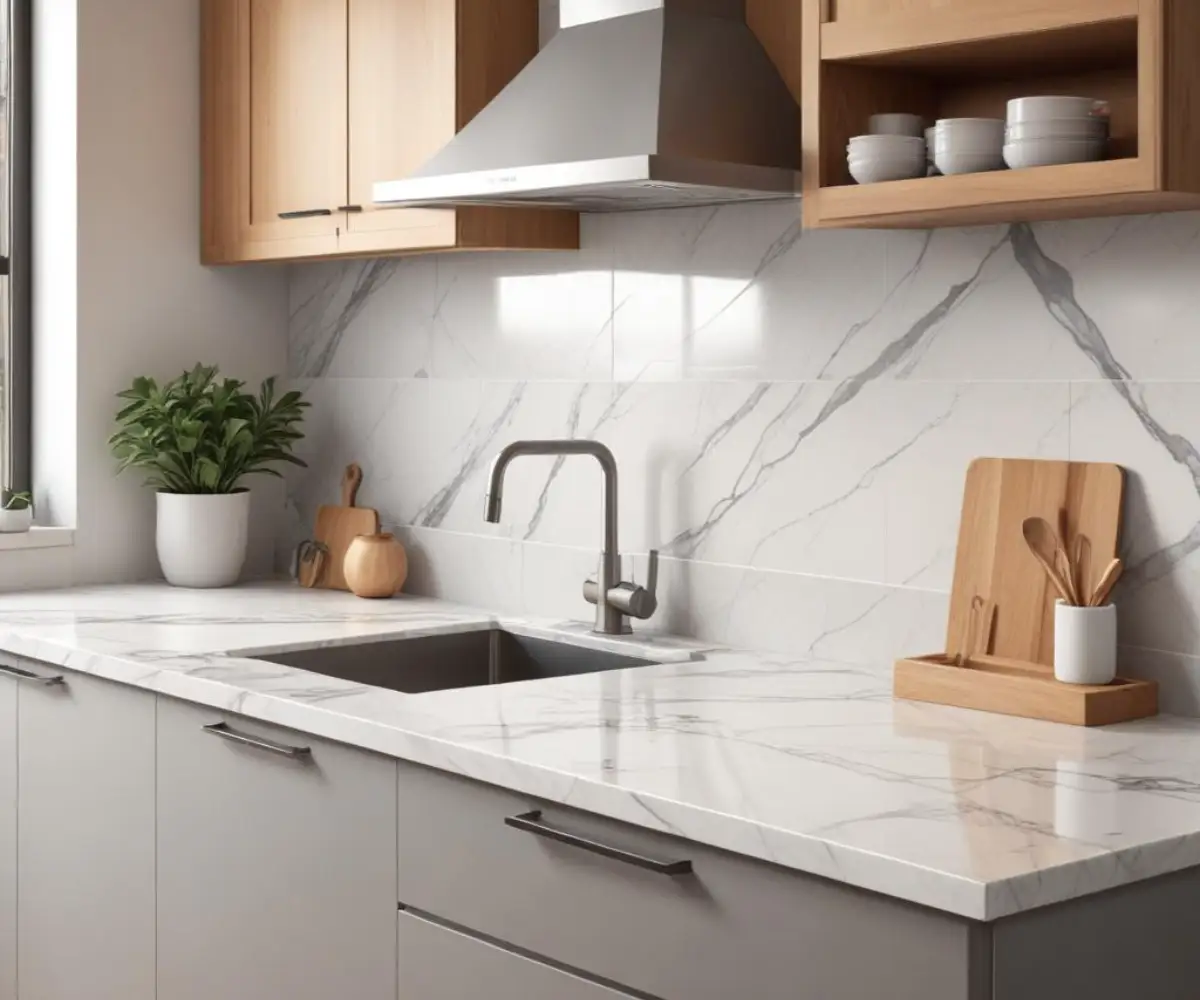
Pattern Subordination: If your quartz countertop features busy, prominent veining, choose a subtle or solid-color marble for the backsplash to allow the counter to be the star. Conversely, a dramatic marble backsplash should be paired with a quieter, less-patterned quartz. [Image showing a busy marble backsplash paired with a solid quartz countertop.]
-
Temperature Match: Ensure both the marble and the quartz share the same dominant undertone (cool or warm). A warm-toned marble paired with a cool-white quartz will instantly create a disjointed, “off” look.
-
Maintenance Awareness: While quartz is nearly bulletproof, remember that your marble backsplash will still require periodic sealing to resist stains, particularly near the cooktop.
By treating the selection process as a coordinated effort—making sure the materials speak the same design language—you create a kitchen where the elegance of marble and the functionality of quartz work together to deliver a high-end, visually cohesive, and lasting aesthetic.
