
Majesty Palm Outdoor Full Sun: Your Ultimate Survival Guide
You brought home a gorgeous Majesty Palm, envisioning a tropical oasis on your patio. Following a common impulse, you placed it in the sunniest spot available, only to watch in horror as its lush green fronds turned yellow, crispy, and brown within days. This rapid decline is a frustratingly common problem for many well-intentioned gardeners.
The core of the issue lies in a fundamental misunderstanding of this plant’s needs. While often associated with sunny, tropical landscapes, the Majesty Palm (Ravenea rivularis) you buy from a nursery has likely been raised in shaded, low-light conditions. Thrusting it directly into intense, outdoor full sun is a shock to its system, leading to severe sunburn, dehydration, and stress.
You'll Learn About
The Majesty Palm and Full Sun: Unraveling the Myth
The belief that all palms thrive in direct, blazing sunlight is a persistent myth that leads to disappointment. In their native habitat in Madagascar, Majesty Palms grow along riverbanks, often in the dappled sunlight beneath a larger canopy. They are not desert plants; they are accustomed to moisture, humidity, and filtered light.
When a shade-grown palm is suddenly exposed to harsh, direct sunlight, its leaves cannot cope. The chlorophyll, responsible for the green color and for photosynthesis, is essentially destroyed by the intense UV radiation, a process known as photo-oxidation. This results in the classic signs of sunburn: yellowing or whitening of the fronds, crispy brown edges, and eventually, the death of the entire leaf.
Understanding “Full Sun” in Your Garden’s Microclimate
It is crucial to recognize that “full sun” is not a uniform concept. Six hours of morning sun in a cooler, coastal region is vastly different from six hours of intense afternoon sun in a hot, dry inland climate. The intensity of the sun, ambient temperature, and surrounding structures all create unique microclimates in your yard.
A location next to a south-facing brick wall, for example, will be significantly hotter and more intense than an open lawn space. This reflected heat can amplify the sun’s effects, further stressing your palm. Understanding your specific environment is the first step toward helping your Majesty Palm not just survive, but truly thrive outdoors.
Acclimation: The Secret to Outdoor Success
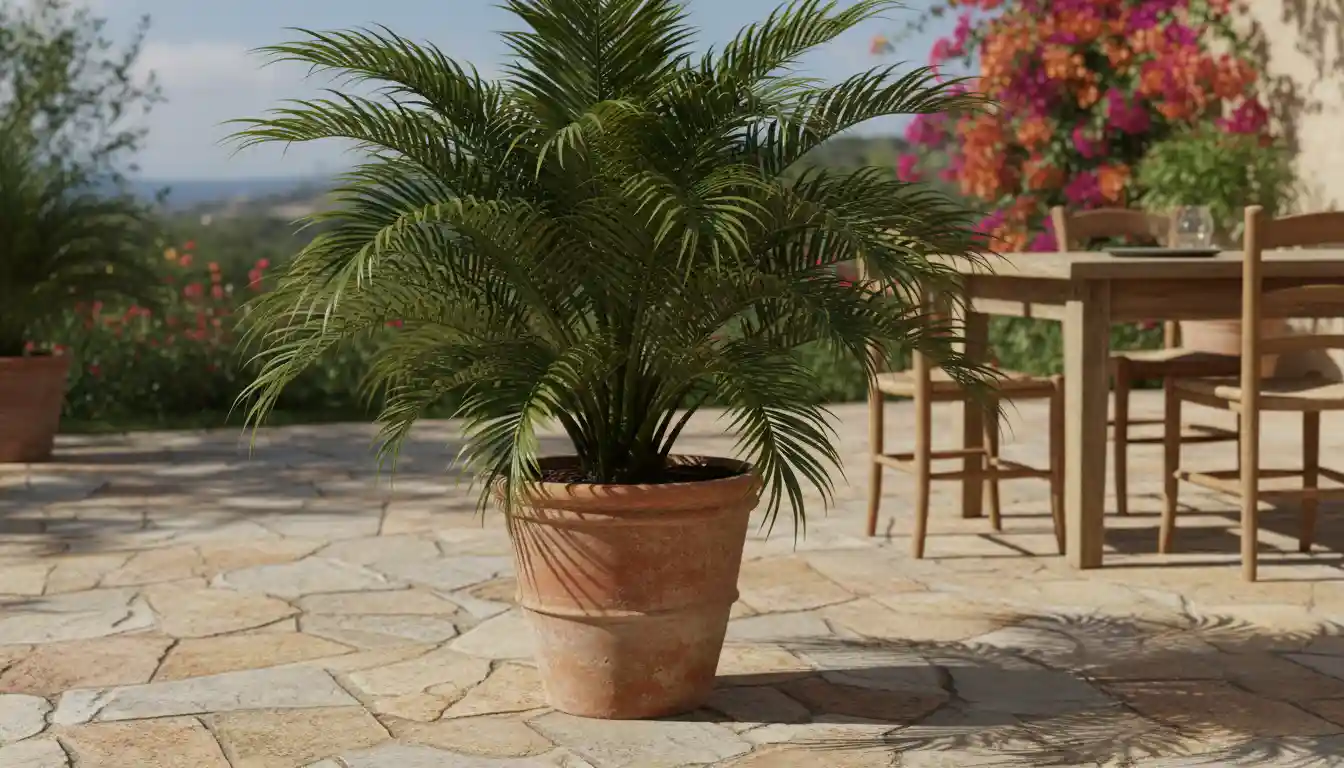
The single most important process for transitioning your Majesty Palm to an outdoor, sunnier location is acclimation. This is the gradual process of getting your plant used to its new, more intense environment. A slow and steady approach prevents shock and allows the palm to build up a tolerance to higher light levels.
Think of it like getting a tan; you wouldn’t spend eight hours at the beach on the first sunny day of summer without protection. Similarly, your palm needs to build up its defenses. Rushing this process is the number one cause of failure.
A Step-by-Step Guide to Sun Acclimation
This process should take a minimum of two to four weeks, but a longer period of up to twelve weeks is even safer, especially in very high-intensity sun areas. Patience is paramount.
Start by placing your palm in a fully shaded outdoor location, like under a covered patio or a large tree, for the first week. This allows it to adjust to the outdoor temperatures and airflow without the stress of direct sun. Over the next several weeks, begin to incrementally increase its sun exposure.
| Week(s) | Daily Sun Exposure | Recommended Placement |
|---|---|---|
| Week 1 | 0 Hours Direct Sun | Full shade (e.g., covered porch, under a dense tree) |
| Week 2 | 1 Hour of Morning Sun | An east-facing location that is shaded the rest of the day |
| Week 3 | 2-3 Hours of Morning Sun | Move slightly further into the east-facing light |
| Week 4 & Beyond | Gradually add an hour every 5-7 days | Slowly transition towards its final, sunnier location |
Always prioritize morning sun over harsh afternoon sun. The sun’s rays are less intense before noon, making it the ideal time for your palm to receive direct light. If your desired final location receives intense afternoon sun, the acclimation process must be even more gradual.
Essential Outdoor Care for a Sun-Stressed Palm
Proper acclimation is only part of the equation. To support your Majesty Palm as it adapts to a full sun environment, you must provide exceptional care. More sun means more heat and faster water evaporation, requiring adjustments to your routine.
Watering: The Most Critical Factor
Majesty Palms are not drought-tolerant. In their native habitat, their roots are often near water. For a potted palm in full sun, this means consistent and abundant watering is non-negotiable. The soil should be kept consistently moist but never waterlogged. During hot, sunny weather, you may need to water it thoroughly every one to two days.
Always check the top 1-2 inches of soil; if it feels dry, it’s time to water. Water slowly and deeply until you see it drain from the bottom of the pot. This ensures the entire root ball is saturated. A plant under heat stress, much like an overheating appliance such as a ceiling fan hot to touch, requires immediate intervention to prevent lasting damage, and for this palm, that intervention is water.
Humidity and Airflow
These palms love humidity. The dry air that often accompanies hot, sunny weather can cause brown, crispy leaf tips. To combat this, mist the fronds regularly, especially in the morning. Grouping it with other plants can also create a more humid microclimate.
Creating this moisture-rich air is similar to the considerations for installing a shower on an exterior wall, where managing humidity is key to success. Good air circulation is also vital to prevent fungal diseases and deter pests like spider mites, which thrive in dry, stagnant conditions.
Soil and Fertilization Needs in the Sun
A well-draining potting mix is essential to prevent root rot. A mix designed for palms or a high-quality potting soil amended with peat moss and perlite or sand provides the right balance of moisture retention and drainage. These palms prefer a slightly acidic soil pH.
A palm in full sun is photosynthesizing more actively and will have higher nutritional needs. Feed your Majesty Palm with a balanced, slow-release palm fertilizer during the growing season (spring and summer). Look for a formula that contains micronutrients like magnesium and manganese, which are crucial for preventing yellowing fronds. Reduce feeding in the fall and winter.
Recognizing and Responding to Distress Signals
Even with careful acclimation, your palm may show signs of stress. Learning to read these signals allows you to intervene quickly and prevent irreversible damage.
Yellowing Leaves: If lower, older fronds are turning yellow, it might be natural aging. However, widespread yellowing can indicate overwatering, underwatering, or a nutrient deficiency. In a full sun setting, underwatering is a common culprit. Check the soil moisture immediately.
Crispy Brown Tips: This is a classic sign of low humidity or allowing the soil to dry out too much between waterings. It can also be caused by a buildup of salts from fertilizer. Increase misting and ensure your watering is consistent.
Scorched White or Brown Patches: This is unmistakable sunburn. The plant was moved into direct sun too quickly. Immediately move it back to a more shaded location and resume a more gradual acclimation process. The burned fronds will not recover and can be trimmed off once they are fully brown.
The Threat of Pests
A stressed plant is more susceptible to pests. Spider mites are a significant threat to Majesty Palms, especially in hot, dry conditions. You’ll notice fine webbing on the undersides of the leaves and a stippled, unhealthy appearance.
To combat them, regularly spray the fronds with water, as spider mites hate moisture. For an active infestation, use insecticidal soap or neem oil, ensuring complete coverage of the plant. A healthy, well-watered, and properly acclimated palm is your best defense against pests.
Is Your Climate Suitable for an Outdoor Majesty Palm?
Majesty Palms are tropical plants and are not frost-tolerant. They are only suitable for in-ground planting in USDA Hardiness Zones 10-11. In these warm climates, they can grow into magnificent trees.
For most people in cooler climates, the Majesty Palm will be a container plant that spends the summer outdoors and is brought inside before the first frost. They cannot tolerate temperatures below 40°F (4°C). When transitioning your palm back indoors for the winter, you must reverse the acclimation process, moving it to progressively shadier spots to prepare it for lower indoor light levels.
Ultimately, succeeding with a Majesty Palm in outdoor full sun is not about finding a “tough” plant, but about understanding and respecting its natural inclinations. It is a moisture-loving, humidity-craving palm that can be trained to tolerate the sun, but not without your diligent help. Through patient acclimation and attentive care, you can transform that struggling, sun-scorched plant into the majestic centerpiece of your garden oasis.
