
Lawn Sweeper vs Lawn Vacuum: Which is Right for Your Yard?
A pristine, manicured lawn is a point of pride, but keeping it free of leaves, grass clippings, and other debris can feel like a never-ending battle. Raking is a back-breaking chore, and while blowers can move debris, they don’t solve the problem of removal. This is where specialized lawn cleanup tools come into play, but the choice between a lawn sweeper and a lawn vacuum can be confusing.
Making the wrong choice can lead to frustration, wasted money, and a yard that’s still messy. Understanding the fundamental differences in how these machines operate is the first step toward reclaiming your weekend and achieving that perfectly clean lawn you desire.
You'll Learn About
Decoding the Lawn Sweeper: A Mechanical Rake
A lawn sweeper is a relatively simple yet effective machine designed to, quite literally, sweep your lawn. It operates using a set of rotating brushes that flick debris up from the grass and into a large collection bag or hopper. Think of it as a super-powered, wheeled rake that does the hard work for you.
Sweepers come in two main varieties: push-behind models for smaller yards and tow-behind models that attach to a riding mower or tractor for larger properties. The forward motion of the wheels is what powers the rotation of the brushes, making it a purely mechanical process without the need for a separate engine.
The Advantages of Sweeping
The primary benefit of a lawn sweeper is its quiet operation. Since there’s no engine or motor, you can clean your yard at any time of day without disturbing your neighbors. They are also highly effective at picking up a wide range of debris, from light grass clippings and dry leaves to heavier items like pinecones, twigs, and even acorns.
Furthermore, sweepers cover a large area quickly, especially the tow-behind models. This efficiency makes them ideal for homeowners with substantial lawns and a significant amount of debris to manage. Maintenance is also straightforward, typically involving cleaning the brushes and ensuring the wheels and gears are free of obstructions.
Potential Drawbacks of Lawn Sweepers
The biggest limitation of a lawn sweeper is its performance on wet debris. Wet leaves and grass tend to clump together and can mat down, making it difficult for the brushes to lift them effectively. It’s best to wait until your lawn is completely dry for optimal results.
Another consideration is that sweepers do not reduce the volume of the debris they collect. A large yard with many trees can fill the hopper quickly, requiring frequent stops to empty it. Finally, their effectiveness can be reduced on uneven terrain or very long grass where the brushes can’t make consistent contact with the ground.
Understanding the Lawn Vacuum: Power-Driven Cleanup
A lawn vacuum, as the name implies, works much like your indoor vacuum cleaner. It uses a gasoline engine or electric motor to create powerful suction, pulling debris up through a nozzle or hose and into a collection bag. Many models also include an impeller that shreds and mulches the material as it’s collected.
Lawn vacuums are available in several styles, including handheld models for small jobs and flower beds, walk-behind units that resemble a lawn mower, and large tow-behind systems for extensive properties. The key feature that unites them all is their reliance on suction power.
The Power of Suction and Mulching
The most significant advantage of a lawn vacuum is its ability to shred and mulch leaves and small twigs. This process can reduce the volume of debris by a ratio of up to 16:1, meaning you’ll have to empty the collection bag far less often. The resulting mulch is also perfect for use in compost piles or as a natural fertilizer for garden beds.
Lawn vacuums are also more effective than sweepers on wet leaves, as the powerful suction can lift matted debris that brushes might miss. Many walk-behind and tow-behind models come with attachment hoses, allowing you to clean hard-to-reach areas like fence lines, under shrubs, and around landscaping features.
Downsides of the Lawn Vacuum
Power comes at a cost, and in this case, it’s noise. Gasoline-powered lawn vacuums are loud and require hearing protection during operation. They are also generally more expensive and require more maintenance than sweepers, including regular oil changes, air filter cleaning, and spark plug checks.
While great with leaves, lawn vacuums can struggle with heavier debris like large acorns, nuts, and thick twigs, which can clog the hose or even damage the impeller. The intake nozzle on walk-behind models can also be relatively narrow, requiring more passes to clear a large, open area compared to a wide tow-behind sweeper.
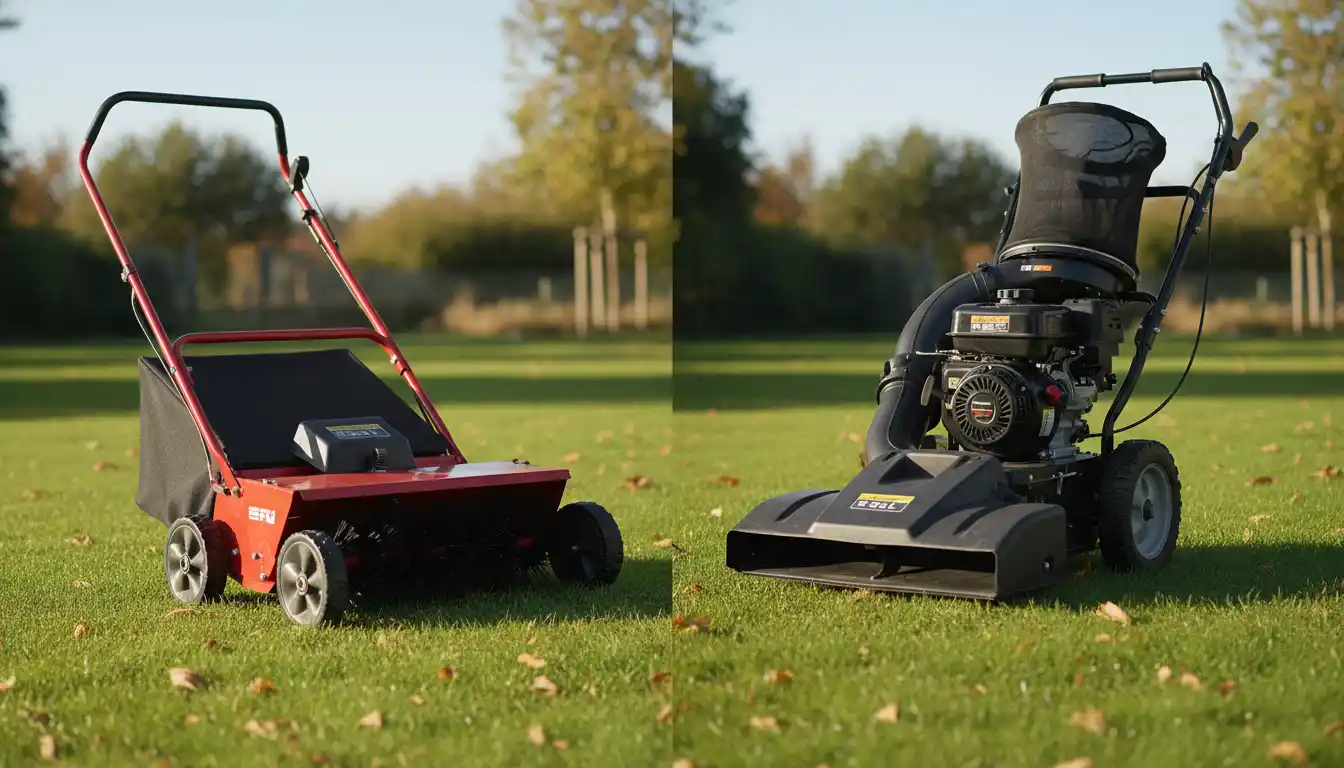
Head-to-Head Battle: Lawn Sweeper vs. Lawn Vacuum
Choosing the right tool depends entirely on your specific needs, lawn size, and the type of debris you handle most often. A direct comparison of their key features can help illuminate the best choice for your situation.
Both tools offer a significant upgrade over manual raking, but their strengths and weaknesses make them suited for very different scenarios. Let’s break down the comparison into the most critical factors for any homeowner.
Feature Comparison Table
This table provides a quick-glance summary of how the two tools stack up against each other across the most important metrics.
| Feature | Lawn Sweeper | Lawn Vacuum |
|---|---|---|
| Primary Mechanism | Rotating brushes flick debris into a hopper. | Engine-powered suction pulls debris into a bag. |
| Best For | Large, open lawns with primarily dry debris. | Small to medium lawns, mulching leaves, and detailed cleaning. |
| Debris Type | Excellent for leaves, grass, pine needles, twigs, acorns. | Excellent for leaves and grass clippings; may clog with heavy nuts/twigs. |
| Wet Debris | Poor performance; clumps and mats down. | Good performance; suction can lift wet leaves. |
| Noise Level | Very quiet; no engine. | Very loud; requires hearing protection. |
| Volume Reduction | None; collects debris at its original volume. | Excellent; mulching feature significantly reduces volume. |
| Maintenance | Low; keep brushes and wheels clean, lubricate gears. | Higher; requires engine maintenance (oil, fuel, filters). |
| Cost | Generally less expensive. | Generally more expensive. |
Performance on Different Debris Types
When it comes to versatility, the lawn sweeper often has an edge. Its simple brush mechanism is surprisingly effective at gathering a wide variety of yard waste. It can handle everything from light grass to heavy, dense acorns without the risk of clogging that plagues vacuum systems.
A lawn vacuum excels with leaves. The ability to suck them up and shred them into a fine mulch is its killer feature. However, trying to vacuum a lawn littered with black walnuts or thick branches can lead to constant jams and potential damage to the machine’s impeller.
Wet vs. Dry Conditions
This is a critical dividing line. A lawn sweeper is almost exclusively a dry-weather tool. Using it on a damp lawn after a morning dew or a recent rain will lead to frustration, as the wet leaves will simply be pressed into the turf. You must wait for conditions to be completely dry for a sweeper to work as intended.
The lawn vacuum, with its powerful airflow, performs much better in damp conditions. While extremely wet, heavy leaves can still cause clogs, it can generally handle moist debris far more effectively than a sweeper, giving you a wider window of opportunity for yard cleanup.
Your Lawn Size and Terrain Matter
For large properties of an acre or more, a wide tow-behind lawn sweeper is often the most efficient choice. Its broad sweep path allows you to cover a lot of ground quickly. However, they are less maneuverable in tight spaces and can struggle on steep hills or bumpy, uneven ground.
Walk-behind lawn vacuums are more nimble, navigating around trees, flower beds, and other obstacles with ease. This makes them a better fit for smaller, more complex suburban yards. While larger tow-behind vacuum systems exist, they are typically more expensive than comparable sweepers.
The Unspoken Factors: Beyond the Basics
Beyond the core functions, there are other practical considerations that can sway your decision. These are the day-to-day realities of owning and using this type of equipment that often get overlooked in a simple feature comparison.
Thinking about storage, physical effort, and secondary uses can prevent buyer’s remorse and ensure you choose a machine that truly fits your lifestyle and home maintenance routine.
Storage and Physical Effort
Lawn sweepers, particularly the tow-behind models, can be bulky and require significant storage space in a garage or shed. Push models are smaller, but still larger than a standard rake. The physical effort for a push sweeper is moderate, comparable to pushing a lawn mower.
Lawn vacuums vary greatly. Handheld models are small and light, while walk-behind units are similar in size to a mower. The self-propelled feature on many walk-behind vacuums can significantly reduce the physical effort required, making them a good option for users with mobility concerns.
Secondary Uses and Versatility
A lawn sweeper’s job is straightforward: it sweeps. Its versatility is limited to the types of debris it can pick up. A lawn vacuum, on the other hand, often has multiple functions. Many models can be converted into powerful blowers, giving you a 3-in-1 tool for blowing, vacuuming, and mulching.
The onboard chipper chute on some higher-end vacuums allows you to break down branches up to 2 inches in diameter, further adding to its utility. This versatility can be a major selling point, as it consolidates your outdoor power equipment. A clean yard also means ensuring all home systems are clear of debris, which is why understanding things like what 4-way venting on a dryer is can be important for overall home safety and efficiency.
Making the Final Decision: Which Tool Is Right for You?
The choice between a lawn sweeper and a lawn vacuum isn’t about which one is “better” overall, but which one is better for your specific circumstances. By honestly assessing your yard, the type of debris you have, and your personal preferences, you can make a confident decision.
Use these scenarios as a guide to determine which tool aligns best with your lawn care needs.
You Should Buy a Lawn Sweeper if…
- You have a large, relatively flat lawn (1/2 acre or more).
- The primary debris is a mix of leaves, grass clippings, pine needles, and small twigs or nuts.
- You prefer a quiet, engine-free operation.
- You have ample space to compost or dispose of large volumes of un-shredded yard waste.
- You primarily do your yard work in dry conditions.
A Lawn Vacuum is Your Best Bet if…
- You have a small to medium-sized yard with many obstacles like trees and garden beds.
- Your main problem is a heavy volume of leaves that you want to mulch for compost or easy disposal.
- You need the flexibility to clean up in damp conditions.
- You value the versatility of a multi-function tool (vacuum, blower, mulcher).
- Noise is not a major concern for you or your neighbors.
Ultimately, both tools are designed to save you from the back-breaking labor of a rake. A lawn sweeper offers simple, quiet, and efficient clearing for large areas, while a lawn vacuum provides powerful, mulching cleanup and detail work for more complex landscapes. By weighing these factors, you can invest in the right machine to keep your lawn looking its best all year round.
