Laundry Room Exhaust Fan: The #1 Secret to Stop Mold & Lint?
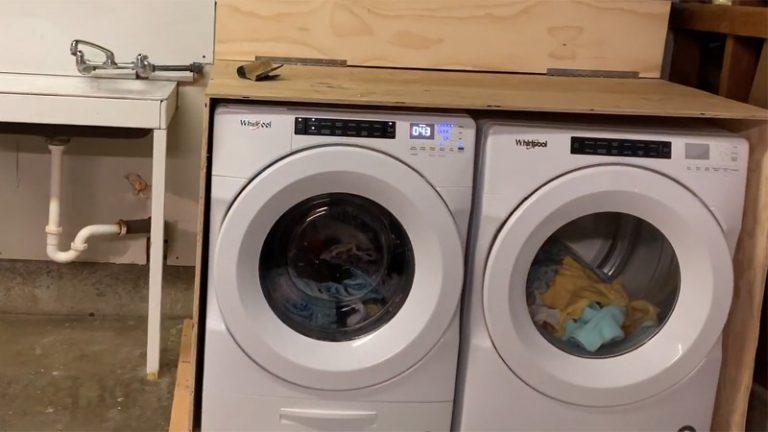
You close the laundry room door and forget about it. But behind that door, a hidden battle is being waged. Your dryer churns out heat and moisture, and your washer adds its own dose of humidity, creating a damp, stagnant environment perfect for problems you can’t see but will definitely have to deal with later.
This isn’t just about a stuffy room or a lingering damp smell. This is about the health of your home and family. Without proper ventilation, you’re inviting mold and mildew to grow, allowing flammable lint to accumulate in hidden corners, and letting chemical fumes from detergents hang in the air.
Many homeowners believe their dryer vent is enough. This is a critical misunderstanding. The dryer vent’s job is to exhaust the dryer, not the room. The surrounding air remains thick with moisture, heat, and airborne particles, creating a host of expensive and hazardous issues down the line.
You'll Learn About
The Unseen Dangers Lurking in Your Laundry Room
That warm, humid air does more than just make the room uncomfortable; it actively damages your home. Moisture is the number one enemy of building materials. It can cause paint to peel, drywall to soften and warp, and even lead to wood rot in your home’s structure over time.
Worse yet, this dampness is a breeding ground for mold and mildew. These fungi release spores into the air that can trigger allergies, asthma, and other respiratory problems. The musty odor you might notice is a clear sign that mold is already present and growing.
Beyond moisture, there’s another significant threat: lint is highly flammable. While your dryer’s lint trap catches a lot, it doesn’t catch everything. Fine particles escape into the air with every cycle, settling on surfaces, behind appliances, and in crevices. According to the National Fire Protection Association (NFPA), failure to clean dryers is a leading cause of home clothes dryer fires.
Why a Window Isn’t a Real Solution
Opening a window seems like a simple fix, but it’s often ineffective. This method relies on passive airflow, which may not be enough to combat the intense moisture and heat produced by your appliances. It’s also impractical during bad weather, cold winters, or for security reasons.
A window alone can’t create the consistent, powerful air exchange needed to pull contaminated air out. To truly solve the problem, you need a dedicated mechanical solution designed for the specific challenges of a laundry room.
The Ultimate Fix: Installing a Dedicated Exhaust Fan
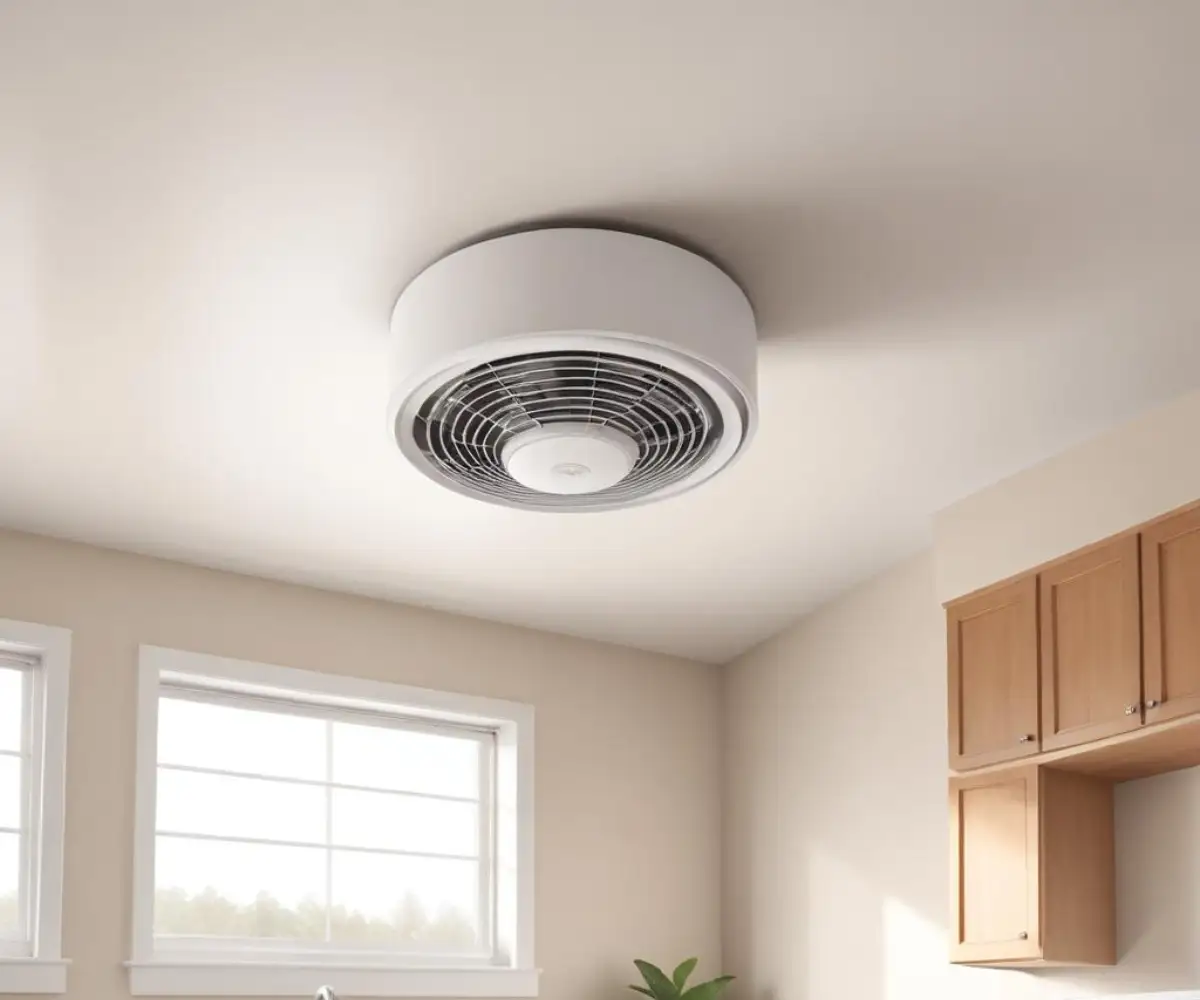
A laundry room exhaust fan is not a luxury; it’s an essential appliance for a safe and healthy home. Unlike a passive window, an exhaust fan actively captures and removes harmful elements. It creates negative pressure, pulling the moist, lint-filled, chemical-laden air from the room and safely venting it outside.
This single addition protects your home from moisture damage, significantly reduces the risk of fire by removing airborne lint, and improves your indoor air quality by expelling VOCs from detergents. It’s a targeted solution for a specific and serious problem.
Choosing the Right Fan: A Guide to Power and Features
Not all exhaust fans are created equal. A standard bathroom fan may not be robust enough for the demands of a laundry room. The key is to select a fan with the right power and features to handle high humidity, heat, and airborne particulates effectively.
The most important factor is the fan’s power, measured in Cubic Feet per Minute (CFM). This rating tells you how much air the fan can move. For a laundry room, a fan rated for 50-100 CFM is typically sufficient to ensure several air changes per hour, keeping the room fresh and dry.
To determine the ideal CFM for your space, you can use a simple calculation. First, find the volume of your room (Length x Width x Height). Then, use this formula: CFM = (Room Volume x 8) / 60. The “8” represents the recommended number of air changes per hour for a utility space like a laundry room.
Key Features That Make a Difference
Beyond CFM, several features can dramatically improve your fan’s effectiveness and convenience. Look for a model with a humidity sensor. This “set it and forget it” feature automatically turns the fan on when it detects a rise in humidity and off again once the air is clear, ensuring ventilation happens exactly when it’s needed without you having to think about it.
Another crucial element often overlooked is the motor. Seek out a fan with a continuous-duty motor. These are built for long, reliable service life, which is essential given the fine airborne lint that can wear out standard motors prematurely. Also, pay attention to the noise level, measured in sones. A fan with a sone rating of 1.5 or less will operate quietly in the background.
A fan with an integrated timer is another excellent option, allowing you to run it for a set period after you finish your laundry to clear out all residual moisture.
| Feature | Benefit | What to Look For |
|---|---|---|
| CFM Rating | Ensures adequate air removal for your room size. | Calculate your room’s needs; typically 50-100 CFM. |
| Humidity Sensor | Automates operation for maximum efficiency. | Adjustable sensitivity settings. |
| Continuous-Duty Motor | Provides long-term durability and reliability. | Check manufacturer specifications for this rating. |
| Low Sones Rating | Ensures quiet, unobtrusive operation. | 1.5 sones or lower for near-silent performance. |
| Timer Switch | Allows for controlled, post-laundry ventilation. | Programmable timers for 30-60 minute cycles. |
Installation Essentials: Getting It Right
Proper installation is just as important as choosing the right fan. The single most critical rule is that the fan must vent directly to the outdoors. Venting into an attic, up-stair, crawl space, or wall cavity simply moves the moisture problem elsewhere, where it can cause hidden mold growth and structural damage.
The ducting should be as short and straight as possible. Use smooth, rigid metal ducting, as the accordion-style flexible ducts can trap lint and restrict airflow. Ensure all joints are sealed with foil tape to prevent leaks. The exterior vent termination should have a backdraft damper to prevent cold air and pests from entering when the fan is off. If you notice your exhaust vent flaps clattering in wind, it’s a sign that the damper may need adjusting or replacement.
While installing an exhaust fan can be a DIY project for those with experience, it involves cutting into drywall and making electrical connections. If you are not comfortable with this type of work, hiring a qualified electrician or HVAC professional is the safest choice to ensure the fan is installed correctly and safely.
Frequently Asked Questions
Do I need an exhaust fan in my laundry room?
While not always required by code, an exhaust fan is highly recommended, especially in laundry rooms without windows. They are crucial for controlling humidity, preventing mold and mildew growth, and improving overall air quality.
What are the main benefits of a laundry room exhaust fan?
A laundry room exhaust fan removes excess moisture and heat, which protects your walls and appliances from damage. It also helps to eliminate odors from detergents and damp clothing, and can improve the efficiency of your dryer by removing humid air.
What should I look for when choosing an exhaust fan for my laundry room?
Consider the size of your laundry room to determine the required airflow capacity, measured in cubic feet per minute (CFM). Look for models with low noise levels and features like humidity sensors or timers for more efficient operation.
Where is the best place to install a laundry room exhaust fan?
The ideal location for an exhaust fan is on the ceiling or a wall near the dryer, as this is the primary source of moisture and heat. It’s essential that the fan is ducted to exhaust the air to the outside of your home, not into an attic or other enclosed space.
How often should I run my laundry room exhaust fan?
For optimal performance, you should run the exhaust fan whenever you are doing laundry. It’s also a good practice to let it run for about 30 minutes after you’ve finished to ensure all the excess humidity has been removed from the room.
Can a window provide enough ventilation for a laundry room?
While a window can help with ventilation, an exhaust fan is generally more effective at quickly removing moisture and odors. Relying solely on a window may not be sufficient, especially in very humid conditions or if the window is not consistently open during and after laundry cycles.
A Final Word on a Healthier Home
A laundry room exhaust fan is a small investment that pays huge dividends in protecting your home and family. It tackles the root causes of moisture, mold, and fire risk at the source. This isn’t just an upgrade; it’s a fundamental component of a modern, healthy home maintenance strategy.
By actively removing harmful airborne particles and controlling humidity, you create a cleaner, safer space. You’ll extend the life of your home’s finishes and structure, improve overall air quality, and gain invaluable peace of mind. While it might operate out of sight, its impact on your home’s well-being is anything but invisible.