
Kitchen Peninsula Without Seating: Your Ultimate Guide
Many homeowners believe a kitchen peninsula must include seating. This common assumption often leads to cramped layouts and wasted potential. A kitchen peninsula without seating, however, can be a strategic design choice that unlocks superior functionality.
Opting for a peninsula dedicated to work and storage over socializing can transform your kitchen. It creates an efficient, organized, and spacious environment tailored to your culinary needs.
You'll Learn About
Why You Should Ditch the Seating at Your Kitchen Peninsula
Removing seating from your peninsula design isn’t a downgrade; it’s a strategic upgrade. This approach prioritizes core kitchen functions, leading to a more practical and streamlined space. It addresses the real needs of a home cook.
A “working peninsula” puts efficiency at the forefront. By eliminating the overhang and stools, you gain valuable real estate for storage and food preparation, fundamentally changing how your kitchen operates.
Maximize Every Inch of Storage
A peninsula without seating offers an unparalleled opportunity for storage. The space typically reserved for knees and stools can be converted into deep drawers for pots and pans. You can also add specialized cabinets for baking sheets, spices, or small appliances.
This design choice allows for full-depth cabinetry on both sides of the peninsula. This effectively doubles its storage capacity compared to a traditional seating-oriented design. Every square inch serves a purpose.
Create an Unbeatable Workflow Triangle
The kitchen work triangle—the path between the sink, refrigerator, and stove—is crucial for efficiency. A peninsula without seating can perfect this flow. It acts as a long, uninterrupted workspace that keeps you steps away from your key appliances.
This setup prevents the peninsula from becoming a bottleneck. Instead of navigating around seated guests, you have a clear, direct path, making meal preparation faster and more intuitive. An efficient layout like this is central to any well-designed 11×20 kitchen layout where flow is paramount.
Define Your Kitchen Space Elegantly
In an open-concept home, a peninsula can create a subtle, effective boundary. It separates the kitchen from the living or dining area without closing off the space. This helps to define distinct zones while maintaining an open, airy feel.
A seating-free peninsula enhances this division. It establishes the kitchen as a dedicated functional zone, keeping guests and daily clutter out of the primary cooking area. This creates a more organized and professional-looking culinary space.
Smart Design Ideas for a Seating-Free Peninsula
Reimagining the peninsula as a functional hub opens up a world of design possibilities. Think beyond the breakfast bar and consider how this space can actively support your daily kitchen tasks. The focus shifts from passive seating to active utility.
From custom storage solutions to dedicated work zones, a peninsula without seating can be tailored to your specific needs. It becomes a versatile and indispensable feature of your kitchen.
The Ultimate Storage Hub
Transform your peninsula into a storage powerhouse. Install deep, full-extension drawers to house heavy cookware. Consider vertical dividers for organizing cutting boards and baking trays, making them easy to grab.
You can also incorporate pull-out spice racks or hidden trash and recycling centers. This keeps your main countertops clear and your kitchen essentials neatly tucked away but within easy reach.
The Dedicated Prep Zone
Designate your peninsula as the primary food preparation area. A durable butcher block countertop can provide a warm, resilient surface for chopping. Alternatively, a seamless quartz or granite slab offers a sleek and easy-to-clean workspace.
Consider adding a second, smaller prep sink to the peninsula. This creates a highly efficient station for washing vegetables and other prep tasks, keeping it separate from the main cleanup area.
A Hidden Appliance Garage
Keep your countertops clutter-free by incorporating an appliance garage into your peninsula. This is a cabinet with a lift-up or retractable door designed to hide bulky items like stand mixers, blenders, and toasters. These items remain accessible but out of sight.
This feature is a game-changer for maintaining a minimalist aesthetic. It ensures your most-used appliances are ready when you need them, without sacrificing a clean, uncluttered look. The right layout makes all the difference, especially in a compact 11×16 kitchen layout where every inch counts.
Critical Dimensions and Planning Considerations
Proper planning is essential to ensure your seating-free peninsula is both functional and beautiful. Paying close attention to dimensions and clearances will prevent common layout mistakes. It guarantees your new feature integrates seamlessly into your kitchen.
From counter height to aisle width, every measurement impacts the final result. Thoughtful consideration of these details will create a space that is comfortable, efficient, and safe to work in.
| Feature | Standard Dimension | Key Consideration |
|---|---|---|
| Counter Height | 36 inches (91 cm) | Should match the rest of your kitchen counters for a seamless look and comfortable work height. |
| Counter Depth | 25-27 inches (63-68 cm) | A slightly deeper counter can provide more workspace without seating overhang. |
| Aisle Clearance | 42-48 inches (107-122 cm) | Ensures enough space for traffic flow and for opening appliance doors without obstruction. |
| Length | Varies (Min. 48 inches) | Must be proportional to the kitchen size to avoid overwhelming the space. |
Standard Peninsula Height and Depth
The standard height for a kitchen peninsula is 36 inches, the same as your main countertops. This creates a uniform work surface throughout the kitchen. For depth, a peninsula without seating can be a standard 25.5 inches, matching the adjacent counters.
If you desire more workspace, extending the depth to 30 inches can be beneficial. This provides extra room for prep work or small appliances without the need for a seating overhang.
Aisle Clearance is Non-Negotiable
Proper clearance around the peninsula is crucial for a functional kitchen. A minimum of 42 inches of open space between the peninsula and opposing counters or appliances is recommended. This allows for comfortable movement and safe operation of drawers and doors.
In kitchens with multiple cooks, increasing this clearance to 48 inches is ideal. This prevents traffic jams and ensures everyone can work without bumping into each other.
Planning for Power
A working peninsula needs accessible power outlets for small appliances. Integrating outlets into the side or end of the peninsula cabinet is a practical solution. This keeps cords off the main countertop and provides power right where you need it.
It’s important to be aware of local building codes regarding electrical placements. For example, understanding regulations similar to those for a kitchen island outlet overhang can ensure your installation is both safe and compliant.
Beyond the Basics: Advanced Peninsula Concepts
Once you have the fundamentals down, you can explore more creative and advanced designs. These concepts elevate the seating-free peninsula from a purely functional element to a stunning focal point. They add a layer of sophistication and custom utility to your kitchen.
These ideas push the boundaries of traditional kitchen design. They offer unique solutions that cater to modern lifestyles and culinary habits.
The Waterfall Edge Peninsula
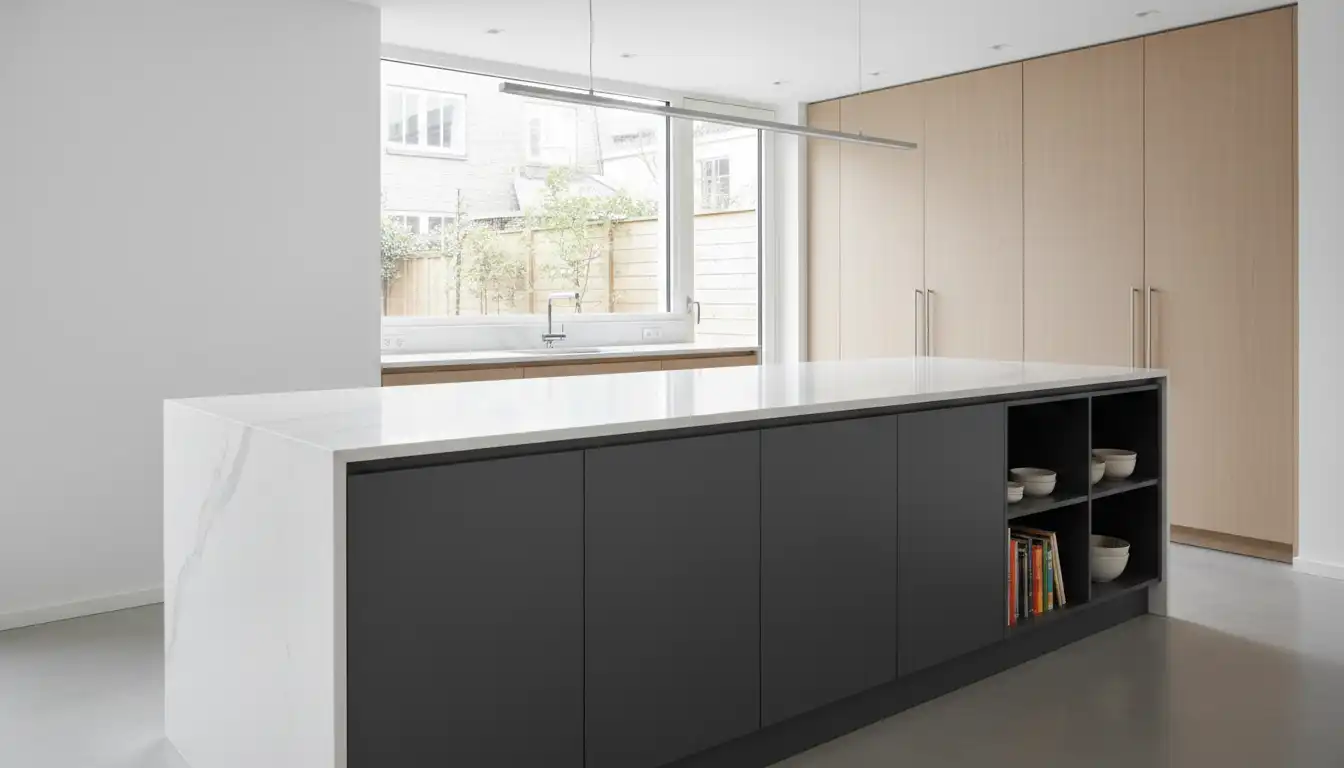
A waterfall edge is a design where the countertop material continues down the side of the peninsula to the floor. This creates a continuous, clean line that is visually striking. It’s a popular choice in modern and contemporary kitchens.
This design makes a bold statement while protecting the cabinet end from wear and tear. Using a material with dramatic veining, like marble or quartz, can turn your peninsula into a work of art.
Integrating a Beverage or Coffee Station
Dedicate a portion of your peninsula to a beverage or coffee station. You can install an under-counter beverage fridge or wine cooler. Add open shelving above for glasses or mugs and a small section of countertop for your coffee maker.
This creates a convenient, self-serve area for family and guests. It keeps traffic out of the main cooking zone, which is especially useful when entertaining.
The Two-Tiered Workstation
A two-tiered design offers functional separation on a single peninsula. The main level can remain at the standard 36-inch height for prep work. A slightly raised back tier, perhaps 4-6 inches higher, can act as a serving ledge or a place to keep ingredients organized.
This design subtly contains the mess of the prep area from view. It adds architectural interest and enhances the peninsula’s versatility without requiring the space of a full seating bar.
Is a Kitchen Peninsula Without Seating Right for You?
Deciding to forgo seating is a personal choice based on your lifestyle and kitchen layout. If your primary goal is maximizing storage, efficiency, and workspace, this design is a superior option. It is particularly effective in smaller kitchens where space is at a premium.
If you already have a dedicated dining area nearby, peninsula seating can be redundant. By reclaiming that space for functional purposes, you create a kitchen that works harder and smarter for you every day.
