
Kitchen Island with Overhang on Two Sides: The Ultimate Guide to Creating a Social Hub
The modern kitchen has evolved far beyond a simple room for cooking. It is now the undisputed heart of the home—a dynamic space for entertaining, casual dining, homework, and heartfelt conversations. At the center of this evolution is the kitchen island, but a standard, single-sided island can often feel more like a serving counter than an integrated social hub.
This design can create a subtle barrier, lining up guests and family members like patrons at a diner rather than participants in a conversation. The core problem many homeowners face is how to design a kitchen centerpiece that is truly multifunctional, encourages genuine interaction, and enhances workflow without overwhelming the space. The solution lies in a thoughtful and strategic design: the kitchen island with overhang on two sides.
You'll Learn About
Why a Two-Sided Overhang Is a Game-Changer for Your Kitchen
Opting for an overhang on two sides of your kitchen island is more than an aesthetic choice; it’s a fundamental shift in how your kitchen functions. This design transforms a simple workspace into a versatile, engaging hub that adapts to the rhythm of your daily life. It breaks down the invisible “chef versus guest” barrier, creating a more communal and welcoming atmosphere.
Fostering Connection and Conversation
The primary advantage of a two-sided overhang is its ability to create a more natural and social seating arrangement. Instead of sitting in a straight line, family and guests can sit at an angle to one another, typically in an “L” configuration. This setup promotes face-to-face interaction, making conversation flow more easily and naturally.
This is the difference between a presentation-style layout and a collaborative one. It invites people to linger, share stories, and connect in a way that linear seating simply cannot accommodate. The island becomes less of a countertop and more of a gathering table, seamlessly integrated into the kitchen’s core.
Unlocking Unmatched Layout Flexibility
A kitchen island with overhang on two sides is not a one-size-fits-all solution; its beauty lies in its adaptability. In an L-shaped or U-shaped kitchen, an island with a two-sided overhang can create a cozy, nook-like seating area without disrupting the primary work triangle between the sink, stove, and refrigerator.
In large, open-plan homes, this design acts as a soft boundary, defining the kitchen area without closing it off from the living or dining spaces. It becomes an anchor point that connects different zones of the home, allowing for seamless interaction whether someone is cooking, doing homework, or relaxing nearby.
The Ultimate Multipurpose Workspace
This design excels at multitasking. One side of the overhang can be a designated spot for casual breakfasts or morning coffee, while the other can be used for laptops and homework. When entertaining, the dual overhangs provide ample space for guests to gather with drinks and appetizers, keeping them close to the action but out of the primary cooking zone.
For buffet-style meals, the extended countertop space is invaluable. This versatility ensures that the island is not just used during meal prep, but becomes a constantly utilized surface throughout the entire day, maximizing its value and footprint in your home.
The Critical Planning Phase: Before You Commit
While the benefits are compelling, successfully implementing a kitchen island with a two-sided overhang requires meticulous planning. The single most common mistake homeowners make is underestimating the amount of floor space this design demands. Without proper clearances, what was intended to be a social hub can quickly become a cumbersome obstacle that chokes traffic flow and makes the kitchen feel cramped and dysfunctional.
Rule #1: Mastering Your Kitchen Clearances
Proper clearance is non-negotiable. The National Kitchen & Bath Association (NKBA) provides clear guidelines for a reason: safety and functionality depend on them. You must ensure there is adequate space around the entire island for movement, opening appliance doors, and pulling out chairs.
For a comfortable workflow, plan for a minimum of 42 inches of clearance between the island and the surrounding countertops or walls. If your kitchen often has two cooks working simultaneously, this should be increased to at least 48 inches. On the seating sides, ensure there is enough room for someone to sit comfortably while also allowing others to pass behind them easily.
Choosing the Right Shape: L-Shape vs. T-Shape Overhang
The configuration of your two-sided overhang significantly impacts the island’s functionality and aesthetic. The two most common and effective shapes are the L-shape and the T-shape, each with distinct advantages.
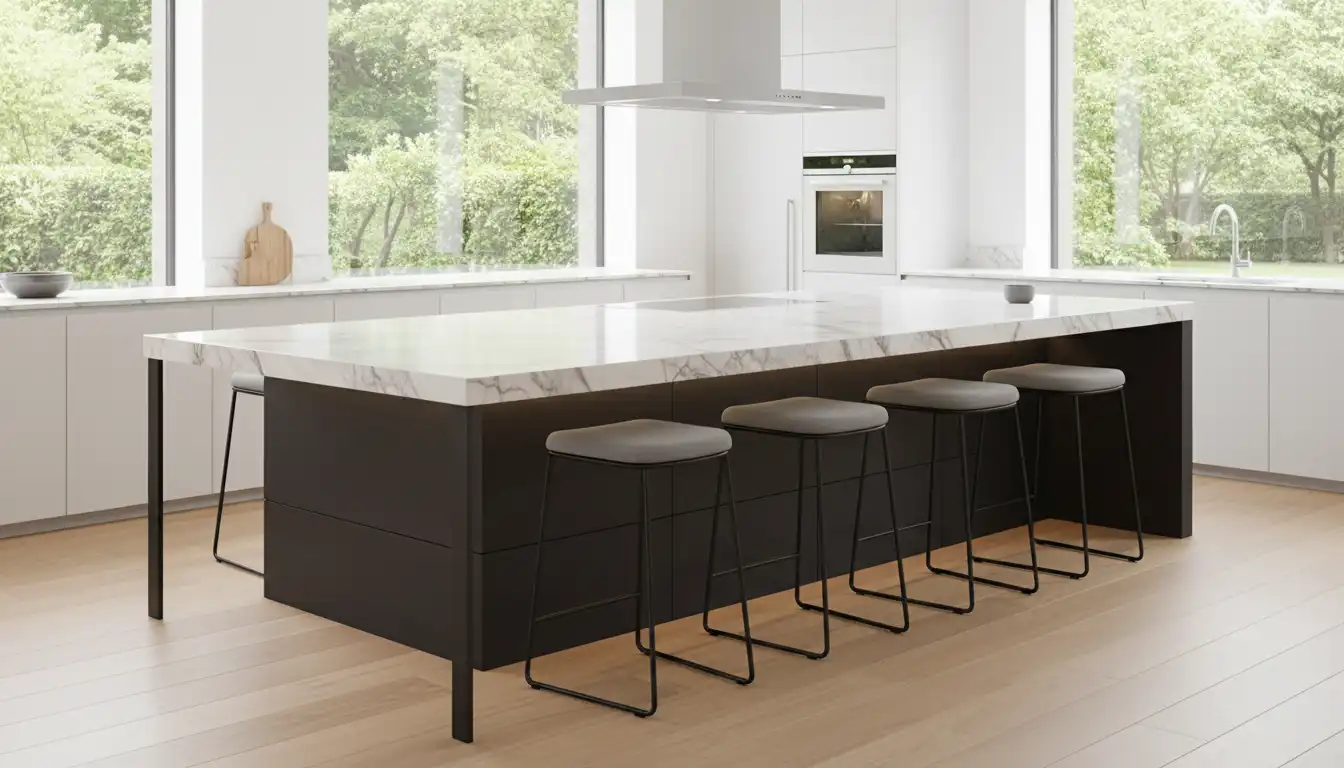
An L-shaped overhang is created by extending the countertop along one full side and one partial side, forming a corner seating arrangement. This is exceptionally effective for promoting conversation, as it allows people to face each other. It’s an excellent choice for creating a cozy, dining-nook feel and works well to anchor a corner of the island.
A T-shaped overhang involves a perpendicular countertop section extending from the center of the main island. This design is superb for zoning in a very large, open-concept space. It can function almost like a built-in dining table, clearly separating the primary cooking workspace from the casual dining area. The T-shape offers a more formal, structured feel compared to the relaxed L-shape.
Designing Your Perfect Two-Sided Island: From Concept to Reality
Once you’ve confirmed you have the necessary space, the focus shifts to the specific design details that will make your island both beautiful and highly functional. These elements—overhang depth, structural support, and integrated features—are what elevate a good island into a truly exceptional one.
Getting the Overhang Dimensions Right
The depth of the overhang is crucial for comfort. For counter-height seating (36 inches), you need a minimum of 15 inches of clear knee space. For bar-height seating (42 inches), a 12-inch overhang is acceptable. Anything less will force people to sit uncomfortably sideways or perch on the edge of their stools.
It’s important not to skimp on this dimension. While a smaller overhang might seem to save space, it renders the seating unusable for anything more than a brief stop. This is a critical detail where trying to solve one problem, like needing an 8-inch overhang for island clearance, can create a bigger one by making the seating impractical.
The Unspoken Requirement: Proper Support
A large countertop with overhangs on two sides is incredibly heavy and requires robust structural support. This is an area where aesthetics must meet engineering. Simply extending the countertop without reinforcing it is a recipe for disaster, as it can lead to cracking, sagging, or even a complete collapse of the stone.
The support system must be planned from the outset. Waterfall edges, where the countertop material flows down the sides of the island to the floor, provide excellent and visually seamless support. For a less monolithic look, options include decorative corbels, chunky leg posts, or—for a minimalist aesthetic—invisible steel support brackets that are routed into the island’s cabinet structure. The right choice depends on your design style, budget, and the specific weight of your chosen countertop material.
| Support Type | Aesthetic | Support Strength | Cost | Best For |
|---|---|---|---|---|
| Corbels | Traditional, Farmhouse, Craftsman | Good to Excellent | Moderate | Adding a decorative, architectural element. |
| Steel Brackets | Modern, Minimalist, Industrial | Excellent | Moderate to High | Creating a “floating” countertop look with hidden support. |
| Waterfall Edge | Contemporary, Luxury, Modern | Superior | High | Making a bold design statement and providing seamless, robust support. |
| Leg Posts | Transitional, Traditional, Furniture-style | Excellent | Moderate to High | Defining the seating area and giving the island a furniture-like appearance. |
Integrating Functionality: Outlets, Storage, and More
A truly functional island goes beyond a beautiful countertop. To make your two-sided island the ultimate hub, integrate modern conveniences directly into its design. Electrical outlets with USB ports should be strategically placed on the island base, making it easy to charge laptops and phones.
Consider the storage needs from all angles. The “work” side of the island should feature deep drawers for pots and pans, pull-out trash and recycling bins, and perhaps a microwave drawer. The “social” sides can incorporate shallower cabinets for less-frequently used items, open shelving for cookbooks and decor, or even a small beverage refrigerator to keep drinks easily accessible for guests.
Is a Two-Sided Island Right for You? Making the Final Call
A kitchen island with an overhang on two sides is a powerful design tool, but it is not the right solution for every kitchen. A clear-eyed assessment of your space, lifestyle, and priorities is essential before committing to this layout.
The Ideal Candidate: When It Works Best
This design truly shines in medium to large kitchens, especially those with an open-concept layout. It is the perfect centerpiece for homeowners who love to entertain and want to create a fluid, interactive space where cooking and socializing can happen simultaneously. If your goal is to have the island serve as the primary dining area, this configuration is a natural fit.
In fact, for many, this setup works so well that it completely replaces a traditional dining table. Exploring a no kitchen table just island layout can open up significant floor space and create a more unified, modern living area. A two-sided overhang makes this transition feel natural and inclusive.
When to Reconsider: Potential Downsides
The most significant barrier is space. In a small or narrow kitchen, forcing a two-sided island will create frustrating bottlenecks and make the room feel cluttered and inefficient. It’s crucial to be realistic about your kitchen’s footprint; sometimes, a different solution is the better choice.
Cost can also be a factor. The larger countertop, additional finishing on multiple sides of the island base, and the requisite support structures all add to the overall project budget. If space is limited or the layout is awkward, a kitchen peninsula without seating might provide the extra counter space you need without compromising the room’s flow.
Ultimately, a kitchen island with an overhang on two sides is an investment in a more connected and functional home. When planned with care, it transforms the kitchen from a place of utility into a vibrant, welcoming hub where the best moments of daily life can unfold. By prioritizing space, support, and thoughtful design, you can create a centerpiece that is not only beautiful but perfectly attuned to the way you live.
