Kitchen Island Outlet Overhang: The Code Violation You Can’t Afford
The kitchen island is the heart of the modern home. It’s a workspace, a dining table, and a social hub. But this multitasking marvel hides a complex and often misunderstood danger: its electrical system. Specifically, the placement of outlets in or under the countertop overhang is a minefield of safety codes, functional compromises, and aesthetic challenges. Getting it wrong isn’t just an inconvenience; it can lead to failed inspections, costly repairs, and genuine safety hazards.
Many homeowners and even some contractors are unaware of the strict rules governing these installations. The result is often a dangerous compromise—an outlet placed incorrectly “for convenience” that creates a serious risk. This guide breaks down the problem, decodes the complex electrical codes, and provides clear, actionable solutions for a safe, compliant, and beautiful kitchen island.
You'll Learn About
Why Your Island Overhang Outlet is a Ticking Time Bomb
The core problem with kitchen island outlets, especially those near an overhang, is the risk of dangling cords. For years, the common practice was to install outlets on the side of the island base, sometimes tucked under the overhang. While seemingly practical, this created a significant hazard. Cords from appliances like mixers or slow cookers would hang over the edge, creating a perfect opportunity for a child to pull on them or for someone to snag them while walking by.
These incidents have led to severe burns and injuries from hot food or liquids spilling. This prompted major changes in the National Electrical Code (NEC) to mitigate these dangers. The latest updates strictly regulate where outlets can and cannot be placed, effectively making the old side-mounted outlets under a deep overhang a thing of the past.
Ignoring these codes doesn’t just put your family at risk. It guarantees you will fail your electrical inspection, forcing expensive and time-consuming rework. Understanding and adhering to these rules is not optional. It’s a critical step in ensuring your kitchen is both functional and safe.
Decoding the Code: NEC Rules for Island Outlets You Can’t Ignore
The National Electrical Code (NEC) is the benchmark for safe electrical design and installation in the United States. Recent updates, particularly in section 210.52, have drastically changed the rules for kitchen island receptacles to enhance safety. One of the most significant changes is that outlets are no longer strictly required on an island, but if you do install them, you must follow precise placement rules.
The old method of calculating the number of required outlets based on countertop square footage has been eliminated. The focus is now entirely on safe placement to prevent cord-related accidents. The code explicitly forbids installing a receptacle below a countertop where the overhang extends more than 6 inches beyond its support base. This single rule makes most under-overhang installations on a seating-side island non-compliant.
Furthermore, all kitchen outlets that serve countertop surfaces must have Ground-Fault Circuit Interrupter (GFCI) protection. A GFCI outlet is a critical safety device that quickly shuts off power if it detects an imbalance, preventing dangerous electrical shock, especially in areas where water is present. Planning for a hidden GFCI outlet can preserve your design while ensuring safety.
| NEC Guideline (2023) | Requirement Summary | Primary Safety Rationale |
|---|---|---|
| GFCI Protection | All outlets serving island and peninsula countertops MUST be GFCI protected. | Prevents electrical shock in areas where water and electricity may mix. |
| Overhang Rule [210.52(C)] | Receptacles are NOT permitted below a countertop that extends more than 6 inches beyond its support base. | Eliminates dangling cords in seating areas, reducing tipping hazards for appliances. |
| Permitted Locations | Outlets must be on or above the countertop (max 20 inches high) or in the countertop using a listed pop-up assembly. | Ensures appliance cords do not hang over the edge of the work surface. |
| Outlet Mandate | Outlets are no longer required on islands. However, if none are installed, provisions (like a junction box) must be made for future installation. | Provides flexibility in design while ensuring future electrical access is possible. |
The “Right Way” to Power Your Overhang: 3 Safe & Stylish Solutions
With the old side-mounted outlets under deep overhangs no longer an option, homeowners and designers must embrace new, code-compliant solutions. Fortunately, there are several excellent ways to provide power to your island that are safe, functional, and aesthetically pleasing.
Solution 1: Under-Overhang Outlets (The Right Way)
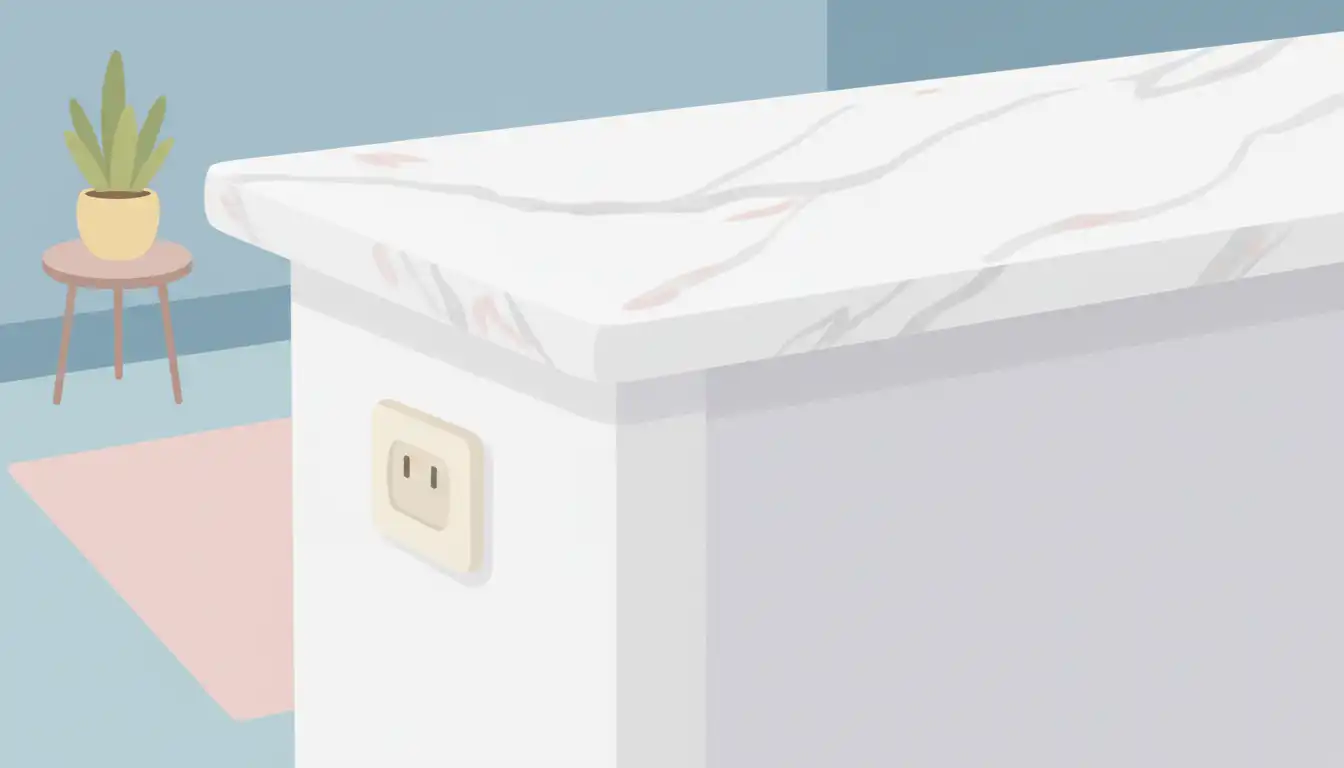
You can still place outlets under the overhang, but only if it complies with the “6-inch rule.” This is typically only possible on the “working” side of the island where the overhang is minimal (usually 1-1.5 inches). For these situations, angled power strips mounted directly beneath the countertop edge are a fantastic solution.
These units keep receptacles out of sight, protecting them from spills while leaving the island’s side panels clean and seamless. This is one of the most popular methods for a clean, modern look. It maintains the minimalist aesthetic without sacrificing convenience, as long as the overhang depth is compliant.
Solution 2: Pop-Up Outlets
Pop-up outlets are a game-changer for island design. These certified assemblies are installed directly into the countertop and remain flush and hidden until needed. With a simple press, they emerge to provide access to multiple receptacles and often include USB ports for charging devices.
Because they are installed on the countertop surface, they fully comply with the latest NEC requirements. They are the perfect solution for islands with large, flat surfaces and no backsplash or upper tier. While they are more expensive and require precise cutting of your countertop material, they offer the ultimate combination of safety, compliance, and modern convenience.
Solution 3: End Panel and Waterfall Installations
Placing outlets on the end panels or “waterfall” sides of the island is another excellent, code-compliant strategy. This location avoids the overhang seating area entirely, eliminating the risk of dangling cords. The outlets are easily accessible for countertop appliances without creating a hazard.
To make this solution even more seamless, the outlet covers can be painted or even custom-finished to match the island’s cabinet or panel material, allowing them to blend in almost invisibly. This approach is a core component of a well-thought-out design, avoiding the kind of remodel disasters that a solid kitchen planner USA guide warns against.
A Hidden Danger: Why Cord-Connected Outlets Are a Major Red Flag
In an attempt to avoid complex wiring, some might be tempted to use a relocatable power tap or a flexible extension cord routed through the island cabinetry. This is an extremely dangerous and non-compliant practice. The NEC strictly prohibits the use of extension cords as a substitute for permanent wiring.
These temporary solutions are not designed to handle the electrical load of kitchen appliances and present a significant fire hazard. Every outlet on your kitchen island must be part of a permanent, hard-wired circuit installed by a qualified electrician. There are no safe shortcuts when it comes to your home’s electrical system.
Installation Essentials: Don’t DIY Without This Checklist
While the final electrical connection must be done by a licensed electrician, proper planning is essential for a successful outcome. Thinking through the details beforehand will save you time, money, and frustration.
First, map out how you will use your island. Consider where you will place small appliances like mixers, blenders, or coffee makers. This will inform the ideal placement of your outlets for maximum convenience. This is also the time to consider major appliances; for example, the location of a dishwasher in island across from sink can impact where you can safely run wiring.
Next, consider the depth of your overhang. If you plan a seating area with a deep overhang, you must rule out placing outlets underneath it. Understanding the limits of an 8 inch overhang for island seating is crucial before you finalize your electrical plan. Finally, always consult a licensed electrician early in the planning process to ensure your design is fully compliant with local codes.
Beyond the Basics: Advanced Overhang Outlet Strategies
Once you have the safety and code requirements handled, you can focus on integrating your island’s power solutions perfectly into your design. Modern outlets offer more than just power; they provide enhanced convenience and aesthetic options.
Many pop-up and power strip outlets now come with integrated USB-A and USB-C ports. Including these is a simple way to create a dedicated charging hub for phones and tablets, reducing countertop clutter from bulky adapters. You can also color-match your outlets and cover plates to your cabinetry or countertop for a truly high-end, seamless look.
The Airflow Factor: A Critical Overlooked Detail
One aspect of island design that is rarely discussed in relation to electrical work is airflow. If your island houses appliances that generate heat, such as a wine fridge, microwave drawer, or even some dishwashers, proper ventilation is critical. When planning your outlet locations, ensure that the electrical boxes or pop-up mechanisms do not obstruct any required ventilation pathways.
Blocking airflow can cause appliances to overheat, shorten their lifespan, and even create a fire risk. This is a crucial detail that links electrical planning with appliance placement and cabinet design, and getting it wrong can be as dangerous as a faulty ceiling fan over kitchen island.
Conclusion: Achieve a Safe, Functional, and Beautiful Kitchen Island
Powering a kitchen island overhang is no longer a simple matter of convenience. It is a task governed by strict safety codes designed to protect you and your family. The days of placing an outlet anywhere it fits are over. By understanding the National Electrical Code, particularly the rules regarding overhangs and GFCI protection, you can avoid dangerous mistakes and failed inspections.
Embrace modern, code-compliant solutions like countertop pop-up outlets, angled power strips under a minimal overhang, or discreetly placed end-panel receptacles. Plan your layout thoughtfully and, most importantly, always work with a licensed electrician to ensure your vision is executed safely and correctly. A well-planned island is the cornerstone of a dream kitchen—a space that is not only beautiful and functional but uncompromisingly safe.