
Walnut Cabinets No Stain: Your Guide to a Flawless Natural Look
The timeless allure of natural wood grain is undeniable. Homeowners invest in premium materials like walnut, seeking its rich color and captivating patterns to create a warm, luxurious kitchen.
Yet, a common mistake can undermine the entire investment. Many default to using a stain, which can muddy the grain and mask the very character that makes walnut so desirable.
Opting for kitchen cabinets with walnut and no stain is the secret to achieving an authentic, high-end look. This guide provides the solution to navigating the process, ensuring you celebrate the wood’s true beauty without compromising on durability.
You'll Learn About
Why Choose Unstained Walnut? The Unfiltered Beauty of Natural Wood
When you choose to forgo stain, you are making a deliberate choice for authenticity. This approach allows the inherent qualities of the walnut to become the centerpiece of your kitchen design.
The primary benefit is showcasing the authentic grain and color of the wood. Walnut has a complex and beautiful grain, with natural variations from creamy white sapwood to deep, chocolate-brown heartwood that a dark stain would obscure.
This commitment to natural materials also offers a timeless appeal. While stain colors can fall in and out of fashion, the pure look of walnut remains a classic choice that complements a wide range of styles, from mid-century modern to ultra-contemporary.
The “No Stain” Misconception: It’s All About the Finish
A crucial distinction must be made. “No stain” does not mean “no finish.” Leaving raw wood exposed in a kitchen is impractical, as it would be highly susceptible to damage from water, oils, and daily use.
The key is to use a protective clear topcoat that preserves the wood’s natural appearance while providing a durable barrier. The type of finish you choose is one of the most important decisions you will make.
Understanding Your Clear Coat Options
The best clear coat will protect your investment without altering the wood’s natural color. Conversion varnish is widely considered the industry gold standard for high-end cabinetry. It is a catalyzed finish that cures to an extremely hard, non-yellowing, and chemical-resistant surface.
Another popular option is polyurethane. A water-based polyurethane is perfectly clear and has a low odor, while an oil-based version offers excellent durability but can impart a slight amber hue that deepens over time.
For a more organic, close-to-the-wood feel, some opt for hardwax oils. These finishes penetrate the wood fibers rather than forming a film on top, resulting in a beautiful matte look that is easy to spot-repair. However, they typically require more frequent maintenance than varnish or polyurethane.
Sourcing Your Cabinets: What to Demand for a No-Stain Finish
When you aren’t using stain to hide imperfections, the quality of the wood itself becomes paramount. You must be specific with your cabinet maker about your expectations for the final look.
Wood grade is everything. For a clean, consistent appearance, you should specify a high grade, such as “Select & Better,” which will have minimal knots and color variations. This will directly impact the cost, but it’s essential for a premium result.
You must also discuss the balance of heartwood versus sapwood. Heartwood is the dark, inner part of the tree, while sapwood is the lighter, outer layer. Specifying “all heartwood” will give you a more uniform, dark cabinet, whereas allowing some sapwood creates a beautiful and natural contrast.
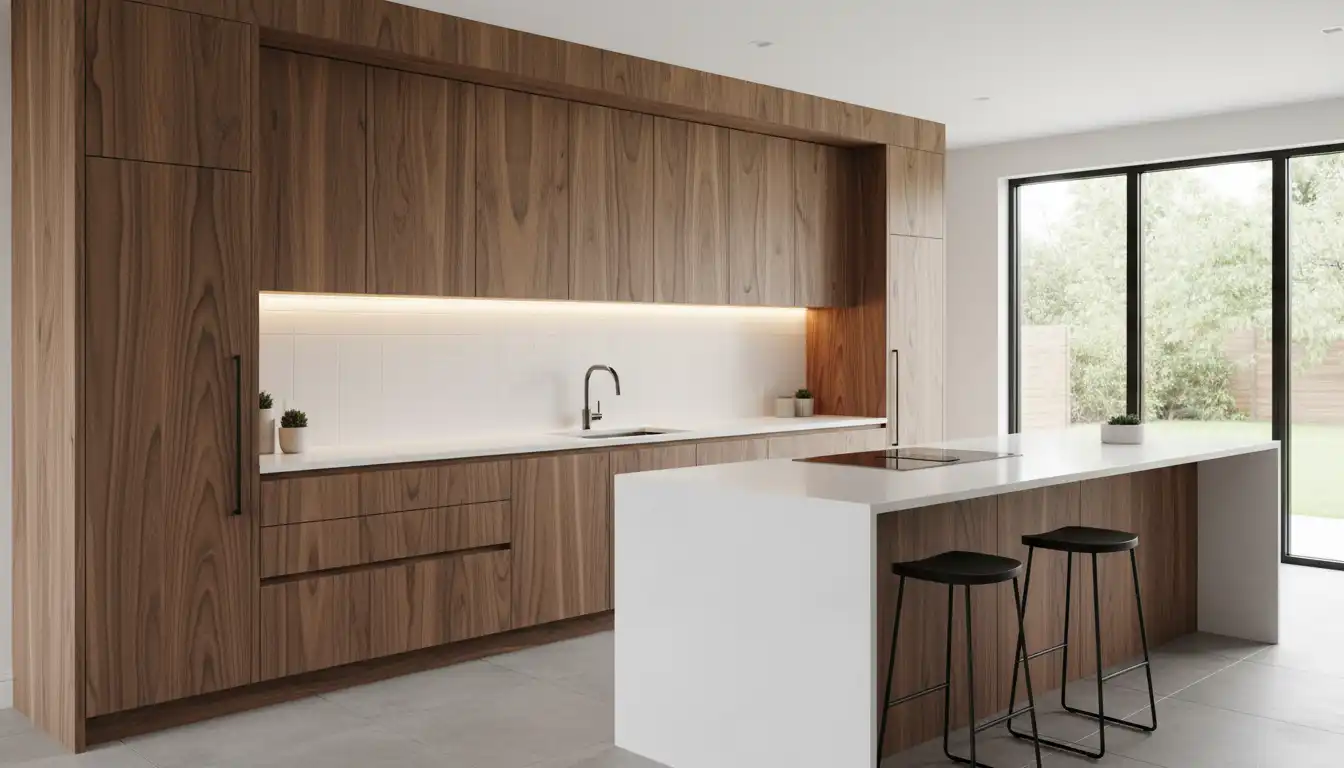
For the ultimate luxury statement, inquire about bookmatching or grain matching. This is a technique where the wood veneer is arranged so the grain patterns flow continuously across doors and drawers, creating a stunning, seamless effect.
Designing Your Kitchen Around Natural Walnut Cabinets
Unstained walnut cabinets serve as a rich, warm foundation for your kitchen design. The key is to select complementary materials that enhance, rather than compete with, the wood’s natural beauty.
Countertop and Backsplash Pairings
To create a bright and airy feel, pair walnut cabinets with light countertops. White quartz, marble, or light-colored granite provide a crisp contrast that allows the richness of the wood to stand out. This pairing prevents the space from feeling too heavy or dark.
For a more dramatic and moody aesthetic, consider dark countertops like soapstone or black granite. When combined with proper lighting, this can create a sophisticated and enveloping atmosphere. A simple backsplash, such as a classic subway tile or a solid slab matching the counter, is often best to keep the focus on the cabinetry.
Hardware and Flooring Choices
The hardware you choose can significantly influence the final style. Brushed brass or gold hardware warms up the walnut, while matte black provides a sharp, modern contrast. For a timeless and versatile look, satin nickel is an excellent choice.
When it comes to flooring, creating contrast is again important. Light wood floors, such as white oak or maple, can beautifully offset the dark tones of the walnut. Be cautious about pairing walnut with woods that have strong, competing grain patterns, like certain types of oak.
A Deep Dive into Clear Finishes for Walnut
Choosing the right protective topcoat is critical for the longevity and beauty of your unstained walnut cabinets. This table breaks down the most common options to help you make an informed decision with your cabinet maker.
| Finish Type | Durability | Appearance | Best For | Maintenance Level |
|---|---|---|---|---|
| Conversion Varnish | Extremely High | Perfectly clear, non-yellowing, available in various sheens | High-use kitchens needing maximum chemical and scratch resistance | Low (Clean with damp cloth) |
| Water-Based Polyurethane | High | Dries clear with no amber tone, low VOCs | Homeowners prioritizing color purity and lower odor | Low (Clean with damp cloth) |
| Oil-Based Polyurethane | Very High | Adds a slight amber warmth, enhances grain depth | Those who want maximum durability and appreciate a warmer tone | Low (Clean with damp cloth) |
| Hardwax Oil | Medium | Natural, matte, penetrating finish that feels like real wood | Lower-traffic areas or for those who prioritize easy spot repairs | Medium (Requires periodic re-oiling) |
Long-Term Care: Protecting Your Investment
Maintaining the beauty of your unstained walnut cabinets is straightforward. For routine cleaning, simply use a soft, damp cloth and a mild soap solution, wiping dry immediately. Avoid abrasive cleaners or scouring pads that can scratch the finish.
One of the most important considerations for natural wood is managing sunlight exposure. Walnut is photosensitive and can lighten over time when exposed to direct UV rays. Using window films or blinds on windows that receive intense, direct sun can help mitigate this natural aging process.
Cost Analysis: Is Unstained Walnut Worth It?
There is no question that walnut is a premium hardwood, and its price reflects that. The cost will be higher than more common options like oak or maple. The final price tag is influenced by several factors, including the wood grade, door style, and cabinet construction quality.
While the initial investment is significant, the timeless appeal and durability of well-finished walnut make it a worthwhile one. To understand how these costs compare to popular brands, it’s helpful to research pricing guides like those for Shiloh Cabinets prices, which can provide a broader market perspective. High-end custom options, such as those discussed in Elmwood Cabinets reviews, will command an even higher premium for their craftsmanship.
A Common Pitfall to Avoid in Your Home
While walnut is versatile, it does not pair well with every other wood. A common design mistake is pairing walnut cabinets with red oak flooring. The distinct undertones of these two woods can clash, creating a visually jarring effect.
Red oak has prominent pink or red undertones, whereas walnut has a complex base of brown with yellow, gray, or even purple undertones. When placed next to each other, they fight for attention rather than creating harmony. This is a different dynamic than you might find with more complementary woods like Spanish Oak cabinets.
To avoid this, opt for flooring with a more neutral color profile, such as white oak, maple, or hickory. If you have existing red oak floors, consider creating a clear visual break with a rug or choosing a different cabinet material for a portion of the kitchen, like a painted island.
The Final Verdict on Natural Walnut
Choosing kitchen cabinets in walnut with no stain is a commitment to celebrating natural beauty and superior craftsmanship. It’s a choice that moves beyond fleeting trends to create a kitchen with enduring warmth and sophistication.
Success lies in the details: selecting a high grade of wood, insisting on a durable and non-yellowing clear coat, and making thoughtful design choices for the surrounding elements. With this approach, you can create a truly stunning kitchen that will be the heart of your home for decades.
