
Kinetico vs Other Water Softeners: The Unbiased Truth
Hard water isn’t just an annoyance; it’s a costly problem that damages your home’s plumbing, ruins appliances, and leaves your skin feeling dry. The search for a solution leads you down a rabbit hole of water softener brands, technologies, and conflicting reviews. It’s a decision that can feel overwhelming, with thousands of dollars on the line.
On one side, you have Kinetico, a premium brand known for its unique non-electric, twin-tank systems. On the other, a vast market of traditional, single-tank electric water softeners from well-known names like Culligan, Whirlpool, and GE. This guide cuts through the marketing noise to deliver an unbiased, in-depth comparison to help you choose the right system for your home and budget.
You'll Learn About
What Makes Kinetico Water Softeners Fundamentally Different?
Kinetico systems operate on a principle that sets them apart from nearly every other softener on the market: they use no electricity. Instead of timers and circuit boards, they are powered by the kinetic energy of moving water. This innovative approach is the foundation of their entire design philosophy.
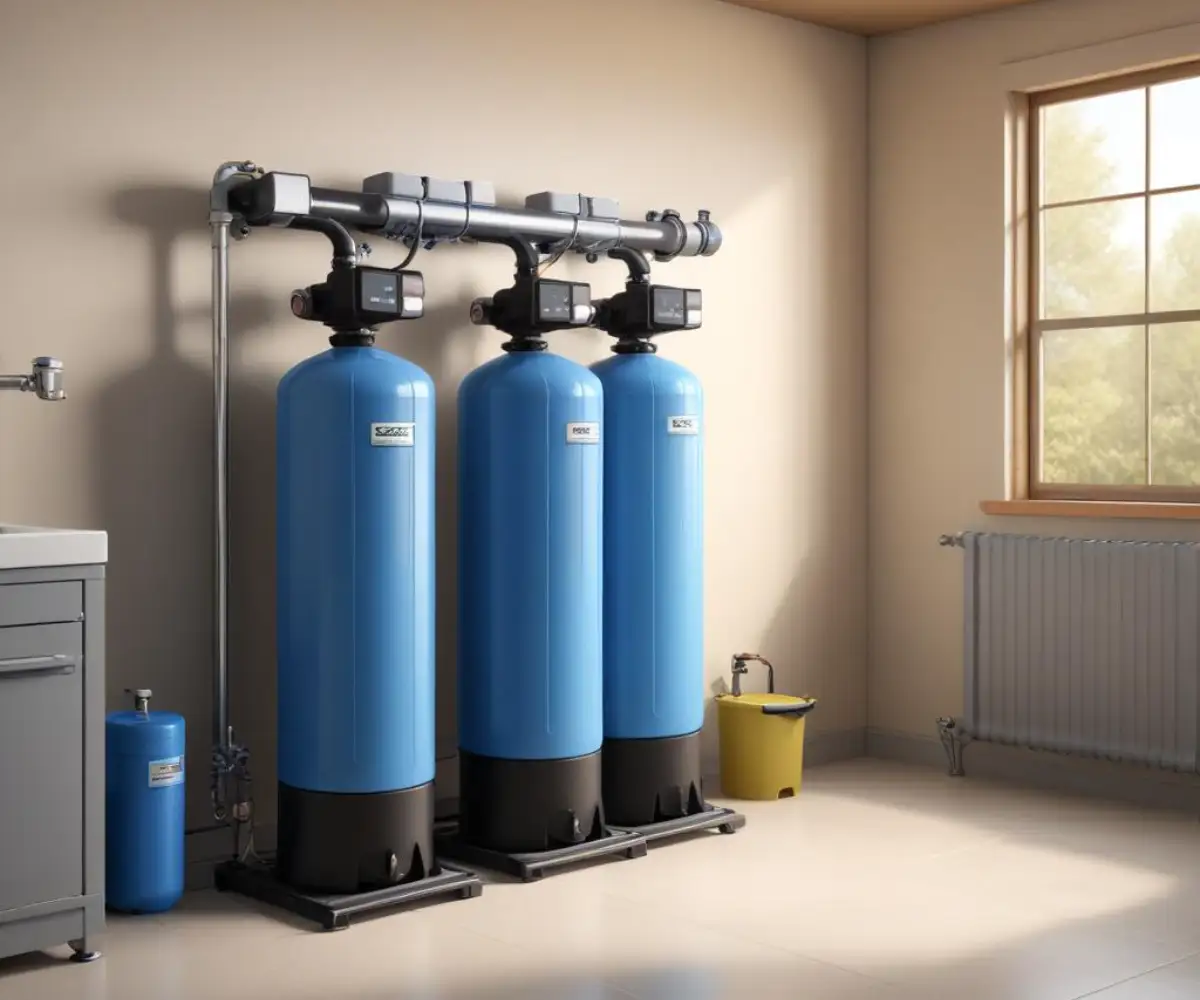
At the heart of most Kinetico models is a dual-tank, or twin-tank, system. While one tank is actively softening your water, the second tank is on standby, ready to take over the moment the first one is exhausted. This means you get a continuous, uninterrupted supply of soft water, 24/7, even during the regeneration process.
The Non-Electric Advantage
The non-electric design isn’t just a gimmick; it directly impacts performance and reliability. With no computers or timers to set, Kinetico systems measure water usage with precision, regenerating only when absolutely necessary. This demand-initiated regeneration results in significant salt and water savings compared to many conventional softeners.
Furthermore, Kinetico systems use soft water to clean their own media tank during regeneration. This leads to a more effective cleaning process, prolonging the life of the expensive resin beads inside. The absence of electrical components also means one less thing can fail, a common pain point for owners of electronic models.
How Do Traditional Electric Water Softeners Stack Up?
The vast majority of water softeners sold today are single-tank, electric models. These systems rely on a single resin tank to soften water. When the resin beads become saturated with hard minerals, the system must go offline to perform a regeneration cycle, a process controlled by an electronic valve.
During this regeneration period, which can last for up to two hours, hard water is typically bypassed into your home. This means if you do laundry or run the dishwasher overnight, you might be using the very hard water you sought to eliminate. These systems are readily available from big-box stores and plumbing suppliers, offering a much lower initial point of entry.
Timers, Meters, and Points of Failure
Electric softeners use one of two methods to trigger regeneration. Older, less efficient models use a simple timer, regenerating on a fixed schedule (e.g., every three days) regardless of your actual water consumption. This is often wasteful, as you might regenerate a tank that’s only half-used, consuming unnecessary salt and water.
More modern electric systems use a meter to measure water usage, a method known as Demand-Initiated Regeneration (DIR). While far more efficient than timer-based models, they still have electronic components—circuit boards, sensors, and displays—that can malfunction. Homeowners often struggle when they discover their water softener regeneration settings are wrong, leading to either wasted resources or untreated hard water.
The Ultimate Showdown: Kinetico vs. The Competition
Choosing between these two technologies requires a clear, side-by-side comparison. Understanding the core differences in how they operate is key to seeing where your money goes and what you get in return. This table breaks down the essential features that impact your wallet, your time, and the quality of your water.
| Feature | Kinetico Systems | Typical Electric Softeners |
|---|---|---|
| Control System | Non-electric; powered by water flow (kinetic energy). | Electric; requires a power outlet for the control valve and timer/meter. |
| Regeneration Trigger | Measures exact water volume; regenerates on demand only. | Can be a simple timer (less efficient) or a water meter (more efficient). |
| Water Supply | Twin-tank design provides a continuous, uninterrupted supply of soft water. | Single-tank design goes into bypass during regeneration, allowing hard water into the home. |
| Efficiency | Extremely high salt and water efficiency due to precise, on-demand regeneration with soft water. | Efficiency varies greatly; metered systems are good, but timer systems can be very wasteful. |
| Maintenance & Reliability | Fewer moving parts and no electronics lead to high reliability. Proprietary parts require a dealer for service. | Electronics can fail. Parts are more widely available, allowing for more DIY or third-party service options. |
| Upfront Cost | Significantly higher initial investment. Often includes professional installation. | Lower initial purchase price, especially for DIY models from big-box stores. |
| Typical Lifespan | Often 20+ years due to robust mechanical design and efficient regeneration. | Typically 10-15 years, with potential for earlier electronic failures. |
Cost Analysis: Is Kinetico’s High Price Tag Justified?
The most significant barrier for many considering a Kinetico system is the price. The upfront cost can be two to three times higher than a high-quality electric softener. This begs the question: is the long-term value really there, or are you just paying for a brand name?
The Upfront Investment
A professionally installed Kinetico system can run into several thousands of dollars. This price is set by local dealers and is often not negotiable. In contrast, you can purchase a capable electronic water softener from a home improvement store for under a thousand dollars and install it yourself if you have basic plumbing skills.
However, the purchase price is only part of the total cost of ownership. You must consider the ongoing operational costs, which is where the financial equation begins to shift. A system that is cheaper to buy can end up costing you more over a decade of use.
Long-Term Operational Costs
This is where Kinetico systems build their case for value. Their metered, on-demand regeneration is exceptionally precise, using significantly less salt and water over the course of a year. For a family in an area with very hard water, these savings can add up to hundreds of dollars annually.
Furthermore, because they use zero electricity, you save on that utility cost, however small it may be. More importantly, the robust mechanical design often translates to a longer lifespan with fewer service calls. When an electric model’s circuit board fails after six years, the repair or replacement cost can easily wipe out its initial price advantage.
Performance and Convenience: What Matters in Your Daily Life?
Beyond the numbers, the daily experience of living with a water softener is a critical factor. The best system is one you don’t have to think about. It should simply work, providing soft water reliably without demanding constant attention.
The “Never Run Out of Soft Water” Promise
One of the biggest user complaints about single-tank softeners is experiencing hard water during regeneration. Kinetico’s twin-tank design completely eliminates this issue. This is a game-changer for large families or anyone with unpredictable water usage patterns, ensuring that even if one tank regenerates during the day, the other is ready to provide soft water instantly.
Maintenance and Reliability
All water softeners require you to add salt, but beyond that, the maintenance needs can differ. With electric models, you might need to reprogram the system if you have a power outage or if your water usage changes dramatically. Incorrect settings can be a persistent source of frustration.
Mechanical systems like Kinetico are essentially “set and forget.” However, if a problem does arise, like a water softener bypass valve getting stuck, troubleshooting can be more complex due to proprietary parts. You are generally locked into your dealer’s service network, which can be a drawback for those who prefer more options.
Who Should Choose Kinetico? And Who Should Look Elsewhere?
No single water softener is the perfect choice for everyone. The decision ultimately comes down to a balance of your budget, water conditions, and personal priorities. Breaking down the ideal customer for each type of system can help clarify your own choice.
The Ideal Kinetico Customer
A Kinetico system is an excellent fit for homeowners who see it as a long-term investment in their property. This includes those with very hard water, large households with high and fluctuating water demand, or anyone who values maximum efficiency and reliability. If your philosophy is “buy the best and only cry once,” Kinetico’s performance will likely meet your expectations.
When a Traditional Softener Makes More Sense
For those on a tighter budget, a quality electric water softener offers compelling value. A DIY-savvy homeowner can save a substantial amount on installation and service. If you have moderate water hardness and predictable usage patterns, the efficiency gains of a premium system may not provide a fast enough return to justify the initial cost.
What About Other Premium Brands?
It’s important to note that Kinetico isn’t the only high-end option. Other brands also offer advanced, high-efficiency systems. For example, some homeowners find themselves comparing Kinetico vs EcoWater, another premium brand that focuses on smart technology and connected features rather than a non-electric design. Exploring these alternatives is crucial to making a fully informed decision.
Beyond the Brochure: What Real Users Are Saying
Online forums and communities like Reddit offer a wealth of unfiltered owner experiences. Kinetico owners almost universally praise the system’s “set it and forget it” nature. Many report owning their systems for over two decades with minimal issues, highlighting incredible salt efficiency and reliability as key benefits.
However, the primary complaints consistently revolve around the business model. Users frequently mention high-pressure sales tactics from dealers and the very high cost of proprietary parts and service calls. On the other hand, owners of traditional softeners appreciate the affordability and the wide availability of parts, but often share stories of electronic failures and the frustration of troubleshooting complex settings.
The Final Verdict: Making the Right Choice for Your Home
Ultimately, the “Kinetico vs other water softeners” debate is about a trade-off between upfront cost and long-term efficiency and convenience. There is no single “best” answer. The right choice depends entirely on your specific circumstances.
If your budget allows for the significant initial investment and you prioritize uninterrupted soft water, maximum efficiency, and minimal interaction, a Kinetico system is likely the superior long-term choice. If upfront cost is your primary concern and you are comfortable with potential electronic maintenance down the line, a modern, high-efficiency electric softener can provide excellent service for a fraction of the price. Before making any decision, get your water tested by multiple sources and gather quotes from different providers to ensure you are investing in the right solution for your home.
