
Juno vs Halo Recessed Lights: The #1 Factor You’re Overlooking
Choosing the right recessed lights feels like a final exam for your home renovation. You’ve picked the paint, the flooring is down, and now you’re staring at a ceiling full of possibilities. Two names dominate the aisles and online stores: Juno and Halo.
The problem is, they both seem so similar. They offer comparable features, come in similar sizes, and both promise to beautifully illuminate your space. Many homeowners get stuck comparing price tags and trim styles, but this approach misses the most critical difference that impacts installation, longevity, and future upgrades.
You'll Learn About
Why This Choice Matters More Than You Think
When you choose between Juno and Halo, you’re not just selecting a light fixture; you’re buying into an entire installation ecosystem. The housing—the “can” that goes into the ceiling—and the light trim are designed to work together. While some generic trims might fit, using a brand-mismatched trim can lead to a poor fit, light leaks, and even safety issues down the line.
The most crucial, and often completely overlooked, factor is the installation hardware and design philosophy behind each brand. This single element determines how easily the lights can be installed, how securely they sit in your ceiling for decades, and how much flexibility you have. For remodelers and new-build contractors alike, this is where the real battle between Juno and Halo is won or lost.
Halo Recessed Lighting: The Contractor’s Go-To
Halo, a brand under Cooper Lighting Solutions, is renowned for its widespread availability and contractor-friendly features. You can find Halo products in nearly every big-box home improvement store, making them accessible for both professionals and DIY enthusiasts.
The Halo Housing System: Built for Speed
For new construction, Halo’s housings like the popular H7ICAT are designed for rapid installation. They feature pre-installed nails, called “Got-Nail!” bar hangers, that are ready to be hammered into joists. Their AIR-TITE design prevents airflow between your living space and the attic, improving energy efficiency.
In remodel projects, Halo’s housings use “Gotcha” clips, which are designed to quickly and securely grip the drywall from inside the ceiling. The goal of the Halo system is often speed and efficiency on a standard job site, a reason it’s a favorite among builders working on tight schedules. While Halo is a solid choice, it’s often compared to other widely available brands like Commercial Electric; understanding the nuances can help you make an even more informed decision for your project, something detailed further in this Halo vs Commercial Electric LED lights comparison.
Halo Light Quality and Trims
Halo offers a vast selection of trims, from basic white baffles to more specialized options like gimbal (swiveling) lights and wall-wash trims. Their LED modules provide good color rendering (CRI) and are available in multiple color temperatures. Many modern Halo products, like the HLB series, are canless “wafer” lights that are incredibly thin and come with a remote junction box, offering even more installation flexibility.
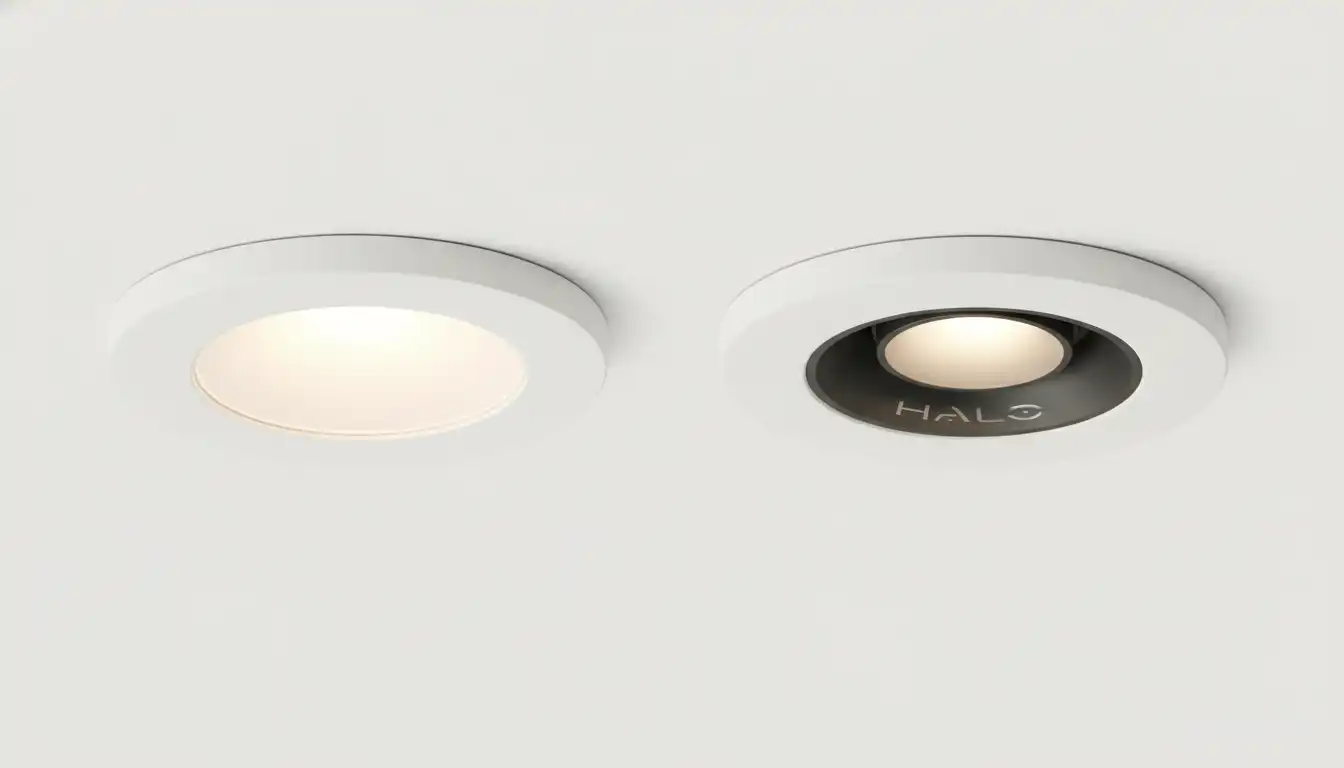
Juno Recessed Lighting: The Architect’s Favorite
Juno, part of Acuity Brands, is often perceived as a more premium or architecturally-focused brand. While also widely available, you’re just as likely to find Juno specified in an architect’s plans as you are to see it on a shelf at a home improvement store.
The Juno Difference: Precision and Flexibility
Juno housings, like the popular IC22 series, are frequently praised by electricians for their robust construction. A key feature is the RealNail 3 bar hanger system, which allows for more precise adjustments during installation. This can be a lifesaver in older homes where ceiling joists may not be perfectly spaced.
The junction boxes on Juno housings are often described as more spacious, making wiring a bit easier. This attention to small details is what gives Juno its reputation for quality. For remodelers, Juno trims typically use heavy-duty torsion springs that pull the trim incredibly snug to the ceiling, leaving a very clean, gap-free finish.
Juno’s Superior Trims and Aesthetics
Where Juno often shines is in its trim design. The brand offers a wider array of high-end and specialized trims, including options with deeper regression to reduce glare and unique finishes. If you are looking for a specific aesthetic, such as creating focused, dramatic lighting, Juno’s selection is hard to beat. This precision is particularly important in areas like bathrooms, where you need to avoid common mistakes with recessed lights over a vanity to prevent shadows.
The Head-to-Head Comparison: Juno vs. Halo
Breaking down the core differences in a simple format helps clarify the choice. Here is a direct comparison of the key features that matter most to homeowners and installers.
| Feature | Juno | Halo |
|---|---|---|
| Installation (New Construction) | Robust housings, often with more adjustability (e.g., RealNail 3 hangers). | Designed for speed with features like pre-installed nails and Slide-N-Side junction boxes. |
| Installation (Remodel) | Heavy-duty torsion springs on trims create a very tight fit against the ceiling. | “Gotcha” clips provide a secure and quick grip on drywall. |
| Trim Selection & Aesthetics | Often considered more architecturally focused with premium, low-glare options. | Extremely broad selection catering to all common styles; widely available. |
| Light Quality & Innovation | Excellent color rendering (High CRI) and a reputation for quality components. | Reliable performance with a strong push into smart lighting with the HALO Home system. |
| Typical Cost | Moderate to High. Often seen as a premium investment. | Low to Moderate. Excellent value, especially in contractor packs. |
| Availability | Found at electrical supply houses, online retailers, and some big-box stores. | Ubiquitous in major home improvement stores and electrical suppliers. |
The #1 Overlooked Factor: The Installation Ecosystem
Here is the secret no one talks about: the choice between Juno and Halo is really about installation philosophy. Halo is built for the 90% of situations. Its hardware is designed to go in fast and easy in standard 16-inch or 24-inch on-center joist bays. It’s efficient and reliable.
Juno, on the other hand, is built with more tolerance for the tricky 10%. Its components often feel more substantial, and the adjustability of its bar hangers can save immense frustration when dealing with irregular framing or plumbing and ductwork obstructions. The tension springs on Juno trims provide an undeniably superior, flush finish that can hide minor drywall imperfections around the cutout.
What About Canless? The Wafer Light Showdown
The rise of ultra-thin canless, or “wafer,” lights has changed the game. Both Juno and Halo offer excellent canless solutions. Here, the battleground shifts from the housing to the remote junction box and the driver that powers the LED.
The design of this junction box is critical. A well-designed box is easy to mount securely, provides ample room for wiring, and has reliable connectors. Poorly designed boxes can be flimsy and frustrating to work with in a tight ceiling space. In both cases, these modern fixtures must be properly installed to avoid overheating, a risk that can sometimes trigger the light’s safety shutoff. Understanding the role of a recessed light thermal protector is key, even with modern LEDs.
Frequently Asked Questions
What is the main difference between Juno and Halo recessed lights?
The primary differences between Juno and Halo recessed lights are often related to cost, ease of installation, and available options. Generally, Halo is considered a more budget-friendly option, while Juno is often praised for its quality and ease of installation, though it may come at a higher price point. Both are reputable brands with a wide range of products to suit different needs.
Are Juno and Halo trims interchangeable?
While it may be physically possible to use a trim from one brand with a housing from another, it is generally not recommended. Using trims and housings from the same manufacturer ensures a proper fit, optimal performance, and compliance with safety listings. Mismatched components can result in a poor fit, light leaks, and potential safety hazards.
Which brand is better for new construction versus a remodel?
Both Juno and Halo offer specific products designed for either new construction or remodel applications. Halo provides fire-rated solutions that are well-suited for new builds, as well as remodel housings designed for quick installation in existing ceilings. Juno also offers a variety of options for both, with some contractors preferring their housings for ease of installation in new work.
Is there a significant difference in the quality of light?
Both brands offer high-quality LED options with good color rendering (CRI). Some users note that Juno may have better color accuracy, while Halo might offer better dimming performance on certain models. Ultimately, the quality of light will depend on the specific product and trim you choose from either brand.
Do I need a recessed can for both Juno and Halo lights?
Both Juno and Halo offer “canless” or “ultra-thin” LED downlights that do not require a traditional recessed housing or “can”. These fixtures are ideal for shallow ceilings or areas with limited space above the drywall. They also offer traditional can lights that do require a housing to be installed.
Making Your Final Decision: Which Brand Is Right For You?
Your choice depends entirely on your project’s specific needs, budget, and priorities.
Choose Halo If…
You are undertaking a standard new construction or remodel with predictable framing. Your top priorities are value and wide availability. You want an easy-to-install product for a DIY project or want to integrate with the HALO Home smart lighting system.
Choose Juno If…
Aesthetics and a premium, architectural look are your primary goals. You are renovating an older home and might encounter non-standard joist spacing. You or your electrician prefer a more robustly built product and your budget allows for a higher initial investment.
Ultimately, both Juno and Halo are trusted brands that produce high-quality recessed lighting. By looking past the surface-level features and understanding the core differences in their installation ecosystems, you can make a choice that not only looks great but also ensures a smooth installation and reliable performance for years to come
