
John Deere 827E Snowblower: Your Secret to Dominating Winter’s Worst
The first heavy snowfall of the season often brings a harsh reality check for homeowners. The shovel that seemed adequate for a light dusting is no match for a foot of dense, wet snow, and the underpowered, single-stage thrower struggles, clogs, and ultimately fails.
This annual struggle leads to frustration, wasted time, and the physical strain of clearing driveways and walkways. The core problem isn’t the snow itself; it’s using the wrong tool for a demanding job, leading to equipment breakdowns and hours spent in the freezing cold.
You'll Learn About
Why Ordinary Snow Removal Fails in Heavy Winter Conditions
Many homeowners find themselves in a cycle of inefficiency. They make multiple passes over the same area, only to have their machine bog down or leave a layer of packed snow behind. This is especially true with the icy, compacted plow drift at the end of the driveway.
The result is a job half-done and a growing dread for the next winter storm. A reliable, powerful machine isn’t a luxury in these conditions; it’s a necessity for reclaiming your time and ensuring safe, clear access to your property.
Introducing the John Deere 827E: A Closer Look at the Solution
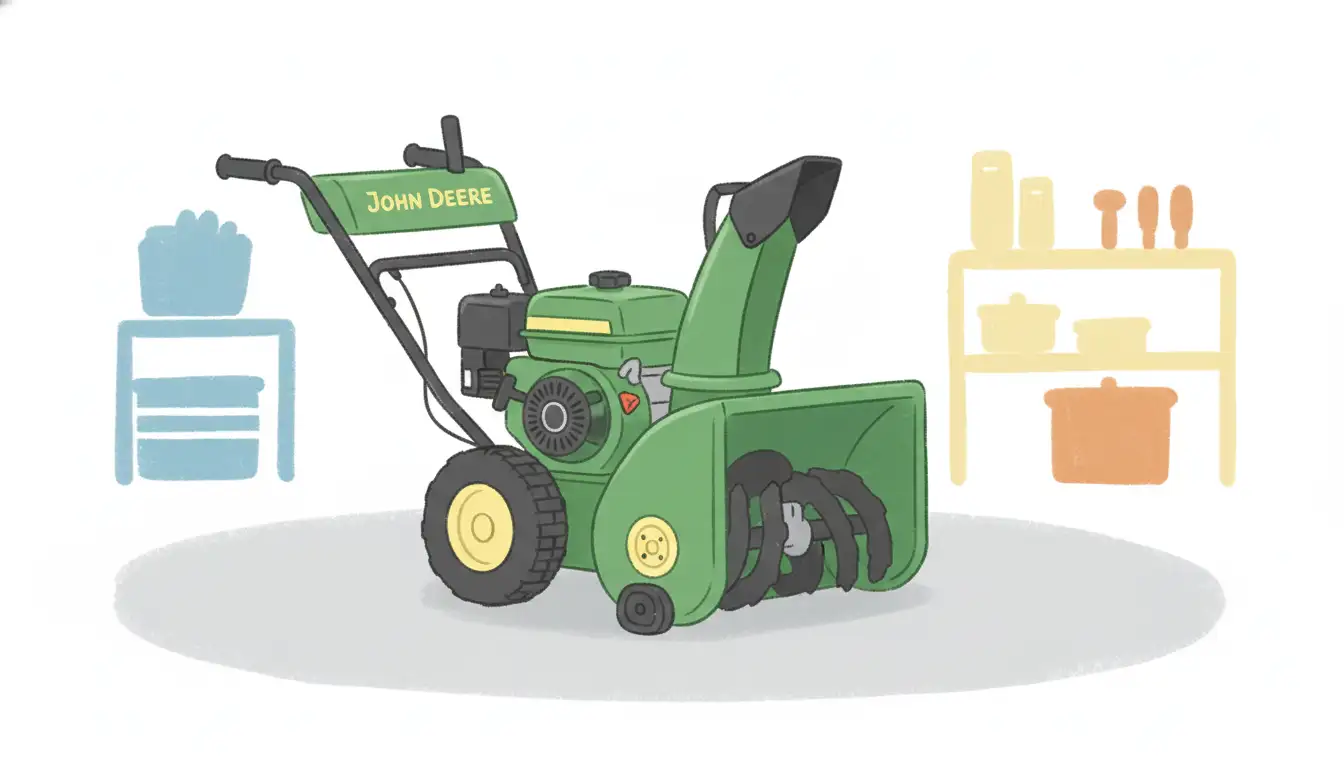
The John Deere 827E snowblower is engineered to solve these exact problems. It stands as a powerful two-stage solution designed specifically for homeowners who face significant snowfall and demand reliability and performance.
This machine is built not just to move snow, but to power through it with authority. Its robust construction and thoughtfully designed features provide a direct answer to the frustrations of winter clearing tasks.
Unpacking the Core Features: What Sets the 827E Apart?
Understanding the components of the 827E reveals why it is so effective. Each part is designed with durability and user experience in mind, from the engine that roars to life in the cold to the auger that eagerly bites into frozen snowbanks.
These features work in concert to deliver a machine that is both powerful and surprisingly easy to operate, turning a dreaded chore into a satisfying task.
The Powerhouse Engine: Briggs & Stratton Performance
At the heart of the 827E lies a robust Briggs & Stratton 1150 Snow Series™ engine. This 250cc powerhouse provides the torque needed to drive the auger through heavy snow and ice without faltering.
This gasoline engine is specifically designed for cold-weather starting and consistent output, a significant advantage over less-specialized power plants. While some heavy-duty equipment utilizes different power sources, like a diesel snowblower, this engine’s design offers a fantastic balance of power and user-friendly maintenance for residential use.
Built to Last: The Heavy-Duty Auger and Impeller System
The 827E employs a two-stage system for maximum efficiency. The first stage is the serrated steel auger, which aggressively breaks up packed snow and ice, feeding it back into the machine.
From there, a high-speed impeller—the second stage—takes over, expelling the snow out of the chute at a high velocity. This system allows the 827E to throw snow up to 40 feet, ensuring you clear the area effectively on the first pass.
Masterful Control: Clearing Width and Intake Height
With a generous 27-inch clearing width, the John Deere 827E significantly reduces the number of passes required to clear a driveway. This wide path is ideal for medium to large residential properties and even small commercial lots.
The 20-inch intake height allows the machine to tackle deep drifts with ease. You can confidently push into the wall of snow left by city plows without the machine riding up over it.
Effortless Operation: Drive System and Controls
Maneuverability is critical, and the 827E delivers with a friction disc drive system offering six forward speeds and two reverse speeds. This allows you to match your pace to the snow conditions, from a slow crawl in deep drifts to a brisk walk in light powder.
The controls are intuitively placed for easy access, even with gloved hands. Features like the remote chute rotation and deflector control let you direct the snow exactly where you want it without stopping, enhancing efficiency and control.
The John Deere 827E Specifications Breakdown
For those who value technical details, the specifications of the 827E highlight its capabilities. This table provides a clear, at-a-glance overview of what makes this machine a formidable force against winter weather.
| Feature | Specification |
|---|---|
| Engine Manufacturer | Briggs & Stratton |
| Engine Model | 1150 Snow Series™ |
| Displacement | 250cc |
| Clearing Width | 27 inches (68.6 cm) |
| Intake Height | 20 inches (50.8 cm) |
| Auger Type | Serrated Steel |
| Impeller Diameter | 12 inches (30.5 cm) |
| Drive System | Friction Disc |
| Speeds | 6 Forward / 2 Reverse |
| Tire Size | 15 x 5 inches |
| Fuel Tank Capacity | 3.2 quarts (3 L) |
| Starting System | Electric Start & Recoil |
Maximizing Performance: A Practical User’s Guide
Owning a powerful machine like the 827E is only half the battle. Knowing how to operate it effectively and prepare it for the task at hand ensures you get the most out of your investment every time you use it.
Following a simple routine before, during, and after operation will not only improve performance but also drastically extend the life of your snowblower.
Pre-Operation Checklist: The 5-Minute Safety and Success Routine
Before starting the engine, take a few minutes for a quick inspection. Check the engine oil level and the fuel tank, ensuring you are using fresh, stabilized gasoline. Inspect the tires for proper inflation, as this affects traction and maneuverability.
This is also a great time to ensure your entire home is winter-ready. For instance, just as you check your snowblower, it is a good practice to test home safety devices. A homeowner who once found their smoke alarm battery drawer stuck learned the hard way that pre-season checks on all equipment, inside and out, are crucial for safety.
Mastering Different Snow Conditions
Adapt your technique to the type of snow you are clearing. For light, powdery snow, you can use a higher forward speed for quick and efficient clearing. This allows you to get the job done faster without straining the machine.
In heavy, wet snow, reduce your forward speed to allow the auger and impeller to process the dense material without clogging. If the snow is particularly deep, it is more effective to clear it in two passes, removing the top half first and then the bottom half, rather than pushing the machine to its absolute limit in a single pass.
After the Storm: Proper Shutdown and Storage
Once the job is done, don’t just put the machine away. Run the snowblower for a few minutes to clear any remaining snow from the auger housing and chute, which helps prevent freeze-up.
Wipe down the machine to remove any salt or de-icing chemicals, which can cause corrosion. For end-of-season storage, it is critical to either drain the fuel tank completely or add a quality fuel stabilizer to prevent the carburetor from gumming up.
Proactive Maintenance: The Key to Unstoppable Reliability
The John Deere 827E is built for durability, but proactive maintenance is the true secret to longevity and flawless operation season after season. A few simple tasks will keep it running like new and prevent the most common operational failures.
Regular attention to key components ensures that when you need your snowblower most, it will start on the first pull and perform at its peak.
Routine Care: Your Seasonal Maintenance Schedule
At the end of each winter season, perform a few key tasks. Change the engine oil to remove contaminants that have built up during use. Inspect the spark plug for wear and proper gap, and replace it if necessary.
Also, check the condition of the skid shoes and the scraper bar. These parts are designed to wear down over time and are critical for protecting the auger housing from damage. Adjust or replace them as needed to maintain the correct clearing height.
Beyond the Basics: Advanced Adjustments for Peak Efficiency
To maintain optimal performance, periodically check the auger and drive control cables for proper tension and adjust them if they feel loose. Proper tension ensures immediate engagement when you squeeze the levers.
Another crucial but often overlooked task is lubricating the auger shaft and other pivot points. Applying a quality grease prevents rust and ensures smooth operation of all moving parts, reducing wear and tear on the entire system.
The Unseen Component: Fuel Quality and Storage
The single most important factor in small engine reliability is fuel management. Always use fresh gasoline (less than 30 days old) with a fuel stabilizer added. This is especially important for modern fuels containing ethanol, which can absorb water and cause corrosion.
Using ethanol-free gasoline, if available, is an excellent choice for small engines like the one in the 827E. It provides better long-term stability and prevents the fuel system issues that are a common source of starting problems.
Troubleshooting Common Issues Like a Pro
Even with the best maintenance, issues can sometimes arise. Knowing how to quickly diagnose and solve common problems can save you from a costly repair bill and significant downtime during a storm.
Most issues are surprisingly simple to fix with a basic understanding of how the machine operates. A logical, step-by-step approach will help you identify the root cause quickly.
Engine Won’t Start: A Step-by-Step Diagnosis
If the engine fails to start, begin with the most obvious checks. Ensure the safety key is fully inserted, the choke is in the correct position, and the fuel shut-off valve is open. Also, confirm there is fresh fuel in the tank.
If these checks don’t solve the problem, the next step is to examine the ignition system. A common culprit in this situation is a fouled or dead spark plug. Knowing how to diagnose a Craftsman snowblower no spark issue, for example, provides transferable skills for checking the spark on your John Deere engine.
Clogged Chute or Auger: The Most Common Frustration
A clog is the most frequent interruption when clearing heavy snow. Crucially, always shut off the engine completely before attempting to clear any obstruction. Never use your hands to clear the auger or chute; use the provided clean-out tool.
To prevent clogs, avoid moving too fast in wet, heavy snow. You can also apply a non-stick silicone spray to the inside of the auger housing and chute, which helps snow slide through more easily.
Machine Not Throwing Snow Far Enough
If you notice a decrease in throwing distance, the cause is often related to ground speed or a worn part. Moving too fast into deep snow can overwhelm the impeller, reducing its ability to throw snow effectively. Slowing down often resolves this issue.
If the problem persists, inspect the auger belt for proper tension and wear. A loose or worn belt will slip under load, reducing impeller speed and, consequently, throwing distance. Also, ensure the chute is not partially obstructed.
Is the John Deere 827E the Right Investment for You?
The John Deere 827E snowblower is an exceptional machine, but it is best suited for specific users. It is an ideal choice for homeowners with medium to large paved or gravel driveways in regions that receive moderate to heavy annual snowfall.
For those who value reliability, power, and long-term durability, the 827E represents a sound investment. It provides the peace of mind that comes from knowing you are equipped to handle whatever winter throws your way, making it a valuable tool for conquering the season’s toughest challenges.
