
Is Wood Trim Outdated? The Surprising Answer
Walk through a home built anytime before the year 2000, and you are likely to find yourself surrounded by wood trim. It’s on the baseboards, around the windows, and framing every door. For years, the prevailing wisdom was to grab a paintbrush and cover it all in a crisp, clean coat of white paint.
But as design trends circle back, many homeowners find themselves asking a critical question: is wood trim actually outdated? Before you commit to the monumental task of painting or replacing, it’s worth exploring whether that wood you’ve been wanting to cover up might just be your home’s greatest hidden asset.
You'll Learn About
The Great Debate: Why Wood Trim Gets a Bad Rap
The aversion to wood trim is understandable and rooted in a specific era. The main culprit is the builder-grade “honey oak” or “golden oak” that was ubiquitous in the 1980s and 1990s. This orange-toned wood was often paired with brassy hardware and beige walls, creating a look that many now consider dated.
The rise of minimalist, Scandinavian, and modern farmhouse aesthetics further pushed wood trim out of the spotlight. These styles favored clean lines and bright, airy spaces, where white trim became the standard for creating a fresh, neutral backdrop. Dark or heavy wood trim, in contrast, can sometimes make a room feel smaller, darker, and more formal than modern lifestyles demand.
When Wood Trim Is Absolutely NOT Outdated
To declare all wood trim “outdated” is a mistake. In many cases, natural wood trim is a timeless, valuable feature that adds character and warmth. The key is understanding the context and quality of the wood you’re working with.
In homes with strong architectural identities, such as Craftsman, Victorian, or Mid-Century Modern styles, the original wood trim is a defining feature. Painting over this high-quality, often irreplaceable woodwork can diminish the home’s historical integrity and even lower its resale value. These homes were designed to celebrate the beauty of natural materials, and the trim is integral to that vision.
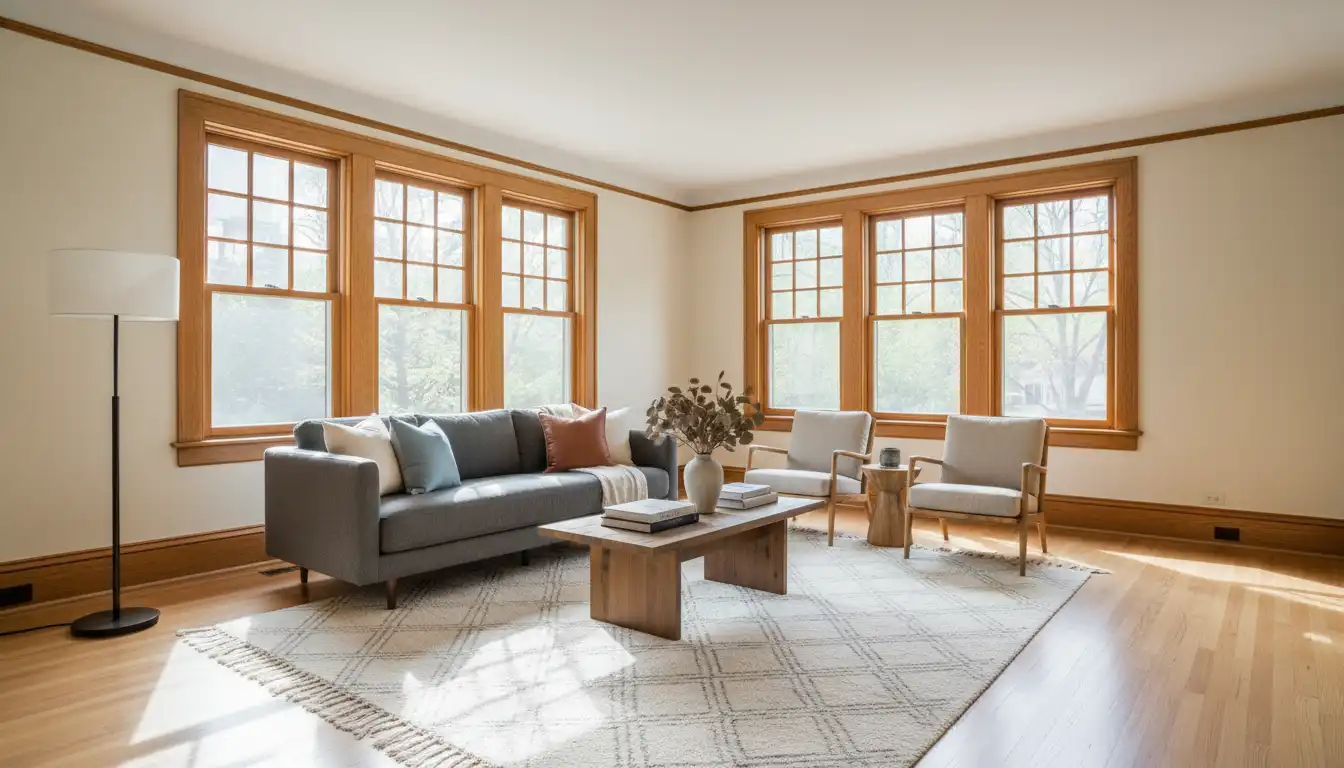
Furthermore, the push towards biophilic design—connecting our living spaces with nature—has sparked a major resurgence in natural materials. Designers and homeowners are increasingly moving away from sterile, all-white interiors and embracing the warmth and organic texture that wood provides. This trend, seen in popular styles like “Japandi” (a mix of Japanese and Scandinavian design) and “Organic Modern,” makes a strong case for keeping and celebrating wood trim.
The Verdict: Which Wood Trims ARE Outdated?
Not all wood trim is created equal. The trim that often fuels the “outdated” debate is typically the thin, builder-grade, orange-toned oak from the 80s and 90s. If your trim is damaged, chipped, made of a low-quality composite material, or simply doesn’t fit the architectural style of your home, it’s a prime candidate for an update.
Another issue arises from clashing wood tones. When the trim, floors, cabinets, and furniture are all different shades of wood, the result can be chaotic and visually jarring. In these cases, unifying some of the wood elements through paint or stain can create a more cohesive and modern look.
Your Action Plan: How to Make Wood Trim Work in 2025 and Beyond
So, you’ve decided to embrace your wood trim. The next step is to make it look intentional and stylish, not like a relic of a bygone era. This involves a holistic approach to your interior design, where the trim is treated as a feature to be complemented, not an obstacle to be ignored.
The single most effective way to modernize a room with wood trim is by changing the wall color. Avoid warm tones like yellow, tan, or beige, which can amplify the orange or yellow undertones in the wood. Instead, opt for colors that create a pleasing contrast or a sophisticated, cohesive look.
Cooler tones are excellent for balancing the warmth of the wood. Consider colors like sage green, dusty blue, or a moody charcoal gray. For a brighter, more modern feel, you can’t go wrong with a crisp, clean white or a soft off-white with cool undertones. These colors make the wood pop, turning it into a deliberate architectural detail.
Step-by-Step Modernization
Beyond paint, several other updates can dramatically transform a space with wood trim. Focus on updating elements that are often overlooked but contribute significantly to the overall feel of a room.
Start by replacing dated hardware. Swap out old, brassy doorknobs, hinges, and light fixtures for more contemporary options in matte black, brushed nickel, or antique bronze. This simple change can instantly elevate the look of your doors and trim, making them feel more current.
Lighting is another crucial element. Dated light fixtures can drag down the entire aesthetic of a room. Replace them with modern pendants, sconces, or ceiling fans to brighten the space and create a more inviting atmosphere. Finally, consider your furniture and decor. Choose modern pieces with clean lines to create a stylish contrast with the traditional feel of the wood trim.
The Smart Way to Paint Wood Trim (If You Must)
If you’ve assessed your trim and decided that painting is the best course of action, it’s essential to do it correctly. A poor paint job will look worse and be harder to fix than the original wood. The key to a professional-looking finish lies in meticulous preparation.
Proper preparation—cleaning, sanding, and priming—is absolutely non-negotiable for a durable, beautiful finish. Start by cleaning the trim thoroughly with a TSP (trisodium phosphate) substitute to remove grease and grime. Next, lightly sand the surface to scuff it up, which helps the primer adhere. Finally, apply a high-quality, stain-blocking primer. This is a critical step, as it prevents the wood tannins from bleeding through and yellowing your white paint over time.
When it comes to the paint itself, choose a durable enamel designed for trim and doors, such as a water-based alkyd formula. These paints offer the hardness of an oil-based paint with the easy cleanup of a latex paint. For a classic look, crisp white is always a safe bet, but don’t be afraid to consider other options like a soft off-white, a dramatic black, or a deep charcoal for a bold, contemporary statement.
Beyond Paint: Creative Alternatives for Outdated Trim
Painting isn’t your only option for updating wood trim. If you dislike the color but want to retain the wood grain, consider refinishing. Sanding down that orange-toned oak and re-staining it with a cooler, darker walnut or a modern, light-washed finish can completely transform its appearance. This is a labor-intensive process, but the results can be stunning.
Another sophisticated approach is the “two-toned” look. You could paint the baseboards and door casings while leaving the window casings and solid wood doors in their natural state. This creates a custom, layered look that feels both classic and fresh. Similarly, if a full replacement is out of budget, consider replacing only the most prominent trim, like that around your entryway, to make a significant visual impact. Improving your entryway with a new look can set a modern tone for the entire house; you could even replace sidelights with wood to create a stunning new focal point.
Wainscoting and wall molding are other creative ways to incorporate wood elements in a modern way. These details add architectural interest and can be painted to match the walls for a subtle, textural look or painted in a contrasting color to become a feature.
| Approach | Pros | Cons | Best For… |
|---|---|---|---|
| Keep Natural Wood | Adds warmth and character. Preserves architectural integrity. No cost if in good condition. | Can look dated if not styled correctly (e.g., honey oak). May make rooms feel dark. | Historic homes (Craftsman, Victorian), high-quality wood, or homeowners embracing organic/natural design trends. |
| Paint Wood Trim | Brightens rooms instantly. Creates a clean, modern aesthetic. Can unify mismatched wood tones. | Extremely labor-intensive prep work. Can devalue historic homes. Shows chips and scuffs easily. | Homes with low-quality, damaged, or builder-grade honey oak trim where a bright, updated look is the primary goal. |
| Restain Wood Trim | Updates the color while preserving wood grain. Offers a custom, high-end look. | Very time-consuming and messy. Requires stripping the old finish completely. | Homeowners with good-quality wood who dislike the current color but want to avoid the painted look. |
| Replace Wood Trim | Allows for a completely new style (e.g., taller baseboards). Ensures a perfect, fresh finish. | The most expensive option. Can be disruptive and requires carpentry skills. | Homes with badly damaged trim or situations where the trim profile itself is the primary outdated feature. |
What About Exterior Trim?
While the debate often centers on interior trim, exterior trim carries its own set of considerations. Here, durability and weather resistance are paramount. Wood is a classic choice, but it requires regular maintenance to prevent rot and decay, especially in harsh climates.
Modern composite materials can offer the look of wood without the upkeep. However, for specific architectural elements like doors, the beauty and solidity of real wood are hard to replicate. When dealing with issues like decay, addressing them properly is crucial to protect your home’s integrity. For instance, knowing how to manage and repair exterior French door trim can save you from costly future problems while boosting curb appeal.
So, Is Wood Trim Outdated? The Final Decision Is Yours
The final verdict is clear: wood trim itself is not outdated. What becomes dated is the context—the specific color of the wood, its quality, the profile shape, and how it is styled with other elements in the room. The orange-hued oak of the 90s, paired with beige walls and brass fixtures, certainly feels of its time.
However, when treated as a valuable design element, wood trim can add timeless warmth, texture, and character to a home. By carefully considering your wall colors, hardware, and lighting, you can make almost any wood trim feel intentional and modern. Whether you choose to embrace it, paint it, or replace it, the key is to make a confident, informed decision that aligns with your personal style and the unique character of your home.
