
Induction Cooktop Wood Countertop: Your #1 Guide to a Safe & Stylish Kitchen
You envision a kitchen that radiates warmth, character, and timeless beauty. At the heart of this dream is a stunning wood countertop, its natural grain telling a story no other material can. But then, reality hits: how do you safely install a cooktop into a combustible surface without creating a disaster?
This single question stops countless homeowners in their tracks, forcing them to compromise on their vision. The fear of scorching, fire, and irreparable damage seems to make the beloved wood countertop an impossible dream when paired with a cooktop. It’s a classic battle between aesthetics and safety.
But what if there was a way to have both? A technological solution that eliminates the primary risks and makes this stunning combination not just possible, but perfectly safe. This guide will reveal the secrets to successfully and safely pairing an induction cooktop with a wood countertop, turning your kitchen nightmare into a functional, beautiful reality.
You'll Learn About
Why a Wood Countertop & Cooktop is a Kitchen Nightmare (Usually)
The core of the problem lies in heat transfer. Traditional cooktops, by their very nature, generate immense ambient heat that radiates outward, posing a significant threat to the surrounding countertop material. Understanding this is the first step to appreciating why induction is so different.
The Dangers of Gas and Electric Radiant Cooktops
Gas cooktops are the most obvious hazard. The open flame produces high, uncontrolled heat that licks the air and surrounding surfaces. Placing a flammable material like wood in such close proximity is a clear and significant fire risk, making it an unsafe and often prohibited combination.
Traditional electric cooktops, whether coil or radiant smooth-top, present a more insidious danger. The heating elements beneath the glass or on the surface must reach extreme temperatures to transfer heat to the cookware. This intense heat doesn’t stay contained; it conducts directly into the adjacent countertop, leading to scorching, discoloration, and charring of the wood over time.
The Induction Revolution: Your Wood Countertop’s Best Friend
Induction technology fundamentally changes the equation. It’s not a slight improvement over older methods; it’s a completely different way of generating heat that makes it uniquely suited for installation in sensitive materials like wood. This isn’t magic, it’s science, and it’s the key to your dream kitchen.
The “Magic” of Induction: How It Really Works
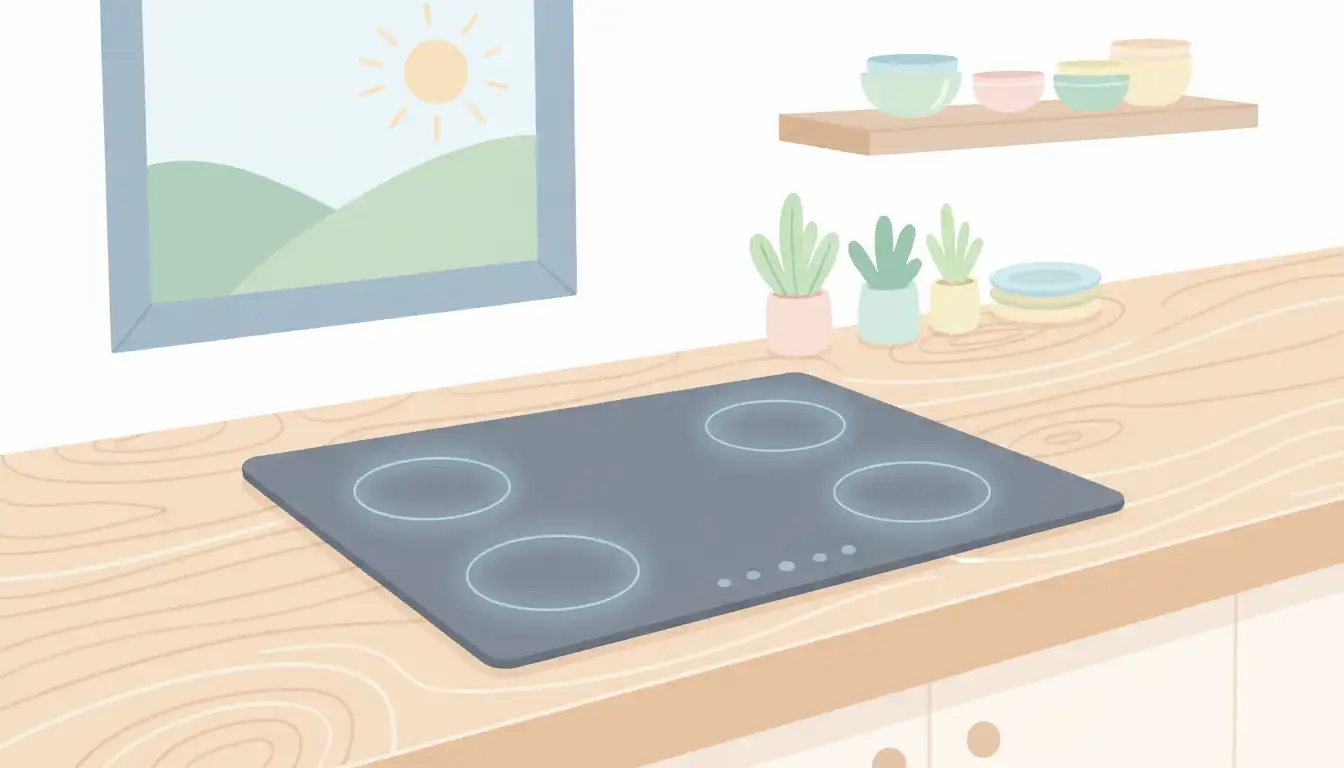
An induction cooktop uses powerful electromagnets beneath its glass-ceramic surface. When you turn on a burner, it creates a magnetic field. If a piece of magnetic cookware (like cast iron or stainless steel) is placed in this field, the field induces an electric current directly within the metal of the pot itself.
This process, called electromagnetic induction, causes the cookware to become the source of the heat. The heat is generated in the pan, not on the cooktop surface. The glass top itself does not heat up, except from the residual warmth transferred back from the hot pan. This distinction is the single most important factor for safety.
Residual Heat: The Real Risk You Must Manage
While the cooktop doesn’t get hot on its own, the hot pan will make the glass surface beneath it warm or even hot to the touch. This residual heat is far less intense and widespread than the direct, radiating heat from a gas or electric coil cooktop. However, it still must be managed properly.
Proper installation, ensuring adequate clearance and ventilation for the unit’s internal electronics, is the key to mitigating any risk from this residual heat. The heat generated by the electronics is minimal but requires airflow to prevent the unit from overheating. Following the manufacturer’s guidelines is not just a recommendation; it’s a critical safety requirement.
Installation Secrets: How to Safely Install an Induction Cooktop in Wood
A successful installation is a trifecta of reading the manual, making a perfect cut, and ensuring proper airflow. Getting these three things right will ensure a safe, durable, and beautiful result that stands the test of time.
Rule #1: Manufacturer’s Specifications are Non-Negotiable
Every induction cooktop comes with a detailed installation manual. This document is your bible. It will specify the exact dimensions for the cutout and, more importantly, the minimum clearance requirements on all sides and below the unit.
These clearances are not arbitrary. They are designed to ensure sufficient airflow to the internal cooling fans that protect the electronics. Ignoring these specifications is the most common and dangerous mistake an installer can make.
The Critical Role of the Cutout
The opening in your wood countertop must be cut precisely to the manufacturer’s specifications. A cut that is too small can create pressure points and prevent proper seating, while a cut that is too large can leave insufficient support for the cooktop’s flange.
Crucially, the raw wood exposed by the cut must be sealed. This is a step that many overlook. Use a high-quality, waterproof, and heat-resistant sealant like silicone or a specialized epoxy to coat the inside edge of the cutout. This prevents moisture from spills or steam from seeping into the wood, which could cause it to swell, warp, and compromise the entire installation.
Ventilation: The Unsung Hero of a Safe Installation
Most induction cooktops have internal fans that pull in cool air and expel warm air to keep the electronics from overheating. Typically, these vents are located on the underside or front edge of the unit. The cabinet below the cooktop must be configured to allow this airflow.
This might mean creating openings in the cabinet back or floor, or ensuring there is a sufficient gap between the bottom of the cooktop and any shelf or drawer below. Blocking this airflow can cause the unit to shut down during use or, in a worst-case scenario, lead to electronic failure or a fire hazard within the cabinet.
| Feature | Induction Cooktop | Electric Radiant Cooktop | Gas Cooktop |
|---|---|---|---|
| Heat Transfer Method | Electromagnetic field heats pan directly. | Heated coils transfer radiant heat to the surface. | Open flame and heated grates. |
| Risk of Scorching Wood | Very Low. Surface only gets hot from pan contact. | High. Intense heat radiates directly into the countertop. | Very High. Open flame and high ambient heat. |
| Energy Efficiency | Highest (~90%). Energy goes directly into the pan. | Moderate (~70%). Significant heat loss to surroundings. | Lowest (~40-50%). Massive heat loss to the air. |
| Cleaning | Easiest. Spills don’t burn onto the cool surface. | Difficult. Spills burn on and require scraping. | Most Difficult. Requires cleaning grates and burners. |
| Safety Features | Auto shut-off, no open flame, cool surface. | Hot surface indicators. | Risk of gas leaks and grease fires. |
Choosing the Right Wood: Not All Countertops are Created Equal
The success of your project also hinges on selecting the right type of wood. For a kitchen environment, durability is key. You need a dense hardwood that can withstand daily use, resist dents, and hold a finish well.
Hardness and Durability: The Janka Scale Explained
The Janka hardness test measures the resistance of a species of wood to denting and wear. For kitchen countertops, a higher Janka rating is better. Look for hardwoods like Maple, Oak, Hickory, and Walnut. Softer woods like pine are not suitable for this application as they will scratch and dent too easily.
Hard Maple is a classic choice for butcher blocks due to its high density, light color, and fine grain. Walnut offers a luxurious, dark alternative, while Oak provides a traditional look with a prominent grain pattern. These woods provide the strength needed to support the cooktop and endure the rigors of a busy kitchen.
Grain Matters: Edge Grain vs. End Grain
Butcher block countertops are typically constructed in two ways: edge grain or end grain. Edge grain is made by laying long boards on their sides, creating a uniform, linear look. It’s stable, durable, and the most common choice for countertops.
End grain is made by fusing the short ends of boards together, creating a checkerboard pattern. While it is prized by chefs as a cutting surface because it is “self-healing,” it is generally less stable and more absorbent, making edge grain the more practical and recommended choice for an installation involving a cooktop cutout.
Long-Term Care: Protecting Your Investment
Proper installation is just the beginning. To keep your wood countertop looking beautiful for years to come, a consistent maintenance routine is essential. The finish you choose will determine the level of care required.
Finishing and Sealing: Your First Line of Defense
There are two primary approaches to finishing a wood countertop: penetrating oils or a film-forming finish. Penetrating oils, like food-safe mineral oil or tung oil blends, soak into the wood fibers, preserving the natural look and feel. This type of finish requires regular reapplication (typically monthly) to maintain its protective qualities.
Film-forming finishes, such as water-based or oil-based polyurethane, create a hard, durable layer on top of the wood. This offers superior protection against water and stains and requires less frequent maintenance. However, it creates a more plastic-like feel and is more difficult to repair if it gets scratched.
Daily Habits for a Flawless Finish
Regardless of the finish, good habits are your best defense against damage. Always wipe up spills immediately, especially liquids like water, wine, or oil. Never place hot pans directly on the wood surface; even with induction’s low residual heat, a screaming hot pan can still damage the finish.
Use cutting boards to protect the surface from knife marks. While some oil finishes are suitable for direct chopping, using a separate board preserves the integrity of your countertop’s finish and hygiene.
Common Myths and Mistakes to Avoid
Misinformation can lead to costly and dangerous errors. Let’s debunk some common myths and highlight the critical mistakes to steer clear of during your project.
Myth: “Induction cooktops produce no heat at all.”
This is a dangerous oversimplification. While the cooktop itself doesn’t generate heat, the hot cookware transfers a significant amount of residual heat back to the glass surface. This surface can become hot enough to burn and must be treated with the same caution as any other cooktop.
Mistake: “Ignoring the under-counter ventilation.”
This is the number one installation error. Homeowners or installers focus on the visible cutout but forget about the airflow needed below. Blocking the unit’s cooling fans with a drawer or a solid shelf will cause the cooktop to overheat and fail, voiding the warranty and creating a safety hazard.
Mistake: “Using the wrong cleaning products.”
Harsh abrasive cleaners or chemical solvents can strip the finish from your wood countertop, leaving it vulnerable to moisture and stains. Always use a gentle, pH-neutral cleaner and a soft cloth for daily wipe-downs. For oil-finished tops, periodically use a specialized butcher block cleaner and conditioner.
Final Verdict: Is an Induction Cooktop in a Wood Countertop Right for You?
Pairing the warmth of a wood countertop with the sleek efficiency of an induction cooktop is not only possible—it is the safest and most effective way to integrate a cooking surface into a butcher block. The technology’s precise, contained heating method eliminates the primary risks of scorching and fire associated with gas and radiant electric models.
Success, however, is entirely dependent on correct execution. This means selecting a high-quality hardwood, using a premium induction unit from a reputable brand, and ensuring the installation adheres strictly to the manufacturer’s specifications for clearance and ventilation. When discussing premium options, browsing detailed Wolf induction cooktop reviews can provide insight into the specific needs of high-end models. For those on a tighter budget, even the units detailed in our IKEA appliances guide have stringent installation protocols that must be followed.
Ultimately, the layout of your kitchen must accommodate these requirements, much like the safety protocols for placing a stove against a wall. If you are committed to professional installation and diligent long-term care, you can confidently create a kitchen that is the perfect fusion of timeless natural beauty and cutting-edge technology.
