
I Hate My Quartz Countertop? The #1 Reason You’re Not Alone
You chose quartz because it was promised as the perfect, indestructible material for a busy kitchen. It was marketed as stain-proof, scratch-proof, and heat-proof—a one-time investment for a lifetime of beauty. Yet, here you are, staring at a surface that has let you down.
This feeling of regret is surprisingly common. The reality of living with quartz countertops can be vastly different from the showroom promise. From unexpected damage to subtle annoyances, the reasons for this dissatisfaction are valid and varied.
You'll Learn About
The Unspoken Truths: Why the “Perfect” Countertop Fails
The core of the issue often lies in the composition of quartz itself. Unlike natural stone, quartz countertops are an engineered product. They are made from approximately 90-95% ground natural quartz and 5-10% polymer resins and pigments.
This resin is both the source of its strengths and its most significant, often unmentioned, weaknesses. It binds the stone crystals, provides color, and creates a non-porous surface. However, this same resin is susceptible to issues that solid stone does not face.
The Hidden Danger of Heat: A Permanent Mistake
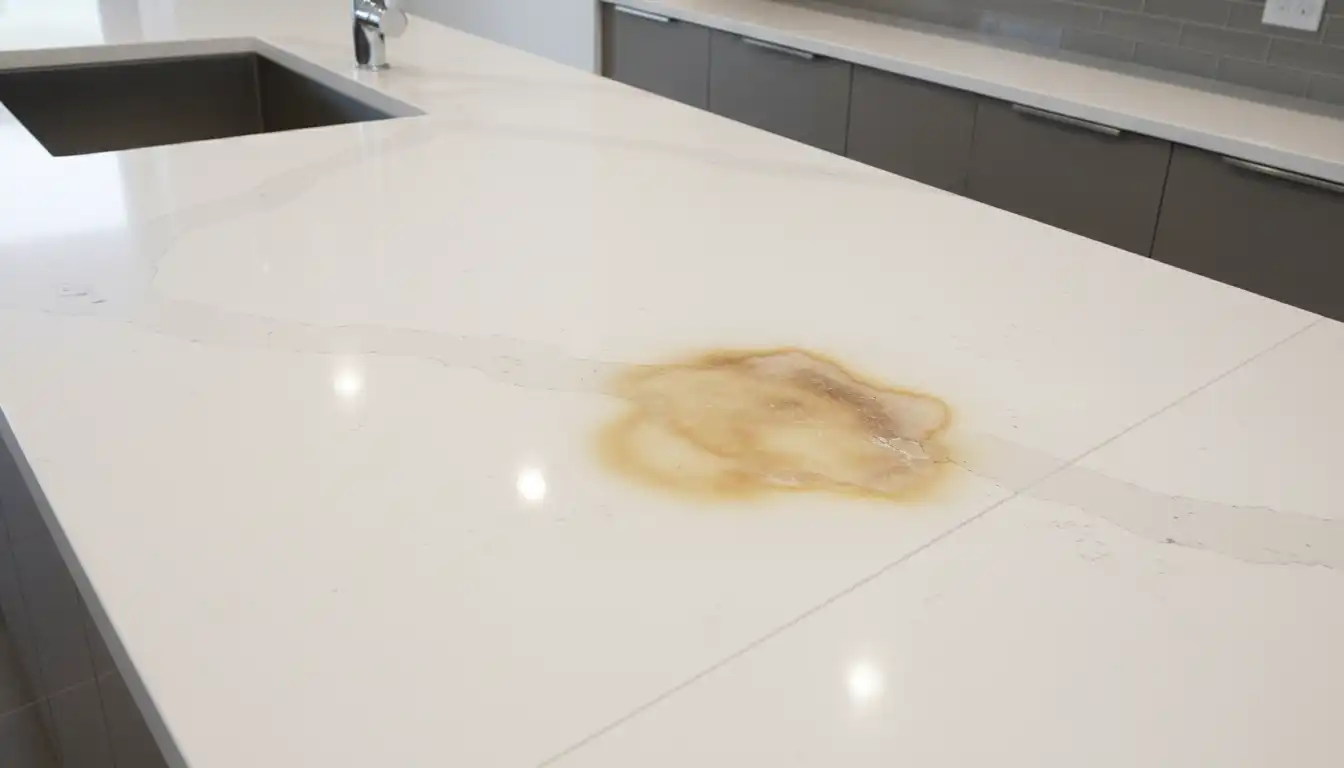
The most shocking discovery for many homeowners is that quartz is not heat-proof. The resin binders can be damaged by high temperatures. Placing a hot pan directly from the stove onto the countertop can cause thermal shock, leading to permanent discoloration or cracking.
This damage often appears as a cloudy, white, or yellowed mark that cannot be removed with cleaning. Unlike granite, which can typically handle high heat, the resin in quartz will scorch, leaving a lasting scar on your investment.
“Death by a Thousand Chips”: The Fragile Reality of Edges
Whie surface of quartz is highly scratch-resistant, the edges are a different story. Around high-traffic areas like a sink or dishwasher, the edges can be surprisingly brittle. A heavy pot or a dropped dish can easily cause a chip or a crack.
These chips, while often small, are noticeable and collect dirt, marring the once-flawless appearance of the countertop. Repairing them perfectly is a challenge, and they serve as a constant reminder of the material’s fragility.
The Stain Magnet: When “Stain-Resistant” Isn’t Guaranteed
Quartz is non-porous, which makes it highly resistant to staining from liquids like wine or coffee. However, “resistant” does not mean “impossible to stain.” Certain chemicals and even some foods can react with the resin if left for too long.
Harsh cleaning chemicals containing bleach or ammonia can dull the surface and break down the resin’s seal. Similarly, prolonged exposure to things like turmeric or permanent markers can leave behind faint stains that are incredibly difficult to remove.
The Unattractive Divide of Bad Seams
For larger kitchens, seams are an unavoidable part of any countertop installation. With natural stone, a skilled installer can hide seams within the stone’s natural veining. With the uniform or repetitive patterns of engineered quartz, hiding seams becomes much more difficult.
A poorly executed seam can look like a dark, obvious line running through your countertop. Even worse, if the slabs are from different batches, the color and pattern may not match up perfectly, creating a jarring visual break that cheapens the look of the entire kitchen.
Pattern Fatigue: When a Bold Choice Becomes a Big Regret
In the showroom, a quartz slab with dramatic, bold veining can look like a work of art. Living with that same pattern every single day, however, can lead to a phenomenon known as “pattern fatigue.” What was once exciting can become overwhelming and visually busy.
This is especially true for highly specific patterns that can dictate the entire design of the room. Homeowners may find themselves limited in their decor choices, feeling trapped by a countertop that has become the demanding focal point of the space. Deciding between different styles, as seen in options like the subtle elegance of Cambria Torquay vs Swanbridge, can be a critical decision for long-term satisfaction.
The Fading Sheen: Is Your Countertop Looking Dull?
Over time, some quartz countertops can lose their original factory sheen and appear dull. This is rarely due to the quartz crystals themselves, but rather the resin surface. Using abrasive sponges or harsh chemical cleaners can create micro-scratches in the resin that diffuse light and reduce shine.
Another little-discussed culprit is hard water. In areas with high mineral content, a fine layer of limescale can build up on the surface, creating a hazy or cloudy appearance that soap and water alone cannot remove.
Your Action Plan: Fixing, Restoring, and Protecting Your Quartz
Feeling regret is one thing; finding a solution is another. The good news is that many common quartz problems can be addressed, and future damage can be prevented. The key is to use the right techniques and products.
Tackling Heat Damage and Discoloration
Unfortunately, severe heat damage from scorching is often permanent because the resin itself has been burned. For minor, light-colored yellowing caused by UV exposure or gentle heat, you may have some options. A professional stone restorer can sometimes polish the very top layer of the resin to reduce the appearance of the stain.
Prevention is the only guaranteed solution. Always use trivets or hot pads for any item coming from the stove or oven. Do not place appliances like slow cookers or air fryers directly on the quartz surface for extended periods.
Expert Fixes for Chips and Cracks
For small chips, DIY repair kits are available. These kits typically include a clear or colored epoxy resin that you use to fill the damaged area. After the resin hardens, you carefully shave it level with a razor blade. This can be an effective fix for minor, less noticeable spots.
For larger cracks or chips in highly visible areas, it is always best to call a professional stone repair specialist. They have the tools and color-matching technology to create a near-invisible repair that will restore the integrity and look of your countertop.
The Ultimate Quartz Stain Removal Guide
For stubborn stains, a targeted approach is necessary. Before trying any new cleaner, always test it on an inconspicuous area first, like under the lip of the counter. Never use abrasive powders, scouring pads, or bleach-based products.
Here is a guide to handling common stains on light-colored quartz countertops.
| Stain Type | Recommended Cleaning Agent | Method of Application |
|---|---|---|
| Coffee, Tea, Wine | A paste of baking soda and water | Apply the paste to the stain, cover with plastic wrap, and let it sit for several hours before wiping clean. |
| Permanent Marker | Isopropyl (rubbing) alcohol | Apply alcohol to a soft cloth and gently rub the stain in a circular motion. Rinse immediately with water. |
| Hard Water / Limescale | A 50/50 solution of white vinegar and water | Spray the solution on the affected area, let it sit for 5-10 minutes (no longer), and wipe clean. Rinse thoroughly. |
| Grease / Oil | A pH-neutral degreasing cleaner | Spray the cleaner on the stain, let it sit for a minute, and then wipe away with a microfiber cloth. |
Making Peace with Visible Seams
If your seams are highly visible due to dark or discolored epoxy, you can hire a professional to have them redone. They can rout out the old epoxy and apply a new, color-matched filler that will blend much more effectively with your countertop’s specific color and pattern.
For seams that are well-joined but still obvious due to pattern interruption, strategic decor can help. Placing a fruit bowl, a knife block, or a small appliance over the seam can effectively camouflage it from daily view.
Prevention: The Best Strategy for Long-Term Satisfaction
Protecting your quartz countertop from future damage is far easier than repairing it. Adopting a few simple habits can keep your surface looking brand new for years to come and ensure you never have to face these frustrations again.
The Golden Rules of Quartz Care
The most important rules are simple. Always use a cutting board for food preparation to avoid scratches. Always use trivets for hot pots and pans to prevent heat damage. Finally, for cleaning, use only a soft cloth with mild soap and water or a pH-neutral cleaner specifically formulated for quartz.
By following these three rules, you can prevent over 90% of the common issues that lead to quartz countertop regret. This is the foundation of proper care and maintenance.
Choosing Wisely: What to Know Before You Buy
If you are considering quartz for another project, or helping a friend choose, learn from experience. Opt for patterns that are more forgiving of fingerprints and crumbs. Lighter colors with subtle, organic patterns tend to hide seams better than dark, uniform colors.
Discuss seam placement with your fabricator before they cut the stone. A good fabricator will work with you to place seams in the least conspicuous locations possible. This planning is especially vital for large projects involving extra wide countertops, where minimizing visual breaks is key to a high-end look.
When to Consider a Replacement
If your countertop is severely damaged, or if you simply cannot overcome your dislike for the material, it may be time to consider other options. Sometimes, the peace of mind that comes with a new surface is worth the investment.
Exploring different materials can open up new possibilities for your kitchen’s design and function. While some people may feel a similar frustration and say, “I hate my concrete countertops,” for different reasons, other materials like granite, quartzite, or even modern laminates offer their own unique sets of benefits and trade-offs.
From Hating to Handling Your Countertops
The frustration with your quartz countertop is understandable, especially when the reality doesn’t match the hefty price tag. By understanding the material’s true weaknesses—its vulnerability to heat, chipping, and improper care—you can take control of the situation.
With targeted solutions for existing problems and a strong preventative strategy for the future, you can restore much of the beauty and function of your countertop. You can move from a state of regret to a position of informed ownership, ensuring your kitchen surface serves you well for years to come.
Final Word
Ultimately, acknowledging that quartz is “durable” rather than “indestructible” is the first step toward reclaiming your kitchen’s beauty. While the marketing might have overpromised, understanding the material’s specific vulnerabilities—like sensitivity to thermal shock and UV light—allows you to adjust your care habits accordingly.
Transitioning from frustration to informed maintenance can extend the life of your counters and mitigate further damage. Whether you decide to repair existing chips or simply implement better protection strategies, you can still enjoy a functional, elegant space. By aligning your expectations with the reality of the stone, you transform a source of regret into a manageable, long-lasting centerpiece of your home.
