
I Hate My Copper Sink: A Survival Guide for Frustrated Homeowners
That stunning copper sink, the one that was supposed to be the crown jewel of your kitchen or bathroom, now feels like a source of endless frustration. You’re not alone. Many homeowners invest in copper sinks for their beauty and unique character, only to find themselves battling unexpected discoloration, green spots, and a patina that seems to have a mind of its own.
This guide will explore the common reasons why people grow to dislike their copper sinks and provide actionable solutions to restore their beauty and your peace of mind. Understanding the nature of copper is the first step toward transforming your relationship with this unique fixture.
You'll Learn About
Why the Love for a Copper Sink Can Fade
The initial allure of a copper sink is undeniable. Its warm, inviting glow can elevate any space. However, the very quality that makes copper unique—its “living finish”—is often the source of dissatisfaction. Unlike stainless steel or porcelain, copper is a reactive metal that changes over time.
The Unpredictable Patina Problem
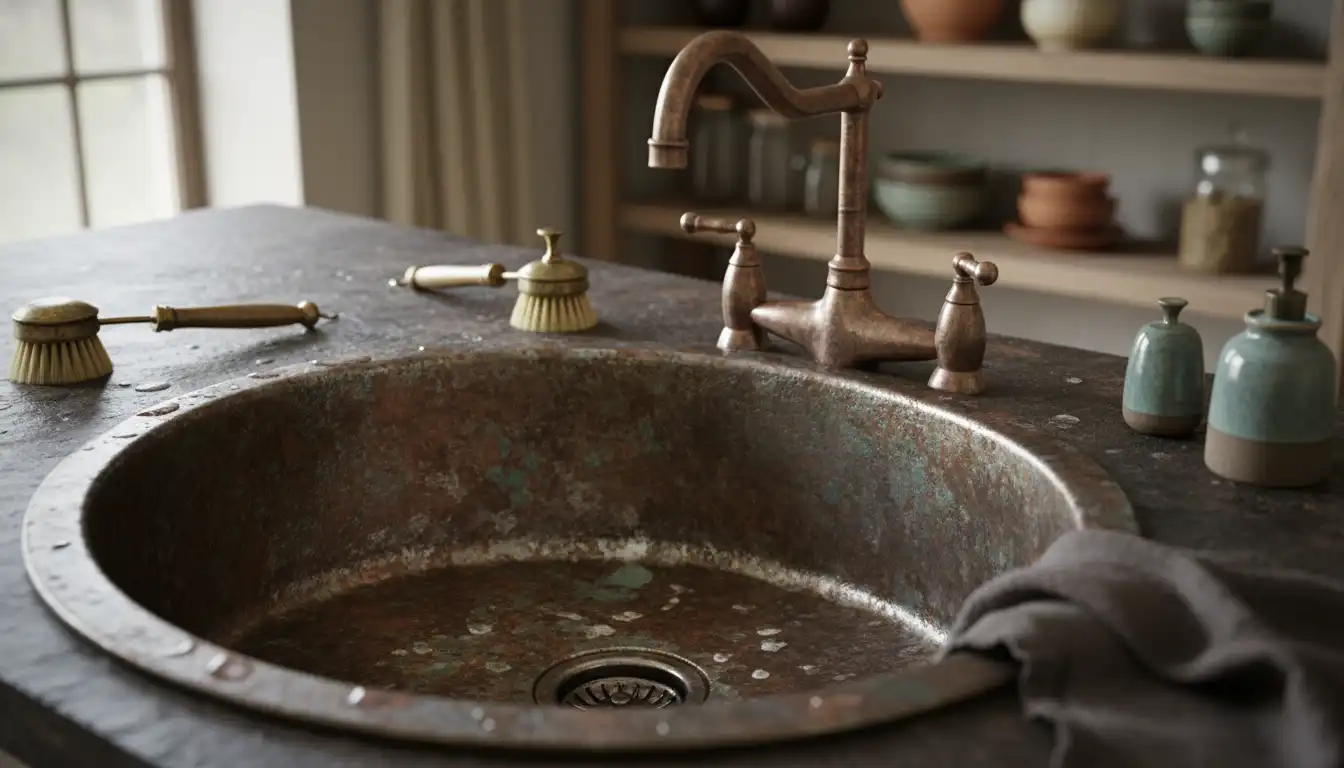
The most significant source of frustration for many copper sink owners is the patina. Patina is the natural tarnish that forms on the surface of copper as it reacts with air, water, and various substances. While this process can create a beautiful, aged look, it often develops unevenly, resulting in a splotchy, dirty appearance rather than a uniform, rustic charm.
Acidic foods like lemons, tomatoes, and vinegar can strip the patina, leaving bright, shiny spots that contrast sharply with the surrounding darker areas. Conversely, water with a high mineral content can cause dark water spots. This constant state of flux can make the sink appear perpetually unclean, no matter how often you wipe it down.
The Dreaded Green Spots (Verdigris)
The appearance of green spots, known as verdigris, is another common complaint. This greenish-blue substance is a result of oxidation, often accelerated by moisture and certain soaps left to sit on the surface. While verdigris is not harmful to the copper itself, it can be unsightly and contribute to the feeling that the sink is dirty or neglected.
These spots tend to form around the drain and faucet, where water is more likely to pool. While easily removed in many cases, their persistent return can be a significant annoyance for homeowners who were unprepared for this aspect of copper ownership.
Misconceptions About Maintenance
Many people purchase copper sinks under the impression that they are low-maintenance. While it’s true that daily cleaning is simple, maintaining a consistent appearance requires more diligence than with other sink materials. The need to dry the sink after each use to prevent water spots and the careful avoidance of harsh chemicals and abrasive scrubbers can feel like a chore.
The frustration is often compounded by a lack of proper guidance from manufacturers or installers on how to care for a “living finish.” This can lead to the use of improper cleaning products that strip the patina and create a cycle of discoloration and restoration efforts.
Taking Back Control: Your Action Plan for a Beautiful Copper Sink
Falling back in love with your copper sink is possible. It requires a shift in perspective and a new approach to care and maintenance. By understanding how to work with the unique properties of copper, you can manage its appearance and minimize the issues that cause frustration.
Embracing and Managing the Patina
The key to happiness with a copper sink is to either embrace its ever-changing nature or learn how to gently guide the patina process. If you desire a more uniform look, regular care is essential. One of the least-discussed but most effective strategies is the use of a high-quality carnauba wax or a specialized copper wax.
After thoroughly cleaning and drying the sink, applying a thin layer of wax every few weeks can work wonders. This creates a protective barrier that helps water bead up and run off, significantly reducing water spotting. The wax also helps to slow down the patina process, giving you more control over the sink’s appearance. While some maintenance is needed, it can be less demanding than dealing with constant cleaning issues like those related to a faulty low-voltage address light not working.
The Right Way to Clean Your Copper Sink
Aggressive cleaning is the enemy of a beautiful copper patina. Forget abrasive powders and scouring pads, which will scratch the surface and remove the patina, leading to more unevenness. The best approach is gentle and consistent.
For daily cleaning, a soft cloth or sponge with mild dish soap and warm water is all that is needed. Rinse the sink thoroughly after each use to wash away any food particles or soap residue. Always dry the sink completely with a soft towel to prevent water spots and mineral buildup. This simple step is perhaps the most crucial for maintaining your sink’s beauty.
| Problem | Gentle Solution | Products to Avoid |
|---|---|---|
| Minor Discoloration/Bright Spots | Allow time for the patina to naturally return. For a quicker fix, a paste of baking soda and water can be gently rubbed on the spot. | Harsh chemical cleaners, bleach, and abrasive powders. |
| Green Spots (Verdigris) | Wipe away with a soft cloth and mild soap. For stubborn spots, a 50/50 solution of white vinegar and water can be used, followed by a thorough rinse. | Leaving soap or cleaners to sit on the surface. |
| Tough Grime | A gentle scrub with a soft brush and mild soap. Some advocate for using ketchup, as its mild acidity can help remove tarnish. | Steel wool or abrasive scouring pads. |
| Water Spots | Dry the sink after every use. A periodic application of copper wax will also help. | Letting water air dry on the surface. |
Dealing with Scratches and Dings
Copper is a relatively soft metal, making it susceptible to scratches and dents, especially in a busy kitchen. While this can be a drawback, the “living finish” has a unique ability to heal itself over time. Minor scratches will gradually darken as the patina redevelops, blending into the surrounding surface.
For deeper scratches, the process can be expedited by gently cleaning the area to remove any debris. The patina will naturally reform, although it may take some time. For those who find this process frustrating, a hammered copper sink is an excellent choice, as the textured surface does a fantastic job of hiding minor imperfections.
Advanced Restoration: When Gentle Cleaning Isn’t Enough
For sinks that have been neglected or cleaned with harsh chemicals, a more intensive restoration may be necessary. This process involves stripping the existing uneven patina to create a “blank slate” from which a new, more uniform patina can develop.
Stripping the Patina
There are several ways to remove the patina from a copper sink. Commercial copper cleaners can be effective, but always test them on an inconspicuous area first. A more natural approach is to create a paste of lemon juice and salt or baking soda. Apply the paste to the sink, let it sit for a few minutes, and then gently scrub with a soft cloth. This will brighten the copper, returning it to a shiny, new-penny look.
It’s important to remember that this is a temporary state. The patina will immediately begin to reform. The advantage of this process is that it allows you to “reset” the finish and encourage a more even patina to develop through consistent care and waxing from the start. Just as you might need a complete overhaul for a complex issue like fixing the John Deere snowblower gearbox oil, sometimes your sink needs a fresh start.
Encouraging a New Patina
Once the sink has been stripped, you can let the patina develop naturally or encourage it with certain techniques. Some homeowners use a vinegar solution, lightly spraying it onto the surface and letting it air dry to speed up the aging process. However, the most reliable method for a beautiful, even patina is consistent, gentle cleaning, regular drying, and the periodic application of wax.
Over time, this routine will result in a rich, warm patina that enhances the beauty of the copper rather than detracting from it. The process requires patience, but the reward is a stunning, unique sink that truly becomes the centerpiece of your room. Managing expectations is key; just as you might wonder about the etiquette of Junk King tipping, understanding the norms of copper care is crucial for satisfaction.
The Final Verdict: Is a Copper Sink Right for You?
A copper sink is not for everyone. It requires a level of care and attention that materials like stainless steel and porcelain do not. However, for those who appreciate its unique, evolving beauty and are willing to adapt their maintenance routine, a copper sink can be a deeply rewarding addition to the home.
If you find yourself hating your copper sink, don’t give up on it just yet. By implementing the strategies outlined in this guide, you can overcome the common frustrations and transform your sink from a source of stress into a feature you love. With the right knowledge and a little patience, you can cultivate a beautiful, living finish that adds warmth, character, and timeless style to your home for years to come.
