
Husqvarna vs John Deere vs Craftsman: The Ultimate Mower Showdown
Choosing a new riding mower can feel overwhelming. With so many options, it’s hard to know which brand offers the best combination of power, durability, and value for your specific needs. You’re not just buying a machine; you’re investing in the health and beauty of your lawn for years to come.
The core problem for many homeowners is cutting through the marketing noise to understand the real-world differences between giants like Husqvarna, John Deere, and Craftsman. Each brand has its loyal followers and a reputation built over decades, but what truly sets them apart when it comes to performance on your half-acre, hilly terrain, or sprawling flat lawn?
You'll Learn About
The Big Three: A Head-to-Head Overview
When you start comparing these brands, you’ll notice they all offer a range of models, from entry-level lawn tractors for smaller yards to more robust garden tractors capable of handling larger properties and tougher tasks. The key is to look beyond the brand name and focus on the components that matter most: the engine, the cutting deck, and the transmission.
These three elements are the heart and soul of any riding mower. They dictate how well it cuts, how it handles different terrains, and how long it will last with proper care. Understanding the nuances of each will empower you to make a much more informed decision.
Engine Performance: The Powerhouse Behind the Blades
The engine is arguably the most critical component of a riding mower. It provides the power not only to the wheels but also to the cutting blades. A more powerful engine doesn’t just mean a faster mower; it means the ability to tackle thick, wet grass and challenging slopes without bogging down.
John Deere often equips its mowers, especially the higher-end X300 and X500 series, with powerful Kawasaki or their own branded engines, known for reliability and smooth operation. Husqvarna frequently partners with trusted engine manufacturers like Kohler and Briggs & Stratton, offering a wide range of horsepower options to match different deck sizes and user needs. Craftsman also utilizes engines from these reputable brands, ensuring their mowers have the power to handle typical residential lawns effectively.
Cutting Deck: The Key to a Perfect Finish
The cutting deck houses the blades and is responsible for the quality of your cut. Deck sizes typically range from 42 to 54 inches for residential models. A wider deck allows you to mow a larger area in less time, but it can be less maneuverable around obstacles. Consider the layout of your yard before defaulting to the largest deck size.
Husqvarna is well-regarded for its ClearCut® fabricated cutting decks, which are designed for superior airflow and a clean, consistent cut. John Deere’s Accel Deep™ mower decks are also engineered for a high-quality cut at faster mowing speeds. Craftsman offers durable stamped and fabricated decks, with many models featuring a deck wash port for easy cleaning, which is crucial for preventing rust and maintaining performance.
Transmission Types: Smooth and Steady Operation
The transmission controls the mower’s speed and direction. Most modern riding mowers use a hydrostatic transmission, which operates similarly to an automatic transmission in a car, offering smooth, pedal-operated speed adjustments. This is a significant step up from manual gear-driven transmissions, which require you to stop and shift gears.
All three brands heavily feature hydrostatic transmissions in their riding mowers, providing an easier and more comfortable mowing experience. The real difference often lies in the durability and responsiveness of the transmission, particularly in entry-level models. It’s worth noting that some users have reported issues with weaker hydrostatic transmissions on lower-end models from various brands, which can lead to costly repairs down the line. If you’re dealing with transmission issues on an older machine, exploring a guide to fixing transmission problems could be a valuable resource.
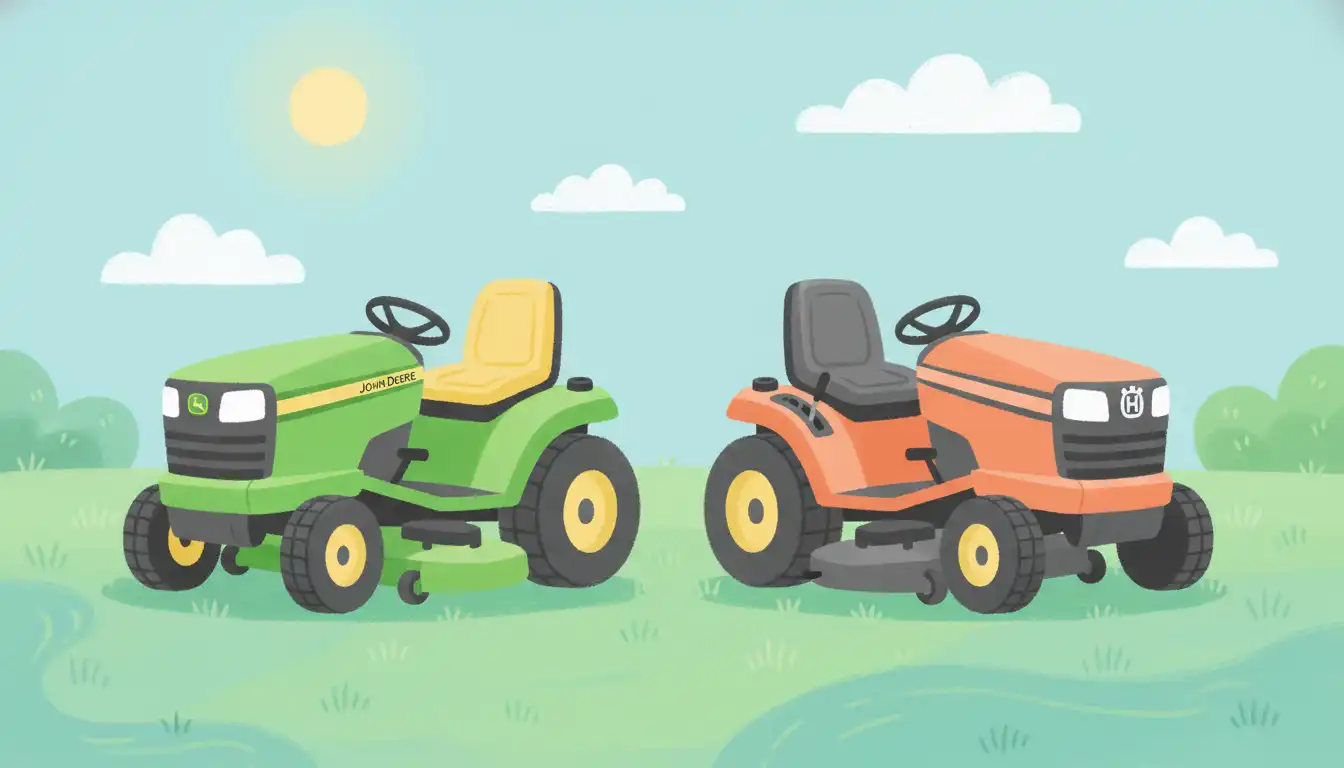
Deep Dive: Husqvarna Riding Mowers
Husqvarna has built a strong reputation for producing powerful and durable outdoor equipment. Their riding mowers are known for robust construction and innovative features designed to deliver a high-quality cut. Many users praise the solid feel and heavy-duty components of Husqvarna tractors.
Features like the ClearCut® fabricated deck, ergonomic steering wheels, and comfortable high-back seats make them a popular choice. Husqvarna also offers a wide range of attachments, turning your mower into a versatile, year-round workhorse for tasks like hauling, snow removal, and aerating.
Common Husqvarna Pain Points
Despite their strengths, some Husqvarna owners report issues. A common complaint involves the transmission on some of the less expensive models, which can feel weak or fail prematurely under heavy use. Another recurring issue can be difficulty engaging the blades, which might point to a problem with the PTO (Power Take-Off) clutch or a safety switch. Ensuring your mower’s battery is in top shape is also critical; a low charge can cause a host of electrical gremlins. To learn more about mower batteries, consider this article on 230 CCA vs 300 CCA batteries.
Uneven cutting is another frustration that can arise. This is often caused by dull blades, an unlevel deck, or incorrect tire pressure. Regular maintenance is key to preventing these problems and ensuring your Husqvarna performs at its best for years.
Deep Dive: John Deere Riding Mowers
John Deere is perhaps the most iconic name in lawn care, synonymous with quality and reliability. Their riding mowers are known for their exceptional build quality, comfortable ride, and user-friendly controls. The “Nothing runs like a Deere” slogan is backed by a legacy of durable machines and a vast dealer network for service and support.
John Deere’s residential lineup, particularly the X-series, is praised for its powerful engines, smooth hydrostatic transmissions, and excellent cut quality. They are often considered a premium choice, and their price tag reflects that. For those who prioritize longevity and are willing to invest in a machine that will last, John Deere is a compelling option.
The Cost of Green and Yellow
The primary drawback for John Deere is often the price. Their mowers typically come with a higher upfront cost compared to similarly equipped models from Husqvarna and Craftsman. While many argue the quality justifies the price, it can be a significant hurdle for budget-conscious buyers.
It’s also important to distinguish between the models sold at big-box stores (like the 100 series) and the more robust X-series sold at dealerships. While the 100 series offers a more affordable entry into the John Deere family, some components may not be as heavy-duty as those found on their more expensive counterparts. This echoes a broader trend in the market, where even premium brands offer different tiers of quality, which can sometimes lead to questions like “Why are Simplicity mowers so expensive?” when comparing dealer-exclusive brands.
Deep Dive: Craftsman Riding Mowers
Craftsman has long been a trusted name in American tools and outdoor equipment, offering a solid balance of performance and value. Their riding mowers are a popular choice for homeowners looking for a reliable machine without the premium price tag of a John Deere. They offer a wide range of models with various engine sizes and deck widths to suit different lawn sizes.
Key features often include tight turning radiuses, comfortable high-back seats, and easy-to-use controls. Craftsman mowers are widely available at major retailers, making them accessible and easy to purchase. For many, they represent a practical, no-nonsense approach to lawn care.
Craftsman’s Achilles’ Heel?
While Craftsman mowers offer great value, they sometimes face criticism regarding the durability of certain components. Some users report issues with the stamped decks bending or rusting more quickly than the fabricated decks on competing models. Electrical issues and problems with the mower deck not engaging properly can also be frustrating.
Regular maintenance is crucial for Craftsman mowers to ensure a long service life. This includes keeping the underside of the deck clean, checking belts for wear, and ensuring all moving parts are properly lubricated. Addressing small issues before they become major problems is the best strategy for any mower brand, but it’s particularly important for value-focused options.
The Ultimate Comparison Table
| Feature | Husqvarna | John Deere | Craftsman |
|---|---|---|---|
| Engine Brands | Kohler, Briggs & Stratton | John Deere, Kawasaki | Briggs & Stratton, Kohler |
| Deck Construction | Stamped and Fabricated (ClearCut®) | Stamped and Fabricated (Accel Deep™) | Stamped and Fabricated |
| Price Range | Mid to High | High | Low to Mid |
| Key Selling Point | Durability and Power | Build Quality and Reliability | Value and Accessibility |
| Common Complaint | Transmission on lower-end models | High initial cost | Durability of some components |
| Best For | Users wanting robust, powerful machines | Buyers prioritizing longevity and support | Budget-conscious homeowners |
Making the Final Decision: What’s Right for Your Yard?
Choosing between Husqvarna, John Deere, and Craftsman ultimately comes down to your priorities and the specific challenges of your lawn. There is no single “best” brand for everyone. The right choice is the mower that best fits your budget, your property’s terrain, and your long-term expectations for durability and performance.
For large properties with tough grass or hills, the robust build and powerful engines of a mid-to-high-end Husqvarna or a John Deere X-series mower are often the best investment. These machines are built to handle more demanding work and will likely provide a longer service life under strenuous conditions.
For a typical suburban lawn of up to two acres with moderate obstacles, a Craftsman or an entry-level John Deere or Husqvarna can provide excellent performance and value. Focus on models with a reliable engine and a deck size that balances cutting speed with the maneuverability you need. No matter which brand you choose, committing to a regular maintenance schedule is the single most important factor in ensuring your riding mower remains a reliable partner in your lawn care routine for many seasons to come.
