Hoya in the Wild: Unlock Jungle Secrets for Thriving Plants
Do your Hoya plants seem stuck in time, refusing to grow or bless you with their famously fragrant flowers? You provide water, light, and care, yet they offer little more than stubborn indifference. This common frustration leaves many plant lovers wondering what they’re doing wrong.
The problem isn’t your dedication; it’s the approach. We often treat Hoyas like typical houseplants, planting them in dense soil and placing them in direct sun. The secret to a thriving Hoya lies not in a garden center aisle but deep within the tropical rainforests of Asia and Australia, where they grow wild.
You'll Learn About
Decoding the Jungle: Where Do Hoyas Actually Come From?
Understanding the natural habitat of a plant is the first step to mastering its care. For Hoyas, this means leaving behind the idea of a traditional potted plant and embracing their wild, tree-dwelling origins. By mimicking these conditions, you can solve the most common Hoya problems before they even start.
Not Your Average Potted Plant: The Epiphytic Lifestyle
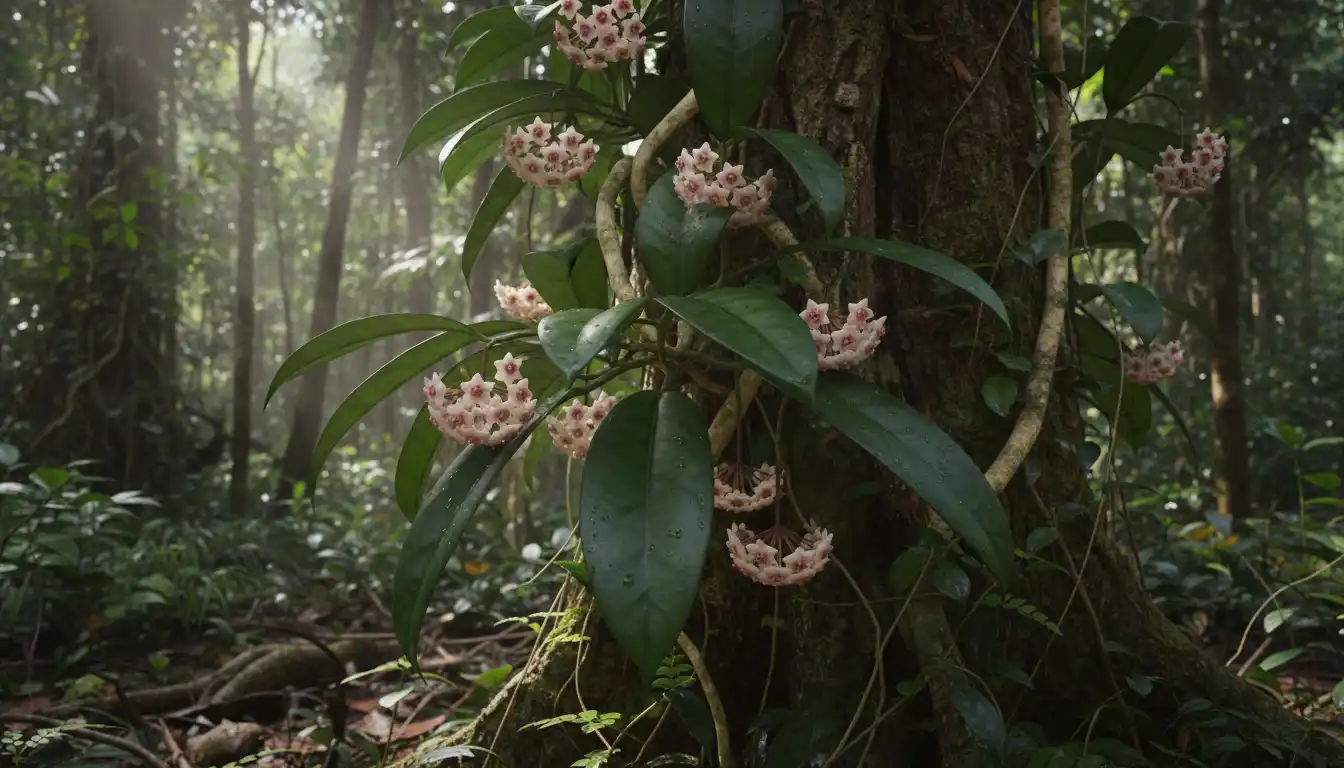
In the jungle, most Hoyas are epiphytes, which means they grow on other plants, typically clinging to the bark of trees. They aren’t parasitic; they simply use the tree as an anchor to reach for light. Their roots are not buried in dense earth but are exposed to air, moisture, and decaying organic matter in tree crevices.
This is a critical distinction. Traditional potting soil holds too much water and not enough air, leading to the number one killer of indoor Hoyas: root rot. Their roots are designed to breathe and dry out between periods of rain, a condition standard soil simply cannot provide.
The Forest Canopy Light Show
Imagine the light on a forest floor. It’s not the harsh, direct sun of an open field but a constantly shifting, dappled light that filters through the leaves of taller trees. This is the “bright, indirect light” that Hoyas have evolved to thrive in.
Placing a Hoya in a south-facing window with no protection is like taking it from the shade of the jungle and leaving it in a desert. The leaves will often scorch, turning yellow or red as a sign of stress. They need the brightness to fuel growth and flowering, but without the intensity that damages their waxy leaves.
The #1 Mistake Hoya Owners Make (And How to Fix It)
The most significant error in Hoya care is treating them like terrestrial, or ground-dwelling, plants. This mistake manifests primarily in the choice of potting medium. If you’re using standard, all-purpose potting soil straight from the bag, you are setting your plant up for failure.
Why Your Soil is Suffocating Your Hoya
Dense potting mix becomes waterlogged easily and compacts over time, squeezing out the air pockets that Hoya roots desperately need. In their wild habitat, rainwater washes over their roots and drains away instantly, while air circulates freely. When trapped in dense, wet soil, the roots cannot perform their functions, begin to decay, and can no longer absorb water or nutrients, ironically leading to symptoms that look like underwatering.
This is why a plant can have yellow, wilting leaves even when the soil is wet. The roots have rotted and are no longer working. The solution is to completely rethink what “soil” means for a Hoya and create a mix that mimics the airy, chunky debris found on a tree.
The Ultimate “Wild-Inspired” Hoya Potting Mix
Creating the perfect Hoya mix is about prioritizing drainage and aeration above all else. A fantastic, beginner-friendly recipe involves combining chunky materials that create a light, airy structure. You can easily create a superior mix at home.
Start with a base of high-quality potting mix, but use it sparingly. The bulk of your medium should be amendments that increase airflow. A great starting recipe is one part potting mix, two parts orchid bark, and two parts perlite or pumice. This blend ensures water drains quickly while retaining just enough moisture and allowing roots to breathe.
| Component | Primary Function | Why It Mimics Nature |
|---|---|---|
| Orchid Bark | Aeration & Structure | Simulates the coarse tree bark Hoyas cling to in the wild. |
| Perlite/Pumice | Drainage & Lightness | Creates air pockets similar to the gaps and crevices on a tree trunk. |
| Coco Coir/Husk | Moisture Retention | Acts like the moss and leaf litter that holds humidity around wild roots. |
| Horticultural Charcoal | “Sweetens” Soil & Drains | Mimics the purifying effect of carbon deposits from natural fires and decay. |
Recreating the Tropical Rainstorm: Watering for Success
Once your Hoya is in the proper substrate, you must adjust your watering habits to match. In the rainforest, Hoyas experience intense but infrequent downpours, followed by periods where their roots dry out in the warm, humid air. Your goal is to replicate this natural cycle.
The “Drench and Dry” Method: Your New Watering Mantra
Forget watering on a strict schedule. Instead, check the potting mix. The best technique is the “drench and dry” method. When it’s time to water, do so thoroughly. Let water run through the potting mix and out of the drainage holes for at least a minute to ensure the entire root ball is saturated.
Then, the crucial part: allow the mix to dry out almost completely before watering again. For most home environments, this could be every 10 to 14 days, but it varies greatly. Sticking your finger two inches into the mix is a reliable test; if you feel any moisture, wait longer.
Humidity: The Invisible Ingredient Your Hoya Craves
Hoyas are native to regions with high humidity. While many common varieties are adaptable to average household humidity, they will truly flourish if you can increase it. Dry, stagnant air can lead to crispy leaf edges and make the plant more susceptible to pests.
Placing your plant on a pebble tray filled with water or grouping it with other plants can create a more humid microclimate. Using a small room humidifier is the most effective method for providing the consistent, moist air they love, encouraging lush growth and healthy foliage.
Light and Support: Letting Your Hoya Climb to New Heights
With soil and watering corrected, the final pieces of the puzzle are providing the right light and giving your vining Hoya a sense of purpose. These elements are key to encouraging not just survival, but vigorous growth and the production of their stunning flowers.
Finding the “Canopy Light” Sweet Spot in Your Home
The ideal location for a Hoya is where it can receive several hours of bright, indirect light each day. An east-facing window, which gets softer morning sun, is often perfect. A spot a few feet back from a west- or south-facing window also works well, as the intensity of the direct sun is reduced.
Watch your plant for clues. If the growth is sparse with long spaces between leaves (leggy), it likely needs more light. Conversely, if the leaves are turning pale yellow or reddish, it might be getting too much direct sun.
Give Them Something to Climb On
Remember, in the wild, Hoyas are climbers. Providing a trellis, moss pole, or even simple bamboo stakes gives their vines something to cling to, which can trigger more robust growth. When Hoyas can climb, they often produce larger leaves and are more likely to expend the energy needed for flowering.
This climbing support directly mimics their natural growth habit, making them feel secure in their environment. Letting them trail from a hanging basket is also a beautiful option that honors their cascading nature.
The Surprising Truth About Feeding Your Hoya
Many gardeners, in an attempt to encourage blooms, make the mistake of over-fertilizing their Hoyas. In their natural habitat, these plants are light feeders, absorbing a slow trickle of nutrients from rainwater and decomposing debris. Bombarding them with strong fertilizer can burn their sensitive roots.
Less is More: Nutrient Lessons from the Jungle
Fertilize your Hoya sparingly, and only during the active growing season of spring and summer. A balanced liquid fertilizer diluted to half-strength, applied once a month, is more than sufficient. An orchid fertilizer is also an excellent choice as it’s formulated for epiphytes.
During the fall and winter, when growth naturally slows, cease fertilizing altogether. This allows the plant to rest, which can be a crucial trigger for flowering in the following season.
Is Your Hoya a Variegated Variety?
Different types of Hoyas can have slightly different care requirements, especially when it comes to light. Variegated plants, with their beautiful cream or pink markings, often need slightly brighter light to maintain their coloration. Learning the specific needs of your plant, for example by understanding the nuances between Hoya Macrophylla Albomarginata vs Variegata, allows you to fine-tune your care for optimal health and beauty.
Careful observation is key. Just as you might identify a mysterious 3 leaf plant with white flowers in your garden, paying attention to the unique traits of your Hoya varieties will make you a better plant parent.
Troubleshooting: When Your “Wild” Hoya Still Struggles
Even with the best care, you might encounter issues. The key is to diagnose the problem by thinking back to the plant’s natural needs. Most problems can be traced back to one of the core principles of light, water, or soil.
Problem: Yellowing Leaves
This is the most common Hoya ailment. Before you do anything else, check the soil moisture. Nine times out of ten, yellow leaves are caused by overwatering and the onset of root rot. If the soil is damp, let it dry out completely. If the problem persists, you may need to unpot the plant, trim any soft, brown roots, and repot in a fresh, chunkier mix.
Problem: No Flowers
Patience is the first requirement, as many Hoyas need to reach maturity before they bloom. The most common cause for a mature plant not flowering is insufficient light. Try moving it to a brighter location where it gets more indirect sun. Some Hoyas also benefit from being slightly root-bound in their pot, as it can encourage them to put energy into flowering instead of root growth.
Problem: Pests
Healthy Hoyas are quite pest-resistant, but stressed plants can fall prey to common culprits like mealybugs and spider mites. Check the undersides of leaves and crevices regularly. If you spot pests, isolate the plant and treat it with insecticidal soap or neem oil.
Your Home is the New Jungle
The secret to a lush, beautiful Hoya is simple: stop treating it like a houseplant and start thinking of it as a wild jungle vine. By providing an airy, well-draining potting mix, mimicking the drench-and-dry cycle of a tropical rainstorm, and offering bright, filtered light, you replicate the very conditions that allow Hoyas to thrive in nature.
Creating this specialized environment is a rewarding process, much like understanding the ecological balance and value of a spring-fed pond in a larger landscape. By embracing the “hoya in the wild” philosophy, you unlock the secrets to not just keeping your plant alive, but helping it flourish into the stunning specimen it was meant to be.