Run a 12V DC Motor on 120V AC: The Ultimate DIY Guide
Have you ever found a small, powerful 12-volt DC motor and dreamed up the perfect project for your home or garden? Perhaps it’s an automated chicken coop door, a custom water feature, or a rotating plant stand. You have the motor, you have the idea, but you face a fundamental problem: your wall outlets supply 120-volt AC power.
This is a common hurdle for DIY enthusiasts. You know instinctively that plugging that small motor directly into a wall socket is a bad idea, but what’s the right way to do it? This guide will walk you through the entire process safely and effectively, transforming that seemingly incompatible motor into the heart of your next brilliant creation.
You'll Learn About
Understanding the Electrical Mismatch: AC vs. DC
Before connecting any wires, it’s crucial to understand why you can’t directly mix these two types of electricity. They are fundamentally different in how they deliver power. Think of it as trying to run a gasoline engine on diesel fuel; the results are messy and destructive.
Alternating Current (AC) is the standard in our homes. The flow of electrical charge constantly reverses its direction, oscillating back and forth. Direct Current (DC), on the other hand, flows in a single, steady direction. This is the type of power provided by batteries and is what most small electronics and motors are designed to use.
The Dangers of Connecting a 12V DC Motor to 120V AC
Attempting to power a 12V DC motor with a 120V AC source is not just a mistake; it’s a significant safety hazard. The motor is designed for a low, steady voltage. Introducing ten times that voltage, and in an alternating form, will lead to immediate and catastrophic failure.
The motor’s internal components, specifically the fine copper windings, are not built to handle this massive electrical pressure. The low resistance of the DC motor will attempt to draw an enormous amount of current from the 120V source, causing the windings to overheat and melt in an instant. This process can produce smoke, sparks, and potentially ignite a fire, posing a serious risk to you and your property.
The Essential Tool: The AC to DC Power Converter
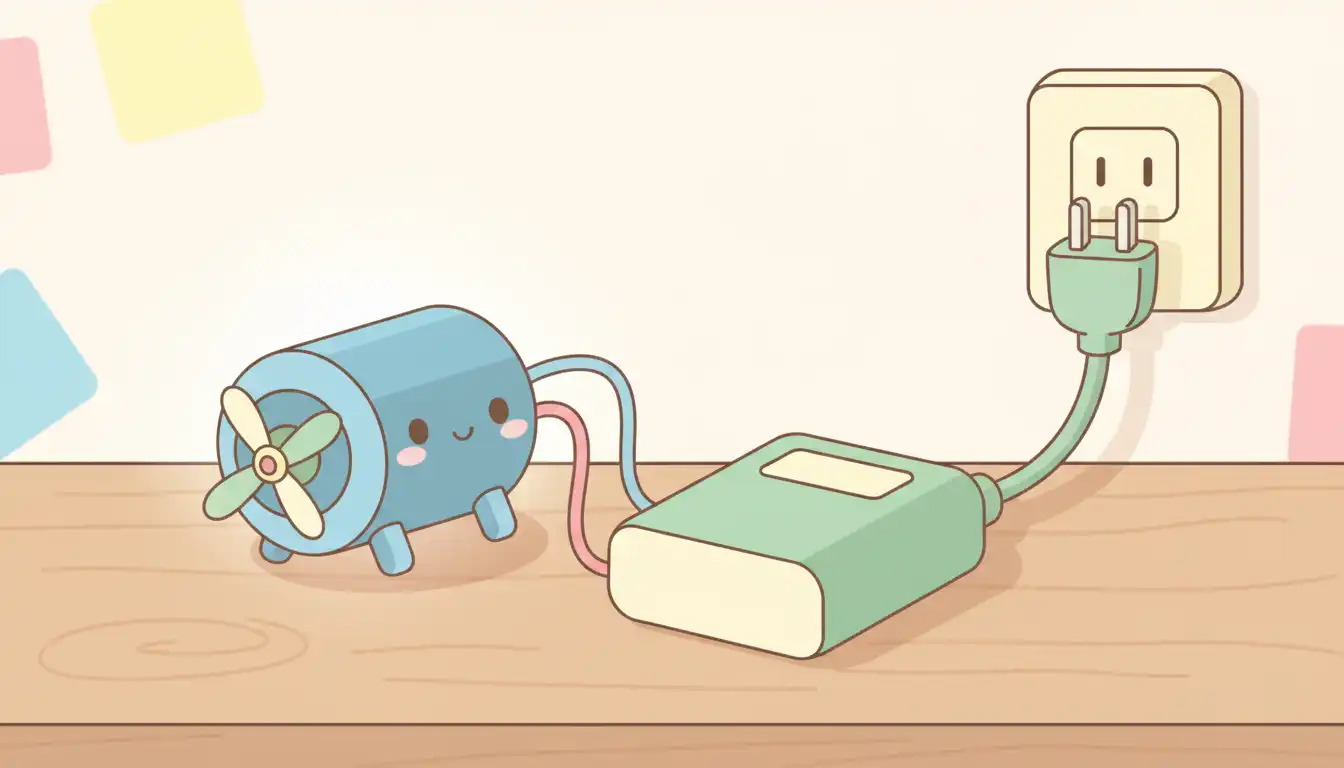
The solution to this electrical dilemma is a device called an AC to DC power converter. You likely have dozens of these in your home already without realizing it. They are the small black boxes, or “wall warts,” that power everything from your laptop and router to your phone charger.
This device does two critical jobs. First, it uses a transformer to “step down” the high 120V AC voltage to a much lower level. Second, it uses a component called a rectifier to convert the alternating current into the direct current that your motor needs to operate safely and correctly.
Choosing the Right Power Converter: A Step-by-Step Guide
Simply grabbing any old power adapter from a drawer is not enough. To ensure your project works reliably and safely, you must select a power supply with the correct specifications. Mismatching these can lead to the motor not running, the power supply overheating, or both components being damaged.
Step 1: Match the Voltage (Volts)
This is the most straightforward and non-negotiable rule. If your motor is rated for 12 volts, you must use a power supply that has a 12-volt output. Using a lower voltage supply will cause the motor to run slowly or not at all. Using a higher voltage supply will damage the motor over time, if not instantly.
Step 2: Check the Current Rating (Amps)
Every motor has a current rating in amperes (A) or milliamperes (mA). This number tells you how much electrical current the motor “draws” from the power source to operate. The power supply you choose must be able to provide at least this amount of current.
Think of it like a water pipe. The motor needs a certain amount of water flow (current) to turn its wheel. Your power supply is the pipe, and its amp rating determines the maximum flow it can handle. It’s perfectly fine to use a power supply with a higher amp rating than the motor needs. The motor will only draw the current it requires. For example, a 5-amp power supply will work perfectly for a 2-amp motor. However, you can never use a power supply with a lower amp rating. A 2-amp supply trying to power a 5-amp motor will overheat and fail.
A crucial detail many guides overlook is the difference between “running current” and “startup current.” Motors often require a brief surge of higher current, known as inrush current, to get started from a standstill. To account for this and to ensure the longevity of your power supply, it is best practice to choose a converter with an amperage rating at least 25-50% higher than your motor’s specified running current.
Step 3: Calculate the Power (Watts)
Sometimes, components are rated in watts (W) instead of amps. You can easily convert between them using a simple formula: Watts = Volts x Amps. If you know your motor is 12V and draws 2A, then it is a 24W motor (12V x 2A = 24W). This helps you ensure all your components are properly matched.
This calculation is also useful for understanding the energy consumption of your project. The power rating is key to its performance, just as you’d carefully weigh your options when choosing between popular snow blower brands for your winter needs, ensuring you have the right power for the job. You can find out more about how power ratings impact performance in different tools here.
Step 4: Consider the Connector Type
Power supplies come with various output connectors. Many common adapters have a round “barrel” connector. For most DIY projects, you will likely need to carefully cut this connector off to access the bare wires inside. Other, more industrial-style power supplies may have screw terminals, which can provide a more secure and robust connection for permanent installations.
Types of Power Converters for DIY Projects
Choosing the right physical form for your power supply can make your project cleaner and more durable. Depending on whether your project is indoors or exposed to the garden elements, one type may be better than another.
| Power Supply Type | Description | Best Use Case | Pros | Cons |
|---|---|---|---|---|
| Wall Adapter (“Wall Wart”) | A self-contained unit that plugs directly into an AC outlet. The most common type. | Indoor projects, prototyping, and temporary setups. | Easy to find, simple to use, affordable. | Lower power ratings, wires can be thin. |
| Enclosed Power Supply | A metal box (often perforated for cooling) with screw terminals for AC input and DC output. | Permanent installations, projects requiring higher power. | Robust, high power capacity, secure connections. | Requires more wiring, must be protected from moisture. |
| Open Frame Power Supply | A bare circuit board without a protective case. | Integrating into a larger custom enclosure. | Compact, lightweight. | Exposed electronics, requires careful handling and housing. |
Wiring Your 12V Motor to the Power Converter: A Safe and Secure Connection
Once you have selected the perfect power supply, it’s time to make the connection. This process is straightforward, but taking your time and prioritizing safety is essential to avoid short circuits and ensure a reliable, long-lasting project.
Gather Your Tools and Materials
Before you begin, make sure you have everything you need on hand. This includes your 12V DC motor, the correctly rated AC to DC power supply, wire strippers, connectors (such as wire nuts or lever-style connectors), and electrical tape. Always wear safety glasses when cutting or stripping wires.
Step-by-Step Wiring Instructions
Follow these steps carefully to ensure a safe and secure connection. A proper connection is fundamental to any electrical work; ensuring a professional and safe installation is key, even for DIY projects, to avoid the common issues one might face. If you want to learn more about the importance of proper installation practices, you can read about avoiding contractor problems here.
1. Unplug Everything: This is the most important safety step. Always ensure the AC to DC power supply is completely disconnected from the wall outlet before you start working on any wires.
2. Prepare the Wires: If your power supply has a barrel connector, use wire cutters to snip it off. Gently separate the two conjoined wires and use wire strippers to remove about half an inch of the plastic insulation from the end of each wire, exposing the copper strands. Do the same for the two wires coming from your DC motor.
3. Identify Polarity (+ and -): The next step is to figure out which wire is positive and which is negative. On the power supply’s output cord, the positive wire is often indicated by a white stripe, dashed line, or printed text on the insulation. The negative wire is usually plain black. On the motor, the positive terminal is frequently marked with a red wire and the negative with a black wire. If you connect them backward, most simple DC motors will just spin in the opposite direction, but it is good practice to maintain correct polarity.
4. Make the Connection: Take the positive wire from the power supply and the positive wire from the motor and twist the exposed copper strands together firmly. Secure this connection by screwing on a wire nut. Repeat the exact same process for the two negative wires.
5. Insulate and Secure: Ensure no bare wire is showing at the base of the connectors. For added safety, wrap each connection with electrical tape, starting on the wire’s insulation and moving up over the wire nut. This helps prevent the connections from vibrating loose and protects against accidental contact.
6. Test Your Setup: With the connections made and insulated, place your motor on a stable, non-conductive surface. You can now plug the power supply into the 120V AC wall outlet. If everything was done correctly, your motor should spring to life.
Advanced Considerations and Project Ideas
Now that you’ve mastered the basics of powering your DC motor, you can explore more advanced options to add greater control and functionality to your home and garden projects. These additions can elevate a simple spinning motor into a truly dynamic and useful tool.
Adding a Speed Controller (PWM)
What if you need your motor to spin slower for a delicate task, like a slowly rotating display, or faster for a small fan? This is where a Pulse Width Modulation (PWM) speed controller comes in. This small electronic device is wired between your power supply and your motor. It works by rapidly turning the power on and off, and a simple control knob allows you to adjust the “on” time, effectively controlling the motor’s average voltage and thus its speed.
Reversing the Motor’s Spin
For projects like an automated door or a small-scale linear actuator, you’ll need the motor to spin in both directions. As mentioned, reversing the polarity (swapping the positive and negative connections) will reverse the spin of most simple DC motors. To do this without manually rewiring each time, you can install a DPDT (Double Pole, Double Throw) switch. This switch has six terminals and allows you to instantly reverse the flow of current to the motor with a simple flick.
Home and Garden Project Inspiration
Armed with this knowledge, a whole new world of automation and creativity opens up for your home and garden. Consider these ideas:
- Automated Chicken Coop Door: Use a motor with a reversing switch and limit switches to automatically open and close the coop door at sunrise and sunset.
- DIY Pond Fountain: Power a small 12V water pump to create a relaxing water feature in your garden. Add a speed controller to adjust the flow.
- Motorized Compost Tumbler: Take the manual labor out of turning your compost by rigging a slow-moving, high-torque motor to do the work for you.
- Rotating Sprinkler System: Build a custom sprinkler that rotates at your desired speed to ensure even watering for an oddly shaped lawn or garden bed.
- Weatherproofing Your Project: For any outdoor project, protecting your electrical connections is paramount. Consider housing the power supply and wiring inside a weatherproof project box. This provides a durable layer of protection, much like how you would apply a protective matte epoxy finish to a floor to shield it from wear and tear. You can explore more about durable finishes here.
Empower Your DIY Projects Safely and Effectively
The gap between a 12V DC motor and a 120V AC outlet might seem vast, but it’s easily and safely bridged with the right component: the AC to DC power converter. By understanding the critical importance of matching voltage and providing sufficient amperage, you can confidently and safely power a huge range of low-voltage motors.
Remember to always prioritize safety by unplugging your power source before making any connections and ensuring all your wiring is properly insulated. By following these guidelines, you can unlock countless possibilities, bringing motion and automation to your creative ideas for a smarter, more efficient home and garden.