
Pruning a Lemon Tree From Seed? Unlock Its Hidden Potential
You did it. You nurtured a tiny seed into a vibrant green lemon sapling. But now you’re faced with a lanky, thorny teenager of a tree that’s growing straight up with no signs of branching, let alone fruit. This is the frustrating reality for many gardeners who embark on the rewarding journey of growing a lemon tree from seed, a path filled with unique challenges that store-bought, grafted trees don’t present.
The core problem lies in the tree’s genetics and juvenile state. A seed-grown tree is a genetic wild card; it hasn’t been selectively bred and grafted for a compact shape and fast fruit production. Instead, it’s focused on one thing: growing tall and fast to compete for sunlight, often resulting in a thorny, single-stemmed plant that seems destined never to become the bushy, fruit-laden tree of your dreams. Without proper, strategic pruning, it may stay that way.
You'll Learn About
Why Pruning Your Seed-Grown Lemon Tree is Non-Negotiable
Pruning a seed-grown lemon tree isn’t just about controlling its size; it’s about fundamentally altering its growth habit to create a strong, productive structure. Unlike grafted trees, which have a head start with mature wood, your seedling needs guidance. The primary goals of pruning are to establish a robust framework, improve air circulation to ward off diseases, and ultimately encourage the tree to transition from its juvenile, vegetative stage to a mature, fruit-bearing state.
Ignoring this crucial task leads to a weak, poorly shaped tree with branches unable to support the weight of future fruit. It can also delay maturity and create a dense canopy where pests and fungal diseases can thrive. Strategic cuts send signals to the plant, redirecting energy from vertical growth into developing strong, lateral branches that will one day hold your homegrown lemons.
Understanding the “Juvenile” Phase: Patience is a Virtue
One of the most significant differences with a seed-grown lemon is its extended juvenile period. This is the phase where the tree is focused solely on growth, not reproduction. This period can last anywhere from 5 to 15 years, and no amount of pruning can rush it. During this time, the tree will exhibit vigorous, upright growth, often with larger leaves and more formidable thorns as a natural defense mechanism.
It’s vital to understand that early pruning is not about forcing fruit; it’s about preparing the tree for the day it’s finally ready. By creating a well-balanced structure during these formative years, you ensure that when the tree does reach maturity, it has the ideal shape to support a healthy and abundant harvest. Think of it as building the foundation of a house long before you furnish it.
The Essential Pruning Toolkit: Your Instruments for Success
Before making a single cut, gathering the right tools is essential for the health of your tree. You don’t need an extensive collection, but what you have must be high quality. Your basic kit should include sharp, clean bypass pruners for small branches, a pair of loppers for thicker stems, and sterile gloves. The most critical rule is to always sterilize your tools with rubbing alcohol before you start and between cuts if you’re removing diseased wood. This simple step prevents the transfer of pathogens that can devastate your young tree.
Dull blades will crush stems instead of making clean cuts, leaving ragged wounds that are slow to heal and invite infection. Investing in a good pair of pruners and keeping them sharp is one of the best things you can do for your lemon tree’s long-term health. Clean cuts heal faster, allowing the tree to redirect its energy toward productive growth.
A Step-by-Step Guide to Pruning Your Lemon Tree by Age
Pruning is not a one-time event but an ongoing conversation with your tree. The approach changes as the tree grows from a delicate sapling into a sturdy, mature plant. By tailoring your technique to its age and stage of development, you can effectively guide its shape and prepare it for a fruitful future.
Years 1-2: Laying the Foundation
During the first two years, your entire focus should be on creating a single, strong trunk and encouraging the first set of primary branches. Many seed-grown lemons will try to grow as a single, tall whip. To counter this, you must make a crucial first cut known as a “heading cut.”
Once your sapling is about 24 to 30 inches tall, use your clean pruners to snip off the top few inches of the central stem. This removes the apical bud, which produces hormones that suppress lateral growth. Removing it sends a signal to the nodes below to sprout, creating the beginnings of a branched structure. Over the following months, select three or four evenly spaced, outward-facing shoots to become your main “scaffold” branches and remove any others. This early shaping is the most important step in creating a strong, open framework.
Years 3-5: Shaping and Structural Development
With your main scaffold branches established, the next few years are about refining the tree’s shape. The goal is to create an open, vase-like structure that allows sunlight and air to penetrate the entire canopy. This is crucial for fruit ripening and disease prevention.
During your annual late-winter pruning, focus on removing any branches that are growing inward toward the center of the tree, as well as any that are crossing or rubbing against each other. Also, look for branches that form a tight “V” shape at the trunk; these are weak and more likely to break. You want branches that have a wider, stronger angle of attachment. This is the stage where your tree begins to take on its classic, balanced shape.
Mature Trees (5+ Years): Maintenance and Encouraging Fruit
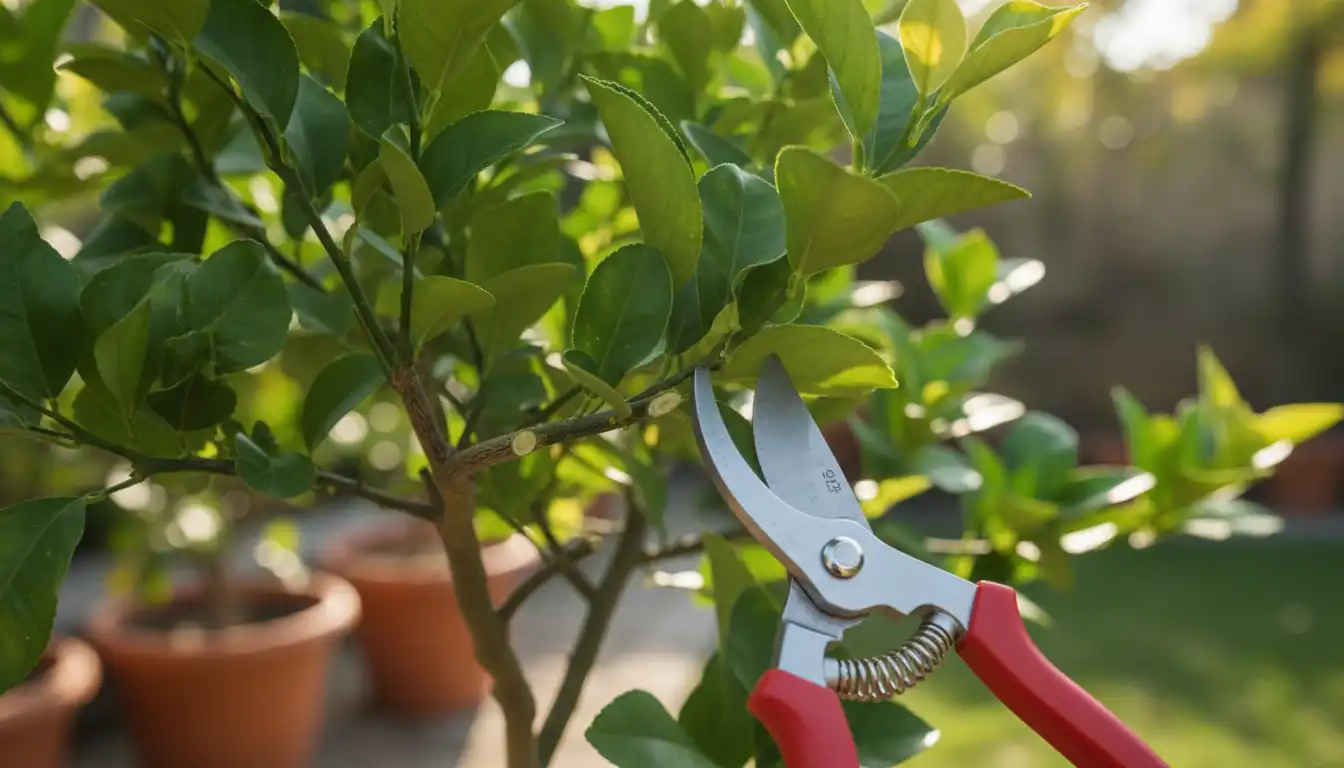
Once your tree has a well-developed structure, pruning shifts to maintenance. The annual goal is to preserve the shape and health of the tree. The foundation of maintenance pruning is removing the “Three D’s”: any wood that is Dead, Damaged, or Diseased. This can be done at any time of year.
Your main pruning session should still be in late winter or early spring. At this time, thin out the canopy slightly to maintain good light penetration. Also, remove any “water sprouts”—vigorous, fast-growing vertical shoots that emerge from the trunk or main branches and rarely produce fruit. Just as you would investigate a strange clicking-noise-in-ceiling-at-night_gem1, you must diligently seek out and remove these energy-draining shoots. Maintaining this structure ensures the tree’s resources are directed toward healthy, fruit-bearing wood.
Taming the Thorns: A Prickly Subject
A common complaint among those who grow lemons from seed is the prevalence of large, sharp thorns. These are a natural characteristic of a juvenile citrus tree, a remnant of its wild ancestors’ need for protection. While you cannot eliminate them entirely, you can manage them.
It is perfectly safe to prune off particularly long or inconveniently placed thorns, especially those on the main trunk or branches you handle often. However, do not attempt to remove every thorn from the tree. This would be an endless task and could cause unnecessary stress to the plant. As the tree matures and begins to produce fruit-bearing wood, you will find that the newer growth has significantly fewer and smaller thorns.
Common Pruning Mistakes That Can Set Your Tree Back
Enthusiasm can sometimes lead to errors that can harm your tree or delay its progress. The most common mistake is over-pruning, or removing more than 25-30% of the tree’s canopy at one time. This can send the tree into shock, prompting it to produce a mess of weak, unproductive water sprouts as a survival response. Always prune with a light hand; you can always remove more later, but you can’t put a branch back on.
Another critical error is pruning at the wrong time of year. Avoid major pruning in the fall, as this can stimulate new growth that will be too tender to survive the winter cold. The ideal window is after the last frost of winter but before the tree begins its major spring growth flush. Finally, always make your cuts just outside the “branch collar,” the slightly swollen area where the branch joins the trunk. Leaving a stub can lead to rot, while cutting flush with the trunk creates a larger wound that is slow to heal.
| Season | Pruning Goal | Actions to Take |
|---|---|---|
| Late Winter / Early Spring | Major Structural Pruning | Perform heading cuts on young trees, establish scaffold branches, remove crossing or inward-growing limbs, and thin the canopy. This is the primary pruning window. |
| Summer | Light Maintenance & Correction | Remove any vigorous water sprouts or suckers as soon as they appear. Snip off any dead or damaged twigs. Avoid heavy pruning. |
| Fall | Minimal Intervention | Avoid pruning. This can encourage new growth that will be vulnerable to frost damage. Only remove branches if they are clearly broken or diseased. |
| Anytime | Health & Safety | Remove dead, damaged, or diseased wood as soon as you spot it to prevent the spread of problems and keep the tree healthy. |
Beyond Pruning: Supporting Your Tree’s Journey to Fruitfulness
Pruning is a powerful tool, but it’s only one piece of the puzzle. To support your tree and encourage it to eventually produce fruit, you must provide excellent overall care. This includes ensuring it receives at least 8 hours of direct sunlight per day, providing consistent water, and feeding it with a balanced citrus fertilizer during the growing season.
Providing the right foundation is as essential for a plant as it is for your home. You wouldn’t install a heavy appliance without first understanding your floor’s limits, such as knowing the bathtub-weight-second-floor_gem1, and similarly, your tree needs a solid base of care. Choosing a reliable, well-draining pot and high-quality soil is as fundamental to your tree’s health as choosing one of the best-non-computerized-washing-machines_gem1 might be for your home’s laundry needs—both choices prioritize long-term performance and stability.
Patience remains the most crucial ingredient. Growing a lemon tree from seed is a marathon, not a sprint. By combining strategic pruning with attentive care, you are not just growing a plant; you are cultivating a future harvest. You are shaping a wild sapling into a productive, healthy tree that will, in time, reward your dedication with the unparalleled taste of homegrown lemons.
