
How to Move Concrete Steps Without Breaking Your Back (or the Bank)!
Relocating a set of precast concrete steps can feel like an impossible task. Whether you’re redesigning your landscape, needing access for foundation repairs, or simply realigning a crooked entryway, the sheer weight and bulk of concrete steps present a significant challenge. Doing it wrong can lead to serious injury, property damage, or a cracked and useless set of stairs.
Many homeowners face this problem and immediately assume they need to hire an expensive crew or demolish the steps entirely. However, with the right plan, the correct tools, and a heavy dose of caution, moving precast concrete steps is an achievable DIY project. This guide provides a comprehensive, step-by-step approach to safely and effectively relocating your concrete steps, ensuring they land perfectly in their new home.
You'll Learn About
Before You Begin: The Critical Planning Phase
Success in this project is determined long before you lift anything heavy. Thorough planning is not just recommended; it is absolutely essential. Rushing into this process without a clear strategy is a recipe for disaster. Taking the time to assess, measure, and prepare will save you from costly mistakes and potential injuries.
The first step is a detailed assessment of the stairs themselves. Are they truly precast, or were they poured in place against your foundation? Poured-in-place steps are integrated with the foundation and are not designed to be moved; they require demolition. Precast steps are manufactured off-site and delivered as a single, massive unit, making them movable, albeit challenging.
Understanding the Challenge: Weight and Condition
You must have a realistic understanding of what you’re dealing with. Concrete is incredibly dense, weighing roughly 150 pounds per cubic foot. A small, three-step unit can easily weigh 700 to 1,300 pounds, while larger sets with landings can exceed a ton. Never underestimate the weight of your concrete steps.
Before planning the move, conduct a thorough inspection. Look for significant cracks, spalling (flaking or chipping), or exposed, rusted rebar. Moving a structurally compromised set of steps is risky, as the stress of lifting can cause them to break apart. Minor surface issues are acceptable, but deep structural fractures mean you should consider replacement instead of relocation.
Preparing the Path and the Destination
One of the most overlooked aspects of this job is preparing the new location. The destination pad is just as critical as the move itself. An unstable or unlevel base will cause your newly moved steps to sink, tilt, and become a safety hazard all over again. The new base must be solid, level, and capable of supporting immense weight without shifting.
Start by excavating the new area to a depth of at least 6-12 inches. Fill this space with processed gravel in 3-4 inch layers, compacting each layer thoroughly with a hand tamper or plate compactor. For the ultimate base, pour a 4 to 6-inch thick concrete pad on top of the compacted gravel. This provides a perfectly level and incredibly stable foundation that will keep your steps secure for decades to come.
Gathering Your Tools & Safety Gear: Don’t Skip This!
Attempting to move concrete steps without the proper equipment is not only inefficient but also extremely dangerous. This is not a task for brute force alone; it requires leverage and mechanical advantage. Your safety and the integrity of the steps depend on having the right tools on hand.
This is a multi-person job. You must have at least one or two strong helpers. Trying to balance and maneuver hundreds of pounds of concrete alone is impossible and can lead to catastrophic failure. Ensure everyone on the team is equipped with the proper personal protective equipment (PPE).
| Category | Essential Item | Purpose |
|---|---|---|
| Lifting & Moving | Heavy-Duty Pry Bars (e.g., Johnson Bar) | To create initial separation and leverage for lifting. |
| Hydraulic Jacks (Bottle or Scissor) | For controlled, powerful lifting to place supports underneath. | |
| Heavy-Duty Appliance Dolly or Step Dolly | For rolling the steps over stable, flat ground. | |
| PVC Pipes (4-inch diameter, Sch 40) | To use as rollers for moving across uneven or soft ground. | |
| Lifting Straps/Slings | For securing the steps to mechanical lifting equipment. | |
| Site Preparation | Shovels & Rakes | For excavating and leveling the new base. |
| Hand Tamper or Plate Compactor | To compact the gravel base for maximum stability. | |
| Level (4-foot) | To ensure the new base and the final placement are perfectly level. | |
| Safety Gear | Steel-Toed Boots | Protects feet from crushing injuries. Non-negotiable. |
| Heavy-Duty Work Gloves | Protects hands from scrapes and improves grip. | |
| Back Brace/Support | Reduces strain on the lower back during lifting. | |
| Safety Glasses | Protects eyes from flying debris when prying or chipping. |
The Step-by-Step Guide to Moving Concrete Steps Safely
With your team assembled, your plan in place, and your equipment ready, it’s time to begin the physical process. Proceed slowly, communicate clearly with your helpers at all times, and prioritize safety above speed. Each step must be executed with precision and care.
Step 1: Disconnect and Separate the Steps
Your first task is to free the steps from whatever they are attached to. Often, precast steps are simply resting against a foundation, but they may be sealed with caulk or mortar. Use a utility knife to cut through any caulk and a cold chisel with a mallet to carefully chip away old mortar. Dig away any soil or landscaping material that is banked up against the sides of the steps to ensure they can move freely.
Step 2: The Initial Lift
This is where leverage is your best friend. Never try to lift the steps directly with your body. Start at one corner and use a long, heavy-duty pry bar with a block of wood as a fulcrum to slowly lift the edge just enough to slide a small piece of wood (a shim) underneath. Repeat this process on the other front corner, working your way up with progressively larger shims until you have enough clearance to position your primary moving equipment.
For a more controlled lift, use a hydraulic bottle jack or scissor jack placed on a solid block of wood. This allows you to raise the unit slowly and safely. The goal is to lift it just high enough to slide rollers or a dolly underneath.
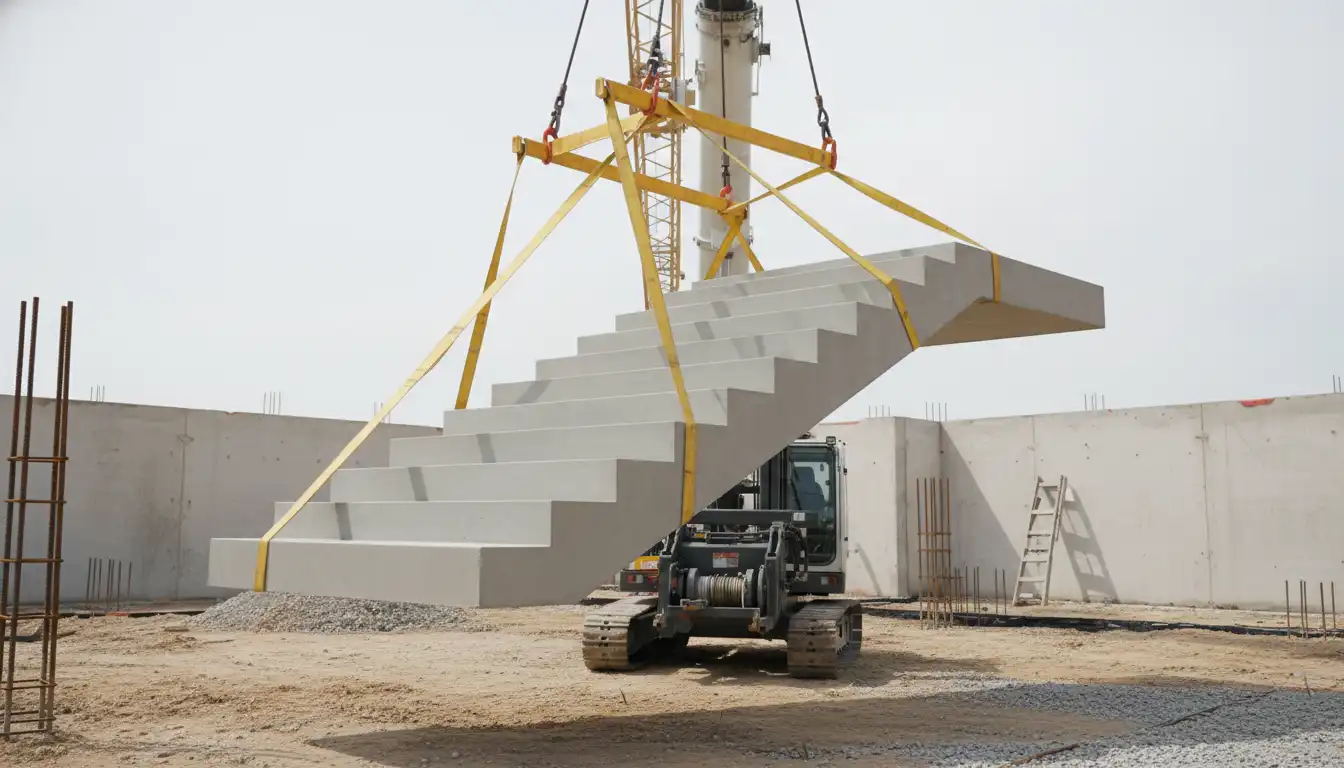
Step 3: Transporting the Steps
You have two primary methods for moving the steps to their new location. If the path is smooth, paved, and relatively short, a heavy-duty dolly is an excellent choice. Carefully tip the steps back onto the dolly, ensuring the weight is balanced over the wheels. Secure the unit to the dolly with ratchet straps before attempting to roll it.
If you need to cross a lawn, gravel, or uneven terrain, the roller method is superior. After lifting the steps onto wooden blocks, slide three or four sections of 4-inch diameter PVC pipe underneath. Push the steps forward, and as a pipe comes out the back, move it to the front to create a continuous rolling path. This ancient technique is surprisingly effective for moving incredibly heavy objects.
Step 4: Setting the Steps in the New Location
Once you arrive at the new, prepared base, the process is reversed. Carefully roll or position the steps over the pad. Use your pry bars and blocks to slowly and carefully lower them into place, removing your equipment as you go. Use a 4-foot level constantly during this stage, checking for level both side-to-side and front-to-back. Make tiny adjustments by prying up an edge and adding or removing sand or fine gravel until the steps are perfectly level and stable.
Step 5: Backfilling and Finishing
With the steps perfectly positioned, backfill the excavated area around the base with soil, tamping it down firmly. This helps lock the steps in place and prevents them from shifting over time. If your steps are against the house, apply a bead of high-quality exterior caulk to the seam to prevent water from getting behind them. Now is also a great time to clean the steps and consider applying a concrete sealer to protect them from the elements.
What If My Steps Are Too Big to Move?
There are situations where the size and weight of the steps make a DIY move impractical or unsafe. If you’re dealing with a very large unit, or if the path is complex, it may be time to call in professionals or consider alternatives. Sometimes, the most practical solution is demolition and replacement. This is especially true for poured-in-place steps that cannot be moved. If you need to break up the old unit, you can learn more about how to remove excess concrete FAST (without damaging surfaces).
In cases where the steps have only settled slightly or have minor damage, a full move might not be necessary. You may be able to perform a repair. For insights into concrete repair techniques, our guide on garage door concrete threshold repair offers valuable information that can be applied to other concrete elements.
Final Thoughts: A Challenging but Rewarding Project
Moving concrete steps is undoubtedly one of the more challenging home improvement projects you can undertake. It demands respect for the weight involved and a methodical approach to safety and execution. However, by planning carefully and using the right techniques and equipment, you can successfully relocate your steps, improving your home’s functionality and curb appeal.
Remember that careful preparation of the new base is the secret to a long-lasting, stable result. If you’re creating a new concrete pad, understanding how to work with fresh concrete is key. Our article on pouring self leveling concrete in sections can provide helpful tips. By following this guide, you can tackle this monumental task with confidence and achieve a professional-quality result.
