
How to Cover Transam Windows in a Bedroom to Maximize Sleep
Transom windows add a touch of architectural elegance to a bedroom, allowing natural light to spill in. However, this same feature can become a significant problem when it’s time to sleep. Unwanted light from streetlamps, passing cars, or early morning sun can disrupt your circadian rhythm and ruin a good night’s rest.
The unique size, shape, and placement of transom windows make them challenging to cover with standard solutions. They are often too high to reach easily and can be an awkward size for off-the-shelf blinds or curtains. This leaves many homeowners struggling to find a balance between aesthetics and functionality.
You'll Learn About
The Core Problem: Light and Privacy in the Bedroom
The primary function of a bedroom is to be a sanctuary for rest. Any element that interferes with this purpose needs a practical solution. Transom windows, especially in urban or suburban settings, can be a major source of light pollution at night.
Beyond light control, privacy is another key concern. Although their high placement offers some seclusion, transom windows can still allow views into your room from certain angles, particularly in multi-story homes or apartments. Finding a covering that addresses both light and privacy without compromising on style is the ultimate goal.
Understanding the Impact of Light on Sleep
Exposure to light during sleeping hours can suppress the production of melatonin, the hormone that regulates sleep-wake cycles. Even small amounts of light can interfere with sleep quality, leading to daytime fatigue and other health issues. For this reason, creating a completely dark environment is crucial for restorative sleep.
Many people are particularly sensitive to ambient light. The flicker from a television in another room or headlights from the street can be just enough to prevent deep sleep. This is why a simple, light-filtering solution may not be enough for a bedroom transom window.
Effective Solutions for Covering Your Bedroom Transom Window
Fortunately, there are numerous effective and stylish ways to cover a transom window in a bedroom. The best option for you will depend on your specific needs regarding light control, privacy, budget, and aesthetic preferences. Let’s explore some of the most popular and practical solutions.
Custom Shades for a Perfect Fit
Because transom windows are often non-standard sizes, custom-made shades are one of the most effective solutions. They are tailored to the exact dimensions of your window, ensuring a perfect fit that eliminates gaps where light can seep through. This precise fit is crucial for achieving a true blackout effect.
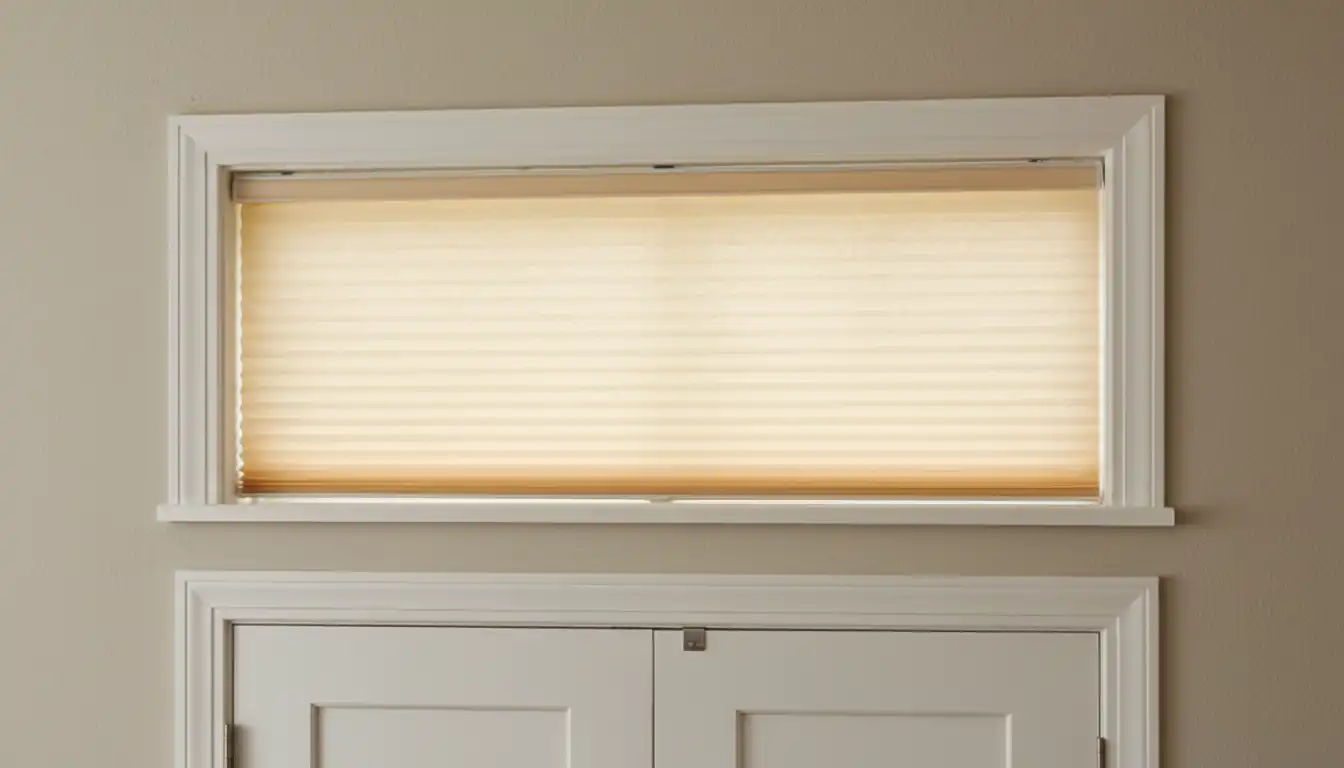
Cellular shades, also known as honeycomb shades, are an excellent choice for bedrooms. Their unique construction traps air, providing an extra layer of insulation against both noise and temperature changes. When ordered in a blackout material, they can block nearly all incoming light.
Roman shades offer a softer, more decorative look. Available in a vast array of fabrics, including room-darkening and blackout options, they can be customized to match your existing decor perfectly. When raised, they stack in neat, elegant folds.
The Timeless Appeal of Shutters
Interior shutters, often called plantation shutters, are a durable and timeless option. They offer excellent light control, allowing you to tilt the louvers to adjust the amount of light entering the room or close them completely for near-total darkness. Their solid construction also provides an additional layer of security and noise reduction.
Shutters can be custom-made to fit any window shape, including the arched or curved transoms that are sometimes harder to cover. While they are a more significant investment upfront, their longevity and classic appeal can add value to your home.
Strategic Use of Drapes and Curtains
While fitting a separate curtain for a small transom window can look awkward, there is a way to use drapes effectively. The key is to mount a single curtain rod well above the transom window. This approach treats the transom and the main window (or door) below it as one large unit.
Using floor-to-ceiling blackout curtains creates a dramatic, cohesive look that can make the room feel taller and more elegant. When closed, they will completely cover the transom, blocking light and ensuring privacy. This is a versatile solution that works well in a variety of design styles.
Some homeowners may be tempted to install a rod between the transom and the window below. This is generally not recommended as it visually divides the wall and can make the space feel smaller and more cluttered.
Innovative and DIY Solutions
If you’re looking for a more budget-friendly or creative approach, there are several other options to consider. These solutions can be particularly useful for renters or those who prefer not to install permanent fixtures.
The Simplicity of Window Film
Window film is an affordable and effective way to block light and add privacy. Blackout window film is designed to block 100% of light, making it an ideal choice for bedrooms. It’s a simple peel-and-stick application that can be cut to fit any window size perfectly.
Frosted or decorative films are another option. While they don’t block all light, they obscure the view, providing privacy while still allowing diffused, natural light to enter during the day. This can be a good compromise if you want to maintain a bright atmosphere while preventing outsiders from seeing in.
One of the most significant advantages of modern window films is their non-adhesive static cling technology. This makes them easy to apply, reposition, and remove without leaving any sticky residue behind, a perfect choice for temporary situations.
Embracing Motorization for Convenience
Given their hard-to-reach location, operating window treatments on transom windows can be a hassle. This is where motorization comes in as a game-changer. Motorized shades and blinds can be operated with the touch of a button on a remote control or even a smartphone app.
This technology is available for various types of window coverings, including cellular shades, roller shades, and blinds. While it adds to the cost, the convenience of being able to easily open and close your transom window covering can be well worth the investment, especially in a bedroom where you’ll be adjusting it daily.
Comparing Your Transom Window Covering Options
Choosing the right covering involves weighing the pros and cons of each option against your personal needs. The following table provides a comparison to help you make an informed decision.
| Covering Type | Light Control | Privacy Level | Aesthetic Appeal | Average Cost (per window) |
|---|---|---|---|---|
| Blackout Cellular Shades | Excellent | Excellent | Modern, clean | $200 – $1,100 |
| Plantation Shutters | Excellent | Excellent | Classic, architectural | $580 – $1,380 |
| Floor-to-Ceiling Drapes | Excellent | Excellent | Elegant, versatile | $150 – $500+ |
| Roman Shades | Good to Excellent | Excellent | Soft, decorative | $350 – $1,150 |
| Blackout Window Film | Excellent | Excellent | Minimalist | $80 – $125 |
| Frosted Window Film | Fair (light diffusing) | Excellent | Modern, decorative | $80 – $125 |
The Case for Custom vs. Ready-Made
While ready-made solutions are tempting due to their lower cost and immediate availability, they often fall short for specialty windows like transoms. Pre-made coverings come in standard sizes that are unlikely to fit your transom window perfectly, leading to gaps that compromise light control and privacy.
Investing in a custom window treatment guarantees a perfect fit. This not only enhances the functionality of the covering but also provides a more polished, professional look. Custom options also offer a much wider selection of materials, colors, and operating mechanisms, allowing you to create a solution that truly matches your home’s style and your personal needs.
Final Considerations for a Peaceful Bedroom
When making your final decision, consider the long-term functionality. A solution that is difficult to operate is one you are less likely to use. For hard-to-reach transom windows, the convenience of motorization can make a significant difference in your daily routine.
Also, think about the overall design cohesion of your room. The window covering should complement your existing decor. Whether you choose the clean lines of a cellular shade, the classic elegance of shutters, or the softness of Roman shades, the right treatment will enhance both the beauty and the function of your bedroom, turning it into the peaceful sanctuary it’s meant to be. If you’re dealing with other challenging window shapes, you might wonder, are half moon windows outdated? Exploring solutions for different window types can provide broader inspiration for your home.
