
Trees Falling on Houses: Your Complete Survival Guide
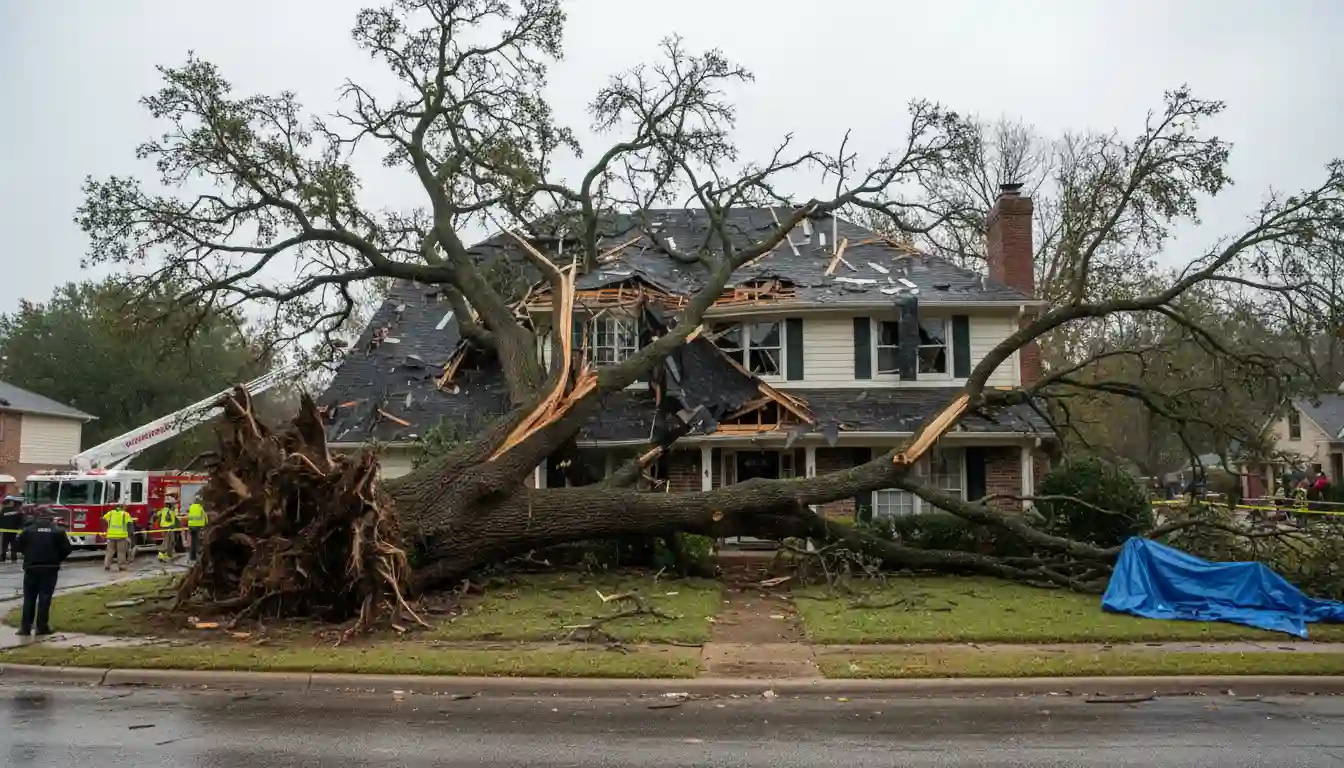
The gentle rustle of leaves in a mature tree can be a soothing soundtrack to home life. But for many homeowners, that sound is mixed with a quiet hum of anxiety, especially when the wind picks up and branches begin to sway ominously. This fear isn’t unfounded; a falling tree can cause catastrophic damage in an instant.
The question looms large: just how often do trees fall on houses, and what can you do to prevent your home from becoming a statistic? This guide provides a comprehensive plan to help you assess your risk, take preventative action, and know exactly what to do if the worst should happen. Understanding the dangers is the first step toward creating a safer environment for your family and your property.
You'll Learn About
The Unsettling Truth: How Often Do Trees Really Fall on Houses?
While a tree crashing through a roof isn’t a daily event for most, it’s a far more common and costly problem than many realize. Across the country, falling trees and branches cause billions of dollars in property damage each year. The frequency of these incidents is heavily influenced by geography, climate, and the age and health of the local tree population.
Areas prone to hurricanes, tornadoes, ice storms, and heavy snowfall see a significant spike in tree-related home damage. However, even seemingly calm weather can bring a tree down if it’s compromised. The reality is that any home with large, mature trees nearby carries a degree of risk that must be managed proactively.
Why Do Healthy-Looking Trees Suddenly Fail? The Hidden Dangers
One of the most frightening aspects of a tree falling is that it often seems to happen without warning. A tree that appeared perfectly healthy one day can be a destructive force the next. The truth is, the warning signs are often there, but they are subtle and hidden from the untrained eye, both above and below the ground.
The Anatomy of a Tree Fall: Beyond the Obvious
The stability of a tree is a complex balance of forces. A tree’s failure often begins silently, deep within its trunk or root system. Hidden decay or disease can hollow out a trunk from the inside, leaving a deceptively solid exterior. Root rot, often caused by poor soil drainage or fungal infections, can severely weaken the tree’s anchor to the earth, making it vulnerable to toppling.
Soil composition is another critical, yet frequently overlooked, factor. Heavy clay soil can become overly saturated during periods of intense rain, losing its ability to hold roots firmly. Conversely, sandy soil may not provide enough stability for large, heavy trees, especially when subjected to the powerful leverage of high winds pushing against a full canopy of leaves.
Environmental Triggers: When Nature Turns Against Your Home
Severe weather is the most common catalyst for tree failure. High winds exert immense pressure on the trunk and branches, while the weight of ice or heavy, wet snow can exceed a limb’s breaking point. These “acts of God” are often unavoidable, but a healthy, well-maintained tree is far more likely to withstand them.
Long-term weather patterns also play a significant role. A prolonged drought can weaken a tree and kill off vital roots, making it brittle. When that drought is followed by a season of heavy, saturating rain, the already-compromised tree is suddenly in unstable soil, creating a perfect storm for failure.
Your Proactive Defense Plan: A Homeowner’s Guide to Tree Safety
You are the first line of defense in protecting your property from tree-related damage. By adopting a proactive mindset and learning what to look for, you can significantly reduce your risk. Regular inspection and strategic maintenance are the cornerstones of responsible tree ownership.
The Annual Tree Wellness Check: What to Look For
At least once a year, and always after a major storm, you should perform a thorough visual inspection of all trees on your property that could potentially hit your house. This simple walkthrough can help you spot developing problems before they become emergencies. For large or questionable trees, hiring a certified arborist for a professional risk assessment is a wise investment.
An arborist brings a trained eye to identify subtle signs of stress, disease, or structural weakness that a homeowner might miss. They can assess the tree’s overall health, structure, and proximity to targets like your home, providing you with a clear action plan. This expert evaluation is the single most effective step you can take to prevent a disaster.
Strategic Pruning and Maintenance: It’s Not Just About Looks
Proper pruning is about more than just aesthetics; it’s a critical safety measure. Removing dead, dying, or broken branches eliminates the most immediate threats. Strategic pruning, such as crown thinning, can reduce the “sail effect” of a dense canopy, allowing wind to pass through more easily rather than pushing against the tree as a solid wall.
However, improper pruning can be more dangerous than no pruning at all. “Topping” a tree—cutting off the entire top—is a harmful practice that encourages weak, unstable new growth and can introduce decay into the main trunk. For any pruning that requires a ladder or involves large limbs, it is essential to hire a professional, insured tree service.
| Area of Inspection | Warning Sign | What It Could Mean |
|---|---|---|
| The Base & Roots | Mushrooms or fungi growing at the base | Significant root rot or internal decay |
| Cracked or heaving soil around the trunk | The tree is beginning to uproot | |
| The Trunk | Deep cracks, splits, or large hollow cavities | Compromised structural integrity |
| Peeling bark or large patches of missing bark | A dead or dying section of the tree | |
| A sudden or significant lean | Root failure or unstable soil | |
| The Canopy & Branches | Large dead or hanging branches (“widow-makers”) | Immediate falling hazard |
| Branches with V-shaped, weak attachments | Prone to splitting apart under stress | |
| Leaf loss or browning from the inside out | Potential root system or circulatory problems |
The Red Flags: Telltale Signs an Emergency Tree Removal is Needed
Some situations require more than just routine maintenance; they signal immediate danger. If you notice a tree has suddenly developed a significant lean, especially toward your home, it’s a critical warning sign. Similarly, the appearance of deep, fresh cracks in the trunk or major limbs, or the sight of the ground heaving and cracking around the base, means the tree’s root system has failed.
In these scenarios, time is of the essence. Cordon off the area to keep people away and contact a 24/7 emergency tree removal service immediately. Do not wait to see what happens, as a complete collapse could be imminent.
When the Worst Happens: A Step-by-Step Emergency Protocol
Even with the best preventative care, accidents can happen. If a tree or a large branch falls on your house, your immediate actions can make a huge difference in ensuring safety and streamlining the recovery process. Stay calm and follow a clear protocol.
Immediate Steps for Safety
Your family’s safety is the absolute first priority. If the impact was severe or if you have any doubt about the structural integrity of your home, evacuate everyone immediately. If there are downed power lines involved, do not go near them and call 911 right away.
If it is safe to do so, turn off the main utilities to your home to prevent the risk of fire or water damage. Once everyone is safe, you can begin the process of dealing with the aftermath.
Navigating the Insurance and Repair Maze
Your next call should be to your homeowner’s insurance company to start the claims process. Document the damage extensively with photos and videos from every possible angle, both inside and outside the house. This evidence will be crucial for your claim.
The cleanup and repair from a tree fall can be extensive. The impact can cause significant structural damage, and the process of fixing it can be messy. It’s not unlike dealing with the dust from a roof replacement, which can permeate every corner of your home if not properly contained. Ensure your contractor has a plan to manage debris and protect the rest of your home during repairs.
Beyond the Obvious: Unseen Risks Lurking Below Ground
While the dramatic spectacle of a falling tree captures our attention, an equally potent threat can be slowly and silently unfolding underground. The root systems of large trees, while essential for their stability, can become destructive forces against your home’s foundation, plumbing, and paved surfaces.
Roots are naturally drawn to sources of moisture and can aggressively invade even the smallest cracks in pipes or foundation walls. Over years, the slow, immense pressure of growing roots can crack concrete, heave sidewalks, and disrupt plumbing lines. This type of damage is insidious, often going unnoticed until significant problems arise.
Managing your property involves being aware of these less obvious challenges. For instance, a homeowner dealing with a steep driveway and car scrapes is focused on a surface-level problem, but beneath that driveway, invasive tree roots could be creating cracks and instability, compounding the issue over time. A holistic approach to property maintenance means considering potential threats from all angles, from the top of the canopy to the tips of the roots.
Choosing the Right Trees: Future-Proofing Your Landscape
The best way to prevent future problems is to make smart choices from the beginning. When planting new trees, consider their mature size, root system characteristics, and suitability for your climate. Planting a fast-growing tree with an aggressive, shallow root system too close to your house is inviting future trouble.
Species like Crabapple, Dogwood, and Japanese Maple are often recommended for planting closer to homes due to their non-invasive root systems and manageable size. In contrast, trees like Silver Maples, Willows, and Poplars are known for having invasive roots and should be planted well away from any structures. Making an informed decision is as important as any other major home improvement project; it pays to do your research, just as you would read detailed Lowe’s countertop installation reviews before remodeling your kitchen.
Cultivating a Safe and Serene Home Environment
Living amongst trees is one of the great joys of homeownership, connecting us with nature and enhancing our properties. That beauty, however, comes with a responsibility. By understanding the risks and embracing a strategy of proactive assessment and regular maintenance, you can transform anxiety into confidence.
Treat the trees on your property as the valuable, living assets they are. Partner with a certified arborist, learn the warning signs of distress, and take decisive action when needed. This approach will not only protect your most significant investment—your home—but will also ensure you can safely enjoy the shade and serenity of your trees for many years to come.
