Homemade Bulb Fertilizer: Unlock Explosive Blooms With These 8+ DIY Secrets
The quiet anticipation of spring is a special feeling for any gardener. You’ve carefully selected and planted your tulip, daffodil, and hyacinth bulbs, dreaming of the vibrant colors that will soon erupt. But when spring arrives, the show is… underwhelming. The blooms are small, the stems are weak, and the color seems faded. This disappointment is a common problem for even the most enthusiastic home gardeners.
Many turn to store-bought fertilizers, hoping for a quick fix. However, the aisles are filled with confusing options, chemical-heavy formulas, and high price tags. The risk of using the wrong product and burning your delicate bulbs is a genuine concern. What if the secret to breathtaking, explosive blooms wasn’t in a plastic bottle, but already waiting in your own kitchen and yard?
Crafting your own homemade bulb fertilizer is the sustainable, cost-effective, and surprisingly simple solution. It allows you to provide the precise nutrients your bulbs crave, without the harsh chemicals, leading to a garden that’s not only beautiful but also healthier from the ground up.
You'll Learn About
Why Your Bulbs Are Starving for the Right Nutrients
Think of a flower bulb as a perfectly packed lunchbox for a plant. It contains all the energy the plant needs to survive the winter and produce its first leaves and flowers in the spring. However, to create that lunchbox for the *next* year, the plant needs to replenish its energy stores after blooming. This is where proper nutrition becomes critical.
Flowering bulbs have specific dietary needs, primarily centered around three macronutrients, known as N-P-K. Phosphorus (P) is the undisputed star for bulbs, as it is essential for vigorous root development and, most importantly, big, beautiful flower production. Potassium (K) is the silent workhorse, boosting overall plant health, strengthening stems, and improving disease resistance. Noticeably, bulbs require less Nitrogen (N); too much nitrogen encourages lush, green leaves at the direct expense of the blooms you’re working so hard to achieve.
Beyond these three, bulbs also benefit from secondary nutrients like calcium and magnesium, which play vital roles in cell structure and photosynthesis. A well-formulated homemade fertilizer can deliver all of these essential elements in a slow-release, natural form that the plant can easily absorb.
The Problem with “Quick-Fix” Commercial Fertilizers
The allure of a fast-acting, synthetic fertilizer is understandable, but it often comes with hidden costs. These products are typically high in soluble salts that can easily damage or “burn” the delicate root systems of your bulbs if not applied perfectly. This chemical burn can stress the plant, making it more susceptible to pests and diseases.
Furthermore, the high-solubility of these chemicals means they are quickly washed away by rain or irrigation. This chemical runoff can contaminate local waterways, contributing to environmental pollution. By creating your own fertilizer, you take control of the ingredients, ensuring you are nurturing your garden and the environment simultaneously.
Unlocking Your Pantry: 8+ Core Ingredients for Your DIY Bulb Fertilizer
The foundation of a powerful homemade fertilizer lies in a few simple, often-overlooked ingredients. Each provides a unique nutritional profile that, when combined, creates a perfect meal for your flowering bulbs. These are the building blocks for your garden’s success.
1. Bone Meal: The Phosphorus Powerhouse
This is perhaps the most crucial ingredient for any bulb fertilizer. Bone meal is exactly what it sounds like—finely ground animal bones. It is a phenomenal organic source of phosphorus and calcium, releasing these nutrients slowly into the soil exactly when the bulb’s roots need them to develop and set blooms.
2. Wood Ash: The Potassium Provider
Ash from your fireplace or fire pit (from untreated wood only) is an excellent source of potassium and lime (calcium carbonate). It is crucial to use wood ash sparingly, as it is alkaline and can raise the soil’s pH. A light dusting is all that is needed to provide a significant potassium boost.
3. Eggshells: The Calcium Champion
Don’t throw away your eggshells! Once rinsed and thoroughly dried, they can be crushed into a fine powder. This powder provides a fantastic source of calcium carbonate, which strengthens the plant’s cell walls and contributes to overall vigor. The finer you can grind them, the faster they will break down and become available to the plants.
4. Banana Peels: Nature’s Potassium Packet
Banana peels are famously rich in potassium, a key nutrient for flower quality and general plant health. To use them, you can chop them up and bury them in the soil, or for a more potent fertilizer, dry the peels completely (in an oven on low heat or a dehydrator) and then grind them into a powder.
5. Used Coffee Grounds: The Gentle Energizer
Used coffee grounds offer a mild dose of nitrogen and improve soil structure and drainage. While bulbs don’t need much nitrogen, the small amount in spent grounds is delivered slowly. It’s best to add them to your compost pile first or use them in moderation to avoid making the soil too acidic.
6. Epsom Salts: The Magnesium Miracle
Epsom salt isn’t actually salt; it’s a naturally occurring mineral compound of magnesium and sulfate. Magnesium is a core component of chlorophyll, the molecule responsible for photosynthesis. A small amount can help your bulbs process nutrients more efficiently, leading to healthier foliage and more energy for bloom production.
7. Kelp Meal: The Micronutrient Master
This is a secret weapon for serious gardeners. Dried and ground seaweed, or kelp meal, is packed with over 60 trace minerals and vitamins. It acts like a multivitamin for your soil, filling in the micronutrient gaps that other ingredients may not cover, leading to exceptionally robust plants.
8. Mature Compost: The Ultimate Soil Conditioner
Well-rotted compost is the black gold of any garden. It provides a balanced, slow-release source of all major and minor nutrients. More importantly, it improves soil structure, aeration, and water retention, creating the perfect living environment for your bulbs to thrive. It’s the ideal base for any fertilizer blend.
Step-by-Step Recipes for Powerful Homemade Bulb Fertilizers
Now that you understand the key ingredients, you can start mixing. These recipes are designed to be simple, effective, and customizable to what you have on hand. Always mix your ingredients thoroughly in a bucket or tub before application.
Here, in a convenient table, are some of the most effective ingredients and their roles in your DIY fertilizer mix.
| Ingredient | Primary Nutrient(s) | Key Benefit for Bulbs | Preparation Notes |
|---|---|---|---|
| Bone Meal | Phosphorus, Calcium | Promotes massive blooms and strong roots. | Use as directed; readily available at garden centers. |
| Wood Ash | Potassium, Calcium | Enhances flower quality and disease resistance. | Use only from untreated wood. Apply sparingly as it is alkaline. |
| Eggshells | Calcium Carbonate | Strengthens plant cell walls for sturdier stems. | Must be cleaned, dried, and ground to a fine powder. |
| Banana Peels | Potassium | Improves overall plant vigor and health. | Best when dried completely and ground into a powder. |
| Kelp Meal | Trace Minerals, Potassium | Acts as a multivitamin for the soil. | A little goes a long way to boost nutrient density. |
| Mature Compost | Balanced N-P-K | The perfect all-in-one soil conditioner and nutrient source. | Ensure it’s fully decomposed and crumbly. |
Recipe 1: The Classic Bloom Booster Mix
This recipe is extremely high in phosphorus and potassium, making it the perfect food to apply when you first plant your bulbs in the fall. It gives them exactly what they need to establish a powerful root system for spectacular spring flowers.
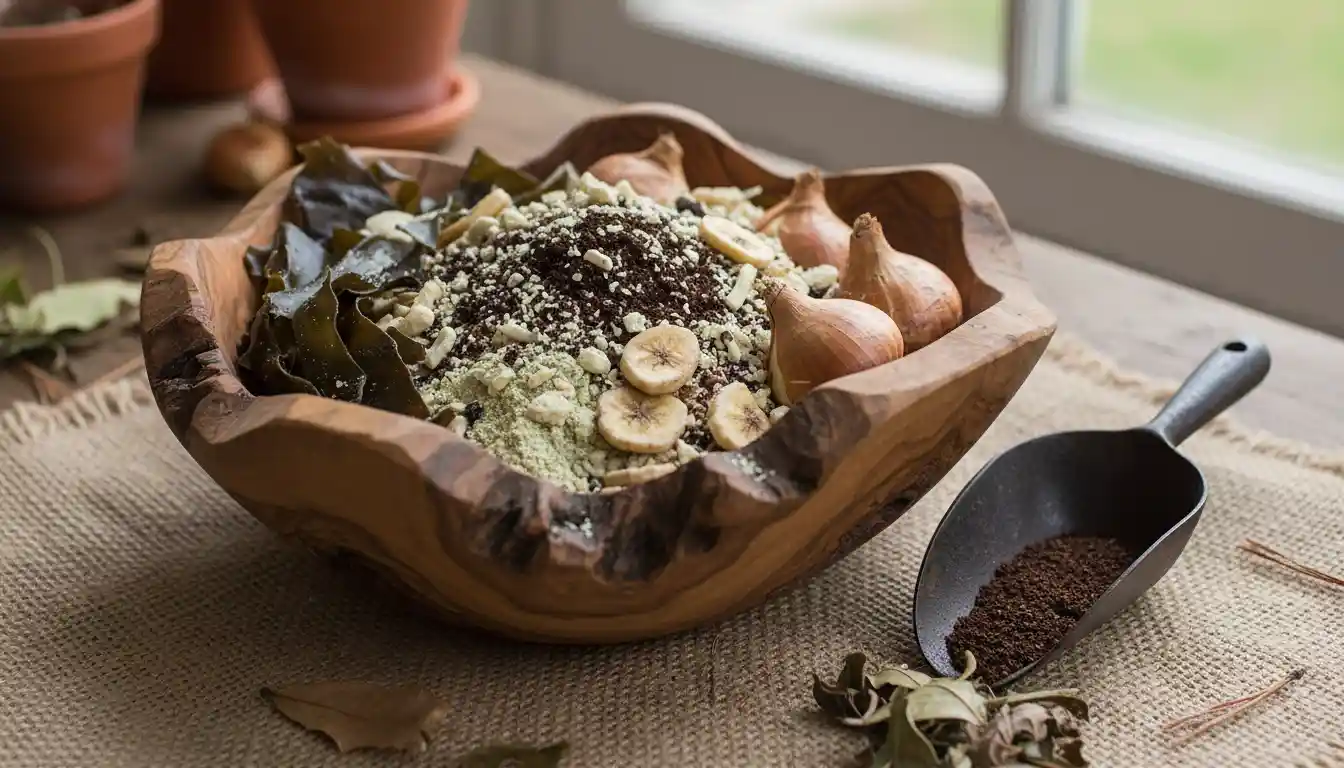
To create this mix, combine: 4 parts Bone Meal + 2 parts Wood Ash + 1 part Kelp Meal. For example, use 4 cups of bone meal, 2 cups of wood ash, and 1 cup of kelp meal. Mix thoroughly.
Recipe 2: The All-Purpose Kitchen Scrap Blend
This is a wonderful, balanced fertilizer made entirely from kitchen waste. It’s an excellent choice for general feeding in the spring as the first shoots emerge.
For this blend, combine: 2 parts ground dried Banana Peels + 2 parts ground Eggshells + 1 part used Coffee Grounds. This mix provides a great balance of potassium, calcium, and a gentle touch of nitrogen.
Recipe 3: The Compost-Based Superfood
If you have high-quality, mature compost, this is the best option for improving your soil while providing sustained nutrition. It’s a fantastic all-around feed.
Simply mix: 4 parts Mature Compost + 1 part Bone Meal. This simple yet powerful combination uses the compost as a base to deliver nutrients and improve soil health, with the bone meal providing that essential phosphorus punch.
How and When to Apply Your Fertilizer for Maximum Impact
Timing your fertilizer application is just as important as the fertilizer itself. Bulbs have two critical feeding windows where the right nutrients will have the most significant effect on their performance. Applying your homemade mixture at these key moments will guarantee the best results.
1. At Planting Time in the Fall
This is the most important application. When you dig the hole to plant your bulb, mix about one tablespoon of your chosen dry fertilizer (like the Bloom Booster Mix) into the soil at the bottom of the hole. Place the bulb on top of the amended soil and then backfill. This puts the phosphorus right where the new roots will grow, encouraging a massive and healthy root system to develop throughout the winter.
2. In Early Spring as Shoots Emerge
When you see the first green tips pushing through the soil, it’s time for their second meal. Gently sprinkle your fertilizer on the soil surface around the plant, a method known as “top dressing.” Use about a tablespoon per plant or a light dusting over the entire bed. Carefully work it into the top inch of soil with your fingers or a small rake, being mindful not to damage the emerging shoots. Water the area well afterward to help the nutrients start breaking down and moving into the root zone.
3. A Little-Known Secret: Post-Bloom Feeding
Many gardeners stop thinking about their bulbs once the flowers fade. This is a missed opportunity. After blooming, the plant’s entire focus shifts to absorbing energy through its leaves to recharge the bulb for next year’s show. Do not cut the foliage back yet! This is the perfect time for a final feeding. Apply a balanced fertilizer like the Compost-Based Superfood to give the bulb the energy it needs to produce an even bigger and better flower next season.
Common Mistakes to Avoid With DIY Fertilizers
Creating your own fertilizer is liberating, but a few common missteps can hinder your success. Avoiding these simple errors will ensure your bulbs get all the benefits of your hard work.
A frequent error is applying too much. With fertilizers, especially potent sources like bone meal or wood ash, more is not better. Over-application can damage roots and drastically alter soil pH. Stick to the recommended amounts—about a tablespoon per bulb is a safe and effective rule.
Another issue is improper ingredient preparation. For ingredients like eggshells and banana peels to be effective, they must be ground into a fine powder. Large pieces will take years to break down and will not provide the immediate nutritional benefit your bulbs need. Finally, always remember to water your fertilizer in. Water is the vehicle that carries the nutrients from the soil surface down to the roots where they can be absorbed.
A Note on Soil Testing
For the truly dedicated gardener, a simple home soil test kit can provide invaluable information. It will tell you the pH of your soil and highlight any major nutrient deficiencies. Knowing your starting point allows you to customize your homemade fertilizer blend for precisely what your garden is lacking. Just as a soil test is a diagnostic tool for your garden, homeowners often rely on modern tools for home improvement. Many wonder if a stud finder app really work when tackling indoor projects.
Understanding the composition of your home’s environment, from the soil up, is a key part of responsible ownership. This extends to understanding what lies beneath your property. For instance, have you ever considered, can you drive over a well? Knowing the location of underground structures is crucial for maintaining your property safely.
Conclusion: Grow with Confidence and Pride
Moving away from commercial fertilizers and embracing a homemade approach does more than just save you money. It connects you more deeply to your garden, transforming kitchen scraps and natural materials into the building blocks of a stunning spring display. You gain complete control over what goes into your soil, fostering a healthier ecosystem for your plants and the environment.
By understanding the unique nutritional needs of your bulbs and feeding them with a custom-blended, organic fertilizer, you are setting the stage for success. The result is not just healthier plants, but a profound sense of pride and accomplishment as you witness the most vibrant, robust, and explosive blooms your garden has ever produced.