
High Curtains Low Window: The Designer Trick to Fix Squat Rooms
There is a common design challenge that can make even the most beautiful rooms feel awkward and unbalanced: the low window. This feature can visually shrink a space, making ceilings feel lower and disrupting the room’s natural flow. Homeowners often struggle with how to dress these windows, inadvertently emphasizing the exact feature they wish to disguise.
The problem lies in treating the window frame as the definitive boundary for your curtains. By hanging a rod just above the window, you create a heavy horizontal line that draws the eye downward, making the room feel squat and dated. This is the #1 mistake that keeps a room from reaching its full potential, but the solution is surprisingly simple and transformative.
You'll Learn About
The Vertical Illusion: Your Secret Weapon Against Low Ceilings
The key to correcting a low window is to ignore its placement and focus on drawing the eye upward. By mounting curtains high above the window frame, you create a powerful vertical line that gives the illusion of height. This single adjustment makes the window appear larger, the ceilings taller, and the entire room more elegant and spacious.
This technique works by tricking the brain. The long, uninterrupted line of the curtain fabric from near the ceiling down to the floor becomes the dominant visual element, overriding the window’s actual placement. The result is a room that feels more open, airy, and professionally designed.
Rule #1: Master the Art of Curtain Rod Height
Forget the old advice of hanging the rod just a few inches above the window. To truly transform your space, you need to be bold. Aim to place your curtain rod approximately halfway between the top of the window frame and the ceiling. In rooms with standard 8-foot ceilings, this often means mounting the rod 4 to 6 inches above the frame.
For an even more dramatic effect, especially if you’re looking for solutions for 7ft ceilings feeling low, you can mount the rod just a few inches below the ceiling or crown molding. This maximizes the vertical space and delivers the most impactful illusion of height.
Rule #2: Go Wide to Maximize Light and Space
Height is only half the battle. To complete the illusion, the curtain rod must also be wider than the window. Extend the rod 6 to 12 inches beyond the window frame on each side. This allows the curtain panels to rest on the wall when open, rather than covering the glass.
This technique, known as “stack back,” has two major benefits. First, it makes the window itself appear much wider. Second, it allows the maximum amount of natural light to enter the room, making the entire space feel brighter and more inviting.
Choosing Curtains and Hardware That Elevate Your Design
The success of this technique depends on selecting the right materials. The wrong curtains or hardware can undermine the entire effect, so careful consideration is key.
The Cardinal Sin: Curtains That Are Too Short
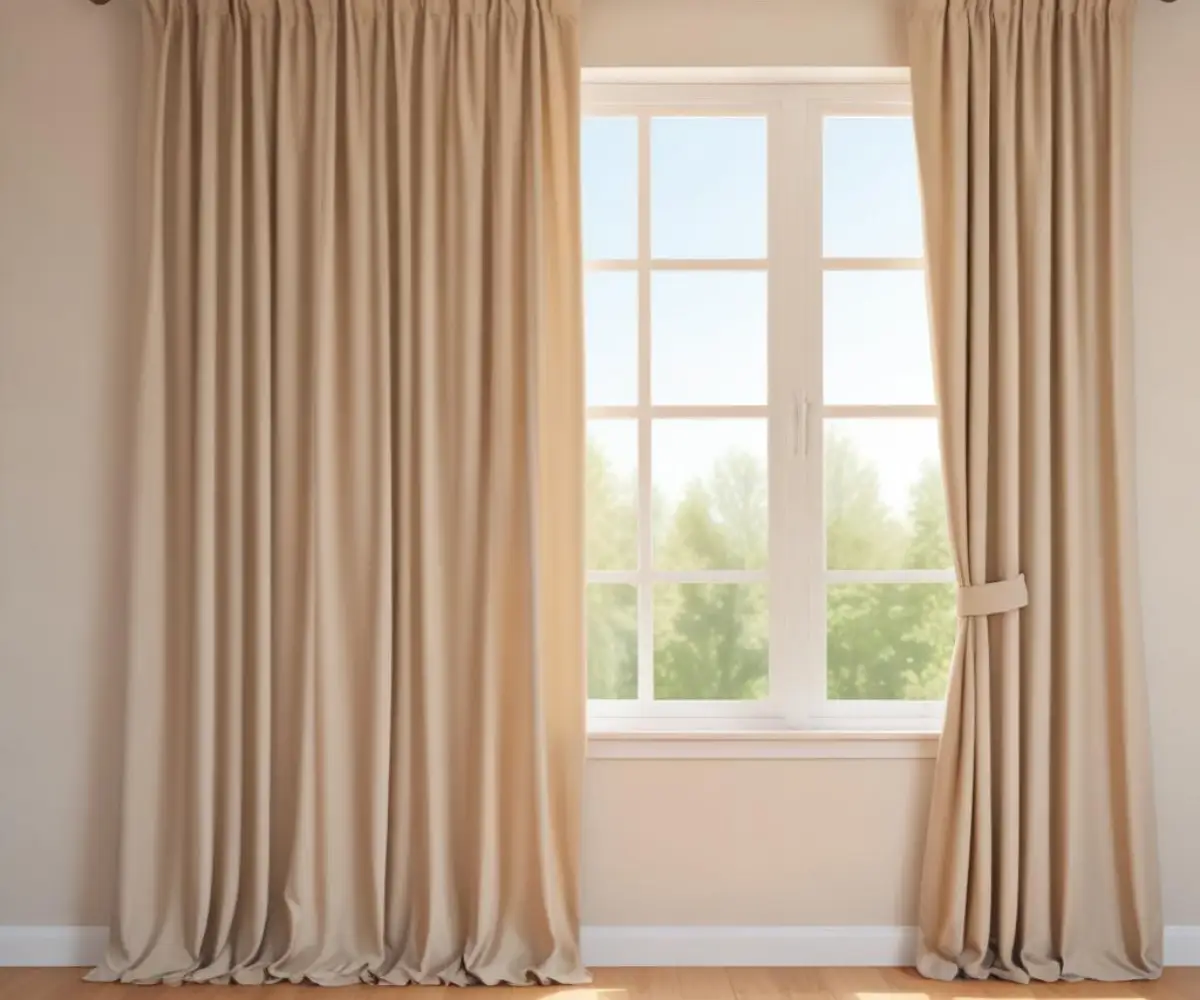
Once you’ve mounted your rod high, you must use curtains that are long enough to complete the vertical line. Your curtains should “kiss” the floor, hanging about a half-inch above it. This creates a clean, tailored look that feels intentional and polished.
Avoid curtains that hang too high, creating an awkward gap, or “puddle” excessively on the floor, which can look messy and collect dust. Measure from the bottom of the curtain rings to the floor to determine the correct panel length before you buy.
Fabric, Color, and Pattern Make a Difference
The right fabric will enhance the feeling of height and airiness. Choose light to medium-weight fabrics like linen, cotton, or sheer voiles that drape beautifully and don’t feel heavy. Lighter colors, such as whites, creams, and soft grays, reflect light and contribute to a more open atmosphere.
If you opt for a pattern, consider vertical stripes. Just as in fashion, vertical lines draw the eye upward and can further enhance the illusion of height. If you’re pairing curtains with other treatments, this is an important part of achieving a flawless look, much like when using curtains with wood blinds.
Hardware is the Finishing Touch
Don’t treat your hardware as an afterthought. Select a curtain rod that is sturdy enough to support your fabric without bowing. The finish of the rod and finials should complement the other metallic or wood tones in your room for a cohesive design.
| The “Do” List | The “Don’t” List |
|---|---|
| Do hang the rod 4-6 inches (or more) above the window frame. | Don’t mount the rod directly on top of the window frame. |
| Do extend the rod 6-12 inches past the frame on each side. | Don’t use a rod that is the same width as the window. |
| Do choose curtains that hang to the floor. | Don’t buy curtains that are too short and float above the floor. |
| Do select light to medium-weight fabrics in lighter colors. | Don’t use heavy, bulky fabrics that weigh the room down. |
| Do ensure your curtain panels are wide enough for proper fullness. | Don’t use narrow panels that look stretched and skimpy when closed. |
The Unspoken Benefit: Balancing Visual Weight
Beyond simply making a room look taller, hanging curtains high on a wall with a low window masterfully redistributes the room’s visual weight. A low window creates a dense, heavy line near the bottom of the wall, which can make the entire space feel grounded in an unflattering way. This is a subtle issue that many people feel but cannot quite identify.
By creating a strong vertical element with floor-to-ceiling curtains, you counteract this effect. The empty wall space between the top of the window and the high-mounted rod is not a flaw; it becomes a crucial part of the composition. This “negative space” acts as a visual pause, allowing the wall to breathe and contributing to the overall sense of openness and balance.
Frequently Asked Questions
Why should I hang curtains high above a low window?
Hanging curtains high above a low window creates a vertical line that draws the eye upward, giving the illusion of taller ceilings and a more spacious room. This technique can make the window itself appear larger and more grand. By mounting the curtain rod closer to the ceiling, you maximize the perceived height of the room.
How high above the window frame should I mount the curtain rod?
For optimal effect, you should mount the curtain rod at least 4 to 6 inches above the window frame. If you have high ceilings, you can go even higher, about halfway between the top of the window and the ceiling. In rooms with low ceilings, hanging the rod as close to the ceiling as possible can make the room feel taller.
How wide should the curtain rod be for a low window?
The curtain rod should extend beyond the window frame on both sides. A good rule of thumb is to have the rod extend 4 to 10 inches on each side of the window. This allows the curtain panels to be pulled back completely, exposing the entire window to maximize natural light and making the window appear wider.
What length should the curtains be?
Ideally, curtains should be long enough to either just touch the floor or hover about half an inch above it. This creates a polished and intentional look. Avoid curtains that are too short, as they can make the window and the room seem smaller. For a more dramatic effect, you can have the curtains puddle slightly on the floor.
Will hanging curtains high make my small room feel bigger?
Yes, this is a well-known interior design trick to make a small room feel larger. By drawing the eye upward, high-hung curtains create a sense of vertical space, making low ceilings feel higher. When combined with a wider curtain rod, this technique can make both the window and the room feel more expansive.
Final Thoughts: A Simple Change for a Grand Impact
The issue of a low window is not a structural flaw but a design
opportunity. By embracing the strategy of hanging curtains high and
wide, you can completely redefine the architecture of your room without
undertaking a costly renovation. This simple, effective technique
empowers you to correct visual imbalances and unlock the hidden
potential of your space.
Move beyond the limitations of the window frame and start seeing your
walls as a blank canvas. By implementing these rules, you will create a
polished, elegant, and harmonious interior that feels both taller and
more thoughtfully designed.
