
Herringbone vs Chevron vs Houndstooth: Unlock Your Home’s Potential
Choosing the right pattern for your home can feel overwhelming. You know a dynamic, geometric design can elevate a space from bland to beautiful, but the subtle differences between classic patterns can be confusing. Many homeowners find themselves stuck, unable to distinguish between herringbone, chevron, and houndstooth, leading to design paralysis or a choice that doesn’t quite achieve the desired effect.
This confusion is a common problem. Failing to understand the unique visual impact of each pattern can result in a space that feels too busy, too plain, or simply mismatched with your home’s overall style. The wrong pattern can make a small room feel cramped or a large room lose its character, wasting both time and money on a design that falls flat.
You'll Learn About
Decoding the Classics: A Deep Dive into Each Pattern
Understanding the history and fundamental structure of these three iconic patterns is the first step toward making a confident design choice. Each has a distinct personality that lends itself to different applications and aesthetics within the home and garden context.
Herringbone: Timeless and Textured
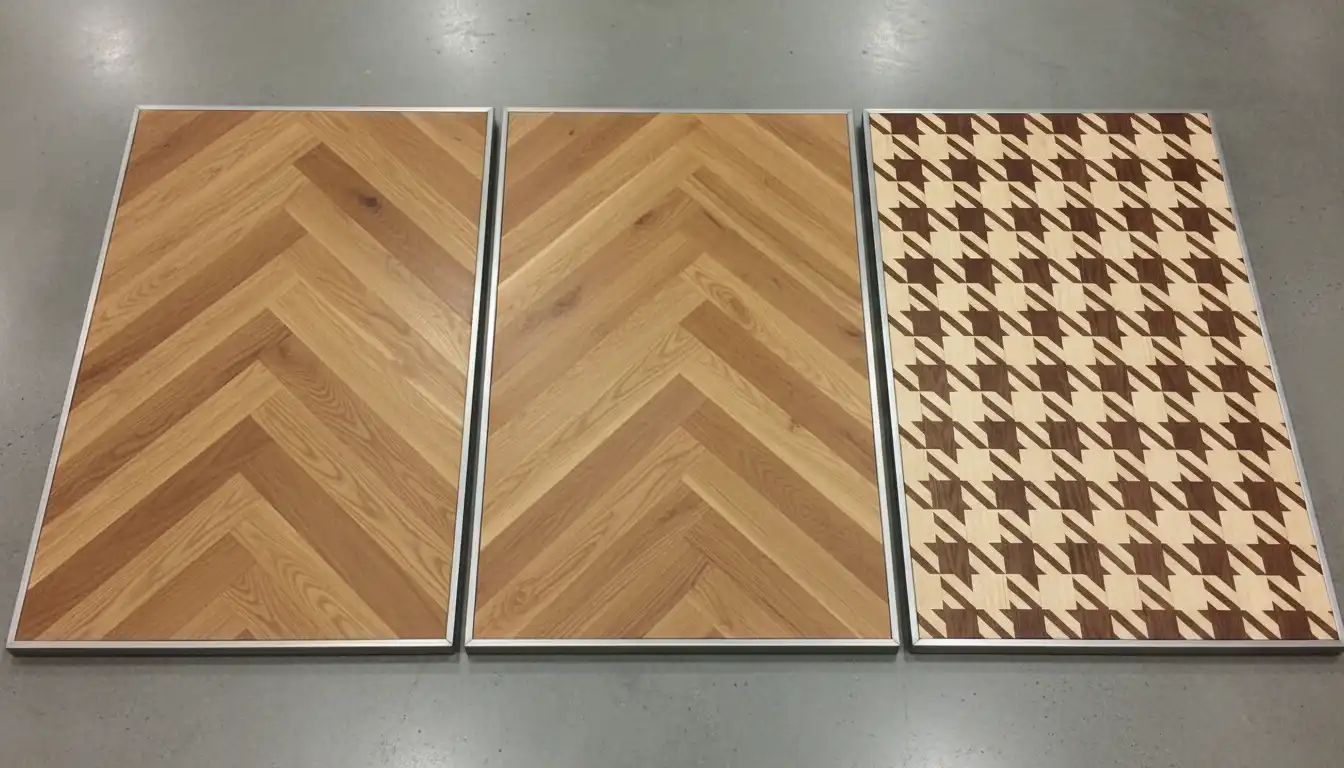
The herringbone pattern is named for its resemblance to the bone structure of a herring fish. It is created by placing rectangular planks or tiles in a staggered, interlocking arrangement at a 90-degree angle. This creates a broken zigzag effect, offering a sense of movement and texture that is subtle yet sophisticated.
With roots tracing back to the Roman Empire’s innovative road-building techniques and ancient Egyptian jewelry, this pattern has a rich history. Its use in flooring became prominent in 16th-century Europe, cementing its status as a symbol of timeless elegance. In home design, herringbone is prized for its ability to add character without overwhelming a space, making it perfect for everything from hardwood floors to kitchen backsplashes.
Chevron: Bold and Dynamic
The chevron pattern is defined by its continuous “V” shape. Unlike herringbone, the pieces used to create a chevron pattern are cut at an angle (typically 45 degrees) so they meet at a perfect point. This creates a seamless, uninterrupted zigzag that produces a clean, sharp, and more modern aesthetic.
The term “chevron” first appeared in the 14th century, derived from the French word for “rafter,” referencing the shape of roof beams. The pattern gained significant popularity during the Art Deco movement and is often associated with a bold, contemporary feel. Its strong directional lines can make a room appear longer or wider, making it a powerful tool for manipulating the perception of space.
Houndstooth: Graphic and Daring
Perhaps the most distinct of the three, houndstooth is a two-toned textile pattern characterized by broken, abstract four-pointed shapes. Often found in black and white, its name comes from the pattern’s resemblance to the jagged back teeth of a dog. It is a type of twill weave that creates its unique, tessellating design.
Originating in the Scottish Lowlands in the 19th century, houndstooth (also called dogtooth) was initially worn by shepherds. It transitioned from humble outerwear to a symbol of wealth and high fashion in the 1930s. In home decor, houndstooth is a bold statement pattern typically used for upholstery, rugs, and accent pieces rather than large-scale installations like flooring, providing a graphic punch of personality.
The Ultimate Showdown: A Side-by-Side Comparison
Choosing the right pattern requires a clear understanding of their key differences. The decision impacts not just the visual style but also the installation complexity, cost, and overall feel of your room. Here is a direct comparison to help you distinguish between these iconic designs.
Key Distinctions at a Glance
The most critical difference lies in how the patterns are constructed. Herringbone uses simple rectangular pieces laid at a 90-degree angle to create a staggered effect. Chevron, on the other hand, requires pieces cut at an angle to form a clean, continuous “V.” Houndstooth is fundamentally different as it is a woven pattern of abstract checks, not an arrangement of individual planks or tiles.
This structural difference directly influences the visual output. Herringbone offers a more textured, classic look, while chevron provides a sleeker, more uniform appearance. Houndstooth delivers a high-contrast, graphic impact that is best used as a focal point. These nuances are crucial when planning your design.
| Feature | Herringbone | Chevron | Houndstooth |
|---|---|---|---|
| Basic Shape | Rectangles laid in a staggered zigzag. | Parallelograms meeting at a sharp point. | Broken, abstract four-pointed checks. |
| Visual Effect | Textured, classic, subtle movement. | Clean, modern, strong directional flow. | Bold, graphic, high-contrast. |
| Overall Style | Timeless, traditional, versatile. | Contemporary, sleek, dynamic. | Daring, sophisticated, accent-focused. |
| Best Applications | Flooring (wood, tile), backsplashes, paving. | Flooring, feature walls, backsplashes. | Textiles (upholstery, rugs, pillows), wallpaper. |
| Installation Complexity | Moderately complex. | Highly complex, requires precise cuts. | Not applicable for installation (it’s a fabric/print pattern). |
Making the Perfect Choice for Your Home and Garden
With a clear understanding of each pattern, you can now apply this knowledge to your own space. The solution lies in matching the pattern’s characteristics to your room’s function, size, and your personal aesthetic goals.
Consider Your Room’s Scale and Purpose
The pattern you choose can dramatically alter the perception of a room’s size. The strong, continuous lines of a chevron floor can make a narrow hallway or small room appear longer and more spacious. Conversely, the gentle, staggered nature of herringbone can add texture and warmth to a large, open-plan area without making it feel too busy.
Houndstooth, with its bold graphic nature, is best reserved for making a statement. A houndstooth armchair or area rug can serve as the perfect focal point in a living room or study, injecting personality without overwhelming the senses. Consider how you use the space and what feeling you want to evoke.
The Secret Language of Pattern Scaling
A crucial element that often goes unmentioned is the impact of scale on these patterns. The size of the individual components—the planks, tiles, or checks—fundamentally changes the pattern’s psychological effect on a room’s atmosphere. This is a powerful design tool that allows for incredible versatility.
A large-scale herringbone or chevron pattern, using wider and longer planks, creates a calmer, more expansive feel, ideal for creating a serene and luxurious environment. A small-scale or “puppytooth” version of houndstooth can read as a subtle texture from a distance, while an oversized houndstooth becomes a dramatic and modern artistic statement. Experimenting with scale allows you to tailor the pattern’s energy to perfectly suit your space.
Installation, Cost, and Maintenance Insights
Practical considerations like cost and installation are vital. Due to the need for precise angular cuts, chevron installations are typically more labor-intensive and can result in more material waste, making them a more expensive option than herringbone. Herringbone uses standard rectangular pieces, which simplifies the process, though professional installation for both is highly recommended to achieve a flawless finish.
Maintenance is largely determined by the material you choose—wood, tile, or vinyl—rather than the pattern itself. Regular cleaning will keep any patterned floor looking its best. For textiles, understanding the fabric composition of a houndstooth piece is key to proper care. Addressing foundational issues before installation, like exploring dirt floor garage solutions if you’re upgrading a rugged space, ensures longevity and a professional result.
Bringing the Outdoors In
Don’t limit these patterns to your home’s interior. A herringbone brick patio can create a stunning, timeless outdoor living area. The pattern’s interlocking nature provides stability, echoing its historical use in Roman roads. This classic design connects your garden to your home with an elegant, textured surface perfect for entertaining.
While chevron and houndstooth are less common in garden applications, their principles can inspire creative landscaping. Use chevron-inspired lines in garden beds to create a sense of direction and flow, or use high-contrast plantings to mimic the graphic punch of houndstooth. Just as it’s important to address hidden issues indoors, like potential garbage mites, maintaining a clean and well-designed outdoor space enhances your home’s overall appeal. Ensuring all aspects of your property run smoothly, even troubleshooting a finicky snowblower idle up and down, contributes to a well-cared-for home environment.
Your Confident Design Decision
The debate of herringbone vs. chevron vs. houndstooth is not about which is superior, but which is right for you. By understanding their distinct visual languages, historical contexts, and practical applications, you are now equipped to choose with confidence. Herringbone offers timeless texture, chevron delivers modern dynamism, and houndstooth provides a bold, graphic statement.
Evaluate your space, consider the psychological impact of scale, and weigh the practical aspects of installation. Armed with this knowledge, you can move beyond confusion and unlock your home’s true design potential, creating a space that is not only beautiful but perfectly aligned with your personal style.
