
Heritage Birch vs River Birch: The Ultimate Guide to the Better Bark
Choosing the right tree for your landscape can feel overwhelming. You want beauty, resilience, and a tree that complements your home, but the subtle differences between popular choices can be confusing. This is especially true when comparing Heritage birch vs River birch, a common dilemma for gardeners seeking the iconic peeling bark and graceful form of a birch tree.
The core problem is that while these trees are related, they are not identical. Making the wrong choice can lead to disappointment in appearance, unexpected maintenance, or a tree that isn’t perfectly suited to your garden’s specific conditions. Understanding the key distinctions is crucial for long-term satisfaction and a thriving landscape.
You'll Learn About
What is a Standard River Birch?
The standard River Birch, scientifically known as Betula nigra, is a hardy, fast-growing deciduous tree native to the eastern United States. It’s naturally found along riverbanks and in wet, swampy areas, which gives it a high tolerance for moist soils and even occasional flooding. It is celebrated for its resistance to the destructive bronze birch borer, an insect that plagues many other birch varieties, especially white-barked types.
The bark of a young, wild-type River Birch is typically a mix of salmon-pink, reddish-brown, and gray, peeling away in papery layers. As the tree matures, the bark on the main trunk darkens considerably, often becoming thick, scaly, and a deep grayish-brown, losing much of the vibrant peeling character that defines its youth.
Understanding the “Heritage” Difference
This is where the confusion often begins. The Heritage birch is not a separate species; it is a specific cultivar of the River Birch. Its full botanical name is Betula nigra ‘Cully’. It was discovered by Earl Cully in St. Louis, Missouri, as a superior specimen of the native River Birch and was subsequently patented and propagated for its exceptional ornamental traits.
Think of it like this: all Heritage birches are River birches, but not all River birches are the ‘Cully’ or Heritage cultivar. The Heritage was specifically selected for its more vigorous growth and, most importantly, its dramatically more attractive and lighter-colored bark that retains its beauty for a longer period. This distinction is the primary reason it has become a landscape superstar.
Heritage Birch vs River Birch: A Head-to-Head Comparison
To solve the dilemma of which tree is best for your home and garden, let’s break down the specific differences. While they share many core traits like a love for acidic soil and resistance to the bronze birch borer, their variations in appearance and performance are significant.
Aesthetic Appeal & Bark Color: The Main Event
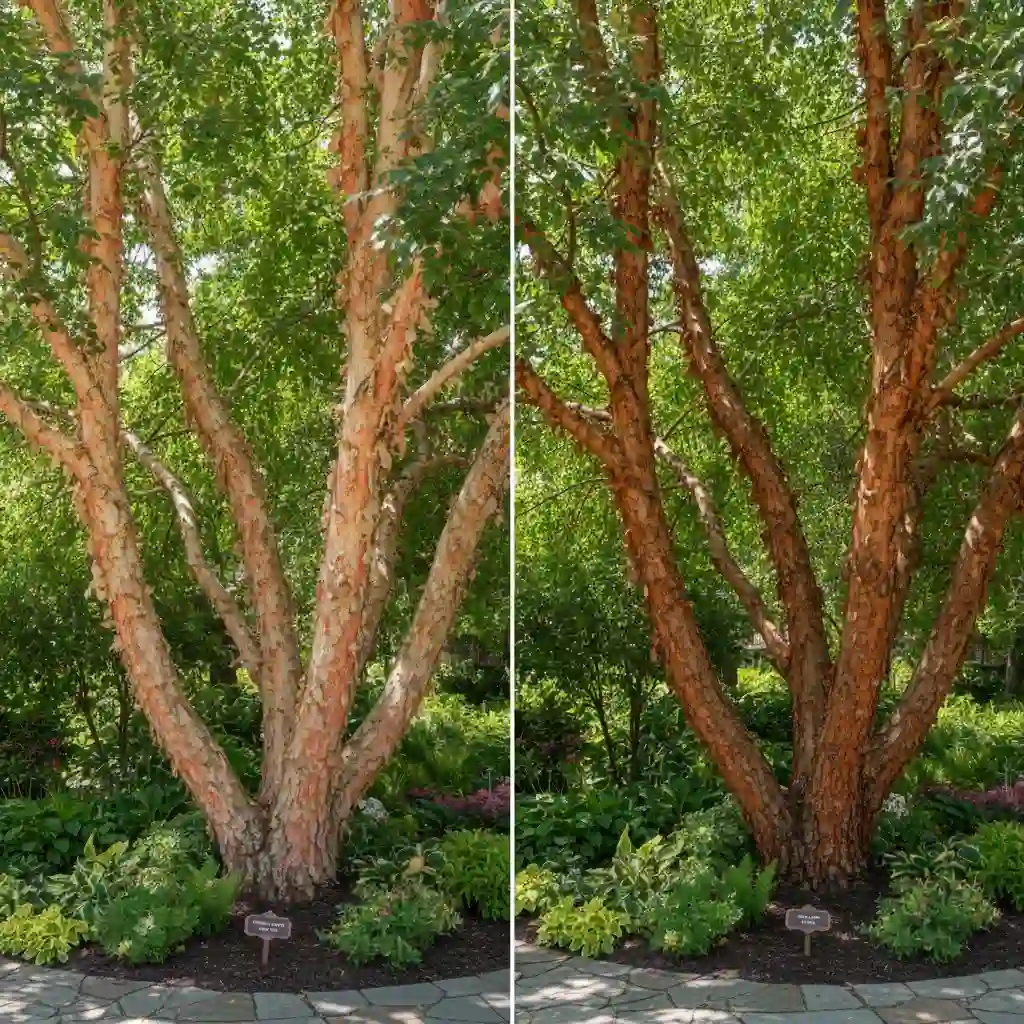
The most significant difference lies in their bark. This is the feature that provides critical winter interest and year-round beauty. While a young standard River Birch has attractive peeling bark, it can be inconsistent in color and tends to darken and become less ornamental with age.
The Heritage birch, on the other hand, was selected for its stunning exfoliating bark. It peels away in large, papery sheets to reveal a vibrant palette of cream, salmon, and tan colors. Critically, this creamy-white inner bark remains prominent for much longer into the tree’s life, creating a much brighter and more striking visual impact in the landscape, especially against a snowy backdrop or green lawn.
Growth Rate and Mature Size
Both trees are known for being fast growers, often adding 2-3 feet of height per year in ideal conditions. This makes them an excellent choice for homeowners who want to establish shade or a privacy screen relatively quickly. Both typically mature to a height of 40-70 feet with a spread of 25-40 feet.
However, the Heritage cultivar is often noted as being slightly more vigorous and developing a denser, more uniform crown than its wild counterpart. This can result in a fuller, more stately appearance as the tree matures. When planning your planting site, consider the tree’s ultimate size and the location of utilities; careful planning can prevent future issues like the need for moving an underground gas line years down the road.
Disease and Pest Resistance
A key advantage for both the standard River Birch and its Heritage cultivar is their strong resistance to the bronze birch borer. This pest is fatal to many other popular birches, making Betula nigra a much more reliable choice in a wide range of climates. Both can be susceptible to minor issues like aphids or fungal leaf spot, especially in wet seasons, but these are rarely serious threats.
One subtle advantage of the Heritage birch is its cleaner exfoliation. The aggressive peeling can help shed overwintering insects or fungal spores that might otherwise find a home in the shaggy bark of the species type, contributing to its overall robust health.
Soil and Site Adaptability
Both trees are champions of adaptability. They thrive in moist, acidic soils (pH 5.0-6.5) and can tolerate poorly drained clay soils and periodic flooding. However, they can suffer from iron chlorosis, a nutrient deficiency causing yellowing leaves, if planted in alkaline soils with a pH above 6.5.
While both prefer moisture, the Heritage cultivar has shown excellent performance in typical garden settings that may not be consistently wet. Once established, it develops a strong root system that can handle periods of dryness better than many assume, though deep watering during droughts is always recommended to prevent stress and leaf drop.
Key Differences at a Glance
For a quick summary, this table highlights the primary distinctions that matter most to a home gardener.
| Feature | Heritage Birch (Betula nigra ‘Cully’) | Standard River Birch (Betula nigra) |
|---|---|---|
| Bark Color & Texture | Superior exfoliating bark with vibrant cream, salmon, and tan tones. Lighter color persists with age. | Bark is more reddish-brown and cinnamon; darkens significantly on the main trunk as it matures. |
| Ornamental Value | Considered more ornamental due to brighter, more consistent, and longer-lasting peeling bark. | Attractive when young, but can become dark and less visually interesting on older trunks. |
| Growth Habit | Vigorous growth with a typically denser and more uniform pyramidal or oval crown. | Fast-growing, but can have a more irregular or open crown. |
| Leaf Quality | Often has slightly larger, glossier, and darker green leaves. | Leaves are medium green and diamond-shaped. |
| Landscape Use | Excellent as a specimen tree, in clumps, or for high-visibility areas where winter interest is key. | Best suited for naturalized areas, stream banks, or where a more rustic look is desired. |
| Cost | Generally more expensive due to being a patented and vegetatively propagated cultivar. | Less expensive as it can be grown from seed. |
Which Birch is Right for Your Home and Garden?
Now for the solution: choosing the perfect birch for your yard. The decision ultimately comes down to your primary goals and aesthetic preferences.
You should choose the Heritage Birch if:
- Year-round beauty is your top priority. The superior, lighter-colored peeling bark offers unparalleled winter interest.
- You want a more refined and uniform-looking tree to serve as a focal point or specimen in your landscape.
- You are willing to invest a little more for a tree with premium ornamental characteristics.
You might opt for the standard River Birch if:
- You are planting in a more naturalized or woodland setting where a wilder, more rustic look is appropriate.
- Your budget is a primary concern, as the species type is generally more affordable.
- The planting site is at a distance where the subtle differences in bark color will be less noticeable.
Planting and Long-Term Care for Your Birch Tree
Regardless of your choice, proper planting and care are essential for a healthy tree. Both the Heritage and standard River Birch thrive in full sun to partial shade and require acidic soil. When planting, dig the hole two to three times as wide as the root ball but no deeper. The top of the root ball should be level with or slightly above the surrounding soil.
Water is the most critical element, especially during the first few years. Provide deep, consistent watering to help the tree establish its root system. A 2-3 inch layer of mulch around the base (but not touching the trunk) will help retain soil moisture and keep the roots cool. Poor water management can sometimes lead to issues around the home, a topic related to understanding how problems like water running back under a metal roof can originate from environmental factors.
Pruning and Maintenance
Birch trees are known as “bleeders,” meaning they will exude a lot of sap if pruned in the late winter or early spring. To avoid this messy (but harmless) situation, it’s best to prune them in the late summer or early fall after the leaves have fully matured. Only remove dead, damaged, or rubbing branches.
The exfoliating bark is a natural process and does not harm the tree. While it does create some litter, many gardeners find the textural strips of bark to be a beautiful addition to their mulch beds. Keeping the area around the tree tidy might involve occasional raking, a task easily handled by reliable garden equipment. For those with larger properties, knowing if the John Deere 724D is any good could be relevant for broader landscape maintenance.
Final Verdict: The Superior Choice for Modern Landscapes
While the standard River Birch is a tough and adaptable native tree, the Heritage Birch (‘Cully’) cultivar stands out as the superior choice for most home and garden landscapes. It takes all the best qualities of the species—fast growth, adaptability to wet soils, and resistance to the bronze birch borer—and enhances them with far more spectacular and enduring ornamental bark.
The investment in a Heritage birch pays dividends for years through its stunning, year-round display of color and texture. It provides the iconic birch aesthetic that many homeowners desire, but on a more reliable and visually impactful plant. For a tree that truly makes a statement in all four seasons, the Heritage River Birch is the undisputed winner.
